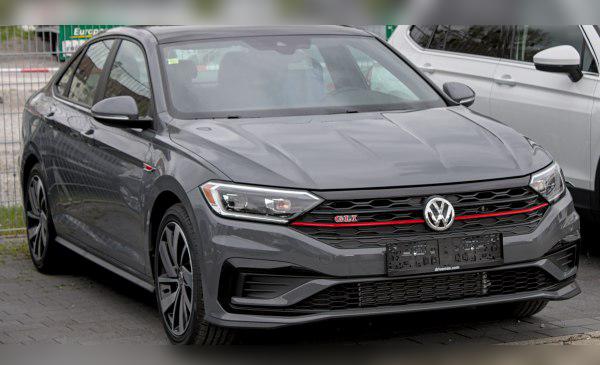
EA888 (DKFA) 2.0 TSI: Experiences, problems, fuel consumption and buying tips
Key points (TL;DR)
- Performance: Aggressive and potent engine. With 228 hp in the Jetta GLI body, this is a serious sleeper machine.
- Thermostat and water pump: The Achilles’ heel of this engine. The housing is plastic and coolant leaks are almost guaranteed before 100,000 km.
- Timing chain: Uses a timing chain. Much more reliable than on earlier generations (Gen 1 and 2), but it requires high‑quality oil and regular changes.
- Oil consumption: Still present, but drastically lower than on older TFSI/TSI engines.
- Tuning potential: Huge. This is one of the best engines in the world for power increase (Stage 1).
- Gearbox: DSG requires strict maintenance, while the manual gearbox has a weak clutch for this power level.
- Recommendation: An excellent choice for enthusiasts who are ready for preventive maintenance of the cooling system.
Contents
- Introduction: What is the DKFA engine?
- Technical specifications
- Reliability and maintenance
- Specific parts and costs
- Fuel consumption and performance
- Additional options and modifications
- Gearbox: Manual vs DSG
- Buying used and conclusion
Introduction: What is the DKFA engine?
The DKFA engine belongs to the famous Volkswagen EA888 Gen 3 family. Specifically, this is a 2.0 TSI unit installed in performance‑oriented models, best known for its use in the Volkswagen Jetta VII GLI (the US equivalent of the Golf GTI with a trunk). Unlike the lower‑output variants (B‑cycle engines with 180–190 hp), the DKFA is a “full‑fat” version with 228 horsepower, designed to deliver a sporty feel.
This engine is important because it represents the peak of development of four‑cylinder turbo petrol engines before mass electrification. It combines direct injection, variable valve timing and a turbocharger to offer a wide torque band.
Technical specifications
| Specification | Data |
|---|---|
| Engine displacement | 1984 cc (2.0 L) |
| Power | 170 kW (228 hp) @ 5000 rpm |
| Torque | 350 Nm @ 1700–4400 rpm |
| Engine code | DKFA (EA888 Gen 3) |
| Injection type | TSI (Turbo Stratified Injection) – Direct |
| Forced induction | Turbocharger (IS20) + intercooler |
| Number of cylinders / valves | 4 / 16 (DOHC) |
Reliability and maintenance
Chain or belt?
This engine uses a timing chain. Unlike the notorious earlier series (EA888 Gen 1 and 2) where the chain tensioner often failed and caused catastrophic engine damage (pistons meeting valves), Gen 3 engines like the DKFA have a significantly revised and reinforced chain and tensioner system.
However, the chain is not eternal. It is recommended to check its condition (stretch) via diagnostics (camshaft phase correction) after around 150,000 km. If you hear rattling on cold start that lasts longer than 2–3 seconds, that is a red flag and you should visit a workshop immediately.
Most common failures
Although mechanically robust, the engine’s peripherals are known to cause issues:
- Thermostat and water pump module: This is the most common failure. The housing is made of plastic which deforms over time due to heat cycles. Symptoms: Coolant loss, smell of antifreeze under the hood or engine overheating. The solution is to replace the entire module (housing + pump + thermostat).
- PCV valve (oil vapor separator): When the membrane tears, the engine can run rough, produce a whistling noise or increase oil consumption.
- Carbon buildup: Since this is a direct‑injection engine, fuel does not “wash” the intake valves. Over time, carbon deposits build up, which can reduce power and cause rough running. Mechanical cleaning (walnut shell blasting) is recommended every 80,000–100,000 km.
Major and minor service
Because the engine has a chain, the classic “major service” (as with a timing belt every 5 years) does not exist in that sense. However, the serpentine belt (for alternator and A/C) and the water pump (driven by a separate small belt from the balance shaft) should be inspected/replaced around 100,000–120,000 km.
Spark plugs: Extremely important on this turbo petrol engine. They should be replaced every 60,000 km (or 4 years). If the car is tuned (chipped), the interval should be shortened to 30,000 km and colder plugs used.
Oil: capacity and consumption
The engine takes approximately 5.7 liters of oil. The factory recommendation for newer models often leans towards 0W‑20 (VW 508.00) for emissions reasons, but many experienced mechanics and enthusiasts recommend switching to 5W‑30 or 5W‑40 (VW 502.00 / 504.00) for European climates and spirited driving.
Does it burn oil? Yes, but it is no longer as alarming as it used to be. Consumption of about 0.5 liters per 5,000–7,000 km is considered acceptable and normal for this type of engine, especially if driven aggressively. Anything over 1 liter per 2,000 km indicates a problem with piston rings or the turbo.
Specific parts and costs
Dual‑mass flywheel and clutch
Yes, this engine has a dual‑mass flywheel, regardless of whether it is paired with a manual or automatic (DSG) gearbox. Its role is to dampen strong vibrations and torque pulses.
- With the manual gearbox, the clutch kit with flywheel is (very expensive) (depends on the market), and the typical lifespan is around 150,000 km, although aggressive launches can cut that in half.
- With the DSG gearbox, the flywheel often lasts longer, but when it starts knocking (metallic clunking noise at idle), replacement is also expensive.
Injection and turbo
The injection system is direct (FSI/TSI) with high‑pressure injectors. The injectors are generally reliable, but sensitive to poor fuel quality. Injector failure manifests as fuel leaking into the cylinder (washing away the oil film), which can be fatal for the engine.
The engine uses a single IS20 turbocharger (manufacturer IHI). This turbo is very responsive (spools quickly). Its service life is long (over 200,000 km) with regular oil changes and proper cooldown after fast driving.
Emissions equipment (DPF/GPF/EGR)
This petrol engine does not have a DPF (that’s for diesels), but newer versions for the European market may have a GPF (Gasoline Particulate Filter). Since the Jetta GLI is primarily for the US market (where the DKFA is most common), most examples do not have a GPF, which is good news for exhaust sound and flow.
There is no classic EGR valve that clogs up in the same way as on old diesels; the exhaust gas recirculation function is achieved via variable valve timing (“internal EGR”), which is a more reliable solution.
AdBlue: None. This is a petrol engine.
Fuel consumption and performance
Real‑world fuel consumption
Do not fully trust the factory figures. This is a 228 hp engine.
- City driving: Expect between 9.5 and 12 l/100 km. In heavy stop‑and‑go traffic, this easily goes to 13+ liters.
- Country roads: It is possible to get down to 6.5–7.5 l/100 km with a light right foot.
- Highway (130 km/h): Consumption is around 7.5–8.5 l/100 km.
Performance and driving feel
The engine is anything but lazy. With 350 Nm available from just 1700 rpm, the Jetta GLI pulls very hard. In‑gear acceleration is excellent and overtaking is effortless.
On the highway, at 130 km/h, the engine in 7th gear (DSG) or 6th gear (manual) runs at relatively low revs (around 2,200–2,500 rpm), which makes it a quiet and comfortable cruiser.
Additional options and modifications
LPG conversion
Technically feasible, but economically questionable and complicated. Due to direct injection, a special system is required (liquid phase or a system that also injects some petrol to cool the injectors). Such setups are (very expensive). Given the complexity and cost, most owners avoid LPG on this engine.
Chip tuning (Stage 1)
EA888 engines are legendary for this. With just a remap (Stage 1), without any mechanical changes, power can be safely raised to 290–310 hp, and torque to over 450 Nm. The engine handles this increase very well, but keep in mind it will shorten clutch life (on manuals) and require more frequent servicing.
Gearbox: Manual vs DSG
With the DKFA engine in the Jetta GLI you most often get two options:
- 6‑speed manual:
- Feel: Precise, but the throws can be a bit long.
- Weak points: The biggest downside is the factory clutch. It is sized right on the limit for 350 Nm. If you plan chip tuning, the stock clutch will start slipping almost immediately. Upgrading to a stronger clutch kit is mandatory for tuned cars.
- 7‑speed DSG (DQ381):
- Type: Wet clutch. This is a modern, very reliable transmission.
- Maintenance: Oil and filter changes in the gearbox are mandatory every 60,000 km (some say 120k, but for longevity stick to 60k). If this is neglected, the mechatronics unit (the gearbox brain) fails, and its repair is (very expensive).
- Failures: With regular oil changes, these gearboxes cover high mileages without issues. Occasional oil leaks from seals can appear.
Buying used and conclusion
Before buying a used car with the DKFA engine, pay attention to the following:
- White residue: Look around the engine, especially on the belt/pump side, for white, crusty traces (dried coolant leaks).
- Cold start: Insist on starting the car when the engine is completely cold. Listen to the chain. Any kind of harsh rattling is a bad sign.
- DSG service history: If it is an automatic and there is no proof of gearbox oil changes at 60k km intervals, be very cautious or negotiate a big discount.
Conclusion: The VW Jetta GLI with the 2.0 TSI (DKFA) engine is a fantastic driver’s car. It offers hot‑hatch performance in a discreet sedan body. Maintenance is not cheap (especially if the water pump or dampers fail), but in return you get one of the most interesting engines of today. If you can afford quality oil and regular servicing, this engine is highly recommended.