B48A20A Engine
- Engine
- 1998 cm3
- Aspiration
- Twin-power turbo, Intercooler
- Fuel
- Petrol (Gasoline)
- Fuel injection system
- Direct injection
- Power
- 178 hp
- Torque
- 280 Nm
- Cylinders
- 4
- Valves
- 16, 4 per cylinder
- Cylinders position
- Inline
- Valvetrain
- VALVETRONIC
- Oil capacity
- 5.25 l
- Coolant
- 6.75 l
- Systems
- Start & Stop System
# Vehicles powered by this engine
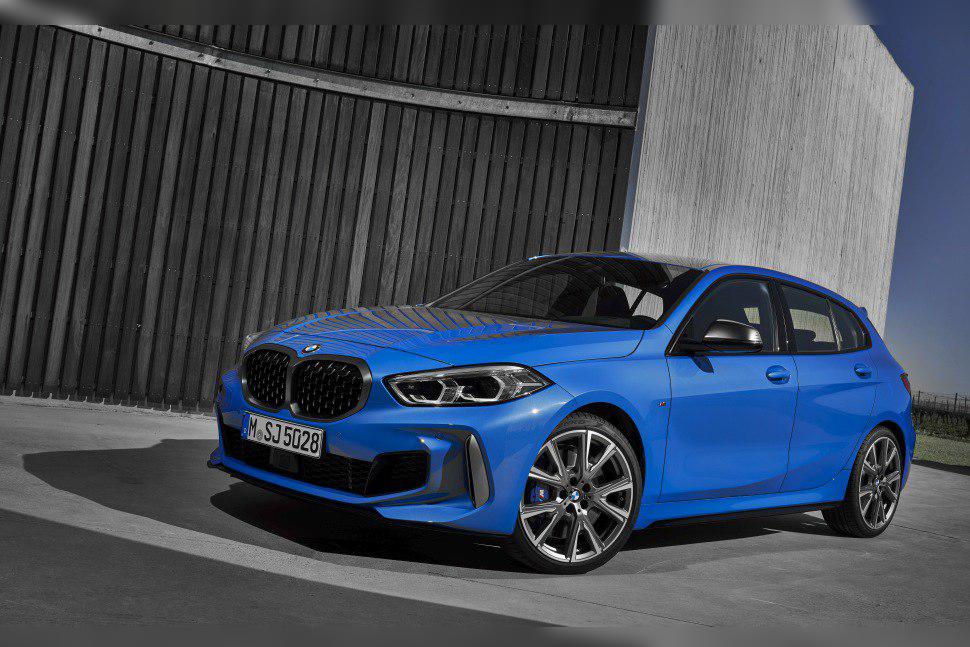
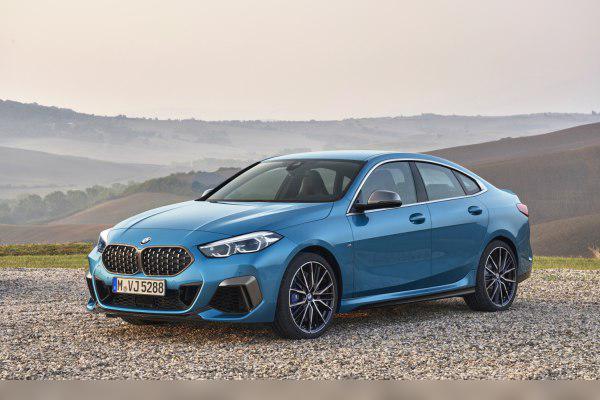


BMW B48A20A (178 hp) – Experiences, problems, fuel consumption and used car buying guide
When talking about modern petrol engines that power the new generation of BMW front-wheel drive cars (or xDrive systems based on front-wheel drive), the B48A20A is the absolute standard. This is the engine that replaced the older 192 hp variants in order to meet stricter Euro 6d regulations, while still retaining a sporty character.
Key points in short (TL;DR)
- Reliability: Significantly better than its predecessor (N20). The B48 is considered a robust engine if serviced regularly.
- Timing chain: It has a timing chain located at the rear of the engine (towards the cabin), which makes any potential replacement very expensive (depends on the market) because the engine usually has to be removed.
- Cooling system: This is the weak spot – plastic housings, hoses and the water pump are prone to leaks.
- Performance: With 178 hp and 280 Nm, the engine is very lively in models such as the 1 Series or Mini Countryman.
- Fuel consumption: Surprisingly economical on the open road, but in the city it can be quite thirsty.
- GPF filter: It has a gasoline particulate filter (OPF/GPF), so it requires high-quality oil and occasional longer drives on open roads.
- Recommendation: An excellent choice for those who want petrol refinement and performance, and want to avoid diesel.
Contents
- Technical specifications
- Reliability and maintenance
- Specific parts and costs
- Fuel consumption and performance
- Additional options and modifications
- Gearbox
- Buying used and conclusion
This power unit, code name B48A20A, belongs to BMW’s modular “B” engine family (together with the B38 and B58). Specifically, the letter “A” indicates that the engine is mounted transversely, which sets it apart from the versions in the 3 Series or 5 Series where it is mounted longitudinally. It is installed in the modern 1 Series (F40), 2 Series Gran Coupe (F44) and the facelifted Mini Countryman (F60). Its task is to provide a premium driving feel, smooth operation and enough power for overtaking, while meeting strict environmental regulations.
Technical specifications
| Feature | Value |
|---|---|
| Engine code | B48A20A |
| Displacement | 1998 cc (2.0 L) |
| Power | 131 kW (178 hp) |
| Torque | 280 Nm at 1350–4200 rpm |
| Fuel type | Petrol (Gasoline) |
| Injection | Direct injection (High Precision Injection) |
| Induction | TwinPower Turbo (twin-scroll turbocharger) |
| Configuration | Inline, 4 cylinders |
Reliability and maintenance
The B48A20A is generally a very reliable engine, especially when compared to its predecessors that suffered from serious timing chain failures at relatively low mileage. Still, it is not without flaws.
Does this engine have a timing belt or a chain?
This engine uses a timing chain. The good news is that the chain on B48 engines is significantly reinforced and is not prone to stretching before 200,000 km, except in cases of poor maintenance. The bad news is its position – it is located at the rear of the engine (towards the gearbox/firewall). This means that if the chain starts rattling and needs to be replaced, the engine often has to be removed, which dramatically increases labour costs (expensive, depends on the market).
What are the most common failures on this engine?
The biggest enemy of this engine is coolant leakage. Plastic parts in the engine bay are exposed to high temperatures and become brittle. The most common failures are:
- Oil filter housing (which is integrated with the cooling system).
- Coolant return hoses (especially the thin hose going to the expansion tank).
- Water pump (it is mechanical, but the module can fail).
Symptoms include a dropping coolant level without a visible puddle under the car (because it evaporates on the hot block) or a “sweet” burnt coolant smell in the cabin.
At what mileage is the major service due?
Since the engine has a chain, a classic “major service” as with timing belts does not exist at a fixed interval. The chain is replaced as needed (it is usually inspected after 200,000 km or if rattling is heard on cold start). However, the water pump and auxiliary (serpentine) belt with tensioners are replaced preventively at around 100,000–120,000 km.
How many litres of oil does this engine take and which grade is recommended?
The engine holds approximately 5.25 litres of oil. It is recommended to use fully synthetic oil of grade 0W-20 or 5W-30 that meets strict BMW specifications (e.g. BMW Longlife-17 FE+ for newer models with a GPF filter). Due to the turbo and high temperatures, 0W-30 is often a better choice for warmer climates, but always check the vehicle’s manual.
Does it consume oil between services?
B48 engines are “tighter” than older BMW petrol engines. Oil consumption is minimal. It is normal for it to consume up to 0.5 litres per 10,000 km, especially if driven aggressively. If it consumes more than 1 litre per service interval, this may indicate a problem with the PCV valve (oil vapour separator) which is integrated into the valve cover.
At what mileage should the spark plugs be replaced?
On this turbocharged direct-injection petrol engine, the spark plugs are under heavy load. It is recommended to replace them every 40,000 to 60,000 km (or every second minor service). Worn spark plugs can lead to ignition coil failure (which are also wear items).
Specific parts (Costs)
Does the engine have a dual-mass flywheel?
Yes. Although most of these models are equipped with an automatic gearbox (Steptronic), they still use a dual-mass flywheel to reduce vibrations transmitted from the engine to the gearbox and cabin. Its service life with automatics is long, often over 200,000 km.
What kind of injection system does it have and are the injectors problematic?
It uses a high-pressure direct fuel injection system. The injectors are precise but sensitive to poor fuel quality. They are not as notoriously problematic as on some older N53 engines, but if they clog or start “pissing”, they can wash oil off the cylinder walls and cause serious damage. Using quality, additivated petrol is recommended.
Does the engine have a turbocharger and what is its lifespan?
The engine uses a single twin-scroll turbocharger (BMW markets this as “TwinPower Turbo”, which often confuses people into thinking it has two turbos – it doesn’t, it has one with two exhaust gas channels). The turbo is made by Mitsubishi or Garrett and is very durable. With regular oil changes and proper cool-down after spirited driving, it will last as long as the engine.
Does this model have a DPF filter or an EGR valve?
Since this is a newer-generation petrol engine (Euro 6d), it does not have a DPF, but it does have its petrol equivalent – a GPF (Gasoline Particulate Filter) or OPF. This filter rarely clogs because exhaust gas temperatures on petrol engines are higher than on diesels, so regeneration is performed passively while driving. It does have an EGR valve, but on petrol engines it gets much less sooted up than on diesels.
Does this engine use AdBlue?
No. AdBlue is a system for diesel engines. This is a petrol engine and does not use any additional fluids for exhaust gas treatment.
Fuel consumption and performance
What is the real-world fuel consumption in city driving?
This is where you should not trust the official figures. In a heavy body such as the Mini Countryman or BMW 2 Series Gran Coupe, real-world city consumption is between 8.5 and 10.5 litres per 100 km. In heavy stop-and-go traffic it can go up to 11 litres. Still, this is acceptable for 178 horsepower.
Is this engine “lazy” for the weight of the car?
Absolutely not. With 280 Nm of torque available from as low as 1350 rpm, the engine pulls linearly and strongly. Acceleration to 100 km/h is usually in the 7 to 7.5 second range (depending on model and drivetrain), which is more than enough for dynamic driving. There is no pronounced turbo lag.
How does the engine behave on the motorway and at what revs does it cruise?
Thanks to 7- or 8-speed gearboxes, the engine is very relaxed on the motorway. At 130 km/h, it runs at around 2,000–2,200 rpm. Fuel consumption is excellent in this scenario, at around 6.0 to 7.0 litres, and the cabin is very quiet.
Additional options and modifications
Is this engine suitable for LPG (autogas) conversion?
It is not recommended. Due to direct injection, LPG installation is complex and expensive (it requires a liquid injection system or a system that uses a mixture of petrol and gas to cool the petrol injectors). The savings are questionable given the high cost of the system (very expensive) and potential electronic issues.
How far can this engine be safely tuned (Stage 1)?
B48 engines are very popular among tuners because they have large reserves. This 178 hp version is a software “detuned” variant of more powerful models (although pistons sometimes differ on the most powerful versions). With a Stage 1 remap you can safely get around 230 to 245 hp and about 350–380 Nm of torque, without any mechanical changes. This drastically changes the character of the car.
Gearbox
Which gearboxes are fitted?
In the models you mentioned (transverse engines), two types of automatic gearboxes branded “Steptronic” are most commonly found:
1. 7-speed DCT (dual-clutch) – Manufactured by Getrag (Magna). Most common in FWD models such as the BMW 120i (F40).
2. 8-speed automatic (torque converter) – Manufactured by Aisin. This gearbox is usually fitted to models with xDrive (e.g. Mini Countryman ALL4 or BMW 220i xDrive) because it handles the load of all-wheel drive better.
What are the most common issues?
DCT (7-speed): These gearboxes shift lightning fast, but can be jerky when setting off from a standstill. They are more prone to clutch pack wear in city driving and mechatronic failures if the oil overheats.
Aisin (8-speed): A very robust and comfortable gearbox (“classic automatic”). It fails less often, but can develop harsh shifts (“jerking”) if the oil is not changed regularly.
At what mileage should the gearbox be serviced?
BMW often states that the oil is “lifetime”, but this is not true if you care about longevity. It is recommended to change the gearbox oil every 60,000 to 80,000 km. This is crucial to avoid expensive mechatronic repairs.
Cost of clutch replacement (for DCT)?
If you have the dual-clutch version, the clutch pack is a wear item (just like on a manual). Replacement is expensive (depends on the market) because it requires removing the gearbox and performing calibration.
Buying used and conclusion
If you are planning to buy a used BMW or Mini with the B48A20A engine, pay attention to the following:
- Cold start: Ask the seller to keep the engine cold. Listen carefully during the first 3–5 seconds of operation. There should be no metallic rattling (a sign of a loose chain).
- Coolant traces: Look around the coolant reservoir and under the intake manifold for white marks (dried coolant). Coolant leaks are the most common issue.
- Service history: Check whether the oil was changed at a maximum of 15,000 km intervals. If it was changed every 30,000 km (LongLife interval), be cautious.
Conclusion:
The 178 hp B48A20A engine is one of the best 2.0-litre petrol engines currently on the market. It offers a perfect balance between performance and reasonable fuel consumption. It is the ideal “golden middle ground” – not as weak as the 1.5 three-cylinder (B38), yet not as expensive to tax and maintain as the M models. It is aimed at drivers who enjoy driving and are willing to pay a bit more for fuel in the city in exchange for the quietness and refinement that a diesel simply cannot provide.
Was this content useful to you?
Your opinion helps us to improve the quality of the content.