B48 Engine
- Engine
- 1998 cm3
- Aspiration
- Twin-power turbo, Intercooler
- Fuel
- Petrol (Gasoline)
- Fuel injection system
- Direct injection
- Power
- 204 hp
- Torque
- 320 Nm
- Cylinders
- 4
- Valves
- 16, 4 per cylinder
- Cylinders position
- Inline
- Valvetrain
- VALVETRONIC, Double-VANOS
- Oil capacity
- 5.25 l
- Systems
- Start & Stop System, Particulate filter
# Vehicles powered by this engine
In short (TL;DR)
- Modern and capable: The B48 is one of the best 2.0 turbo petrol engines today, and in the 223i (U06) version it comes with Mild Hybrid technology that smooths out turbo lag.
- Timing chain: It has a timing chain that is generally more reliable than on older N20 engines, but it is located at the rear of the engine (towards the cabin), which makes any replacement more expensive.
- Cooling system: This is its Achilles’ heel. The thermostat and water pump housings are prone to leaking.
- Direct injection: Requires quality fuel and regular servicing to avoid carbon buildup on the intake valves.
- Gearbox: This model comes exclusively with a 7-speed dual-clutch automatic (DCT), which requires strictly regular oil changes.
- Recommendation: An excellent choice for those who drive fewer kilometers than typical diesel owners, but still want sporty performance in a family package.
Contents
BMW B48 (223i) – Experiences, issues, fuel consumption and buying used
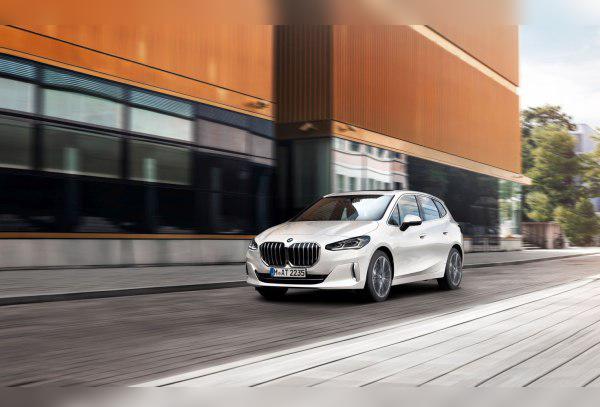
BMW’s modular “B” series of engines brought much-needed peace of mind to owners after the problematic “N” series. Specifically, the B48 engine in the BMW 2 Series Active Tourer (U06), badged as the 223i, represents the pinnacle of two-liter technology paired with a 48V mild hybrid system. This is not just an engine “for getting from A to B”, but a powerplant that gives this family MPV the character of a sporty hatchback.
This is a transversely mounted engine, which is specific to the UKL2 platform used by the Active Tourer, unlike classic BMW models (3 Series, 5 Series) where the engine is mounted longitudinally. This is important to know because it dictates the approach during servicing.
Technical specifications
| Parameter | Data |
|---|---|
| Displacement | 1998 cc (2.0 L) |
| Configuration | I4 (inline four-cylinder) |
| Engine power | 150 kW (204 hp) + 14 kW (19 hp) electric motor (system output around 218 hp) |
| Torque | 320 Nm (at 1500–4000 rpm) |
| Engine code | B48A20P (specific for hybrid/transverse applications) |
| Injection type | Direct injection (High Precision Injection) |
| Charging | TwinPower Turbo (single turbo with twin-scroll housing) + MHEV assistance |
Reliability and maintenance
Does this engine have a timing belt or a chain?
The B48 engine uses a timing chain. Unlike the notorious N47 diesel, the chain on B48 engines is much more robust and rarely snaps without warning. However, it is important to know that the chain is located at the rear of the engine (towards the gearbox/cabin). This means that if it needs to be replaced (you usually hear rattling on cold start at high mileage, over 200,000 km), the engine or gearbox has to come out, which dramatically increases labor costs.
What are the most common issues with this engine?
Although reliable, the B48 has its quirks:
- Coolant leaks: This is issue number one. The plastic housings of the water pump and thermostat are prone to cracking due to thermal cycles. Symptoms are low coolant level or white stains in the engine bay.
- Crankcase breather hose: It often becomes brittle and cracks, which can lead to rough running and a check engine light.
- VANOS solenoids: They can get dirty or fail, causing loss of power or rough running. Regular oil changes help prevent this.
- Engine mounts: On the Active Tourer, due to front-wheel drive and high torque, the lower engine mount is under heavy load and fails faster than on rear-wheel-drive models.
At what mileage is a major service due?
Since the engine has a chain, a classic “major service” (timing belt replacement) does not exist in that sense. However, the serpentine belt (which drives the auxiliaries) should be inspected every 60,000 km and replaced as needed (usually around 100,000–120,000 km). The chain is replaced only if it becomes noisy (whining or rattling); there is no prescribed interval, but in practice it is fine up to around 200,000 km with good maintenance.
How many liters of oil does this engine take and which grade is recommended?
The B48 engine takes approximately 5.25 liters of oil. For newer engines (especially with a GPF filter like this one), BMW recommends low-viscosity oils for efficiency, most commonly 0W-20 (BMW Longlife-17 FE+ specification). 5W-30 (BMW Longlife-04) can also be used, which I personally recommend for warmer climates or more spirited driving for better protection, although it slightly increases fuel consumption.
Does it consume oil between services?
A healthy B48 engine should not consume a noticeable amount of oil. Consumption of 0.5 liters per 10,000 km is considered acceptable. If you have to top up a liter of oil between services, that indicates a problem (often valve stem seals or leaks at the turbo/gaskets), not a characteristic of the engine.
At what mileage should the spark plugs be changed?
On turbo petrol engines with direct injection, spark plugs are under heavy stress. The recommendation is to replace them every 40,000 to 60,000 km. Worn spark plugs can lead to coil failure, which is a much more expensive repair. Symptoms include hesitation or misfiring under acceleration.
Specific parts (costs)
Does the engine have a dual-mass flywheel?
Yes. Since this model is paired with a dual-clutch automatic gearbox (DCT), it uses a dual-mass flywheel adapted for automatic transmissions. Its lifespan is longer than on manuals because the electronics smooth out shocks, but when it fails (rattling at idle, vibrations), replacement is expensive (depends on the market).
What kind of injection system does it have and are the injectors problematic?
It uses piezo-electric direct injection. The injectors are precise but sensitive to poor fuel quality. The main issue is not the injectors themselves but carbon buildup on the intake valves. Since the fuel does not wash the valves (it is injected directly into the cylinder), airflow gradually decreases over time. Symptoms are rougher idle and a slight loss of power at higher mileage (100k+ km).
Does this engine have a turbocharger and what is its lifespan?
It has a single twin-scroll turbocharger (Mitsubishi or Garrett). The “TwinPower” name confuses people – it does not mean two turbos, but twin-scroll technology with two exhaust gas inlets. The turbo is very reliable and often outlasts the engine if you let it cool down after fast driving and change the oil regularly. The electronic actuator on the turbo can fail separately.
Does this model have a DPF filter or EGR valve?
As a petrol engine, it has no DPF, but it does have a GPF (OPF) – a gasoline particulate filter. It rarely clogs because exhaust gas temperatures on petrol engines are higher, which facilitates passive regeneration. It also has an EGR valve, but on petrol engines it gets much less dirty than on diesels and rarely causes issues before 150,000 km.
Does this engine use AdBlue?
No. AdBlue is used exclusively on diesel engines (SCR catalysts). This engine is a pure petrol/hybrid and does not require any additional fluids besides fuel, oil, coolant and washer fluid.
Fuel consumption and performance
What is the real-world fuel consumption in city driving?
Thanks to the 48V Mild Hybrid system, which shuts the engine off while decelerating and assists during take-off, fuel consumption is surprisingly low for 204 hp. In heavy city traffic you can expect between 8.0 and 9.5 l/100 km. If you have a heavy right foot, it easily goes to 11 liters, but with moderate driving it is very efficient.
Is this engine “lazy” for the weight of the car?
Absolutely not. The BMW 223i Active Tourer weighs around 1.6 tons, but 320 Nm of torque available from as low as 1500 rpm, with the help of the electric motor (an additional 55 Nm of initial torque), makes this car very agile. The 0–100 km/h sprint takes about 7 seconds, which is on par with former hot hatch models.
How does the engine perform on the motorway and at what rpm does it cruise at 130 km/h?
This is its natural habitat. At 130 km/h the engine spins at a low ~2,000–2,200 rpm in 7th gear. The cabin is quiet, and there is always enough power in reserve for overtaking, without the need for aggressive downshifts. Fuel consumption on the open road is around 6.0–7.0 l/100 km.
Additional options and modifications
Is this engine suitable for LPG conversion?
Not recommended. Due to direct injection, expensive systems are required (liquid phase or systems that use both petrol and LPG simultaneously to cool the injectors). Installation is very expensive (over 1000–1500 EUR, depending on the market) and the cost-effectiveness is questionable unless you cover huge mileages. You also lose boot space, which is already specific on hybrids.
How much can this engine be safely tuned (Stage 1)?
The B48 is a tuner favorite. The stock 204 hp is conservatively set. A safe Stage 1 remap raises power to 260–280 hp and torque to around 400 Nm. However, be careful: the gearbox in this model has its own torque limits, so overdoing it can lead to clutch slip.
Gearbox
Which gearboxes are fitted?
With the 223i engine in the U06 model you only get a 7-speed Steptronic dual-clutch gearbox (manufacturer Getrag/Magna, model 7DCT300). A manual gearbox is not an option. This gearbox is quick, precise and efficient.
What are the most common automatic gearbox issues?
In general it is reliable, but it uses “wet” clutches. Problems can occur with the mechatronics unit (electronic control unit) if the oil overheats or is not changed. Symptoms are harsh engagement when shifting from P to D, or hesitation when changing gears. Oil leaks at the driveshaft seals are also not uncommon.
At what mileage should the gearbox be serviced?
Although BMW often states that the oil is “lifetime”, the gearbox manufacturer says otherwise. Be sure to change the gearbox oil every 60,000 to 80,000 km. This is crucial for the longevity of the dual clutch. The service is not cheap (expensive special oil and filters), but it is far cheaper than a gearbox overhaul.
Buying used and conclusion
If you are looking at a used BMW 223i (U06), pay attention to the following:
- Cold start: The engine must run smoothly immediately after starting. Chain rattling in the first 3–5 seconds is a bad sign.
- Coolant traces: Check around the water pump and under the intake manifold for whitish deposits (dried coolant).
- Diagnostics: Check the condition of the Mild Hybrid battery and system (48V), because repairs on the high-voltage system can be very expensive.
- Gearbox: Start gently uphill without pressing the accelerator (in D). The car must not jerk or shudder.
Conclusion: The BMW B48 in the 223i variant is an excellent engine. It offers performance that exceeds the needs of the average MPV driver, with reasonable fuel consumption. Although maintenance is not cheap (it is still a BMW), the absence of typical diesel issues with injectors, EGR and DPF makes it a better buy than a diesel for anyone who drives mainly in the city or mixed conditions. Just service it regularly and do not skimp on oil quality.
Was this content useful to you?
Your opinion helps us to improve the quality of the content.