B38 Engine
- Engine
- 1499 cm3
- Aspiration
- Turbocharger, Intercooler
- Fuel
- Petrol / electricity
- Fuel injection system
- Direct injection
- Power
- 136 hp
- Torque
- 220 Nm
- Cylinders
- 3
- Valves
- 12, 4 per cylinder
- Cylinders position
- Inline
- Valvetrain
- DOHC
- Oil capacity
- 4.5 l
- Coolant
- 7.7 l
- Systems
- Start & Stop System, Particulate filter
# Vehicles powered by this engine
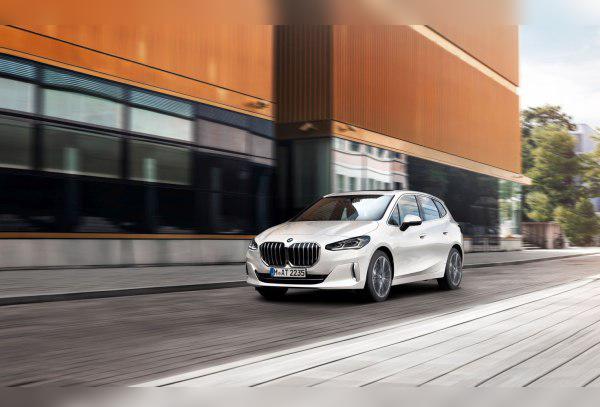

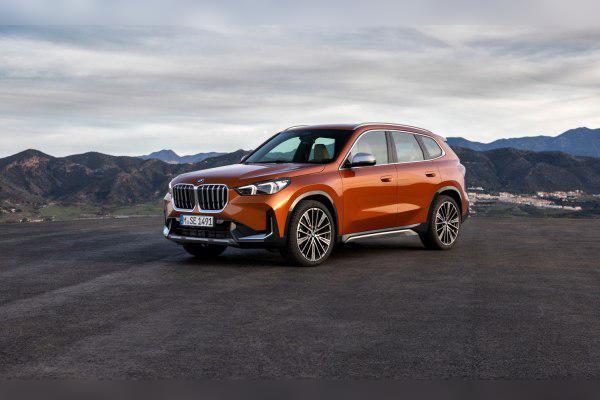

BMW B38 1.5 Turbo: Experiences, problems, fuel consumption and used car buying tips
Key points in short (TL;DR)
- Three-cylinder architecture: The engine has a specific sound and vibration, although BMW does an excellent job of suppressing it with engine mounts and a balance shaft.
- Timing chain drive: It uses a timing chain, which is mounted on the rear side (towards the gearbox) on most variants, making any replacement more complex and expensive.
- Sensitivity to cooling system issues: Coolant leaks (thermostat housing, water pump) are a common problem that must be dealt with immediately.
- Good performance for its displacement: With 136 hp and 220 Nm, the engine is lively in the city, but it “runs out of breath” in heavier bodies (X1, 4 Series) on the motorway.
- Direct injection: Requires high-quality fuel and is prone to carbon buildup on intake valves.
- Hybrid variants: In models such as the X1 30Le, this engine is subjected to specific stress due to frequent cold starts.
Contents
- Introduction and applications
- Technical specifications
- Reliability and maintenance
- Specific parts and costs
- Fuel consumption and performance
- Additional options and modifications
- Gearbox: Manual and automatic
- Buying used and conclusion
Introduction: Small engine in big cars
BMW’s engine with the code B38 is the entry ticket into the world of modern Bavarian technology. It is a modular engine (part of the B38/B48/B58 family) that shares the same 500 cc cylinder displacement with its bigger “brother”, the three‑liter inline‑six. Although purists often complain about three cylinders in a BMW, especially in models such as the 4 Series Gran Coupe or X1, this engine is a technological gem designed to meet strict emissions regulations while retaining decent driving dynamics.
This unit replaced older four‑cylinder engines (N13), bringing lower weight and quicker throttle response thanks to a compact turbocharger. It is installed in a wide range of vehicles, from the compact Active Tourer to hybrid SUV models where it works in tandem with an electric motor.
Technical specifications
| Characteristic | Data |
|---|---|
| Engine code | B38 (most commonly B38A15 or B38B15) |
| Displacement | 1499 cc (1.5 liters) |
| Configuration | R3 (Inline, 3 cylinders) |
| Power | 100 kW (136 hp) |
| Torque | 220 Nm at 1250–4300 rpm |
| Charging | Turbocharger (Twin‑Scroll technology) + intercooler |
| Injection | Direct injection (High Precision Injection) |
| Valve timing | Chain, Valvetronic, Double‑VANOS |
Reliability and maintenance
Timing belt or chain?
The B38 engine uses a timing chain to drive the valves. In theory this is a “lifetime” solution, but practice shows otherwise. On B38 engines, the chain is usually located on the rear side of the engine (closer to the cabin/gearbox) on longitudinally mounted engines, while on transverse ones (Active Tourer, X1) access is somewhat better, but still demanding.
Symptoms of problems: Rattling at cold start (metal‑on‑metal sound) that lasts longer than 3–5 seconds. Although the chains on the B series are more durable than on the notorious N series, you should expect inspection or replacement at around 150,000 to 200,000 km.
Most common failures
Although generally reliable, the B38 has several weak points:
- Crankshaft thrust bearing (early models): On the first series (2014–2015) there was excessive wear of the thrust bearing, which could lead to catastrophic engine failure. Most were fixed under warranty, but check the service history if you are buying an older model year.
- Coolant leaks: The oil filter and thermostat housings are made of plastic, which cracks over time due to thermal cycles. Symptoms are disappearing coolant and a burning smell under the hood.
- Engine mounts: Due to the nature of a 3‑cylinder engine, vibrations are higher. The mounts (especially the right hydraulic one) fail faster than on 4‑cylinder engines. You will feel strong vibrations in the cabin at idle.
- VANOS solenoids: They can get dirty or fail, leading to rough running and loss of power.
Major and minor service
A “major service” in the classic sense (belt replacement) does not exist; instead, you have a timing chain set replacement when it becomes noisy or stretched. It is recommended to have the chain preventively inspected after 150,000 km. Chain replacement is a costly operation (depends on the market, but expect a serious expense) because it often requires removing the engine or gearbox.
Oil: Quantity and consumption
The B38 engine takes approximately 4.25 to 5.25 liters of oil (depending on the exact oil pan and drivetrain variant, e.g. xDrive can have a different shape). Recommended grade: BMW Longlife‑17 FE+ (0W‑20) for newer models for better fuel economy, or BMW Longlife‑04 (5W‑30) for better protection under higher loads.
Oil consumption: A healthy B38 engine should not consume a significant amount of oil. Consumption up to 0.5 l per 10,000 km is acceptable. If it consumes more (e.g. 1 l per 3,000 km), the cause is usually valve stem seals or piston rings, which is a sign of a neglected engine.
Spark plugs and injectors (Hybrid/Petrol context)
Since this is a petrol engine (including in the hybrid variant): Spark plugs should be replaced every 50,000 to 60,000 km (or at every second oil service). On plug‑in hybrids (X1 30Le), this is especially important because the engine often runs under full load immediately after a cold start when the battery is depleted.
The injectors are piezo‑electric (direct injection). They are durable but sensitive to poor fuel quality. Symptoms of failure are “jerking” during acceleration and a check‑engine light.
Specific parts (Costs)
Dual‑mass flywheel
Yes. Regardless of whether it has a manual or automatic gearbox, this engine uses a vibration damping system. On manual gearboxes there is a classic dual‑mass flywheel (DMF). Since this is a three‑cylinder with uneven firing intervals, the flywheel is subjected to higher stress. Its lifespan is usually around 150,000–200,000 km. Replacement is expensive.
Turbocharger
The engine has a single turbocharger (Twin‑Scroll type on more powerful versions or a regular one on weaker ones, but the B38 usually uses Continental or Bosch systems). Service life is long (over 200,000 km) with regular oil changes. Symptoms of failure: Siren‑like whistling when accelerating, blue smoke from the exhaust or loss of power. Rebuilding is possible and the price ranges from moderate to high, depending on the market.
DPF, GPF and EGR
Petrol engines do not have a DPF, but newer models (usually from 2018 and Euro 6d standard) have an OPF/GPF (gasoline particulate filter). It rarely clogs because petrol exhaust temperatures are higher and clean it passively. The EGR valve is present, but not as problematic as on diesels. A bigger issue is carbon buildup on intake valves due to direct injection, which requires “walnut blasting” at higher mileage.
AdBlue
No. AdBlue is used exclusively for diesel engines (SCR catalysts). This is a petrol engine and does not have that system.
Fuel consumption and performance
Real‑world fuel consumption (City and highway)
Factory figures are often overly optimistic. Here is the reality for the 136 hp version:
- City driving: In heavier bodies (X1, 4 Series GC, Active Tourer), expect between 8.5 and 10.5 l/100 km. Although the engine is small, it has to be “revved” to move a mass of 1.5 tons. On hybrids (X1 30Le), fuel consumption depends on how often you charge the battery (it can be 0 l, but also 8 l when the battery is empty).
- Country roads: This is where the engine is most efficient, consuming around 5.5 to 6.5 l/100 km.
- Motorway (130 km/h): Consumption rises to around 7.0 to 8.0 l/100 km.
Is the engine “lazy”?
It depends on your expectations. Thanks to the turbo and 220 Nm of torque available from just 1250 rpm, the engine feels lively in city conditions (0–60 km/h). However, in models such as the BMW 4 Series Gran Coupe or X1, when overtaking at speeds above 100 km/h, you will feel the lack of displacement. You have to plan your overtakes. For the average driver it is perfectly adequate; for enthusiasts it is underpowered.
Motorway cruising
Thanks to long gear ratios (especially with the 8‑speed automatic), at 130 km/h the engine spins at around 2200 to 2500 rpm (depending on the gearbox). This allows for relatively quiet driving, but the three‑cylinder sound (a characteristic “thrum”) can be heard under hard acceleration.
Additional options and modifications
LPG conversion
Not recommended / Very expensive. Since the engine has direct fuel injection into the cylinders, a special (and expensive) sequential system is required that either injects liquid gas directly (LDI) or mixes petrol and gas (to cool the petrol injectors). Installation is very expensive, and the cost‑effectiveness is questionable unless you drive more than 30,000 km per year.
Chiptuning (Stage 1)
The B38 engine has solid potential for optimization because it is software‑limited in lower‑powered versions. Safe Stage 1: Power can be raised to about 165–170 hp, and torque to 260–280 Nm. This drastically changes the character of the car, especially when overtaking. However, keep in mind that higher torque additionally stresses the gearbox and turbo, so shorten oil change intervals to 8,000–10,000 km if you decide to go this route.
Gearbox: Manual and automatic
Types of gearboxes
Attention is needed here because the B38 is installed on two different platforms:
- UKL platform (Front‑wheel drive – X1 U11/F49, Active Tourer U06): Uses Aisin (Japanese) 6‑speed or 8‑speed automatic gearboxes, or in newer models a 7‑speed DCT (dual‑clutch, made by Getrag).
- CLAR platform (Rear‑wheel drive – 4 Series F36): Uses the excellent ZF 8HP 8‑speed automatic gearbox.
Most common issues
- Manual gearbox: Generally reliable. The most common expense is the clutch kit and dual‑mass flywheel. Failures of the gearbox mechanics themselves are rare.
- Automatic (Aisin/ZF): Very reliable. ZF gearboxes are known as the best on the market. Problems (jerking, hesitation) occur exclusively due to lack of maintenance.
- DCT (dual‑clutch): Can be jerky when moving off (stop‑and‑go traffic). Mechatronics failures are possible and very expensive to repair.
Gearbox maintenance
BMW often states that the gearbox oil is “lifetime”. This is not true if you care about long‑term mechanical health. Recommendation: Change the oil and filter in automatic gearboxes every 60,000 to 80,000 km. This is crucial for long service life, especially on ZF and DCT gearboxes. The cost of a gearbox service is mid‑range, but far lower than a gearbox rebuild.
Buying used and conclusion
Before buying a used BMW with the B38 engine, pay attention to the following:
- Cold start: Listen to the engine when it is completely cold. Chain rattling, rough idle or a smell of petrol are bad signs.
- Coolant leaks: Check the coolant level and look for white residue around the water pump and thermostat housing.
- Vibrations: If the whole cabin shakes at idle while the gearbox is in “D”, the engine mounts are probably worn out.
- Diagnostics: Checking “live” injector parameters and turbo pressure is mandatory.
Final conclusion
The BMW B38 engine (136 hp) is a rational choice, but not a sporty one. It is ideal for drivers who spend most of their time in city and suburban driving, and want a premium feel and low registration costs. In models such as the 2 Series Active Tourer or X1, it does its job quite adequately.
However, if you often travel on the motorway with a fully loaded car, or expect true “BMW performance” from a 4 Series Gran Coupe, this engine may disappoint you – in that case look for the B48 (2.0 engine). Maintenance is cheaper than on diesels (no DPF/AdBlue issues), but it still requires a premium‑class budget.
Was this content useful to you?
Your opinion helps us to improve the quality of the content.