B48B20B Engine
- Engine
- 1998 cm3
- Aspiration
- Twin-power turbo, Intercooler
- Fuel
- Petrol (Gasoline)
- Fuel injection system
- Direct injection
- Power
- 184 hp
- Torque
- 290 Nm
- Cylinders
- 4
- Valves
- 16, 4 per cylinder
- Cylinders position
- Inline
- Valvetrain
- VALVETRONIC
- Oil capacity
- 5.25 l
- Coolant
- 9.9 l
- Systems
- Particulate filter
# Vehicles powered by this engine
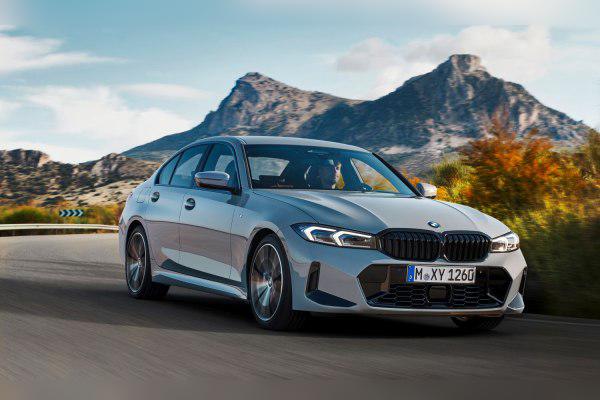
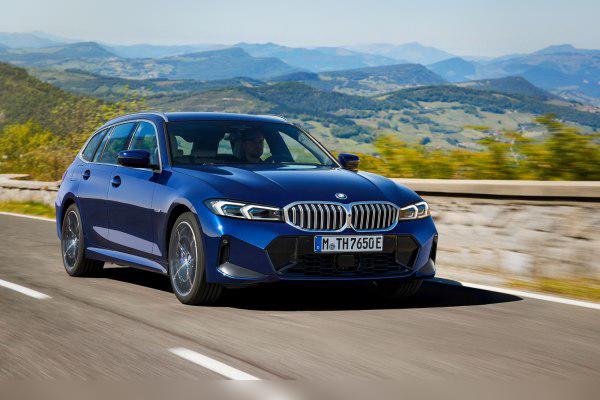
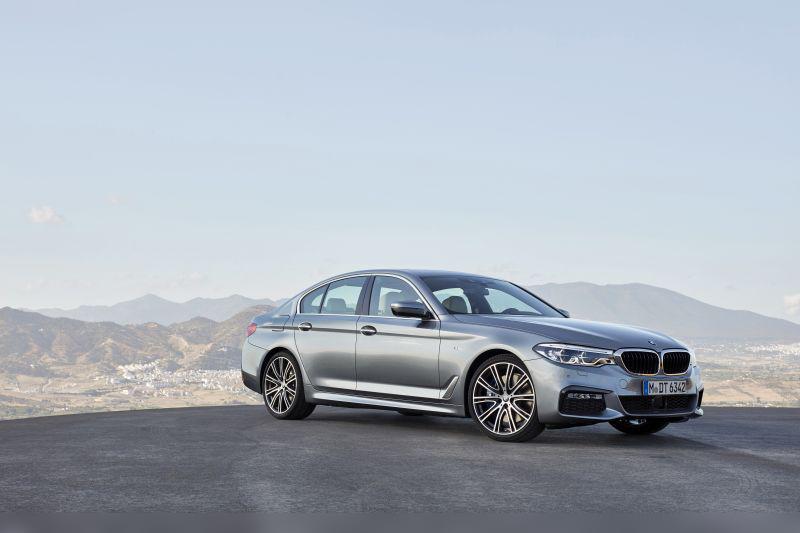
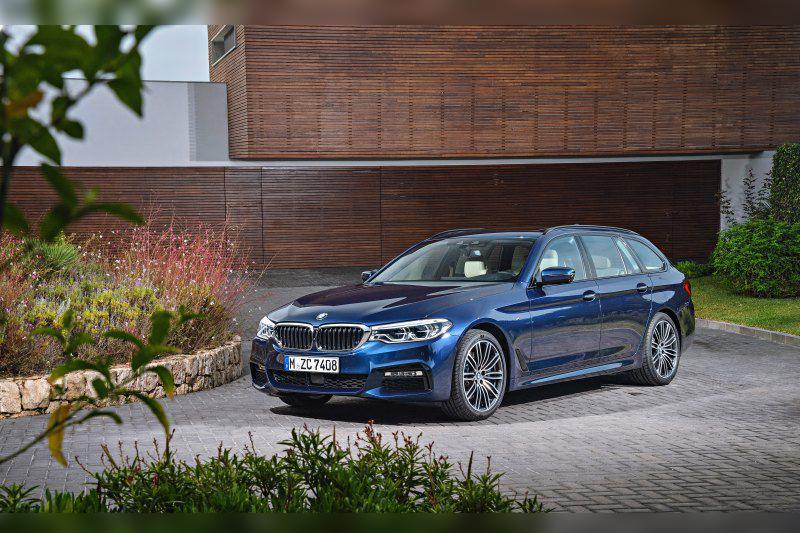
B48B20B (2.0 Turbo): Experiences, problems, fuel consumption and maintenance – Everything you need to know
Key points (TL;DR)
- Reliability: This is one of the most reliable modern BMW engines, far better than its predecessor (N20). Timing chain issues have been resolved.
- Biggest downside: Cooling system. Plastic hoses and housings are prone to cracking after 100,000 km, which leads to coolant loss.
- Potential: The B48B20B code often indicates a “detuned” version of a more powerful engine (lower compression), which makes it ideal for chiptuning.
- Gearbox: The ZF 8-speed automatic is a perfect match for this engine, but it requires oil changes even though BMW claims it is “lifetime fill”.
- Hybrids (330e): In hybrid models, this engine suffers fewer cold starts, but the system is more complex to maintain.
- Recommendation: An excellent purchase if you want a balance between performance and efficiency, provided you regularly check the coolant level.
Contents
- Introduction and Models
- Technical Specifications
- Reliability, Maintenance and Failures
- Specific Parts and Costs
- Fuel Consumption and Performance
- Additional Options (LPG and Tuning)
- Gearbox: Experiences and Maintenance
- Conclusion and Buying Tips
Introduction: The heart of the modern BMW lineup
The engine with the code B48B20B represents the “golden middle” in the Bavarian manufacturer’s range. It is a two-liter four-cylinder that powers a huge number of models, from the 3 Series (G20 LCI) to the 5 Series (G30/G31). In this specific 184 hp (135 kW) variant, it serves as the base for models with the 20i badge, as well as the petrol component in the popular 330e plug-in hybrids.
Contrary to the old belief that “a real BMW has 6 cylinders”, the B48 has proven that four cylinders can also provide adequate comfort and dynamics, with significantly lower registration and fuel costs. It is important to note that the TwinPower Turbo label does not mean the engine has two turbochargers, but a single turbo with two channels (Twin-Scroll), which ensures better throttle response.
Technical Specifications
| Characteristic | Data |
|---|---|
| Engine displacement | 1998 cc (2.0 liters) |
| Configuration | Inline 4-cylinder (R4) |
| Power | 135 kW / 184 hp |
| Torque | 290 Nm (at 1350–4250 rpm) |
| Injection type | Direct injection (High Precision Injection) |
| Turbocharger | Single (Twin-Scroll) |
| Timing drive | Chain (rear-mounted) |
| Engine code | B48B20B |
Reliability and Maintenance
Chain or belt?
This engine uses a timing chain. Unlike the notorious N47 diesel or early N20 petrol engines, the chain on B48 engines has proven to be very durable and is not prone to breaking or stretching at low mileage. However, it is located at the rear of the engine (towards the cabin/gearbox), which makes any eventual replacement complicated and expensive (it requires removing the engine or gearbox). Fortunately, with regular maintenance, the chain often lasts over 200,000 km without issues.
Most common failures and symptoms
Although mechanically (pistons, crankshaft) very robust, the peripherals can cause headaches:
- Coolant loss: This is problem number one. Plastic hoses, the thermostat housing and the expansion tank are made of plastic that becomes brittle over time due to heat cycles. Symptom: Puddles under the car, a sweet coolant smell in the cabin or a “Low Coolant” warning on the dashboard. Pay special attention to the vent hose that runs from the cylinder head to the expansion tank.
- Oil filter housing: Also plastic, it can crack or deform, which leads to oil leaks or, in the worst case, mixing of oil and coolant.
- VANOS solenoids: They can get dirty if the oil is changed infrequently, which leads to rough idle and loss of power.
Service intervals and oil
The manufacturer often recommends “Long Life” intervals of 30,000 km. As an editor and technical person, I advise you to ignore that.
- Minor service: Do it at a maximum of 10,000 to 15,000 km or once a year. This is crucial for the longevity of the chain and the VANOS system.
- Major service: There is no fixed interval for chain replacement. It is replaced only when it becomes noisy (rattling at cold start). Replace the auxiliary belt and tensioners at around 100,000–120,000 km.
- Oil quantity and type: The B48B20B takes approximately 5.25 liters of oil. Recommended grades are 0W-20 (for newer models for fuel economy) or 5W-30 (better protection, BMW Longlife-04 or LL-17 FE+ specification).
- Oil consumption: A healthy B48 engine should not consume a significant amount of oil between services. Consumption of 0.5 liters per 10,000 km is acceptable; anything above that requires inspection (it is often a leak rather than burning).
Spark plugs and injectors
On this petrol engine, spark plugs should be replaced every 50,000 to 60,000 km. If the car is “chipped” (Stage 1), this interval should be halved to 30,000 km because higher pressure and temperature wear the electrodes faster.
Injectors: Since this is a petrol engine with direct injection, the injectors are more sensitive to poor fuel quality than on older engines. In general, they are durable, but if they fail, it is an expensive repair. Symptoms include hesitation under acceleration and a “check engine” light.
Specific Parts and Costs
Dual-mass flywheel
Models equipped with the automatic Steptronic gearbox do not have a classic dual-mass flywheel like manual cars that is replaced as a wear item together with the clutch kit. Instead, they have a torque converter. There is, however, a vibration damper within the system, but it rarely fails before the gearbox itself. There is no clutch replacement cost here, but there is the cost of torque converter refurbishment if problems arise (shuddering, slipping), which is expensive (varies by market).
Turbocharger
The engine has a single turbocharger with Twin-Scroll technology. Its service life is usually very long (over 200,000 km) with regular oil changes. Its biggest enemy is shutting the engine off immediately after hard driving on the motorway. The electronic actuator (wastegate) can sometimes cause problems, but it can often be repaired without replacing the entire turbo.
Emissions systems (DPF/GPF, EGR, AdBlue)
- GPF (OPF): Yes, all the mentioned models (G20/G21/G30) for the European market have a GPF (Gasoline Particulate Filter). This is the petrol equivalent of a DPF. Fortunately, petrol engines reach higher exhaust temperatures, so this filter clogs much less readily than on diesels and rarely causes issues in city driving.
- EGR: They have an exhaust gas recirculation system, but the intake manifold and valves get dirty more slowly than on diesels. However, due to direct injection, carbon buildup on intake valves is possible after higher mileage, which is solved by walnut blasting.
- AdBlue: This engine DOES NOT have an AdBlue system. That is reserved exclusively for diesel engines.
Fuel Consumption and Performance
Real-world fuel consumption
The B48 is an extremely efficient unit.
- City driving (petrol): Expect between 8.5 and 10.5 l/100 km, depending on traffic and how heavy your right foot is. The 5 Series (G30) will use about one liter more than the 3 Series due to its weight.
- City driving (330e Hybrid): If you charge the battery, you can drive with 0 l/100 km of petrol (30–50 km of electric range). When the battery is depleted, the hybrid behaves like a regular petrol car and uses around 7–8 l/100 km in the city because it recuperates energy when braking.
- Open road: On country roads, consumption drops to 5.5–6.5 l/100 km.
Is the engine “lazy”?
With 184 hp and 290 Nm, this engine is anything but lazy. In the BMW 320i, 0–100 km/h acceleration is about 7.4 seconds. Thanks to a turbo that spools up early (from just 1350 rpm) and the excellent gearbox, the car feels lively in everyday driving. In the 330e hybrid, with the help of the electric motor (“XtraBoost”), you get a system output of 292 hp, which turns the car into a serious straight-line performance machine (0–100 in about 5.8 s), but keep in mind that the hybrid is 200–300 kg heavier, which you can feel in corners.
Motorway
This is the natural habitat of this engine. At 130 km/h in 8th gear, the engine spins at a low ~1800–2000 rpm. The cabin is quiet, and the engine has enough reserve for overtaking without the need for dramatic downshifts.
Additional Options and Modifications
LPG conversion
Not recommended. The engine has direct fuel injection into the cylinders. A classic sequential LPG system does not work well here (the injectors would overheat). Expensive liquid injection LPG systems (Direct Liquid Injection) that use the petrol injectors are required. The price of such a system is very high (often over 1000–1500 EUR), which significantly extends the payback period. You also lose boot space, which is already reduced on hybrids.
Chiptuning (Stage 1) – A hidden gem
This is where it gets interesting. The B48B20B code (if that is indeed the one in your car) suggests that the engine has lower compression (10.2:1) and pistons identical to the more powerful 330i. This means that this engine is software-detuned.
Potential: With a simple software “unlock” (Stage 1), this 184 hp engine can safely reach 260 hp and even up to 290 hp and over 400 Nm of torque! This is currently one of the best engines on the market for tuning.
Note: If you have the B48B20A version (high compression 11:1), the tuning potential is lower (max around 220–230 hp) due to the risk of knock. Always check the exact engine code via the VIN before tuning.
Gearbox: ZF 8HP
Type of gearbox
All models listed (Steptronic) use the legendary ZF 8HP 8-speed automatic gearbox. Manual gearboxes in these model years (G20 LCI, G30) are practically no longer offered with these engines, especially in combination with xDrive or the hybrid system.
Reliability and failures
This is probably the best automatic gearbox in the world at the moment. Failures are extremely rare. If they do occur, they are usually related to oil leaks from the gearbox pan (which is plastic and contains the filter).
Symptoms of problems (very rare): Harsh shifts, holding gears too long, jolts when coming to a stop.
Gearbox maintenance
BMW claims the gearbox oil is “lifetime fill”. The gearbox manufacturer (ZF) says otherwise: The gearbox oil should be changed every 80,000 to 100,000 km or every 8 years. The oil change is done exclusively by flushing or static replacement together with a new pan (because the filter is integrated into the pan) and new bolts. The cost of this service is in the “moderately expensive” category, but it is crucial for gearbox longevity.
Buying used and Conclusion
Before buying a used BMW with the B48 engine, pay attention to the following:
- Traces of white residue around coolant hoses and the expansion tank (sign of leaks).
- Cold start: The engine should run smoothly immediately after starting. Chain rattling for more than 2–3 seconds is a bad sign.
- Service history: Insist on proof of oil changes at intervals shorter than 20,000 km.
- Hybrid system (330e): Check whether the car charges normally and whether there are any faults in the high-voltage system.
Conclusion
The B48B20B engine in its 184 hp variant is an outstanding piece of engineering. It offers more than adequate performance for the average driver, diesel-like fuel consumption (especially in the 330e variant) and a level of refinement that a diesel cannot match. Its greatest strength lies in a robust base that can handle serious power increases. If you can live with the risk of minor coolant leaks, this is an engine that comes highly recommended.
Was this content useful to you?
Your opinion helps us to improve the quality of the content.