A20NFT Engine
- Engine
- 1998 cm3
- Aspiration
- Twin-scroll turbo, Intercooler
- Fuel
- Petrol (Gasoline)
- Fuel injection system
- Direct injection
- Power
- 250 hp @ 5300 rpm
- Torque
- 400 Nm
- Cylinders
- 4
- Valves
- 16, 4 per cylinder
- Cylinders position
- Inline
- Oil capacity
- 5.7 l
- Coolant
- 7.8 l
# Vehicles powered by this engine
In short (TL;DR)
- Powerful, but thirsty: With 250 hp and 400 Nm, this is a true cruiser, but expect high fuel consumption, especially in the city (12+ liters).
- Chain, not belt: The engine uses a timing chain. Although designed to last, chain stretch is not uncommon at higher mileage.
- 4x4 Drive (Haldex): Most examples come with 4x4 drive. Maintaining the Haldex clutch is critical – if the oil is not changed, the pump and differential fail (an expensive repair).
- Direct injection: A sophisticated system that does not tolerate poor fuel and makes LPG (autogas) installation an expensive investment.
- Heavy body: The Insignia is an extremely heavy car, so these 250 hp in practice feel more like 200 hp in a lighter vehicle.
- Transmissions: The Aisin automatic is comfortable but slower than modern gearboxes; the manual F40 is "indestructible" but rougher.
- Recommendation: An excellent choice for open roads and long journeys, a poor choice for stop‑and‑go city driving.
Contents
Opel Insignia 2.0 Turbo (A20NFT) 250 hp – Experiences, issues, fuel consumption and buying used
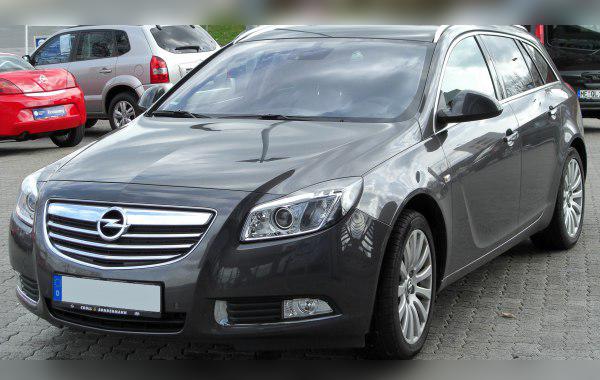
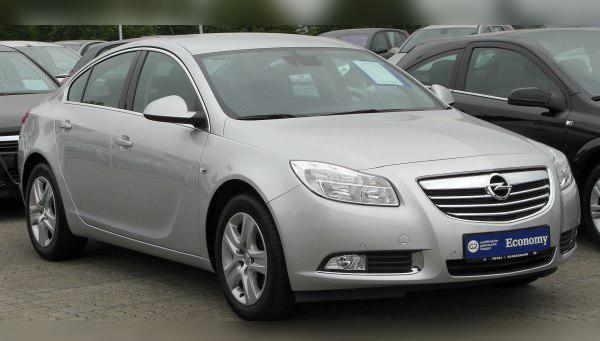
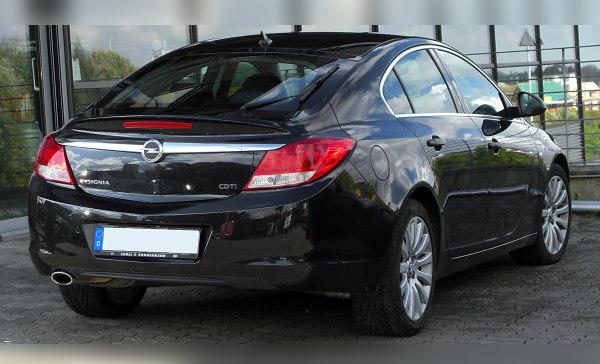
The engine designated A20NFT (often internally in the GM group also referred to as LHU) represents the peak of the standard petrol engine range in the first generation Opel Insignia (after the facelift). This is not the OPC version (which had a V6), but a civilized yet extremely potent unit aimed at drivers who want power in reserve at any moment and prefer petrol.
It is a two‑liter turbo engine with direct injection, which brought modernization to the Insignia compared to the older A20NHT units. It was installed in all body styles – sedan, hatchback and estate (Sports Tourer), often combined with all‑wheel drive. This is an engine for those who do not count every liter of fuel, but seek safety when overtaking and comfort on the motorway.
Technical Specifications
| Specification | Data |
|---|---|
| Engine displacement | 1998 ccm |
| Power | 184 kW (250 hp) at 5300 rpm |
| Torque | 400 Nm at 2500–4000 rpm |
| Engine code | A20NFT (GM Ecotec Gen II / LHU) |
| Injection type | Direct injection (SIDI - Spark Ignition Direct Injection) |
| Induction | Twin-scroll Turbo, Intercooler |
| Cylinder layout | Inline 4 cylinders, 16 valves |
Reliability and Maintenance
Timing system: Chain or belt?
The A20NFT engine uses a timing chain (actually two chains – one for the camshafts, the other for the balance shafts and water/oil pump). Although the idea is that the chain lasts for the "lifetime" of the engine, in practice this is not the case. On this engine, chain stretch can occur, usually after 150,000 km, although it heavily depends on oil change intervals.
Symptoms: Rattling on cold start (the so‑called "cold start rattle") that lasts a few seconds, or a "hissing" chain noise at idle when the engine is warm. If this is ignored, the chain can jump a tooth, which leads to catastrophic engine failure (pistons hitting valves). The recommendation is preventive replacement of the chain kit (including guides and tensioners) if you hear any suspicious noise or preventively at around 150,000 - 200,000 km.
Most common failures
Besides the chain, owners encounter several specific issues:
- Cracking of the exhaust manifold/turbo housing: Due to high temperatures, the turbo housing or exhaust manifold can crack, which manifests as exhaust smell in the cabin or loss of power.
- Variable valve timing solenoids: They can get dirty or fail, which leads to rough engine operation and the "Check Engine" light coming on.
- Coolant leaks: Plastic housings and junctions in the cooling system become brittle with age and crack.
Service intervals and oil
Major service: Since the engine has a chain, a classic "major service" at a fixed mileage (as with belts) does not exist. The auxiliary (serpentine) belt and related tensioners/rollers are replaced every 60,000 to 90,000 km. The chain is replaced as needed (noise/stretch).
Oil quantity and type: The A20NFT engine takes approximately 5.7 to 6.0 liters of oil (always check the dipstick). The recommended grade is 5W-30.
Very important: Always use oil that meets the Dexos 1 Gen 2 (or newer Dexos 1 Gen 3) standard. These standards were developed to prevent LSPI (Low Speed Pre‑Ignition – knock at low rpm) which can destroy pistons in turbo engines with direct injection.
Oil consumption
This engine can consume oil, but it should not be alarmingly high as with some older Ecotec engines. Consumption of up to 0.5 liters per 3,000 - 5,000 km is considered acceptable, especially if driven aggressively. If it uses a liter per 1,000 km, you have a problem (piston rings or valve stem seals, less often the turbo).
Spark plugs and injectors
Since this is a petrol engine with direct injection:
- Spark plugs: Replace every 40,000 to 60,000 km. Use only iridium/platinum plugs recommended for this engine. Worn plugs can cause coil packs to fail (which are expensive).
- Injectors: They last long but are sensitive to fuel quality. They can clog or start leaking, which leads to cylinders being washed with fuel and oil dilution. Periodic cleaning with additives is recommended.
Specific Parts (Costs)
Dual‑mass flywheel
YES. If you have a version with a manual gearbox, the engine is paired with a dual‑mass flywheel. Given the high torque (400 Nm), the flywheel is under heavy load.
Failure symptoms: Metal‑on‑metal knocking noise when switching the engine off, vibrations on the clutch pedal or judder when taking off. The cost of replacing the clutch kit with flywheel is high (falls into the "expensive" category).
Note: Models with an automatic transmission do not have a dual‑mass flywheel; they use a hydraulic torque converter instead, which is one less thing to worry about.
Turbocharger
The engine uses a single but advanced twin‑scroll turbocharger (usually BorgWarner). Twin‑scroll technology allows for a quicker throttle response (reduces "turbo lag"). Service life is generally good and often exceeds 200,000 km with regular oil changes and proper turbo cooldown after spirited driving. Rebuilding is possible and the price is in the mid‑range (depends on the market).
DPF, EGR, AdBlue?
- DPF: None. (This is a petrol engine produced before the widespread introduction of GPF/OPF filters).
- AdBlue: None.
- EGR: This engine uses variable valve timing (VVT) to achieve the effect of exhaust gas recirculation, so a classic problematic EGR valve as on diesels is not a primary source of trouble here, but the crankcase ventilation system (PCV) can cause issues (membrane failure).
Fuel Consumption and Performance
Is it "lazy"?
With 250 hp and 400 Nm, the Insignia with this engine is anything but lazy, but the sense of speed can be deceptive. The reason is the car’s huge weight (the Insignia A, especially the 4x4 estate, can weigh close to 1,800 kg or more). The engine "fights" this mass bravely. Acceleration is linear, there is no "kick in the back" like with old‑school turbo engines, but the speedometer climbs very quickly. Overtaking is safe and fast.
Fuel consumption (real‑world)
This is the painful part.
- City driving: Expect between 12 and 15 l/100 km. In heavy traffic and winter, with an automatic and 4x4, this can go up to 16 l.
- Country roads: It is possible to get it down to 7.5 – 8.5 l/100 km with careful driving.
- Motorway (130 km/h): Consumption is around 9 – 10 l/100 km.
Motorway cruising
The engine is extremely quiet and refined. At 130 km/h in top gear (6th), it spins at relatively low revs (around 2,500 - 2,800 rpm, depending on the gearbox), which contributes to comfort, but aerodynamics and weight dictate the fuel consumption.
Additional Options and Modifications
LPG installation (autogas)
Complicated and expensive. Since the A20NFT engine has direct injection (injectors spray directly into the cylinder), a regular sequential LPG system cannot be installed. You need a direct‑injection LPG system that works in one of two ways:
- Uses a mixture of LPG and petrol (e.g. 80% LPG, 20% petrol) to cool the petrol injectors.
- Injects liquid LPG directly through the petrol injectors (very expensive systems, but with no petrol consumption).
Due to the installation cost (which can exceed 1000–1500 EUR, depending on the market), cost‑effectiveness is questionable unless you cover very high mileage.
Chiptuning (Stage 1)
This engine responds very well to tuning. From the factory it is "detuned" for emissions and fuel consumption.
Stage 1 potential: It can safely be raised to 280 - 290 hp and around 450–480 Nm.
Warning: Increasing power puts additional stress on the automatic gearbox and Haldex clutch. If you remap it, halve your oil change intervals!
Transmission and Drivetrain
Types of gearboxes
- Manual (F40): 6‑speed. Known as a robust and durable gearbox. It is a bit "notchy" when shifting, but can handle high torque. Failures are rare, mostly related to the shift cables.
- Automatic (Aisin AF40-6): 6‑speed. A conventional automatic with a torque converter. It is not as quick as modern ZF or DSG gearboxes, sometimes "thinks" before shifting, but is very comfortable.
4x4 system issues (Haldex)
This is the most critical point on 4x4 models. The Insignia uses a Haldex clutch (usually 4th generation) on the rear differential.
The problem: Opel often does not officially specify an oil and filter change interval for the Haldex. Because of this, the oil turns to sludge, the filter clogs, and the pump burns out.
The solution: Always change the oil and filter in the Haldex clutch every 40,000 to 60,000 km. If you get a "Service Rear Axle" or "All Wheel Drive off" message on the dashboard, the pump has probably already failed. The repair is expensive.
Buying Used and Conclusion
What to check before buying?
- Cold start: Listen to the chain. Any rattling lasting longer than 2–3 seconds is a sign it needs replacing.
- 4x4 system: Try a hard launch on a slippery surface or grass. If the front wheels spin and the rear do not engage, the Haldex is not working (even if there is no warning on the dashboard).
- Oil leaks: Inspect the engine from underneath and around the turbo.
- Automatic gearbox: It must shift smoothly, without jolts, especially when warm and when shifting from D to R and back.
- Diagnostics: Check injector corrections and the fault history related to fuel pressure and the turbocharger.
Conclusion: Who is this engine for?
The Opel Insignia 2.0 Turbo (250 hp) is a car for drivers who cover medium and long distances, want the safety of 4x4 drive and power in reserve, and are prepared to pay the price in the form of higher fuel consumption and more expensive maintenance compared to a diesel.
If you are looking for a city car – skip it (too high consumption and too big). But if you need a comfortable, fast and quiet sedan or estate for travelling, which can keep up with premium competitors on the motorway for significantly less money to buy, this is an excellent choice, provided the previous owner regularly changed the oil in the engine, gearbox and Haldex.
Was this content useful to you?
Your opinion helps us to improve the quality of the content.