CGEA, CGFA Engine
- Engine
- 2995 cm3
- Aspiration
- Supercharger, Intercooler
- Fuel
- Petrol (Gasoline)
- Fuel injection system
- Direct injection
- Power
- 333 hp @ 5500 rpm
- Torque
- 440 Nm @ 3000 rpm
- Cylinders
- 6
- Valves
- 24, 4 per cylinder
- Cylinders position
- V-engine
- Max engine speed
- 6700 rpm
- Valvetrain
- DOHC
- Oil capacity
- 6.8 l
- Systems
- Start & Stop System
# Vehicles powered by this engine
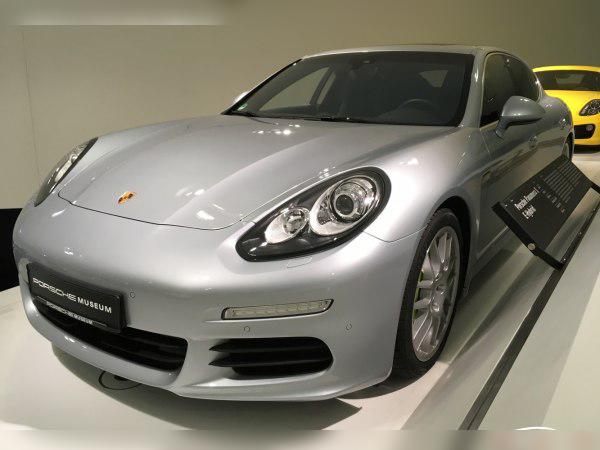
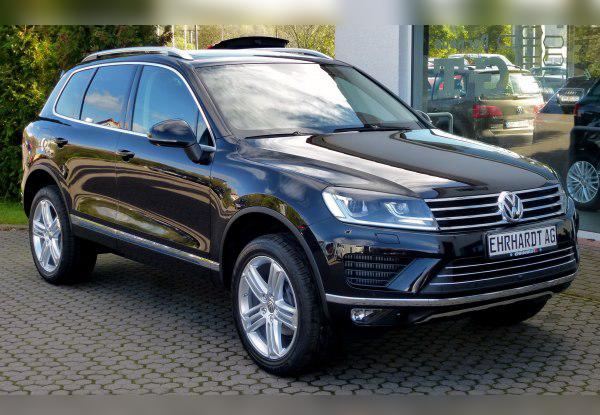
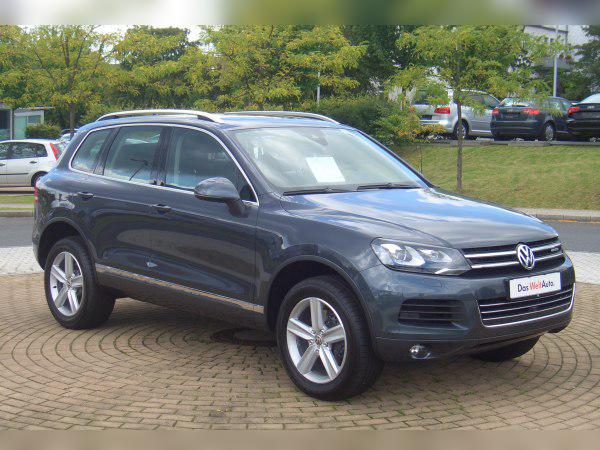
3.0 TFSI/TSI V6 Hybrid (CGEA, CGFA) – Experiences, issues, fuel consumption and maintenance
Key points in short (TL;DR)
- Powerful and flexible: The combination of a mechanical supercharger and an electric motor provides instant throttle response with no turbo lag.
- Timing chain: Uses a complex chain system mounted on the rear of the engine. Rattling on cold start is a warning sign and usually means an expensive repair.
- Oil consumption: These engines are known for “liking” to burn oil, most often due to issues with the PCV valve or piston oil rings.
- Hybrid complexity: The CGEA and CGFA codes are specific to hybrid models (Touareg, Panamera). Maintenance of the high-voltage system and battery is an additional cost.
- Sensitive cooling system: Coolant leaking into the cylinders through the supercharger intercoolers is a known and dangerous problem.
- Recommendation: A fantastic engine to drive, but it requires meticulous maintenance and a “deep pocket” for preventive servicing.
Contents
- Introduction and applications
- Technical specifications
- Reliability and maintenance
- Specific parts and costs
- Fuel consumption and performance
- Additional options and tuning
- Gearbox and drivetrain
- Buying used and conclusion
Introduction and applications
The engine we’re talking about today belongs to the EA837 family (Evo generation), but in its specific CGEA and CGFA variants. This is not a regular V6 petrol; it is the heart of hybrid powertrains in heavyweight vehicles such as the Porsche Panamera S E-Hybrid and the Volkswagen Touareg Hybrid. Unlike conventional turbo engines, this unit uses a Roots-type mechanical supercharger mounted between the cylinder banks (in the “V” layout).
Its role is to deliver V8-level performance with (theoretically) V6 fuel consumption, supported by electric power. This is an engine for drivers who want quiet operation and instant power, but it is important to understand that the complexity of the hybrid system combined with direct injection carries certain risks.
Technical specifications
| Specification | Data |
|---|---|
| Displacement | 2995 cc (3.0 L) |
| Configuration | V6, 90-degree angle |
| Power (ICE engine) | 245 kW (333 hp) |
| Torque (ICE engine) | 440 Nm |
| Engine codes | CGEA, CGFA |
| Injection system | FSI / TSI (Direct injection) |
| Induction | Mechanical supercharger (Eaton TVS Roots-type) + intercooler |
| Camshaft drive | Chain (4-chain system) |
Reliability and maintenance
Does this engine have a timing belt or a chain?
The engine uses a timing chain system. This is one of the most critical aspects of this engine. The chains are located at the rear of the engine (next to the gearbox), which makes any major work extremely complicated and expensive, as it often requires removing the engine from the car. Although the chains are designed to last the “lifetime” of the engine, in practice the hydraulic tensioners can wear out or lose pressure, which leads to the characteristic rattling noise on startup (the so‑called “cold start rattle”). If the rattling lasts longer than 1–2 seconds, it’s time for an urgent visit to a workshop.
What are the most common failures on this engine?
Besides the chain, owners most often encounter the following issues:
- PCV valve (crankcase ventilation/oil separator): When the membrane in this valve tears, the engine starts consuming oil, creates high vacuum in the crankcase (you can hear a whistling sound) and runs roughly. This is a common failure.
- Thermostat and water pump: The thermostat often sticks, and since it is located under the supercharger, replacement is not straightforward. The water pump is also a wear item.
- Intercooler leaks: The charge air coolers are integrated into the supercharger housing. They can start leaking, allowing coolant to enter directly into the cylinders, which can damage the catalytic converters or even cause hydrolock.
- Carbon buildup: As a direct-injection engine, the intake valves are not “washed” by fuel, so carbon deposits build up on the intake valves over time, reducing performance.
At what mileage is the major service due?
Since it has a chain, there is no classic “major service” at a fixed interval like with a timing belt. However, the serpentine belt that drives the supercharger and other accessories should be replaced at around 90,000 to 120,000 km. Chain condition is checked by listening and via diagnostics (camshaft adjustment values). Chain replacement is done as needed, usually between 200,000 and 300,000 km, but it can be required earlier if oil changes are neglected.
How many liters of oil does this engine take and which grade is recommended?
The engine takes approximately 6.5 to 6.8 liters of oil (always check the exact amount by VIN, as oil pans can differ on hybrid models). Only fully synthetic oil of grade 5W-30 or 5W-40 that meets VW 502 00 or VW 504 00 standards is recommended.
Does it consume oil between services?
Yes, oil consumption is common on 3.0 TFSI engines. The manufacturer considers up to 0.5 L per 1000 km “normal”, but in practice a healthy engine should not consume more than 0.5 L to 1 L per 10,000 km. If it uses a liter every 1000–2000 km, the PCV valve is likely faulty or the oil control rings are stuck.
At what mileage should the spark plugs be replaced?
Due to the supercharger and high combustion temperatures, the spark plugs are under heavy stress. It is recommended to replace them every 60,000 km (or 4 years), while on tuned (remapped) engines this interval should be shortened to 30,000–40,000 km. Use only iridium spark plugs specified for this engine (e.g. NGK).
Specific parts (costs)
Does this engine have a dual-mass flywheel?
The hybrid models (Touareg, Panamera) have a specific configuration. Between the engine and the gearbox there is an electric motor and a separating clutch. Although they do not have a classic dual-mass flywheel like manual diesels that fall apart and rattle, they do have a damper (vibration absorber) and a clutch mechanism that disconnects the ICE from the electric drive. Failures in this area are rare, but if they occur, repairs are very expensive (depends on the market) because the gearbox has to be removed and specific parts are needed.
What kind of injection system does it have and are the injectors problematic?
It uses high-pressure direct injection (FSI). The injectors are generally reliable but sensitive to poor fuel quality. Symptoms of a bad injector include fuel leaking into a cylinder (washing off the oil film, fuel smell in the engine oil) or rough idle. Replacing a full set of injectors is expensive.
Does this engine have a turbocharger?
No, this engine does not have a turbocharger. It uses an Eaton TVS mechanical supercharger. Its service life is very long, often lasting as long as the engine itself. It does not suffer from oil-cooling issues like a turbo (it does not use engine oil for cooling, but has its own sealed oil for rotor lubrication). It is recommended to change the oil in the supercharger itself at around 100,000 km, even though the manufacturer does not list this as a mandatory service.
Does it have a DPF filter or an EGR valve?
Since it is a petrol engine, it does not have a DPF filter. Instead, it has catalytic converters. Also, this engine usually does not have a conventional EGR valve prone to soot clogging like on diesels, because it uses variable valve timing for internal exhaust gas recirculation. However, it does have a secondary air injection system for heating up the catalytic converters, and its passages can clog with carbon deposits, which triggers the “Check Engine” light (expensive to clean).
Does this engine use AdBlue?
No, it does not have an AdBlue system. That is reserved exclusively for diesel engines.
Fuel consumption and performance
What is the real-world fuel consumption in city driving?
This is a hybrid, so consumption heavily depends on the battery state of charge.
If the battery is full: The first 20–30 km can be covered with 0 liters of petrol (Panamera plug‑in).
If the battery is empty (running as a conventional hybrid): Realistic city consumption is around 10 to 14 l/100 km. Don’t expect miracles; these vehicles weigh over 2.3 tons.
Is this engine “lazy” for the weight of the car?
Absolutely not. With 333 hp from the petrol engine and additional torque from the electric motor (total system output often exceeds 380 or 416 hp), these cars are extremely agile. The electric motor fills in any “gap” in throttle response, and the supercharger pulls linearly from low revs. Overtaking is effortless.
How does the engine perform on the highway?
This is the engine’s natural habitat. At 130 km/h the engine runs at low revs (thanks to the 8‑speed gearbox), usually around 2,000–2,200 rpm. Cabin noise is very low, and fuel consumption on the open road is around 9–11 l/100 km, depending on driving style.
Additional options and modifications
Is this engine suitable for LPG conversion?
Not recommended. Although it is technically possible to install an LPG system on direct-injection engines (which still use some petrol for injector cooling), on hybrid models this is an engineering nightmare. Frequent starting and stopping of the petrol engine while driving, complex electronics and lack of space (due to the batteries) make LPG conversion uneconomical and risky for system reliability.
How far can this engine be safely tuned (Stage 1)?
The 3.0 TFSI is one of the best engines for tuning. With just a remap (Stage 1) it easily reaches 380–400 hp. The real gains come from changing the supercharger pulley (smaller pulley = higher supercharger speed) combined with software (Stage 2), where power can exceed 450 hp. The engine itself can mechanically handle this increase well, but the gearbox and hybrid system on these specific models can be the limiting factor, so proceed with caution.
Gearbox
Which gearboxes are used?
With CGEA/CGFA engines in hybrid variants, only an 8‑speed automatic gearbox (Tiptronic) is used.
In the VW Touareg this is an Aisin automatic adapted for hybrid use.
In the Porsche Panamera S E‑Hybrid a Tiptronic S (8‑speed) is used, and not the PDK gearbox, because at that time the conventional PDK could not be paired with the hybrid module in the same way.
What are the most common automatic gearbox issues?
These gearboxes (Aisin/ZF origin) are very robust. The most common problems are not mechanical gear failures, but issues with the mechatronic electronics or overheating of the oil if the car is driven hard. Symptoms include harsh shifts between gears or delayed engagement when setting off.
Clutch replacement costs?
Since this is an automatic with a torque converter (or a hybrid module that acts as a converter), there is no classic clutch disc replacement. However, there is a clutch that disconnects the engine from the electric drive. If it fails, the repair is very expensive because the entire module is replaced. Fortunately, this rarely happens before very high mileage.
At what mileage should the gearbox be serviced?
Manufacturers often claim the oil is “lifetime fill”. This is not true. For long gearbox life, change the oil and filter every 60,000 to 80,000 km. On hybrids this is even more important due to the high torque the gearbox has to handle.
Buying used and conclusion
Before buying a car with a CGEA or CGFA engine, make sure to check:
- Cold start: The engine must be completely cold. Listen for chain rattling during the first 3 seconds.
- Coolant level: If it is low and there are no visible leaks, suspect the intercooler inside the supercharger.
- Hybrid system: A full diagnostic check at an authorized service center is mandatory to assess the condition (“health”) of the high-voltage battery. Battery replacement costs several thousand euros.
- Vibrations: Check the engine mounts (active mounts), as they are expensive to replace.
Conclusion: This is an engine for enthusiasts who want the best of both worlds – performance and modern technology. It is intended for people who have a budget not only for fuel, but also for proper maintenance. If you are looking for a “just drive and forget” car with minimal running costs, this engine (and these cars) are not for you. But if you find a car with a well-documented service history, you will enjoy every kilometer.
Was this content useful to you?
Your opinion helps us to improve the quality of the content.