DTRD Engine
- Engine
- 1968 cm3
- Aspiration
- Turbocharger, Intercooler
- Fuel
- Diesel
- Fuel injection system
- Diesel Commonrail
- Power
- 115 hp @ 3250 rpm
- Torque
- 300 Nm
- Cylinders
- 4
- Valves
- 16, 4 per cylinder
- Cylinders position
- Inline
- Valvetrain
- DOHC
- Oil capacity
- 5.5 l
- Coolant
- 8 l
- Systems
- Particulate filter
# Vehicles powered by this engine
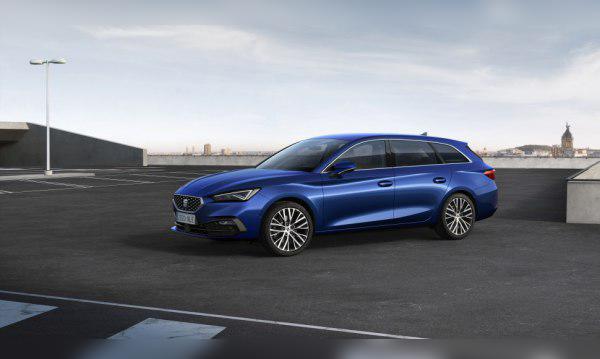
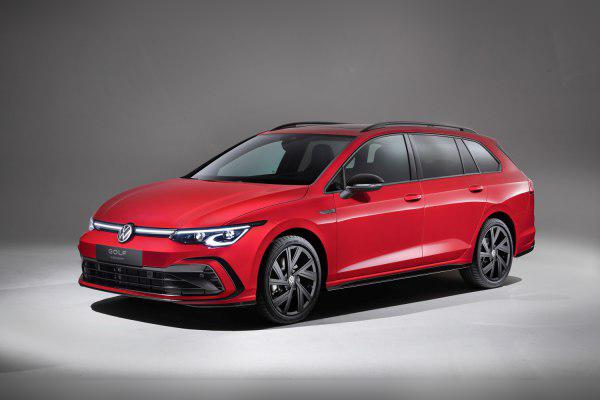
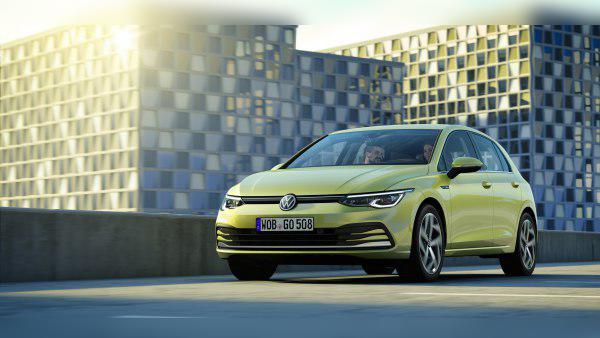
VW / Seat 2.0 TDI (DTRD) 115 HP – Experiences, problems, fuel consumption and used car buying guide
The engine with the code DTRD represents a kind of turning point in the Volkswagen Group’s lineup. It is a 2.0 TDI unit from the EA288 Evo family, which came as a direct replacement for the famous but often criticized 1.6 TDI. Although on paper it has “only” 115 horsepower, this engine brings drastic improvements compared to its smaller-displacement predecessor. It is installed in the latest generations (Golf 8, Leon IV) and features “Twin Dosing” exhaust gas aftertreatment technology.
This is not a racing engine, but it is probably the most rational choice for the average European driver who covers a lot of mileage. Below you can read a detailed analysis from a mechanic’s point of view.
Key points in brief (TL;DR)
- This is a 2.0, not a 1.6 engine: Even though it has 115 HP, the base is a robust 2.0 block, which guarantees longevity because the engine is not “stressed”.
- Torque of 300 Nm: This is the key advantage; it pulls much better than the power figure suggests.
- Exceptional efficiency: On the open road it sips fuel.
- Twin Dosing AdBlue: The system with two SCR catalysts is excellent for emissions, but potentially expensive to repair once out of warranty.
- Timing belt: It uses a belt, not a chain, which makes regular maintenance cheaper, but requires discipline.
- Recommendation: Ideal for fleet vehicles and family users. Avoid examples with a suspicious service history of the AdBlue system.
Contents
- Technical specifications
- Reliability and maintenance
- Specific parts (Costs)
- Fuel consumption and performance
- Additional options and modifications
- Gearbox
- Buying used and conclusion
Technical specifications
| Parameter | Value |
|---|---|
| Engine code | DTRD (EA288 Evo series) |
| Displacement | 1968 cc |
| Power | 85 kW / 115 HP |
| Torque | 300 Nm at 1600–2500 rpm |
| Fuel type | Diesel |
| Injection | Common Rail (Solenoid injectors) |
| Charging | Variable geometry turbocharger (VGT) + intercooler |
| Emissions | Euro 6d (Twin Dosing SCR) |
Reliability and maintenance
Does this engine have a timing belt or a chain?
The DTRD engine uses a timing belt running in an oil bath (in some EA288 variants) or a conventional dry timing belt, depending on the exact sub-variant and model year, but in the case of DTRD you most often find a conventional timing belt with a long replacement interval. This is good news for owners because the system is quieter and generally cheaper to replace than the complicated chains that plagued older VW engines. However, it absolutely must be replaced on time because a snapped belt leads to catastrophic engine damage.
What are the most common failures on this engine?
Since this is a “de-stressed” version of the 2.0 engine, mechanical failures of the block and pistons themselves are extremely rare. Problems are mostly peripheral:
- Electronics and sensors: Modern VW models (especially the Golf 8) suffer from software glitches that can trigger engine warning lights without any real mechanical fault.
- Water pump: A known weak point of TDI engines. It is often electronically controlled (it has a “cup” that moves over the impeller) and can seize, which leads to overheating.
- AdBlue system: Heaters in the AdBlue tank or the urea dosing injectors are prone to crystallization and failure.
- Oil leaks: Sometimes occur at the crankshaft seal, but less often than before.
At what mileage should the major service be done?
The manufacturer often states optimistic intervals of 210,000 km. However, any experienced mechanic will tell you that this is too long, especially if the car is driven in city stop-and-go conditions. Practical recommendation is to replace the timing belt kit and water pump at 150,000 to 160,000 km or every 5 to 7 years, whichever comes first.
How many liters of oil does this engine take and which grade is recommended?
The sump holds approximately 5.5 liters of oil. DTRD engines are optimized for very low-viscosity oils in order to reduce friction and fuel consumption. The factory recommendation is usually the VW 508.00 / 509.00 standard, which implies a 0W-20 grade. Some owners switch to 0W-30 (VW 504.00/507.00) in warmer climates, but do this only after consulting a specialist workshop so as not to jeopardize the warranty or the DPF.
Does it consume oil between services?
All modern engines running on low-viscosity oil consume a certain amount. For DTRD engines, consumption of 0.5 to 0.8 liters per 10,000 km is considered completely normal. If you often drive on the motorway at high revs, consumption can be higher. It only becomes alarming if the engine needs a liter of oil every 2–3 thousand kilometers, which may indicate problems with piston rings or the turbocharger.
How long do the injectors last and how reliable are they?
The DTRD uses a modern Common Rail system with solenoid (electromagnetic) injectors. They have proven to be significantly more robust and cheaper to refurbish than the old piezoelectric injectors (as in some 1.6 TDI models). With good-quality fuel and regular fuel filter changes, the injectors easily last 200,000–250,000 km.
Specific parts (Costs)
Does the engine have a dual-mass flywheel?
Yes, it does. Although it has only 115 HP, the torque of 300 Nm is high enough that a solid flywheel would transmit too much vibration to the body and gearbox. The dual-mass flywheel here serves comfort and gearbox protection. Its lifespan depends on driving style – hard acceleration from low revs kills it the fastest.
Does the engine have a turbocharger and what is its lifespan?
The engine has a single turbocharger with variable geometry (VGT). This is not a bi-turbo system, which is good for maintenance costs. The turbo is reliable, but sensitive to switching the engine off immediately after hard motorway driving. If it is properly cooled down and the oil is changed regularly, the turbo lasts as long as the engine.
Does it have a DPF filter or an EGR valve that often gets clogged?
It has both. The EGR valve on EA288 Evo engines is split into a low-pressure and a high-pressure system. The DPF filter is positioned very close to the engine for faster warm-up. Clogging is less frequent than on older models, provided the car is driven on the open road at least once a week. Short urban trips are the death of this system.
Does this engine have AdBlue, does it cause problems and how is it maintained?
Yes, it uses an advanced Twin Dosing system (double AdBlue injection). This drastically reduces NOx emissions but makes the system more complex.
Problems: Urea crystallization in the tank or on the injector is a common issue if the car sits for long periods or is driven rarely.
Maintenance: Use only high-quality AdBlue and consider anti-crystallization additives that are poured into the AdBlue tank (available at fuel stations). Repairs are expensive (depending on the market, sensors and pumps cost hundreds of euros).
Fuel consumption and performance
What is the real fuel consumption in city driving?
In heavy city traffic, expect 6.0 to 7.0 l/100 km. Thanks to the start-stop system and efficient thermal management, it reaches operating temperature quickly, which helps in winter. This is an excellent result for an estate car weighing around 1.5 tons.
Is this engine “lazy” for the body weight it is fitted to?
Absolutely not. Don’t let the 115 HP figure fool you. The key is the torque of 300 Nm (which is as much as engines with 140–150 HP used to have). The car pulls convincingly from as low as 1600 rpm. In everyday driving, the feeling of power is identical to stronger versions; the difference is only noticeable at speeds above 160 km/h, where the engine starts to run out of breath.
How does the engine behave on the motorway and at what revs does it cruise at 130 km/h?
This is the engine’s natural habitat. In 6th gear (or 7th with DSG), at 130 km/h the engine spins at a comfortable 2000 to 2100 rpm. It is extremely quiet and consumes around 4.5 to 5.0 l/100 km. Overtaking is safe, but requires a downshift if the car is fully loaded.
Additional options and modifications
How far can this engine be safely “chipped” (Stage 1)?
The DTRD is a “software-detuned” engine. Hardware-wise it is very similar, and in some aspects identical, to the 150 HP version. This makes it an ideal candidate for a remap.
Stage 1: It can safely be raised to 150–160 HP and about 360–380 Nm of torque.
Risk: Although the engine can handle the power, check whether your clutch (if you have a manual gearbox) can withstand the extra torque. With DSG gearboxes, a gearbox remap is also recommended.
Gearbox
Which manual and automatic gearboxes are fitted to this engine?
- Manual: 6-speed gearbox (often code MQ281). Precise and robust.
- Automatic: 7-speed DSG dual-clutch gearbox. Due to the 300 Nm torque, the “infamous” dry DQ200 (limited to 250 Nm) is usually not fitted here, but stronger variants (such as the DQ381 with wet clutch). However, always check by VIN, as VW uses various combinations for different markets.
What are the most common failures of the manual and automatic gearboxes?
Manual: Almost indestructible. Problems are related to the clutch kit and dual-mass flywheel.
Automatic (DSG): The most common issues are the mechatronics unit (the gearbox “brain”) and clutch pack wear if the car is driven aggressively in the city. Symptoms include juddering when moving off or a delay when engaging reverse.
Does this model have a dual-mass flywheel and how much does clutch replacement cost?
As mentioned, it does have a dual-mass flywheel. Replacing the complete kit (clutch + flywheel + release bearing) is an expensive job. Prices vary (depending on the market), but expect this to be one of the more costly regular expenses around 200,000 km.
At what mileage should the gearbox be serviced and the oil changed?
- Manual: The manufacturer says “lifetime fill”, but in practice you should change the oil every 100,000 km. It’s cheap and protects the bearings.
- DSG (wet clutch): It is MANDATORY to change the oil and filter every 60,000 to 120,000 km (depending on the exact gearbox model). If you skip the service, you risk a failure costing several thousand euros.
Buying used and conclusion
Before buying a used car with the DTRD engine, pay attention to the following:
- Cold start: The engine must start immediately and run smoothly without metallic noises (a sign of a bad flywheel or injectors).
- Coolant: Check whether the expansion tank is clean. Dirty coolant may indicate a problem with the EGR cooler or the head gasket (less common).
- Diagnostics: Always check DPF saturation and the condition of the AdBlue system. These are the most expensive emissions components.
Conclusion
The 2.0 TDI DTRD (115 HP) engine is a “golden mean”. You get the reliability and longevity of a two-liter block, combined with the low registration and fuel costs typical of smaller engines. Who is it for? Drivers who cover more than 20,000 km per year, families who need a safe estate car for trips, and companies. It is not suitable for those who drive only short commutes from home to work (because of the DPF). If you are choosing between the old 1.6 TDI and this new “detuned” 2.0 TDI – always choose the 2.0 TDI.
Was this content useful to you?
Your opinion helps us to improve the quality of the content.