DNUC Engine
- Engine
- 1984 cm3
- Aspiration
- Turbocharger, Intercooler
- Fuel
- Petrol (Gasoline)
- Fuel injection system
- Direct injection
- Power
- 290 hp
- Torque
- 380 Nm
- Cylinders
- 4
- Valves
- 16, 4 per cylinder
- Cylinders position
- Inline
- Oil capacity
- 5.7 l
- Coolant
- 10 l
- Systems
- Particulate filter
# Vehicles powered by this engine

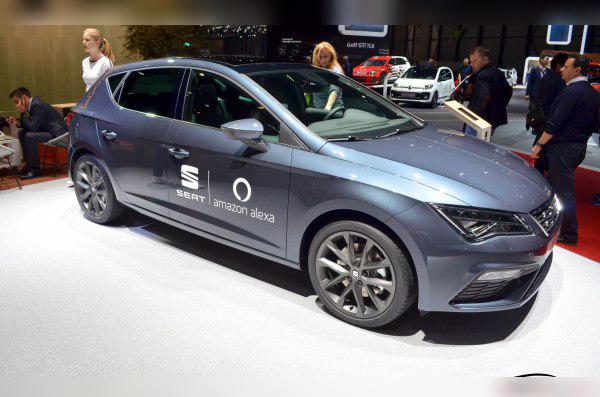
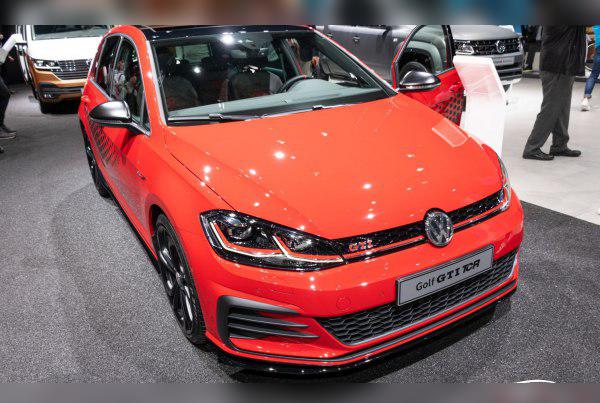
2.0 TSI (DNUC) 290 HP – Experiences, issues, fuel consumption and used-car buying tips
If you’re looking for the ultimate hot hatch from the VAG group, but you’re not ready to pay the premium for an Audi S3 or an all-wheel-drive Golf R, you’re probably looking at a Seat Leon Cupra or a Golf GTI TCR. The heart of these machines is the DNUC engine. It’s an evolution of the EA888 Gen 3 unit, offering serious performance but also some specific maintenance requirements.
Key points in short (TL;DR)
- Performance: An excellent engine with huge potential. 290 HP stock, but can easily be woken up to over 340 HP.
- Timing drive: Uses a chain that is far more reliable than on earlier generations, but should be checked after 150,000 km.
- Thermostat and water pump: The weakest point of this engine. The thermostat housing is prone to leaking (an expensive repair).
- GPF filter: The DNUC code indicates the presence of a gasoline particulate filter (OPF/GPF). That means a quieter exhaust note, but also one more component in the exhaust system.
- Gearbox: Comes exclusively with a DSG gearbox (usually DQ381 – 7-speed), which is robust but requires regular oil changes.
- Fuel consumption: Can be surprisingly economical on the highway, but in the city it “drinks” fuel.
- Recommendation: An excellent choice for enthusiasts who understand regular maintenance and don’t skimp on high-quality oil.
Contents
- Technical specifications
- Reliability and maintenance
- Specific parts and costs
- Fuel consumption and performance
- Additional options and tuning
- Gearbox (DSG)
- Buying used and conclusion
Technical specifications
| Parameter | Value |
| Engine displacement | 1984 cc (2.0 L) |
| Power | 213 kW (290 HP) |
| Torque | 380 Nm at 1950–5300 rpm |
| Engine code | DNUC (EA888 Gen 3b) |
| Injection type | Combined (Direct + MPI) or Direct only (depends on GPF implementation) |
| Forced induction | Turbocharger (IS38) + intercooler |
| Emissions standard | Euro 6d-TEMP (with GPF filter) |
Reliability and maintenance
Timing belt or chain?
The DNUC engine uses a timing chain. Unlike the notorious earlier generations of TSI engines (EA888 Gen 2), here the tensioning system and the chain itself have been significantly improved. There is no fixed replacement interval, but in practice the chain is reliable up to around 150,000–200,000 km. Still, it’s recommended to check chain stretch via diagnostics (cam/crank phase angle) or visually through the inspection port at every service after 100,000 km.
Most common issues
Although this is one of the best 2.0 turbo engines on the market, it’s not without flaws:
- Thermostat housing and water pump: This is the Achilles’ heel. The housing is plastic and exposed to large thermal cycles. Over time it cracks and coolant starts leaking. Symptoms include a dropping coolant level or a “sweet” smell under the hood. The repair is not cheap (depends on the market).
- PCV valve (oil separator): If the membrane tears, the engine may start consuming oil, run roughly, or you may hear a whistling noise. This is a wear item.
- Oil leaks: Often appear on the timing cover or oil pan, but these are solvable problems.
Service intervals and oil
The “major service” in the sense of chain replacement is done as needed, usually when you hear rattling on cold start. The auxiliary (serpentine) belt and tensioners should be replaced at around 100,000–120,000 km.
Oil: The engine takes approximately 5.7 liters of oil. For DNUC (because of the GPF filter), the factory often recommends 0W-20 (VW 508.00 specification) for emissions reasons. However, many enthusiasts and mechanics switch to a high-quality 5W-30 (VW 504.00) for better protection at high temperatures, especially if the car is driven hard. Check what’s written on the sticker under the hood, but never use oil that is not “Low SAPS” because of the GPF filter.
Oil consumption
This engine can consume some oil, but it’s nowhere near as dramatic as on older Audis. Consumption of 0.5 liters per 5,000 km is considered acceptable if the car is driven aggressively. If it uses a liter per 1,000 km, you have a problem with piston rings or the turbo.
Spark plugs
On a powerful petrol engine like this, spark plugs are crucial. Replace them at a maximum of 60,000 km. If the car is tuned (Stage 1), shorten the interval to 30,000 km and use “colder” plugs (e.g. NGK Racing series).
Specific parts (costs)
Dual-mass flywheel
Yes, this engine combined with the DSG gearbox does have a dual-mass flywheel. It protects the gearbox from engine vibrations. Its lifespan depends on driving style, but typically ranges between 150,000 and 200,000 km. Symptoms of failure include metallic rattling in neutral that disappears when you rev the engine or engage a gear. Replacement is expensive (very costly).
Fuel injection system and turbo
The DNUC uses an advanced direct injection system. The injectors are generally reliable but very sensitive to poor fuel quality. A single injector is expensive (costly).
The engine uses a single but large turbocharger – the well-known IHI IS38. This is a bigger turbo than in the regular GTI. It’s known for delivering huge power at higher revs. Lifespan is long if the engine is not shut off immediately after hard driving (turbo cooldown). Early IS38 units had issues with shaft failure, but on the DNUC (2018+) revised, more durable versions were installed.
GPF filter and EGR
Since the DNUC is a more modern engine (Euro 6d-TEMP), it has a GPF (Gasoline Particulate Filter) – the petrol equivalent of a DPF on diesels. The good news is that a GPF regenerates much more easily than a DPF because petrol exhaust gases are hotter. Clogging is rare unless the wrong oil is used. There is an EGR valve, but it’s nowhere near as problematic as on diesels.
AdBlue
No, this engine does not have an AdBlue system. AdBlue is used exclusively on diesel engines to reduce NOx emissions. Petrol engines handle this with different types of catalytic converters.
Fuel consumption and performance
City driving: There’s no sugar-coating it – 290 horses need to be fed. In heavy traffic, expect 11 to 14 l/100 km. If you’re very gentle with the throttle (which is hard in a Cupra/TCR), you might get it down to 10 l/100 km, but that’s optimistic.
Open road: This is where it pleasantly surprises. On country roads at 80–90 km/h, consumption drops to 6.5–7.5 l/100 km. On the motorway at 130 km/h, the engine spins at about 2,500 rpm (in 7th gear) and uses around 8–9 l/100 km.
Is it lazy? Absolutely not. With 380 Nm of torque available from low revs, the car really “rips” the tarmac. The weight of a Leon or Golf (around 1,400 kg) is nothing for this engine. In-gear acceleration is brutal.
Additional options and modifications
LPG (autogas) conversion
Technically possible, but economically unviable and risky. Due to direct injection, you need an expensive liquid LPG injection system or a system that still uses 20–30% petrol to cool the injectors. Considering the GPF filter and the complexity of the electronics, the recommendation is to avoid LPG on this engine.
Chip tuning (Stage 1)
This is a favorite pastime of EA888 owners. The DNUC engine is “detuned” from the factory. With a software-only change (Stage 1), without mechanical modifications, power can safely be raised to 340–360 HP and torque to over 450 Nm. The engine can handle this increase without issues, provided it has been regularly maintained.
Gearbox
With the DNUC engine (in the mentioned Leon Cupra and Golf GTI TCR models) you most commonly get the DQ381 DSG gearbox, a 7-speed dual-clutch (wet clutch) unit. This is an improved version of the older DQ250.
Gearbox failures and maintenance
- Maintenance: Oil in the DQ381 gearbox should be changed every 60,000 km to 120,000 km (depending on manufacturer recommendation and oil type, but for sporty models the strict recommendation is every 60,000 km). This is not a cheap service, but it is mandatory.
- Failures: The mechatronics unit is the most expensive component that can fail. Symptoms include harsh gear changes, delay when setting off, or error messages on the dashboard.
- Clutches: The clutch packs wear out. If the car has been driven aggressively (launch control), they can fail even before 100,000 km. A clutch pack is expensive (depends on the market).
Buying used and conclusion
Before buying a car with the DNUC engine, pay attention to the following:
- Cold start: The engine should settle into a smooth idle after a few seconds. If you hear loud chain rattling for more than 2–3 seconds, walk away or negotiate the price down (chain replacement likely needed).
- Coolant leaks: Look under the intake manifold for traces of dried pink/red coolant (thermostat housing leak).
- DSG service history: If the gearbox oil hasn’t been changed on time, it’s a ticking time bomb.
- Exhaust condition: Even with a GPF, the exhaust should be relatively clean. Excessive black soot may indicate poor combustion or oil consumption.
Conclusion: The DNUC 2.0 TSI is a fantastic engine. It delivers the performance of a supercar from 15 years ago in a family hatchback package. Reliability is high for this power level, provided you accept that the water pump may start leaking and that regular maintenance (oil, spark plugs, DSG service) is not cheap. It’s ideal for those who want excitement behind the wheel, not just transport from point A to point B.
Was this content useful to you?
Your opinion helps us to improve the quality of the content.