EA888 / CJXE Engine
- Engine
- 1984 cm3
- Aspiration
- Turbocharger, Intercooler
- Fuel
- Petrol (Gasoline)
- Fuel injection system
- Direct injection and Multi-port manifold injection
- Power
- 265 hp
- Torque
- 350 Nm
- Cylinders
- 4
- Valves
- 16, 4 per cylinder
- Cylinders position
- Inline
- Valvetrain
- DOHC
- Oil capacity
- 5.7 l
- Systems
- Start & Stop System
# Vehicles powered by this engine
2.0 TSI EA888 Gen 3 (CJXE) 265 HP: Ownership, Issues, Fuel Consumption and Used-Buying Guide
Key points (TL;DR)
- Performance: This is a serious hot hatch engine. The 265 HP version is mechanically almost identical to the stronger variants (280/290/300 HP), which means it has huge potential.
- Thermostat housing and water pump: The Achilles' heel of this engine. The housing is plastic and coolant leaks are a matter of “when”, not “if”.
- Timing chain: Although this is the third generation (Gen 3) where chain issues are drastically reduced compared to older TSI engines, it still needs to be checked, especially after 100,000 km.
- Oil consumption: Much better situation than with Gen 2 engines. If it consumes oil, it’s often the PCV valve or turbo, and less often the piston rings.
- Gearbox: The DSG is fantastic but requires regular maintenance. The manual gearbox has a clutch that is sensitive at this power level.
- Recommendation: One of the best 2.0 turbo petrol engines on the market, provided it has been regularly serviced and high-quality oil has not been skimped on.
Contents
Introduction and Applications
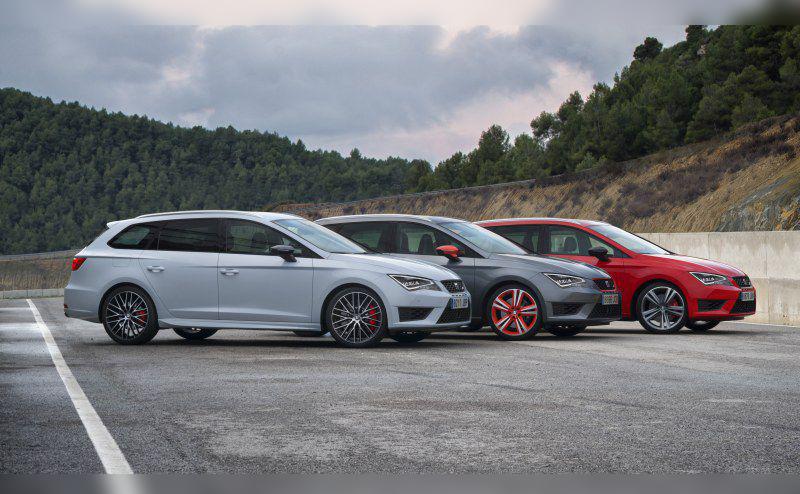
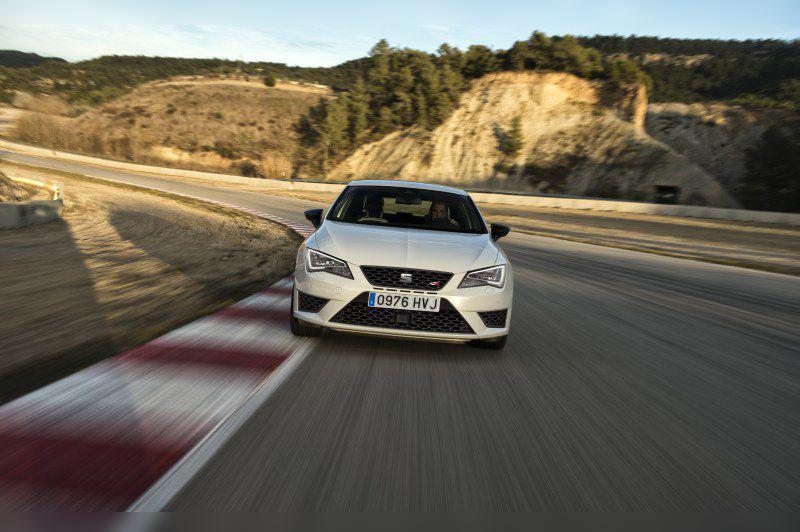
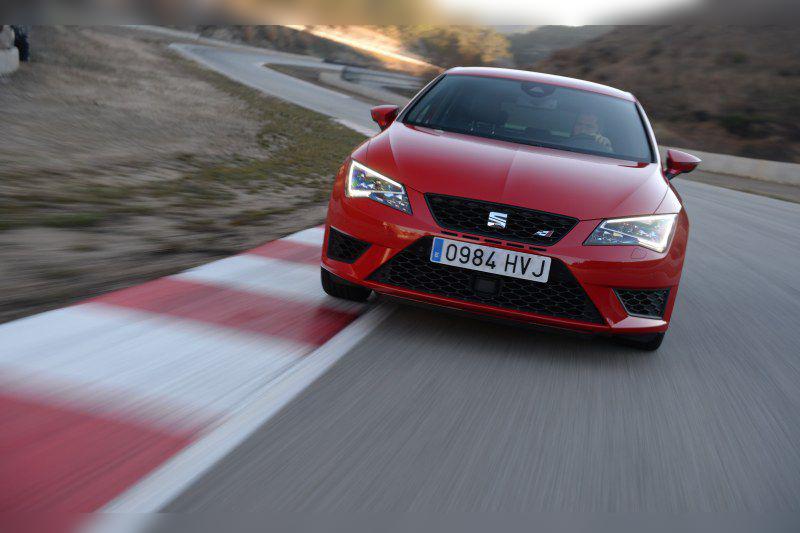
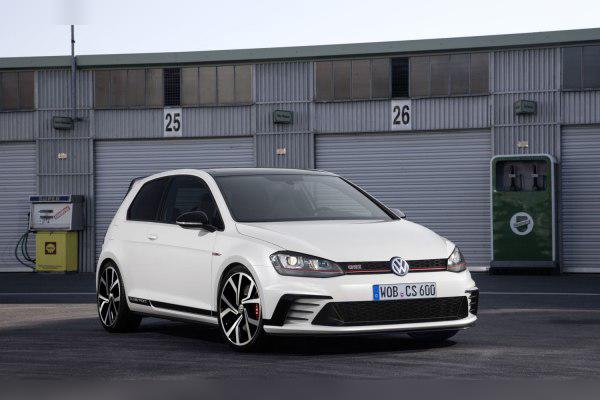
The engine with the code CJXE belongs to the famous, but also controversial EA888 family from the Volkswagen Group, more precisely its third generation (Gen 3). This is crucial to emphasize because the first two generations were notorious for oil consumption and timing chain failures. The 265 HP CJXE is the “sweet spot” – it was primarily installed in Seat Leon Cupra models and special versions of the VW Golf VII GTI Clubsport. It represents an entry ticket into the world of serious performance, offering technology from the more expensive Golf R, but often with front-wheel drive only (in the Leon and Clubsport), which makes it lighter and more fun for purists.
Technical Specifications
| Parameter | Value |
|---|---|
| Displacement | 1984 cc (2.0 L) |
| Power | 195 kW / 265 HP |
| Torque | 350 Nm (available from low revs) |
| Engine code | CJXE (EA888 Gen 3) |
| Fuel type | Petrol (Recommended 98 or 100 RON) |
| Injection system | Combined: Direct (FSI) + Port (MPI) |
| Forced induction | Turbocharger (IHI IS38), Intercooler |
| Configuration | Inline 4-cylinder, 16-valve |
Reliability and Maintenance
Timing system: Belt or Chain?
The CJXE engine uses a timing chain. Unlike previous generations where the chain was a “nightmare”, the system here is significantly improved. Still, the chain is not eternal. Chain stretch can occur, usually at mileages over 120,000–150,000 km.
Symptoms: Rattling on cold start that lasts longer than 2–3 seconds, or the “Check Engine” light with a camshaft/crankshaft correlation error. A preventive inspection of the chain tensioner condition is recommended at every major service.
Most common issues
Although reliable, this engine has its “weak spots”:
- Thermostat housing and water pump: This is problem number one. The housing is made of plastic which deforms over time from heat, causing coolant leaks. If you notice a sweet smell of coolant around the car, this is the first suspect.
- PCV valve (oil separator): When the membrane in this valve tears, the engine may start consuming oil, idle roughly, or you may hear a whistling noise. Fortunately, replacement is not too expensive.
- Camshaft position sensors: They can occasionally fail, leading to difficult starting.
Service intervals and Oil
Minor service: Although the manufacturer often recommends “Long Life” intervals of 30,000 km, for this engine that is a death sentence. Due to the high power and thermal load, oil and filter should be changed at no more than 10,000 km or once a year.
Oil quantity and type: The engine takes approximately 5.7 liters. Recommended grades are 5W-30 or 0W-40 (VW 504.00 / 507.00 standard). High-quality fully synthetic oil is a must.
Major service: Since the engine has a chain, a classic “major service” (timing belt replacement) does not exist in that sense. However, the auxiliary (serpentine) belt and its tensioners should be replaced at around 100,000–120,000 km. At that time, the chain should also be thoroughly inspected.
Oil consumption
EA888 Gen 3 engines have solved the massive oil consumption problem that plagued Gen 2 (due to poor piston rings). Still, consumption of 0.5 to 0.8 liters per 10,000 km is considered completely normal and acceptable for this type of engine. If it consumes a liter per 1,000 km, the engine is ready to be opened up (rings or turbo).
Spark plugs
On the CJXE engine, spark plugs are under heavy stress. It is recommended to replace them every 40,000 to 60,000 km. If the car is “chipped” (Stage 1), the interval is shortened to 20,000–30,000 km. Use only NGK or Bosch plugs specified for this engine (often iridium).
Specific Components and Costs
Dual-mass flywheel
Yes, this engine has a dual-mass flywheel (DMF), regardless of whether it is paired with a manual or DSG gearbox.
Costs: On DSG gearboxes, the flywheel usually lasts longer, but when it fails you will hear metallic clattering at idle. On manual gearboxes, lifespan depends directly on driving style. Replacement is a costly job (parts + labor).
Fuel injection system and injectors
This is a major advantage of this engine for the European market. The CJXE uses combined injection:
1. Direct (FSI): For performance and efficiency.
2. Port (MPI): Into the intake manifold.
Why does this matter? Port injection “washes” the intake valves with petrol, which prevents carbon build-up, a problem that plagued older FSI engines. Injectors are generally reliable, but the high-pressure fuel pump (HPFP) can fail at high mileages.
Turbocharger
This engine uses the powerful IHI IS38 turbocharger (the same as in the Golf R). This is a larger turbo than in the standard GTI model (IS20).
Service life: The turbo is very durable if the warm-up and cool-down rules are respected. However, early IS38 units had issues with shaft failure. Symptoms include loss of power, blue smoke and a “siren” whistling noise. Rebuilding is possible, but a new revised unit is often recommended.
DPF, EGR and AdBlue
This is a petrol engine, so it does not have a DPF filter (it has a catalytic converter) and does not use AdBlue.
GPF/OPF: Models produced before 2018 (most CJXE engines) generally do not have a GPF/OPF (gasoline particulate filter), which is great news for sound and performance. Later models (after 2018/2019) may have an OPF. Check by VIN.
EGR: There is no classic EGR valve that clogs up like on diesels; exhaust gas recirculation is done internally via variable valve timing (VVT).
Fuel Consumption and Performance
Real-world fuel consumption
- City driving: Expect between 10 and 13 l/100 km. In heavy traffic it can go up to 15 l/100 km. This is not an economical city car.
- Country roads: With careful driving, it is possible to get down to 6.5–7.5 l/100 km.
- Motorway (130 km/h): Consumption is around 8–9 l/100 km.
Is the engine “lazy”?
Absolutely not. With 265 HP and 350 Nm, this engine makes the Leon Cupra or Golf Clubsport extremely fast cars. 0–100 km/h is usually under 6 seconds. The engine pulls hard across the entire rev range and, thanks to the IS38 turbo, has a strong “kick” at higher revs.
Behaviour at 130 km/h
At 130 km/h the engine is in its comfort zone. If you have a DSG gearbox (6 or 7 speeds), revs will be relatively low (around 2,500–3,000 rpm), which makes cruising quiet and comfortable. There is always enough power for overtaking, without the need to downshift.
Upgrades and Modifications
LPG conversion
Not recommended. Due to direct injection, LPG conversion is technically complex and expensive (it requires a system that injects liquid gas or mixes petrol and gas to cool the petrol injectors). Given that this is a performance engine, the risk of overheating valves and the cylinder head on LPG is increased. The cost-effectiveness is questionable.
Remap (Stage 1)
This engine is a tuner’s dream. Since the CJXE is hardware-wise almost identical to the more powerful 300 HP engines, it is factory “detuned”.
Stage 1 potential: With just a software change (remap), this engine safely reaches 300–320 HP and over 420 Nm of torque. The engine can handle this without issues, provided it has been regularly maintained.
Gearbox: Manual vs DSG
Options
- Manual (6-speed): Code MQ350. Precise, but the clutch is sized from the factory “on the limit”.
- Automatic (DSG): Most commonly the 6-speed DQ250 (wet clutch). Later models may have the 7-speed DQ381.
Most common problems
Manual: The main issue is the clutch. If the car is driven aggressively or a Stage 1 tune is applied, the stock clutch will start slipping very quickly. Upgrading to a reinforced clutch (e.g. Sachs Performance) is a common modification.
DSG (DQ250): This is a very robust gearbox. Failures are rare if it is maintained properly. The most expensive failure is the mechatronics unit, which can be very costly. Symptoms include harsh gear changes or delay when setting off.
Gearbox maintenance
On DSG gearboxes, oil and filter changes are MANDATORY every 60,000 km. Skipping this service drastically shortens the lifespan of the clutches and mechatronics. On the manual gearbox, oil is not changed as often, but it is recommended to replace it at 100,000 km for smoother shifting.
Buying Used and Conclusion
Before buying a car with the CJXE engine, make sure to check the following:
- Cold start: Listen to the chain. Any rattling lasting more than a couple of seconds is a red flag.
- Coolant level: Check the expansion tank. If the level is below minimum or you see white traces of leaks around the engine (below the intake manifold), the thermostat housing needs replacing.
- DSG service history: If there is no proof of gearbox oil changes every 60,000 km, walk away from that car.
- Exhaust smoke: Bluish smoke under hard acceleration or after idling indicates issues with the turbo or piston rings.
- Tyres and suspension condition: These cars “eat” front tyres and control arm bushes due to the high torque.
Final verdict
The 2.0 TSI CJXE engine is a fantastic choice for enthusiasts. It offers performance on par with supercars from 10 years ago in the body of a practical hatchback or estate. It is more reliable than its predecessors, and the issues that do appear (water pump, PCV) are well-known and solvable. It is aimed at drivers who appreciate good engineering, do not skimp on quality oil, and want a car that puts a smile on their face every time they press the throttle.
Was this content useful to you?
Your opinion helps us to improve the quality of the content.