EA888 evo4 / DNPD Engine
- Engine
- 1984 cm3
- Aspiration
- Turbocharger, Intercooler
- Fuel
- Petrol (Gasoline)
- Fuel injection system
- Direct injection
- Power
- 265 hp
- Torque
- 370 Nm
- Cylinders
- 4
- Valves
- 16, 4 per cylinder
- Cylinders position
- Inline
- Valvetrain
- DOHC
- Oil capacity
- 5.7 l
- Systems
- Start & Stop System, Particulate filter
# Vehicles powered by this engine


2.0 TSI EA888 evo4 (DNPD) 265 HP: Ownership Impressions, Issues, Fuel Consumption and Used-Buying Guide
Key points (TL;DR)
- Timing: Uses a timing chain, which in this 4th generation (Gen 4) is significantly more reliable than in earlier versions.
- Performance: With 265 hp and 370 Nm, this is a serious engine that offers an excellent balance between daily usability and sporty dynamics.
- Maintenance: Requires strict adherence to oil change intervals (recommended every 10–15,000 km, not 30,000 km) and a specific 0W-20 grade.
- Achilles’ heel: The cooling system (thermostat module and water pump) can still be a source of coolant leaks.
- Gearbox: Comes exclusively with a DSG gearbox (wet clutch) that needs regular servicing to last.
- Emissions: Equipped with an OPF/GPF filter (gasoline particulate filter), which means constant short city trips can cause issues.
Contents
- Introduction: The heart of the modern hot hatch segment
- Technical specifications
- Reliability and maintenance
- Specific components and costs
- Fuel consumption and performance
- Options and tuning
- Gearbox and drivetrain
- Used-buying tips and conclusion
Introduction: The heart of the modern hot hatch segment
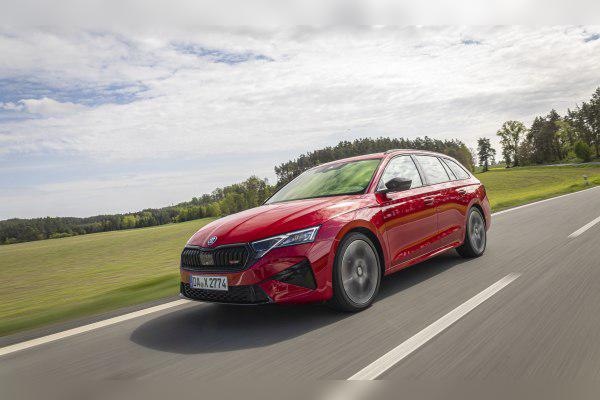
The engine with code DNPD belongs to the latest evolution of the famous EA888 engine family, specifically the “evo4” generation. This is not just a mild refresh of the old engine, but a technologically very advanced unit designed to meet strict Euro 6AP+ standards while retaining the explosiveness GTI and RS models are known for. It is installed in the facelifted 2024 versions of the VW Golf 8.5 GTI and Škoda Octavia IV RS. Compared to the previous 245 hp version, this one brings 265 hp, optimized combustion and more sophisticated thermal management.
Technical specifications
| Specification | Data |
|---|---|
| Displacement | 1984 cc (2.0 L) |
| Power | 195 kW (265 hp) |
| Torque | 370 Nm |
| Engine code | DNPD (EA888 evo4) |
| Injection type | Direct injection (FSI/TSI) – 350 bar |
| Charging | Turbocharger (mono-scroll), intercooler |
| Camshaft drive | Chain |
Reliability and maintenance
Timing belt or chain?
This engine uses a timing chain to drive the valvetrain. In the “evo4” generation, the chain-stretch issues that plagued early TSI engines have largely been resolved. The chain is designed to last the “lifetime” of the vehicle, but in practice that means it should handle at least 200,000 km with regular oil changes. Still, it is recommended to check chain stretch via diagnostics or by physically inspecting the tensioner around 150,000 km.
Most common failures
Although the engine is robust, there are a few areas that require attention:
- Thermostat module and water pump: This is a plastic housing exposed to high temperatures. Coolant leaks or a stuck thermostat are common. Symptoms include loss of coolant without a visible puddle under the car (it evaporates on the block) or engine overheating.
- Crankcase ventilation system (PCV valve): If the membrane fails, the engine may start consuming oil, idle roughly or produce a whistling noise.
- Carbon buildup: As a direct-injection engine, the intake valves are not “washed” by fuel. Over time, carbon deposits form and can reduce power.
Service intervals and oil
There is no classic “major service” in the sense of a timing belt change, because it uses a chain. However, the auxiliary (serpentine) belt and its tensioners are usually replaced between 100,000 and 120,000 km.
Oil: This engine takes approximately 5.7 liters of engine oil. What is crucial for “evo4” engines is the use of a very thin 0W-20 oil with the VW 508.00 / 509.00 specification. This oil is necessary due to tight tolerances and the efficiency of the oil pump.
Oil consumption
Modern TSI engines consume significantly less oil than 10 years ago. Still, consumption of 0.3 to 0.5 liters per 5,000 km is considered acceptable, especially with spirited driving. If the engine uses more than 0.5 liters per 1,000 km, this points to an issue with piston rings, the turbocharger or the PCV valve.
Spark plugs
On a powerful petrol engine like this, spark plugs are under heavy load. It is recommended to replace them every 60,000 km. If the car is remapped (tuned), this interval should be halved to 30,000 km.
Specific components (costs)
Dual-mass flywheel
Yes, this engine combined with the DSG gearbox uses a dual-mass flywheel (DMF). Its role is to dampen engine vibrations before they reach the gearbox. Failure symptoms include a metallic “rattling” noise at idle (especially when cold) and vibrations when switching the engine off. Replacement is expensive (very costly, depending on the market).
Fuel injection system and turbo
The injection system operates at extremely high pressure (up to 350 bar). Injectors are generally reliable but sensitive to poor fuel quality. A faulty injector manifests as engine misfire and an illuminated “Check Engine” light.
The engine has a single turbocharger (usually Continental or Garrett, depending on the batch). Turbo lifespan is directly related to driving style – if the engine is not shut off immediately after hard driving (it should be left to idle for a minute) and if oil is changed regularly, the turbo can last over 200,000 km.
DPF/GPF and EGR
This engine does not have a DPF (it’s not a diesel), but it does have its gasoline equivalent – a OPF or GPF filter (Gasoline Particulate Filter). Its purpose is to trap soot. Unlike diesels, GPF regenerates much more easily and quickly due to the higher exhaust gas temperatures of petrol engines. It rarely clogs, except when the car is used exclusively for very short trips in winter. An EGR function is present (implemented internally via variable valve timing or externally), but it is nowhere near as problematic as on diesels.
AdBlue: This engine does NOT use AdBlue fluid.
Fuel consumption and performance
Real-world consumption
- City driving: Expect between 9 and 12 l/100 km. In heavy traffic and with a heavy right foot, this can easily exceed 13 liters. After all, it’s a 2.0 turbo petrol.
- Country roads: This is where the engine shines and can use around 6.0–7.0 l/100 km with moderate driving.
- Motorway (130 km/h): Consumption is around 7.5–8.5 l/100 km.
Performance and “laziness”
This engine is anything but “lazy”. With 265 hp and 370 Nm available from low revs (below 2,000 rpm), the Octavia RS and Golf GTI with this engine really move. Overtakes are lightning-fast, and throttle response is very direct thanks to improvements to the turbocharger.
Motorway cruising
Thanks to the 7-speed DSG gearbox, at 130 km/h the engine spins at a relatively low 2,000–2,200 rpm (depending on drive mode and gradient), which contributes to cabin comfort and reasonable fuel consumption.
Options and modifications
LPG conversion
Is it possible? Technically yes. Is it recommended? No. Due to direct injection, you need a sophisticated (and very expensive) liquid LPG injection system or a system that uses a mix of petrol and LPG to cool the petrol injectors. The savings are questionable, while the risk of damaging expensive components (injectors, cylinder head) is high. Buying an RS/GTI and converting it to LPG generally goes against the philosophy of these cars.
Remap (Stage 1)
EA888 engines are legendary for their tuning potential. A Stage 1 (software-only remap) on this engine safely raises power to about 300–310 hp and torque to over 420–440 Nm. The engine and turbo can handle this without issues, but spark plug life is reduced and oil needs to be changed more frequently.
Gearbox
Gearbox type
With this engine (DNPD 265 hp) in the Golf 8.5 and Octavia IV FL you only get an automatic dual-clutch gearbox – the 7-speed DSG (code DQ381). This is a “wet” clutch gearbox, meaning the clutch packs are immersed in oil for cooling.
Gearbox failures
The DQ381 is a very reliable gearbox, much better than the older 7-speed “dry” DSG units. The most common issues are related to the mechatronics (the gearbox’s electronic control unit) if the oil is not changed regularly. Symptoms include jerking when setting off, delayed shifts or harsh gear changes.
Gearbox maintenance
The manufacturer often quotes a long service interval, but real-world experience suggests the following: DSG oil and filter should be changed every 60,000 km. This is critical for the longevity of the mechatronics and clutches. The cost of servicing the gearbox is in the “moderately expensive” category, but still far cheaper than a rebuild.
Buying used and conclusion
When buying a used car with this engine, make sure to check:
- Gearbox service history: If the DSG has not been serviced on time, walk away from that car.
- Coolant leaks: Check the coolant level and look for white residue around the water pump (on the front side of the engine block).
- Cold start: The engine should run smoothly immediately after starting, without chain rattling for more than 1–2 seconds.
- Tyres and brakes condition: These are powerful cars that go through consumables quickly.
Conclusion: The 2.0 TSI (265 hp) is a fantastic engine. It delivers sports-car performance with fuel consumption that is acceptable for a family car on the open road. It is aimed at drivers who want excitement behind the wheel and are willing to pay a bit more for proper maintenance and premium fuel. If you are looking for reliability and power in one package, this is one of the best petrol engines on the market today.
Was this content useful to you?
Your opinion helps us to improve the quality of the content.