EA888 / CHHB Engine
- Engine
- 1984 cm3
- Aspiration
- Turbocharger, Intercooler
- Fuel
- Petrol (Gasoline)
- Fuel injection system
- Direct injection and Multi-port manifold injection
- Power
- 220 hp
- Torque
- 350 Nm
- Cylinders
- 4
- Valves
- 16, 4 per cylinder
- Cylinders position
- Inline
- Valvetrain
- DOHC
- Oil capacity
- 5.7 l
- Coolant
- 10 l
- Systems
- Start & Stop System
# Vehicles powered by this engine


2.0 TSI (EA888 Gen 3 / CHHB) – Experiences, problems, fuel consumption and used car buying guide
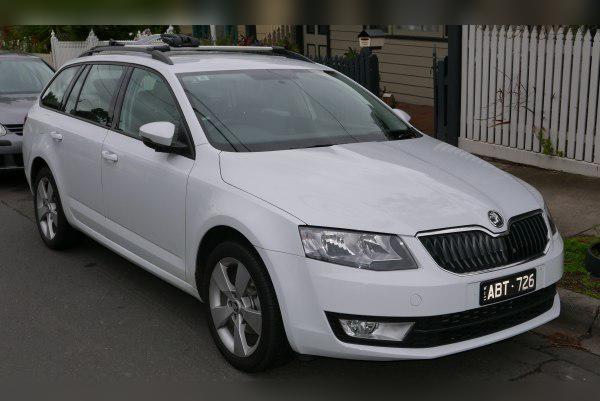
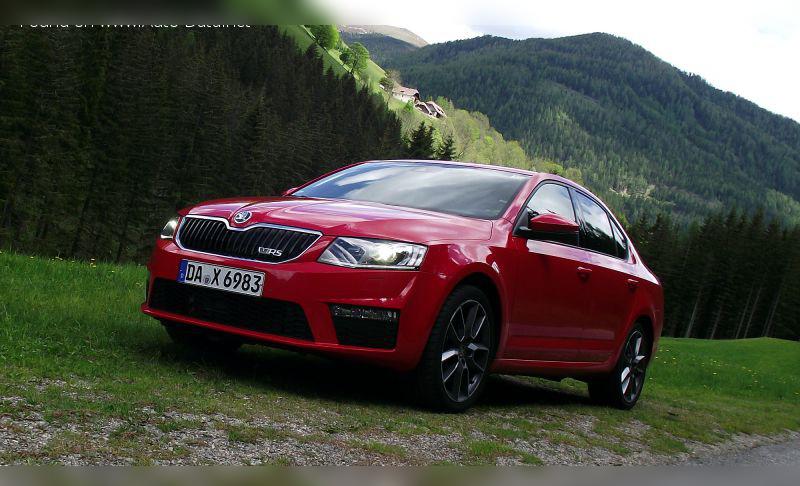
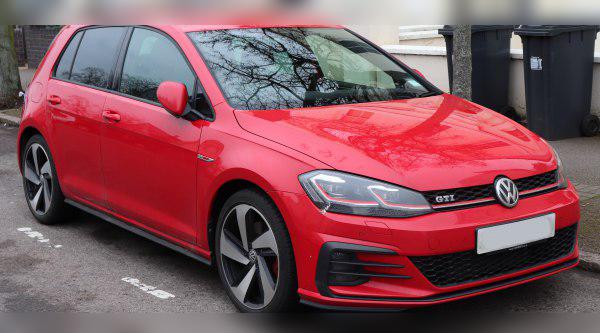
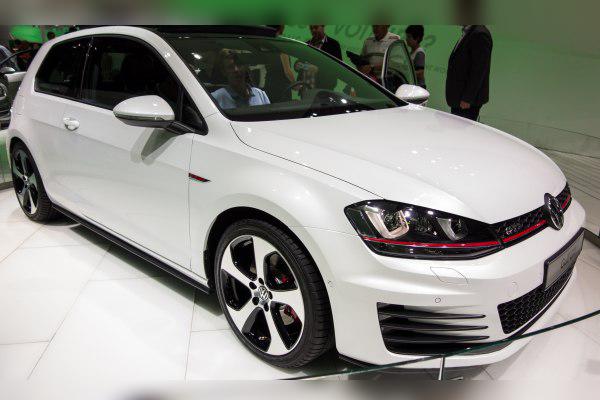
When talking about modern turbo petrol engines that have defined the "hot hatch" class and fast family sedans over the past decade, the 2.0 TSI with the CHHB code from the EA888 Generation 3 is the absolute king. This is the engine that powers icons such as the Golf 7 GTI and Škoda Octavia RS. Unlike its predecessor (Gen 2), which had a bad reputation due to catastrophic oil consumption, the CHHB (Gen 3) brought drastic improvements, but it still requires specific maintenance. In this text, as someone who has spent years analyzing the VAG group, I will dissect this engine down to the smallest detail.
Key points in short (TL;DR)
- Oil consumption solved: Unlike older 1.8 and 2.0 TSI engines, the CHHB (Gen 3) does not suffer from a factory piston ring defect, so oil consumption is kept within reasonable limits.
- Biggest weakness – Thermostat/Water pump: The thermostat housing is plastic and will almost certainly start leaking before 100,000 km.
- Great performance: With 220 hp and 350 Nm, the engine is extremely flexible and powerful, while still being relatively economical on the open road.
- Chain instead of belt: The timing drive uses a chain which has been significantly improved, but it still requires stretch checks at higher mileage.
- DSG gearbox: Most often paired with the reliable DQ250 (6-speed) gearbox, which requires regular oil changes.
- Tuning potential: One of the best engines for remapping; with software alone (Stage 1) it easily reaches 300 hp.
Contents
- Technical specifications
- Reliability and maintenance
- Specific parts and costs
- Fuel consumption and performance
- Additional options and modifications
- Gearbox (DSG and manual)
- Used car buying tips and conclusion
Technical specifications
| Engine displacement | 1984 cc (2.0 L) |
| Power | 162 kW (220 hp) at 4500-6200 rpm |
| Torque | 350 Nm at 1500-4400 rpm |
| Engine code | CHHB (EA888 Gen 3) |
| Injection type | Combined: Direct (FSI) + Indirect (MPI) |
| Forced induction | Turbocharger (IHI IS20) + Intercooler |
| Camshaft drive | Chain (Timing chain) |
Reliability and maintenance
The EA888 Gen 3 (CHHB) is an engineering gem, but it is not without flaws. Maintenance requires discipline and quality parts.
Does this engine have a timing belt or a chain?
This engine uses a timing chain. Unlike the Gen 2 engines, where the chain tensioner was a ticking time bomb, on the CHHB the system has been revised and is much more reliable. Still, the chain is not "lifetime". It is recommended to check its condition (stretch) via diagnostics or visually through the inspection opening after about 150,000 km. A symptom of problems is a metallic rattling sound ("chain rattle") on cold start that lasts longer than a few seconds.
What are the most common failures on this engine?
The most common and most expensive problem is the thermostat and water pump module. The housing is made of plastic, which deforms over time due to heating and cooling cycles, leading to coolant leaks. If you smell antifreeze or see the level in the expansion tank dropping, this is suspect number one. Another common issue is the PCV valve (oil vapor separator), whose failure can lead to increased oil consumption or rough engine operation.
At what mileage is the major service due?
Since the engine has a chain, a classic "major service" at fixed intervals like on belt-driven engines does not exist in that sense. However, the auxiliary (serpentine) belt and its tensioners should be replaced at around 100,000 - 120,000 km or every 5-7 years. The timing chain is replaced only if needed, when noise appears or diagnostics show a cam/crank phase deviation.
How many liters of oil does this engine take and which viscosity is recommended?
The sump holds approximately 5.7 liters of oil. The factory recommendation is often 5W-30 (VW 504.00/507.00 standard), but many enthusiasts and mechanics recommend switching to a quality 5W-40 oil (VW 502.00 standard) for this engine, for better protection at high temperatures and spirited driving. The oil change interval should be shortened to 10,000 km or one year; do not follow "Long Life" intervals of 30,000 km if you want longevity.
Does it consume oil between services?
Good news: This engine generally does not consume oil in problematic amounts like its predecessors. Thanks to redesigned piston rings and pistons, consumption is minimal. It is considered normal to top up up to 0.5 - 1 liter per 10,000 km if driven hard. If it consumes more than that, first check the PCV valve or turbocharger leaks, and only then suspect the piston rings.
At what mileage should the spark plugs be replaced?
On 2.0 TSI engines, the spark plugs are under heavy thermal load. It is recommended to replace them every 60,000 km (or 4 years). If the engine is remapped (Stage 1), the interval should be halved to 30,000 km and "colder" heat range plugs should be used (e.g. from an Audi RS7).
Specific parts (Costs)
Does the engine have a dual-mass flywheel?
Yes, it has a dual-mass flywheel (DMF), regardless of whether it is paired with a manual or DSG gearbox. Its role is to dampen vibrations from the powerful four-cylinder. Failure is recognized by metallic knocking at idle which disappears when the clutch is pressed (on manuals) or by vibrations when setting off. Replacement is expensive (depends on the market, but expect a serious bill).
What kind of injection system does it have and are the injectors problematic?
The EA888 Gen 3 (European CHHB version) uses a brilliant dual injection system: direct injection (FSI) for power under load and indirect (MPI) into the intake manifold at lower loads. This is crucial because the MPI injectors wash the intake valves with petrol, which drastically reduces carbon buildup on the valves – a major problem on engines that have only direct injection. The injectors are generally reliable.
Does this engine have a turbocharger and what is its lifespan?
The engine uses a single IHI IS20 turbocharger. It is very potent and spools up quickly. Lifespan is long with regular servicing and proper warm-up/cool-down. One specific issue with these turbos is the "wastegate rattle" – the actuator rod develops play and rattles. In more severe cases, the actuator can stick, which leads to an "EPC" warning on the dash and loss of power.
Does this model have a DPF filter or EGR valve?
This is a petrol engine, so it does not have a DPF filter (newer models after 2018/2019 have a GPF, but the CHHB is mostly from before that era). It also does not have a classic EGR valve that clogs with soot and sticks like on diesels; exhaust gas recirculation is handled via internal variable valve timing, a system that does not require maintenance.
Does this engine use AdBlue?
No, it does not have an AdBlue system. That is reserved exclusively for diesel engines.
Fuel consumption and performance
What is the real-world fuel consumption in city driving?
Do not trust the factory figures. The reality for the 2.0 TSI (220 hp) in the city (e.g. stop-and-go traffic) is between 10 and 12 liters per 100 km. If you have a heavy right foot, it easily goes up to 14 liters. In smaller towns without traffic jams, it is possible to get it down to around 9 liters.
Is this engine “lazy” for the weight of the car?
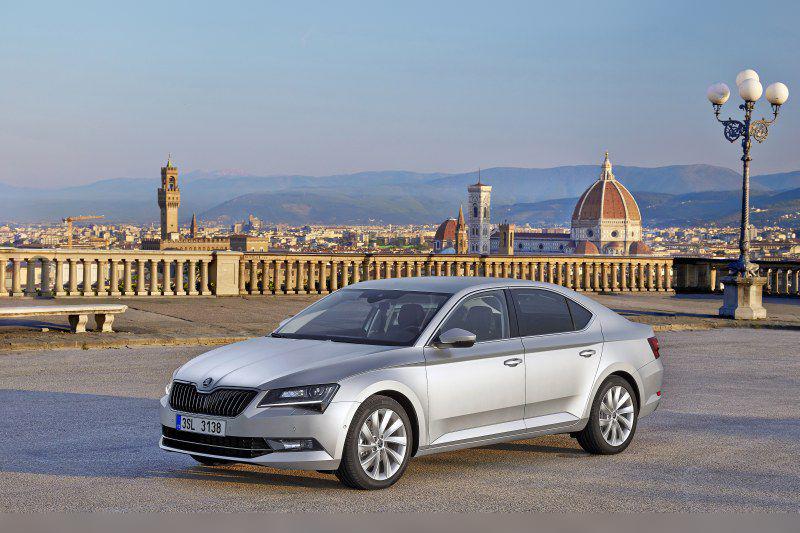
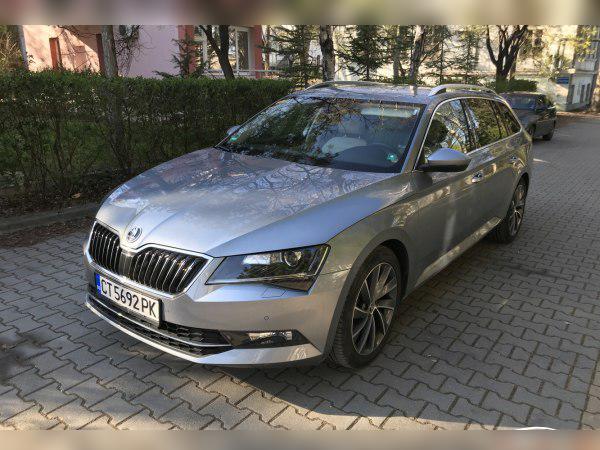
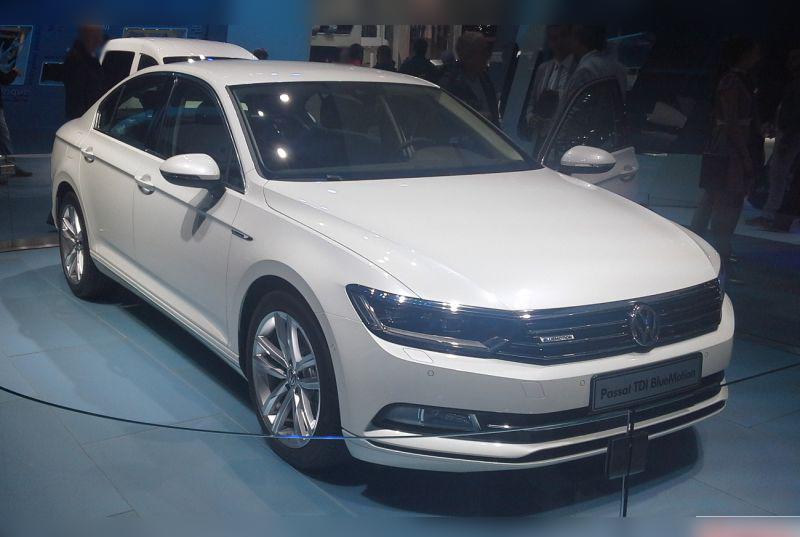
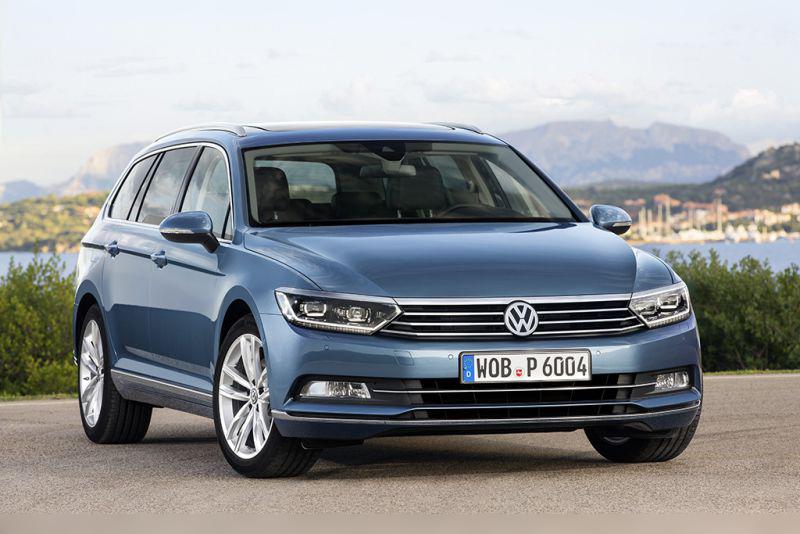
Absolutely not. With 350 Nm of torque available from just 1500 rpm, this engine moves an Octavia, Superb or Passat with incredible ease. The feeling of acceleration is linear and strong. Overtaking is safe and quick, and the engine never feels like it is struggling, even when fully loaded.
How does the engine behave on the motorway and at what rpm does it cruise at 130 km/h?
This is the natural habitat of this engine. At 130 km/h in 6th gear (DSG or manual), the engine spins at around 2,300 - 2,500 rpm (depending on the gearbox). The cabin is quiet, and fuel consumption at that speed is around 7.0 - 8.0 liters, which is an excellent result for a petrol engine of this power.
Additional options and modifications
Is this engine suitable for LPG conversion?
Technically it is possible, but it is financially unprofitable and complicated. Due to direct injection, an expensive system is required (liquid injection or a system that uses a mixture of petrol and LPG to cool the injectors). The installation cost is very high and the payback period is long. Most owners of such cars do not install LPG.
How far can this engine be safely remapped (Stage 1)?
The EA888 Gen 3 is every tuner’s dream. With a software remap alone (Stage 1), without any mechanical changes, power can be safely raised from 220 hp to 300 - 310 hp, and torque to over 420 Nm. The engine and gearbox (especially the DSG) can handle this without issues, provided they are regularly maintained.
Gearbox
Which manual and automatic gearboxes are fitted?
The CHHB engine is most commonly paired with:
- 6-speed manual (MQ350) – precise and robust.
- 6-speed DSG (DQ250) – dual-clutch automatic gearbox with wet clutches.
What are the most common failures of the manual and automatic gearboxes?
- Manual: Very reliable. The only weak point is the clutch, which can start slipping if the car is remapped, as the stock clutch struggles with torque above 400 Nm.
- DSG (DQ250): Considered one of the best DSG gearboxes. Failures are rare if maintained properly. Possible issues include mechatronics failures (the gearbox control unit), which are expensive to repair. Symptoms include harsh engagement from P to D, jerks when shifting, or delayed response.
Does this model have a dual-mass flywheel and how much does a clutch replacement cost?
As mentioned, both gearboxes use a dual-mass flywheel. On the DSG, the clutch pack (friction plates inside the gearbox) lasts a very long time (often over 200-250k km), but replacement is expensive. On the manual gearbox, the clutch kit is cheaper, but the flywheel still represents a significant cost (moderate to very expensive, depending on the market).
At what mileage should the gearbox be serviced and the oil changed?
For the DSG (DQ250), oil and filter changes every 60,000 km are MANDATORY. Skipping this service drastically shortens the lifespan of the mechatronics and clutches. On the manual gearbox, the oil is "lifetime" according to the factory, but it is recommended to change it every 100,000 km for smoother shifting.
Used car buying guide and conclusion
When buying a car with the CHHB engine, pay attention to the following:
- Signs of coolant leaks: Check the engine bay around the intake manifold (under it) for white/pink dried residue. This is a sign that the water pump is starting to fail.
- Cold start: Insist that the engine is completely cold. Listen to the chain noise during the first 3 seconds. Anything longer than that is a red flag.
- DSG service history: If there is no proof that the gearbox oil was changed at 60k and 120k km, look for another car or factor in the potential risk.
- Exhaust condition: Although these are turbo petrol engines, the exhaust should not be excessively sooty (black). Too much soot can indicate a rich mixture or oil consumption.
Conclusion: The 2.0 TSI (CHHB) is probably the best all-round engine that the VW group has made in the last 15 years. It offers a fantastic balance between power, driving excitement and everyday usability. It has solved most of the teething problems of its predecessors, and the weaknesses it does have (water pump) are predictable and manageable. If you are looking for a car that can be tame on the commute to work and a beast on the open road – this is the right choice.
Was this content useful to you?
Your opinion helps us to improve the quality of the content.