K15C Engine
- Engine
- 1462 cm3
- Aspiration
- Naturally aspirated engine
- Fuel
- Petrol (Gasoline)
- Fuel injection system
- Multi-port manifold injection
- Power
- 102 hp @ 6000 rpm
- Torque
- 135 Nm @ 4400 rpm
- Cylinders
- 4
- Valves
- 16, 4 per cylinder
- Cylinders position
- Inline
- Valvetrain
- DOHC, VVT
- Oil capacity
- 3.3 l
- Coolant
- 4.2 l
- Systems
- Start & Stop System, Particulate filter
# Vehicles powered by this engine
Suzuki / Toyota K15C 1.5 Dualjet Hybrid: Experiences, problems, fuel consumption and buying tips
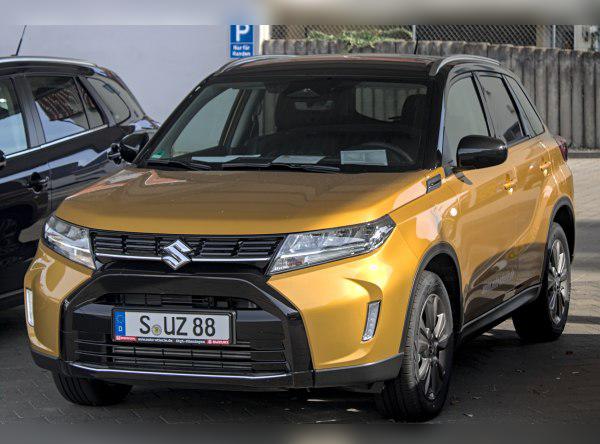
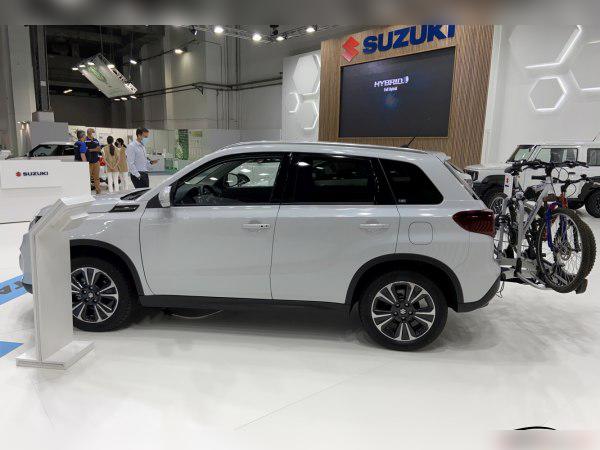
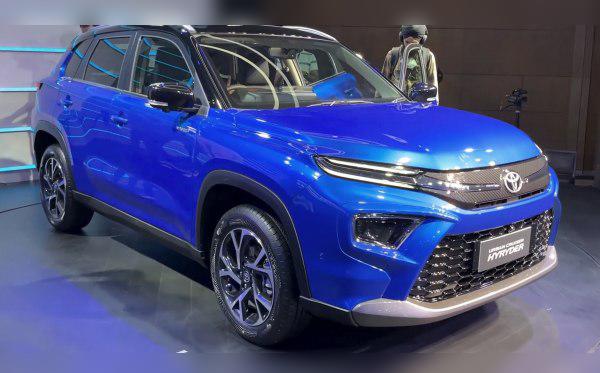
The engine with the code K15C is Suzuki’s answer to increasingly strict emission standards, developed as an evolution of the proven K15B unit. This is the engine you’ll most often find in newer “Strong Hybrid” (full hybrid) versions of the Suzuki Vitara and S-Cross, as well as in Toyota models that came out of the Suzuki–Toyota partnership (such as the Urban Cruiser Hyryder).
Unlike conventional petrol engines, the K15C is deeply integrated into the hybrid system. Its philosophy is not racing from light to light, but maximum efficiency using the Atkinson cycle. If you’re thinking about buying a Vitara with the “Strong Hybrid” badge or a Toyota with this drivetrain, you should read this before you reach for your wallet.
Key points in short (TL;DR)
- Timing chain: The engine uses a timing chain, which significantly reduces regular maintenance costs.
- Atmospheric simplicity: No turbocharger, no high-pressure direct injection – lower chance of expensive failures.
- AGS gearbox: The robotised gearbox (AGS) is technically simple, but in real driving it can be jerky and slow – it takes some getting used to.
- City champion: In town it uses ridiculously little fuel for an SUV, thanks to the hybrid system.
- Sluggish on the open road: It’s not designed for aggressive motorway driving; overtakes require planning.
- Battery and boot space: In “Full Hybrid” versions, the high-voltage battery reduces boot capacity.
Contents
- Technical specifications
- Reliability and maintenance
- Specific parts (costs)
- Fuel consumption and performance
- Additional options and modifications
- Gearbox (AGS and manual)
- Buying used and conclusion
Technical specifications
| Engine code | K15C (Dualjet) |
| Displacement | 1462 cc |
| Power (petrol engine) | 75 kW (102 hp) |
| Power (system – hybrid) | 85 kW (116 hp) |
| Torque (petrol) | 135 – 138 Nm at 4400 rpm |
| Injection type | Dualjet (multipoint / indirect – two injectors per cylinder) |
| Aspiration | Atmospheric (naturally aspirated) |
| Number of cylinders | 4 (inline) |
Reliability and maintenance
When we talk about the K15C engine, we’re talking about one of the mechanically most reliable designs on the market today. Suzuki is known for not overcomplicating things where it doesn’t have to, and this engine is proof of that philosophy.
Does this engine have a timing belt or a chain?
The engine uses a timing chain. That’s great news for owners, because the chain on Suzuki petrol engines rarely causes problems before 200,000 or 250,000 km, provided the oil is changed regularly. There is no “major service” in the sense of a belt change at 60–80k km; instead, the chain is just monitored (by sound, on a cold start).
What are the most common failures on this engine?
The petrol unit itself is “bulletproof”. However, since it’s part of a complex hybrid system, potential issues are of a different nature:
- Sensors and electronics: Occasional errors from the crankshaft position sensor or communication issues with the hybrid battery.
- 12V battery: In hybrids, if the small 12V battery gets weak, the system may refuse to start even if the high-voltage battery is full.
- GPF filter: Although rare, driving exclusively in the city can lead to clogging of the GPF (gasoline particulate filter), although it regenerates more easily than a diesel DPF.
At what mileage is the major service done?
As mentioned, there is no classic “major service” (timing belt replacement). Replacement of the auxiliary (serpentine) belt (which drives auxiliary units, although in Full Hybrids many components are electric) and inspection of the water pump is usually done at around 90,000 – 100,000 km or as needed. Iridium spark plugs are replaced at around 60,000 to 100,000 km, depending on the importer’s recommendation for your market.
How many litres of oil does this engine take and which grade is recommended?
This engine requires very low-viscosity oil to reduce friction and improve hybrid system efficiency. The recommended grade is 0W-16 or 0W-20. The engine takes about 3.6 to 3.8 litres of oil including the filter. It’s not recommended to use thicker oils (such as 5W-30 or 5W-40) because that can disrupt VVT operation and increase fuel consumption.
Does it burn oil between services?
In general, it does not consume oil in worrying amounts. Consumption of up to 0.5 litres per 10,000 km is considered completely normal, especially if the car is driven a lot on the motorway at high revs. If the level drops drastically, that’s not a characteristic of this engine but a sign of a fault (valve stem seals or piston rings), which is rare at low mileage.
Specific parts (costs)
Does the engine have a dual-mass flywheel?
The situation here is specific. The K15C in its Full Hybrid variant is paired with the AGS gearbox. Although AGS works as a robotised manual gearbox, the drivetrain usually does not use a conventional dual-mass flywheel as we know it from diesels, which tends to fail and cost a fortune. The hybrid system (MGU – motor generator unit) helps smooth out vibrations. So an expensive dual-mass flywheel replacement is not something you need to worry about here.
What kind of injection system does it have and are the injectors problematic?
The engine uses Dualjet technology. This means it has two injectors per cylinder, but it’s indirect (port) injection into the intake manifold, not direct injection into the cylinder.
This is excellent for longevity!
1. No issues with carbon build-up on intake valves (a common problem with direct injection).
2. The injectors themselves are cheaper and more tolerant of lower-quality fuel than piezo injectors on GDI engines.
Does the engine have a turbocharger?
It does not have a turbocharger. The engine is atmospheric (naturally aspirated). This eliminates a whole range of potential failures: no turbo overhauls, no intercooler issues, no oil leaks from the turbo. The power deficit is compensated by the electric motor in the hybrid system.
Does it have a DPF filter or an EGR valve?
It doesn’t have a DPF (that’s for diesels), but it does have a GPF (Gasoline Particulate Filter) to meet Euro 6d and newer standards. The GPF rarely clogs because petrol exhaust gases are hotter. The EGR valve (Exhaust Gas Recirculation) is present. In hybrids that start and stop frequently, the EGR can gradually get dirty, but this is usually solved by cleaning rather than replacement, and typically at higher mileage.
Fuel consumption and performance
What is the real fuel consumption in city driving?
This is the K15C hybrid’s home turf. Thanks to its ability to set off on electric power and cover short distances in EV mode, real-world city consumption ranges from 4.5 to 5.5 l/100 km. Even in heavy stop‑and‑go traffic, it rarely exceeds 6 litres, which is an excellent result for an SUV like the Vitara.
Is this engine “lazy” for the weight of the car?
Honestly? Yes, it can feel lazy. With 102 hp from the petrol engine and the extra weight of the hybrid system (battery + motor), the car is no sprinter. Although the electric motor adds torque instantly (for a system total of 116 hp), the sensation of acceleration is linear rather than explosive. Up to 60 km/h it’s quite lively thanks to the electric assist, but from 80 km/h to 120 km/h it takes its time. Overtaking on country roads requires full throttle (“kickdown”) and patience.
What is the engine like on the motorway and at what revs does it cruise at 130 km/h?
The motorway is not its favourite environment. At 130 km/h, the engine spins at around 3000–3500 rpm (depending on the gear at that moment), and cabin noise is noticeable. Due to the lack of a turbo, on every steeper incline the gearbox will have to drop one or two gears, which raises engine noise. Motorway fuel consumption rises to around 7.0 – 8.0 l/100 km because the hybrid system helps less in that scenario.
Additional options and modifications
Is this engine suitable for LPG (autogas) conversion?
Technically – yes, because it has indirect injection, which is ideal for LPG. Practically – it’s not recommended / it’s complicated. Why? 1. In Full Hybrid models (Vitara 1.5), the high-voltage battery is located in the boot, often taking up the space for the spare wheel where the LPG tank would go. There’s nowhere to put the tank without losing almost all of the boot. 2. Mapping LPG for an Atkinson-cycle engine that constantly starts and stops is complicated.
How much can this engine be safely “chipped” (Stage 1)?
Forget about it. This is a naturally aspirated engine. With “chipping” (remap) you’d gain maybe 3–5 hp, which is imperceptible in real driving. Your money is better spent on quality tyres or fuel.
Gearbox: AGS and variants
Which gearboxes are fitted?
With the K15C engine in Europe (Vitara/S-Cross Full Hybrid), you only get the AGS (Auto Gear Shift) gearbox. It’s a 6‑speed robotised manual. In the Toyota Urban Cruiser Hyryder (for markets outside Europe) you can also find a conventional manual or an e‑CVT (planetary), but we’ll focus on the AGS, which is the most common pairing with this engine in our region.
What are the most common issues and characteristics of the AGS gearbox?
AGS is essentially a manual gearbox operated by a robot (electro‑hydraulic actuator).
Issues:
- Jerking (“head‑nod” effect): During gear changes there is a noticeable pause where the car “dips” before it continues to accelerate. That’s not a fault, it’s a characteristic. The hybrid’s electric motor tries to fill this torque gap, but you can still feel it.
- Indecisiveness: Sometimes, for example on a roundabout, the gearbox can’t decide whether to stay in second or drop to first.
Gearbox maintenance and clutch replacement?
Since this is the mechanical part of a manual gearbox, it has a clutch set (disc and pressure plate). The cost of replacement is similar to that of a manual gearbox, but it requires calibration via diagnostics (adaptation) after replacement. Clutch life is usually around 150,000 km, depending on city driving. The gearbox oil should be changed at 60,000 km (recommended), even though some workshops claim it’s “lifetime” (don’t believe that).
Buying used and conclusion
Before buying a used car with the K15C engine, make sure you do the following:
- Battery check: Ask for a “Hybrid Health Check” at an authorised service centre. The battery warranty is often longer than the car’s warranty (up to 10 years).
- Gearbox test drive: This is crucial. Many people buy this car and then sell it because they can’t get used to how the AGS gearbox behaves. Check whether the pauses during shifting bother you.
- Service history: Check whether the oil has been changed on time (0W‑16/20).
Final verdict
Who is this engine for? Drivers who spend 80% of their time in city and suburban driving, taxi drivers, and those who want Suzuki reliability with minimal fuel consumption and don’t mind a somewhat rough‑shifting gearbox.
Who is it not for? Sales reps who live on the motorway, enthusiasts of sporty driving, and those who expect the smoothness of a traditional torque‑converter automatic. For them, the older 1.4 BoosterJet (turbo) is a better choice.
Was this content useful to you?
Your opinion helps us to improve the quality of the content.