S58B30T0 Engine
- Engine
- 2993 cm3
- Aspiration
- Twin-power turbo, Intercooler
- Fuel
- Petrol (Gasoline)
- Fuel injection system
- Direct injection
- Power
- 480 hp @ 6250 rpm
- Torque
- 550 Nm
- Cylinders
- 6
- Valves
- 24, 4 per cylinder
- Cylinders position
- Inline
- Valvetrain
- Double-VANOS, VALVETRONIC
- Oil capacity
- 7 l
- Systems
- Start & Stop System, Particulate filter
# Vehicles powered by this engine
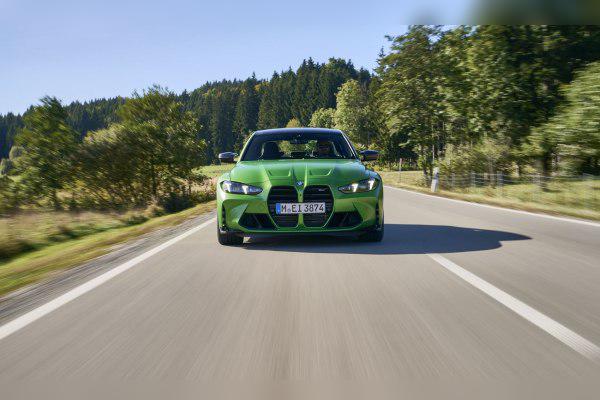
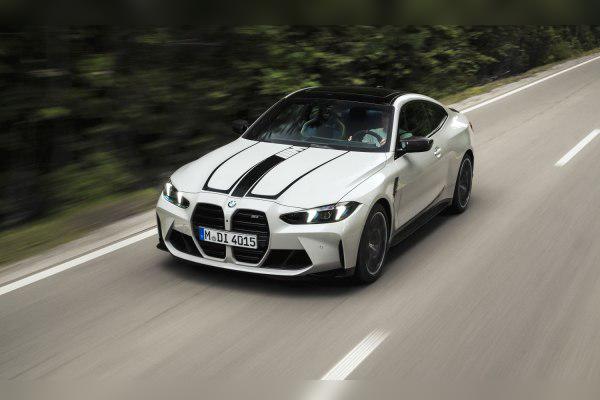
BMW S58B30T0 (480 HP) – Experiences, issues, fuel consumption and maintenance of the last “true” M engine
Key points in short (TL;DR)
- The last stronghold of manuals: The 480 HP version is specific because it is primarily paired with a 6-speed manual gearbox, which is a rarity today.
- Excellent base: The engine is based on the B58 architecture (closed deck), which means it is mechanically extremely robust and can withstand high loads.
- Maintenance is expensive: Although reliable, this is an M engine. Oil, spark plugs, brakes and specific parts cost significantly more than on standard 3 or 4 Series models.
- Fuel consumption: In the city you can expect high figures (over 15 l/100 km), but on the open road it can be surprisingly economical for this power level.
- Cooling system: This is its Achilles’ heel in minor impacts – the radiators are mounted low and exposed to stone chips.
- GPF filter: Present due to Euro regulations, which slightly muffles the sound compared to older models, but does not drastically affect performance.
- Recommendation: Ideal for enthusiasts who want to drive, not be driven. Requires strict adherence to service intervals.
Contents
Introduction and applications
The engine designated S58B30T0 represents the pinnacle of engineering from BMW’s M division in the inline-six category. It is the successor to the well-known S55 engine, but structurally it is based on the modular B58 platform, which is considered one of the best modern engines in general. The version discussed here produces 480 horsepower and is specific in that it represents the “entry ticket” into the world of the M3 (G80) and M4 (G82) models, often combined with rear-wheel drive and a manual gearbox, while the more powerful “Competition” versions are reserved for automatics.
This engine is not just a “chipped” B58. It has a forged crankshaft, lighter pistons, a different cylinder head, two turbochargers (instead of a single twin-scroll on the B58) and a completely revised cooling and lubrication system in order to withstand track abuse.
Technical specifications
| Characteristic | Data |
|---|---|
| Engine code | S58B30T0 |
| Displacement | 2993 cc (3.0 L) |
| Configuration | Inline six-cylinder (R6 / I6) |
| Power | 353 kW (480 HP) at 6250 rpm |
| Torque | 550 Nm at 2650–6130 rpm |
| Induction | Twin-Power Turbo (two mono-scroll turbochargers) |
| Injection | Direct injection (High Precision Injection) |
| Fuel | Petrol (recommended 98 or 100 RON) |
Reliability and maintenance
Timing system: chain or belt?
The S58 engine uses a timing chain. Unlike some older BMW engines (such as the N47), the chain on the B58 and S58 platforms has proven to be very reliable and is not intended to be replaced within a regular service interval. It is located at the rear of the engine (towards the gearbox), which complicates any potential replacement, but in practice, with regular oil changes, the chain should not cause problems before 200,000+ km. There are no pronounced symptoms of stretching at low mileage.
Most common failures and issues
Although robust, the S58 is not without flaws:
- Main bearings: There was an early batch of S58 engines (before 2021) that had an issue with crankshaft bearings, which resulted in a recall. On LCI models (2024), this problem has been resolved, but you should always check the service history.
- Coolant leaks: Due to the complex cooling system with multiple radiators (high-temperature and low-temperature circuits), it can happen that stones from the road puncture the radiator, which is mounted low and sits behind large openings in the bumper. Symptoms include a sudden loss of coolant or puddles under the car.
- Valve cover and PCV valve: As with most modern BMWs, the crankcase ventilation membrane (PCV), integrated into the valve cover, can tear, causing rough idle, whistling noises or increased oil consumption.
Major and minor service
This engine does not have a classic “major service” in the sense of replacing belts at a fixed mileage as on older vehicles. However, the “major service” essentially comes down to checking and, if necessary, replacing the auxiliary (serpentine) belt (for the alternator and A/C compressor), the tensioner and the water pump, usually at around 100,000–120,000 km or as needed.
Oil: quantity, grade and consumption
The sump holds approximately 7.0 liters of oil (always check the exact amount when filling, as the system retains some oil in the coolers). The recommended grade is 0W-30 or 5W-30 with BMW Longlife-04 (LL04) or LL01 FE specification, depending on the market and the presence of a GPF filter.
Oil consumption: M engines are designed with larger tolerances due to thermal expansion. Consumption of 0.5 to 1 liter per 5,000–8,000 km can be considered normal, especially if the car is driven aggressively. If it uses a liter per 1,000 km, that indicates a problem (piston rings or turbocharger).
Spark plugs and replacement interval
Since this is a high-performance engine with direct injection, the spark plugs are under heavy stress. It is recommended to replace them at every second minor service, i.e. at around 30,000 km. If the car is tuned, this interval is reduced to 15,000–20,000 km. Symptoms of worn spark plugs are hesitation or “stumbling” under acceleration (misfire) at high revs.
Specific parts and costs
Dual-mass flywheel
Yes, the version with the manual gearbox is equipped with a dual-mass flywheel. Its purpose is to absorb engine vibrations before they reach the gearbox. With aggressive launches (DIY “launch control”), the flywheel can wear out more quickly. Replacement is expensive (depends on the market).
Fuel injection system (injectors)
The S58 uses high-pressure piezoelectric injectors (350 bar). They are generally reliable, but extremely sensitive to poor fuel quality. Injector failure manifests itself as fuel leaking into the cylinder, which can wash oil off the cylinder walls and lead to catastrophic engine damage. Replacing a single injector is very expensive.
Turbochargers
The engine has two mono-scroll turbochargers (one for each bank of three cylinders). Their service life is long (over 150,000 km) with proper maintenance (regular oil changes and letting the turbo cool down before switching off the engine). Rebuilding is possible, but for M models it is more common to recommend replacing them with new units.
DPF, GPF and EGR
Since this is a petrol engine, it does not have a DPF, but it is equipped with a GPF (Gasoline Particulate Filter) or OPF in order to meet strict Euro 6d standards. The GPF rarely clogs unless the car is driven exclusively on very short trips without reaching operating temperature. There is no EGR valve in the classic diesel sense that soots up; instead, it uses variable valve timing (VANOS/Valvetronic) for internal exhaust gas recirculation.
AdBlue: This engine does not have an AdBlue system because it is a petrol unit.
Fuel consumption and performance
Real-world fuel consumption
- City driving: Expect between 13 and 16 l/100 km. In heavy traffic and with a heavy right foot, it easily goes over 18 l/100 km.
- Open road (single carriageway): It is possible to get it down to 8–9 l/100 km with very gentle driving.
- Cruising at 130 km/h: At this speed, fuel consumption is around 9.5–10.5 l/100 km.
Is the engine “lazy”?
Absolutely not. Although the M3/M4 weighs around 1700–1800 kg, the 550 Nm of torque available from just 2650 rpm makes the car feel very quick. The engine has minimal turbo lag and a linear power delivery that pulls all the way to the redline (7200 rpm). Any sense of weight disappears as soon as you go past 3000 rpm.
Behaviour on the motorway
This is the natural habitat of this engine. Overtakes are instantaneous and do not always require a downshift. At 130 km/h in top gear (6th in the manual or 8th in the automatic), the engine turns at around 2400–2800 rpm (depending on the gearbox; the manual has shorter ratios, so revs are slightly higher than with the automatic), which ensures quiet running and plenty of power in reserve.
Additional options and modifications
LPG conversion
In theory, it is possible to install a liquid direct injection LPG system (LDI) for engines with direct injection, but on a car like this it is absolutely not recommended. First, the investment is huge (very expensive), second, you risk damaging the complex piezo injectors and overheating the cylinder head, and third – you drastically reduce the value of an M model.
Remapping (Stage 1)
The S58 is known as a “tuner’s dream”. Since the 480 HP version is actually “detuned” (the Competition has 510 HP, and the CSL even more), with just a software remap (Stage 1) this engine safely reaches 560–580 HP and over 700 Nm of torque. However, you should be careful with the manual gearbox, as the clutch may not be able to withstand a drastic increase in torque without slipping.
Gearbox
Types of gearboxes
The 480 HP version is most commonly paired with a 6-speed manual gearbox (ZF), which is the key difference compared to the Competition models that come exclusively with an 8-speed ZF automatic gearbox (torque converter, not a dual-clutch as before).
Most common gearbox issues
- Manual: Robust, but some owners complain about a “rubbery” feel when shifting from first to second gear while cold. The main wear item is the clutch kit. If power is increased or the car is driven aggressively, the clutch can start slipping relatively early (below 50,000 km).
- Automatic (ZF 8HP): Considered one of the best gearboxes in the world. Failures are extremely rare. Possible oil leaks from the gearbox pan after 150,000 km.
Gearbox maintenance
Although BMW often states that the gearbox oil is “lifetime”, in practice and according to the gearbox manufacturer (ZF), this is not the case.
- Manual: Oil change recommended every 60,000–80,000 km.
- Automatic: Oil and filter change (the filter is integrated into the gearbox pan) is mandatory at 80,000–100,000 km to preserve the mechatronics.
The cost of replacing the clutch kit and dual-mass flywheel on the manual gearbox is high (depends on the market), while regular servicing of the automatic is moderately expensive.
Buying used and conclusion
What to check before buying?
- Break-in service: Crucial! Check whether the initial “break-in” service was done at around 2,000 km. If not, the warranty may be void and the engine potentially compromised.
- Abuse: Check the “Launch Control” counter via diagnostics. Also, the condition of the brake discs and tyres will tell you whether the car has been driven on track.
- Leaks: Inspect the radiators through the front grille – are they damaged by stone chips? Look under the car for traces of oil or coolant.
- Engine noise: On a cold start there should be no metallic rattling (chain or bearings).
Conclusion
The S58B30T0 engine in its 480 HP version is probably one of the last Mohicans for purists. Its greatest advantage is not raw power (although there is plenty of it), but the possibility of pairing it with a manual gearbox and rear-wheel drive. Reliability is at a high level for this class of vehicle, provided that maintenance is not skimped on. It is intended for drivers who want a mechanical connection with the car and are willing to pay the price of owning a top-tier machine.
Was this content useful to you?
Your opinion helps us to improve the quality of the content.