S58B30A Engine
- Engine
- 2993 cm3
- Aspiration
- Twin-power turbo, Intercooler
- Fuel
- Petrol (Gasoline)
- Fuel injection system
- Direct injection
- Power
- 510 hp @ 6250 rpm
- Torque
- 650 Nm
- Cylinders
- 6
- Valves
- 24, 4 per cylinder
- Cylinders position
- Inline
- Max engine speed
- 7200 rpm
- Valvetrain
- VALVETRONIC, Double-VANOS
- Oil capacity
- 7 l
- Coolant
- 11 l
- Systems
- Start & Stop System, Particulate filter
# Vehicles powered by this engine
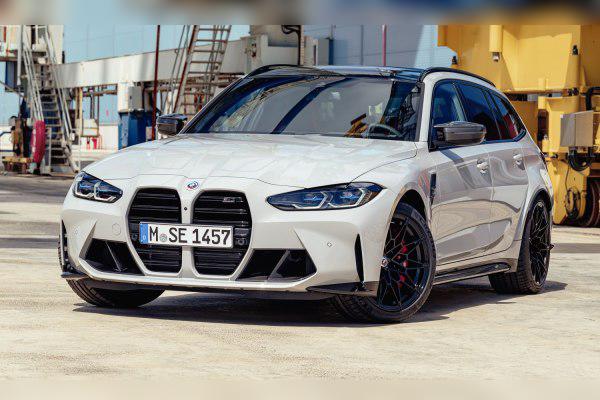
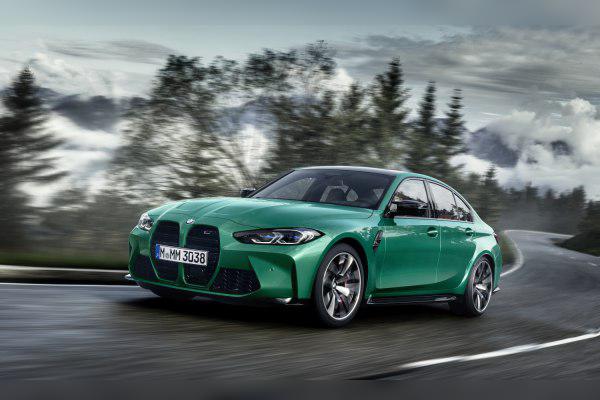
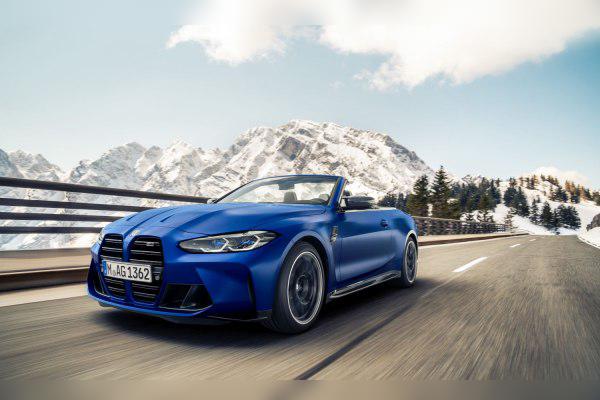
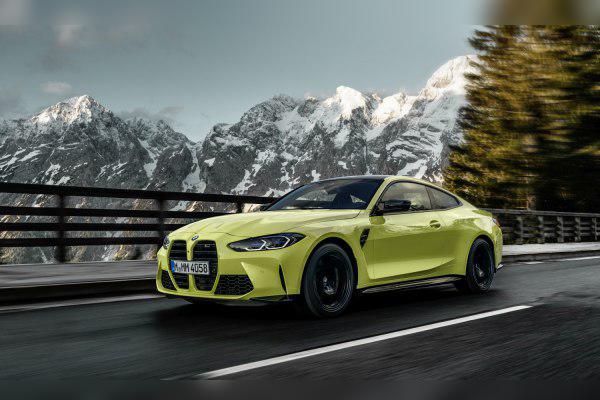
BMW S58 (3.0 Twin-Turbo) – Experiences, Issues, Fuel Consumption and Buying Used
Key points in short (TL;DR)
- Brutal power and potential: The S58 is one of the most technically advanced inline-sixes ever made, with forged internals that can withstand enormous loads.
- Crank hub issue solved: Unlike its predecessor (S55), this engine has a redesigned crankshaft and pulley, which has eliminated the most notorious weakness of newer-generation M engines.
- ZF 8-speed gearbox: The dual-clutch transmission (DCT) has been abandoned in favor of a conventional automatic. Although less “sharp”, it is far more reliable and better for daily driving.
- City fuel consumption: Expect high numbers. This is not an engine for saving fuel in stop-and-go traffic.
- Maintenance is expensive: Even though the engine is reliable, parts such as brakes, tires and specific sensors come with an “M tax”.
- Cooling system: Radiators are mounted low and exposed to stone chips, which can lead to coolant leaks.
Contents
Introduction
BMW’s S58B30A engine is not just a “beefed-up” version of the standard B58 engine found in models like the M340i. This is a thoroughbred M product, developed from the ground up to withstand track torture while still being usable for a quick run to the store. It is installed in the latest generation M3 (G80/G81) and M4 (G82/G83) models. What sets it apart is the “closed-deck” engine block (extremely rigid), forged pistons and crankshaft, as well as a 3D-printed cylinder head for better optimization of cooling channels. For buyers seeking top-tier performance without stepping into exotic supercar territory, this engine is currently the gold standard in the up-to-3.0-liter class.
Technical Specifications
| Parameter | Data |
|---|---|
| Displacement | 2993 cc (3.0 L) |
| Power | 375 kW (510 hp) |
| Torque | 650 Nm |
| Engine code | S58B30A |
| Injection type | Direct injection (High Precision Injection, up to 350 bar) |
| Induction | Bi-turbo (two mono-scroll turbochargers) |
| Configuration | Inline six-cylinder (R6) |
Reliability and Maintenance
Camshaft drive (Chain or belt?)
The S58 engine uses a chain to drive the camshafts. The chain is located at the rear of the engine (towards the gearbox), which is standard practice on newer BMW six-cylinders for better weight balance and pedestrian safety. This chain is generally robust and does not fall into the category of parts that are replaced preventively at low mileage. With regular oil changes, the chain should last over 200,000 km without stretching or rattling.
Most common failures and issues
Although the S58 is a very reliable unit, there are specific points to pay attention to:
- Radiators and coolant leaks: Due to the enormous cooling demand (up to 510 hp), the M3/M4 have large openings in the front bumper. The radiators are exposed to stone impacts. Symptoms are a puddle under the car or a sudden drop in coolant level. It is recommended to install protective mesh grilles (aftermarket) if the car does not already have them.
- Fuel pressure sensors: There have been sporadic reports of failures of the sensor on the high-pressure fuel pump, which can cause the engine to go into “limp mode” (safety mode).
- Oil consumption under aggressive driving: This is not a failure but a characteristic; however, if the engine consumes a liter per 1,000 km in normal driving, it points to an issue with piston rings or turbochargers (rare at low mileage).
Worth noting: The notorious spun crank hub issue that plagued the previous S55 engine has been solved here with an integrated design. Although extreme tuners still additionally secure this part, for the stock 510 hp and Stage 1 tunes, this is no longer a concern.
Major and minor service
This engine does not have a classic “major service” in the sense of a timing belt replacement, because it uses a chain. However, at around 100,000 – 120,000 km it is recommended to perform a thorough inspection of the cooling system, and to replace the auxiliary belt (serpentine belt), tensioner and idler pulleys. The water pump is both electric and mechanical (depending on the cooling circuit) and its condition should be monitored.
Oil: Quantity and intervals
The engine holds approximately 7.0 liters of engine oil. BMW recommends 0W-30 or 5W-30 with BMW Longlife-01 FE specification (or LL-04 in Europe due to the GPF filter). Although the manufacturer allows intervals of up to 30,000 km, for a machine like this that is absolutely unacceptable. Change the oil at a maximum of 10,000 km or once a year.
Oil consumption: Between two services (10k km), it is completely normal for the engine to consume 0.5 to 1.0 liter of oil, especially if driven at high revs. Always keep a liter of oil in the trunk. The electronic oil level gauge will notify you when a top-up is needed.
Spark plugs and injectors
The spark plugs in the S58 engine are subjected to very high thermal loads. It is recommended to replace them every 30,000 to 40,000 km (every second or third minor service). If the car is “chipped”, the interval is reduced to 15,000 – 20,000 km. Worn spark plugs cause misfires under full throttle.
Specific Components (Costs)
Dual-mass flywheel
Yes, this model has a dual-mass flywheel. Since it is paired with an automatic gearbox (ZF 8HP), the flywheel serves to reduce vibrations transmitted from the engine to the transmission. It is not as prone to failure as on manual gearboxes or older diesels, but replacement is expensive (market-dependent: very expensive). Symptoms are vibrations at idle or rattling from the bell housing area.
Fuel injection system and injectors
The S58 uses direct injection at up to 350 bar. The injectors are generally reliable but extremely sensitive to poor fuel quality. Injector failure manifests as fuel leaking into the cylinder, which can wash oil off the cylinder walls and lead to catastrophic engine damage. It is recommended to use only high-octane fuel (98 or 100 RON) from reputable fuel stations.
Turbochargers
The engine has two mono-scroll turbochargers. Their service life is designed to match the life of the engine (over 200,000 km with proper maintenance). Their biggest enemy is shutting off a hot engine immediately after spirited driving (oil cokes in the turbo bearings). Always let the car idle for a minute or two before switching it off.
DPF, GPF, EGR and AdBlue
Since this is a petrol engine, it has no AdBlue fluid and no DPF in the diesel sense. However, European models (due to Euro 6d standards) are equipped with a OPF/GPF filter (Gasoline Particulate Filter). These filters rarely clog because exhaust gas temperatures on petrol engines are very high, which passively cleans the filter. An EGR valve is present for emissions, but on the S58 it rarely causes soot-related issues like on diesels.
Fuel Consumption and Performance
Real-world fuel consumption
Let’s be honest – nobody buys 510 hp to save fuel.
- City driving: Expect between 14 and 18 l/100 km. In heavy traffic and with a heavy right foot, this figure easily goes over 20 liters.
- Country roads: It is possible to get down to 8.5 – 9.5 l/100 km with very moderate driving.
- Highway (130 km/h): Thanks to the 8th gear, the engine spins at low revs (around 2,000 rpm), so consumption is around 9.5 – 10.5 l/100 km.
Is the engine “lazy”?
Absolutely not. Although the G80/G82 models are heavy (around 1700–1800 kg), the 650 Nm of torque is available from as low as 2,750 rpm. The car rips up the tarmac in any gear. Turbo lag is minimal for this type of setup. The engine feels like it has more than the rated 510 hp.
Additional Options and Modifications
LPG conversion
Theoretically, there are systems for direct injection of liquid LPG that could work, but in practice – do not do it. This is a high-performance engine with complex electronics and thermal management. An LPG conversion is risky for the injectors, valves and turbochargers, and it drastically reduces the value of such a car. You also lose trunk space, which in the M3/M4 is needed for weight balance.
Remapping (Stage 1)
The S58 is an “over-engineered” engine. The factory-forged components can handle much more power.
- Stage 1 (software only): Safely raises power to 600 – 620 hp and torque to around 750 Nm. This is considered the safe limit for the gearbox and engine without mechanical changes.
- Potential: With an upgraded exhaust and intake (Stage 2), the engine easily goes beyond 700+ hp.
Note: On newer models (built after June 2020), the ECU is locked by Bosch/BMW and has to be sent to specialized workshops (often in Finland or Russia) for an “unlock” before mapping (Femto unlock).
Transmission
Type of transmission
The Competition models (510 hp) come exclusively with the 8-speed M Steptronic gearbox with Drivelogic. This is essentially a tuned version of the well-known ZF 8HP76 automatic transmission with a torque converter. It is not a manual, nor is it a DCT (dual-clutch).
Transmission failures and maintenance
This is one of the best automatic transmissions in the world.
- Failures: Very rare. Occasionally, there may be oil leaks from the transmission pan (which is plastic and incorporates the filter).
- Behavior: Unlike the old DCT, this gearbox is much smoother when setting off and parking, but in the most aggressive mode it is tuned to “hit” on upshifts to simulate a sporty feel.
- Service: BMW claims the oil is “lifetime”. Do not believe that. The transmission manufacturer (ZF) recommends changing the oil and pan with filter every 60,000 to 80,000 km. This is crucial for longevity.
Buying Used and Conclusion
When buying a used M3 or M4 with this engine, the following checks are crucial:
- Break-in service: Check the service history to see if the 2,000 km break-in service was performed. At that point, the engine and differential oils are changed to remove metal shavings from the running-in period. If this service was not done or was done very late, skip that car.
- Number of launches (Launch Control): Diagnostics can show how many times Launch Control has been used. A high number of launches (e.g. more than 50) means the drivetrain has been subjected to extreme stress.
- Discs and pads: These cars often come with carbon-ceramic brakes (gold calipers). Replacing them costs as much as a small new city car (very expensive). Check whether they are damaged or near the end of their life. Steel discs (blue/red/black calipers) are significantly cheaper to replace.
- Differential noise: When slowly turning with full steering lock, listen for grinding or knocking from the rear differential.
Conclusion: The S58B30A engine is a masterpiece of engineering. It has corrected the flaws of its predecessor and offers supercar-level performance in a package that can serve as a family car (especially in the Touring version). It is intended for enthusiasts who understand that the purchase price is not the end of the expenses – maintenance, tires and fuel are all part of owning such a beast. If you have the budget for proper maintenance, this engine will provide one of the best driving experiences available today.
Was this content useful to you?
Your opinion helps us to improve the quality of the content.