B48B20W Engine
- Engine
- 1998 cm3
- Aspiration
- Twin-scroll turbo, Intercooler
- Fuel
- Petrol (Gasoline)
- Fuel injection system
- Direct injection
- Power
- 258 hp @ 5000 rpm
- Torque
- 400 Nm
- Cylinders
- 4
- Valves
- 16, 4 per cylinder
- Cylinders position
- Inline
- Valvetrain
- VALVETRONIC, Double-VANOS
- Systems
- Start & Stop System, Particulate filter
# Vehicles powered by this engine
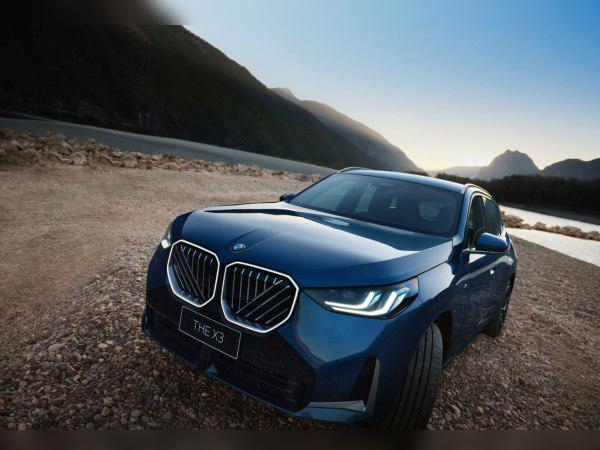
Key points in short (TL;DR)
- Timing drive: The engine uses a timing chain located at the rear of the engine (towards the cabin), which makes replacement more expensive if needed, but it is significantly more durable than on the older N20 engines.
- Cooling system: The biggest weak point of the B48 engine. Frequent cracking of plastic hoses, oil filter housing and coolant leaks from the water pump.
- Gearbox: Comes exclusively with the excellent ZF 8-speed automatic. Reliable, fast and smooth.
- Power and fuel consumption: With 258 hp and 400 Nm, the engine handles the weight of the X3 very well, but expect city fuel consumption above 11 l/100 km.
- Tuning potential: The B48 block is very robust (closed-deck design), so Stage 1 remaps safely raise power to around 290–300 hp.
- Recommendation: An excellent choice for those who want performance close to 3.0 engines, but with lower registration and maintenance costs, provided you regularly check the coolant level.
Contents
- Introduction: BMW B48B20W – The heart of the modern “thirty”
- Technical specifications
- Reliability and maintenance: Where does it leak and what needs replacing?
- Specific parts and technology
- Fuel consumption and real-world performance
- Additional options, LPG and tuning
- Gearbox: ZF8HP as standard
- Buying used and conclusion
Introduction: BMW B48B20W – The heart of the modern “thirty”, real-world experience and issues
The engine with the code B48B20W represents the very top of BMW’s two-litre four-cylinder lineup in this class. As part of the modular “B” engine family, it is the direct successor to the problematic N20 engine and brings significant improvements in terms of thermal management and block durability. The specific “W” variant with 258 hp is most commonly found in models badged as 30i.
This powerplant is key because it offers performance that used to be reserved for naturally aspirated straight-sixes, but with lower weight and better efficiency. In the BMW X3 Long (G48), which is specific to certain markets (long wheelbase), this engine’s job is to move a heavy and luxurious body without feeling strained. Whether it succeeds in that and what the price of that power is, we analyse below.
Technical specifications
| Parameter | Value |
|---|---|
| Engine code | B48B20W (B48 series) |
| Displacement | 1998 cc (2.0 L) |
| Configuration | Inline 4-cylinder (R4) |
| Power | 190 kW (258 hp) @ 5000–6500 rpm |
| Torque | 400 Nm @ 1550–4400 rpm |
| Injection type | Direct injection (High Precision Injection) |
| Forced induction | Twin-scroll turbo + intercooler |
| Timing drive | Chain |
Reliability and maintenance: Where does it leak and what needs replacing?
Does this engine have a timing belt or a chain?
The BMW B48 engine uses a timing chain. However, unlike older generations where the chain was at the front, here the timing system is located at the rear of the engine (towards the firewall/cabin). Although the chain on B48 engines is much more reliable than on the infamous N47 diesel and rarely fails, if it does need to be replaced (due to stretching at high mileages over 200,000 km), the engine or gearbox has to be removed, which makes the job very expensive (depending on the market, but count on “very expensive” in labour hours).
What are the most common failures on this engine?
The biggest enemy of the B48 engine is not the internals of the block, but the cooling system peripherals. The plastic BMW uses becomes brittle due to thermal cycles.
Symptoms and causes:
- Coolant loss: The oil filter housing (integrated with the thermostat and oil cooler) often cracks, as do the plastic coolant return hoses. If you smell coolant (a sweet smell) around the car or see a puddle, react immediately.
- Water pump: The mechanical pump with an electronic module is known to start leaking.
- VANOS solenoids: They can get dirty or fail, causing rough engine operation and a “Check Engine” light.
At what mileage is a major service required?
On chain-driven engines there is no fixed “major service” interval like with timing belts. The chain is designed to last the “lifetime” of the vehicle, which in BMW terminology means around 200,000–250,000 km. Still, it’s recommended to check the condition of the chain (listen for rattling noise on cold start) every 150,000 km. The auxiliary (serpentine) belt and tensioners should be replaced at around 100,000–120,000 km.
How many litres of oil does this engine take and which viscosity is recommended?
The B48 engine takes approximately 5.25 to 5.75 litres of oil (always buy 6 litres). The recommended viscosity is usually 0W-20 (for newer model years and fuel economy, LL-17 FE+ standard) or 5W-30 (LL-04 standard, often a better choice for warmer climates and higher engine protection). Check the exact specification in your owner’s manual or by VIN, as BMW strictly defines the standards.
Does it consume oil between services?
A healthy B48 engine should not consume a significant amount of oil. Consumption of 0.5 litres per 10,000 km is acceptable. If the engine uses a litre every 2–3 thousand kilometres, this points to an issue with the PCV valve (integrated into the valve cover) or, less commonly, a problem with the turbocharger or piston rings. This is a big improvement compared to older BMW engines.
At what mileage should the spark plugs be replaced?
As this is a turbocharged direct-injection engine, the spark plugs are under heavy stress. The recommended replacement interval is every 40,000 to 60,000 km (or every second oil service). Symptoms of worn plugs are hesitation under hard acceleration and rough idle. Use only OEM or top-quality replacement plugs (NGK/Bosch) specified for this engine.
Specific parts (costs)
Does the engine have a dual-mass flywheel?
Since this model (X3 G48) is paired with an automatic Steptronic gearbox, it does not have a conventional dual-mass flywheel like manual versions. Instead, it uses a torque converter and a flexplate. This is good news because converters generally last much longer than dual-mass flywheels, provided the gearbox is not overheated.
What kind of injection system does it have and are the injectors problematic?
It uses a high-pressure direct fuel injection system. The injectors are piezo-electric and generally reliable. However, they are sensitive to poor fuel quality. Failure of a single injector can cause a cylinder to be “washed” with petrol, which destroys the oil film and the engine. The price of one injector is high (varies by market).
Does this engine have a turbocharger and what is its lifespan?
Yes, it has a single twin-scroll turbocharger (Mitsubishi or Garrett, depending on series). Twin-scroll technology enables a faster throttle response. Its lifespan is usually over 200,000 km with regular oil changes. The most common issue is not the turbo itself, but the electronic actuator (wastegate) which can stick, leading to a loss of power.
Does this model have a DPF filter or EGR valve?
Being a petrol engine, it does not have a DPF, but newer models (from around 2018 onwards, depending on market) have a GPF (Gasoline Particulate Filter) or OPF. It rarely clogs because exhaust gas temperatures on petrol engines are higher. It does have an EGR system, but it gets much less dirty than on diesels and rarely causes issues.
Does this engine use AdBlue?
No. AdBlue is used exclusively on diesel engines for NOx treatment. The B48 is a petrol engine and does not use any additional exhaust treatment fluids.
Fuel consumption and performance: The X3 is no lightweight
What is the real fuel consumption in city driving?
Don’t let the factory figures fool you. The X3 (especially the Long version) is a heavy car with all-wheel drive (xDrive).
Real-world city consumption: Between 11 and 14 litres per 100 km, depending on traffic and how heavy your right foot is. In “Eco Pro” mode and with light traffic it can drop to around 10 l/100 km, but that’s rare.
Is this engine “lazy” for the weight of the body?
Absolutely not. With 258 hp and 400 Nm available from as low as 1550 rpm, this engine feels very lively. 0–100 km/h acceleration is around 6.5 seconds (for a standard X3), which is quicker than most hot hatches from a few years ago. The twin-scroll turbo eliminates most of the “turbo lag”, so the car pulls in a linear fashion.
How does the engine behave on the motorway and at what rpm does it cruise at 130 km/h?
Thanks to the 8-speed gearbox, the engine is very relaxed on the motorway. At 130 km/h, it spins at about 2,000 to 2,200 rpm. This results in a quiet cabin and fuel consumption on the open road of around 7.5 to 9 litres, which is an excellent result for a tall SUV.
Additional options and modifications
Is this engine suitable for LPG conversion?
Not recommended. Due to the direct injection system, LPG installation is complex and expensive. You need “liquid LPG” systems (injecting liquid gas through the petrol injectors) or systems that use a petrol-LPG mix to cool the injectors. The savings are questionable given the high installation cost (very expensive) and potential risks to the high-pressure injectors.
How far can this engine be safely tuned (Stage 1)?
The B48 is a very tuner-friendly engine. The “closed-deck” block (cylinders reinforced at the top) can handle high pressures.
Stage 1: With a software remap only, power can be safely raised to 290–310 hp, and torque to 450–470 Nm. This drastically changes the character of the car. However, before tuning, always check the condition of the cooling system and spark plugs.
Gearbox: ZF8HP – The gold standard
Which gearboxes are fitted to this engine?
In the X3 (G48) with the B48B20W, you get exclusively the ZF 8HP (Steptronic) automatic gearbox. Manual gearboxes in this configuration and vehicle class are practically not offered or are extremely rare in specific markets.
What are the most common automatic gearbox issues?
The ZF 8HP is considered the best automatic gearbox in the world in this class. Failures are rare.
Possible issues:
- Oil leaks: From the gearbox pan (which is plastic) or at the mechatronics connector.
- Harsh shifts: Usually a sign of old oil or the need for software adaptation.
What are the costs of clutch replacement/maintenance?
Since it does not have a conventional clutch but a torque converter, there is no regular clutch disc replacement. However, if the converter fails (rare, due to overheating or improper towing), rebuilding it is expensive (varies by market).
At what mileage should the gearbox be serviced and the oil changed?
BMW claims the gearbox oil is “lifetime”. Do not believe that. The gearbox manufacturer (ZF) recommends changing the oil and filter (pan) every 80,000 to 100,000 km. Changing the oil drastically extends the life of the gearbox and prevents jerky shifts.
Buying used and conclusion
Before buying, make sure to check:
- Signs of coolant leaks: Whitish traces on hoses and around the expansion tank.
- Cold start: Listen for chain rattling during the first 3–5 seconds of operation.
- Gearbox service history: If the car has over 120,000 km and the gearbox oil has never been changed, that’s a risk.
Verdict
The B48B20W engine in the BMW X3 is probably the best all-round choice. It offers about 80% of the performance of the big 3.0 engines with significantly lower maintenance and registration costs. It is not as economical in the city as a diesel, but it is quieter, more refined and avoids expensive DPF and AdBlue issues. If you can live with fuel consumption of 11–12 litres of petrol, this is an engine that will put a smile on your face every time you press the throttle.
Was this content useful to you?
Your opinion helps us to improve the quality of the content.