EA288 / CUUB, DFSB Engine
- Engine
- 1968 cm3
- Aspiration
- Turbocharger, Intercooler
- Fuel
- Diesel
- Fuel injection system
- Diesel Commonrail
- Power
- 150 hp
- Torque
- 340 Nm
- Cylinders
- 4
- Valves
- 16, 4 per cylinder
- Cylinders position
- Inline
- Valvetrain
- DOHC
- Oil capacity
- 4.6 l
- Systems
- Start & Stop System, Particulate filter
# Vehicles powered by this engine
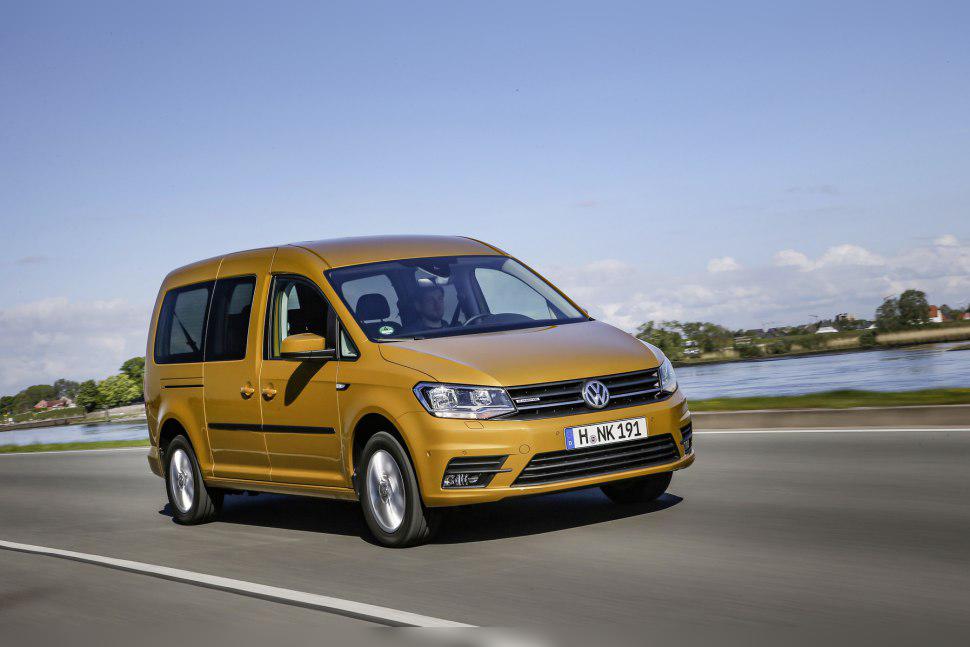
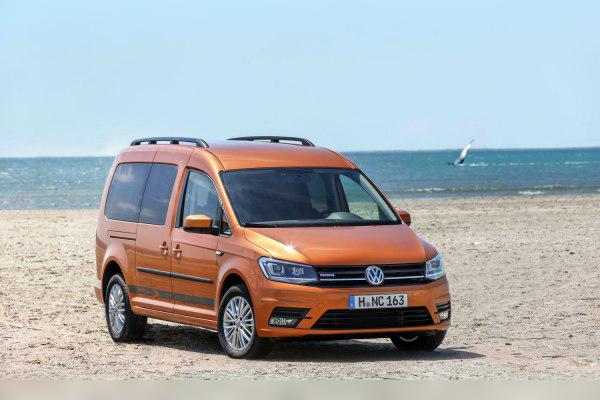
2.0 TDI (EA288) 150 HP in VW Caddy: Experiences, problems, fuel consumption and buying tips
Key points (TL;DR)
- Best option: With 150 HP and 340 Nm, this is by far the best engine for the Caddy (especially the Maxi version), turning it from a sluggish van into a very capable passenger vehicle.
- Timing belt: It uses a timing belt, but pay attention to the water pump, which is the weak point of this system.
- AdBlue system: As a Euro 6 engine, it has an SCR catalyst with AdBlue fluid. Heaters and pumps in the AdBlue tank are a common and expensive failure.
- Dual-mass flywheel: Present on both manual and DSG gearboxes. Replacement falls into the "expensive" category.
- DSG maintenance: If the vehicle is equipped with a DSG gearbox, oil changes every 60,000 km are mandatory for longevity.
- Oil consumption: Generally not a pronounced issue as with older generations, but regular checks are necessary.
- Recommendation: Ideal for heavy loads, towing trailers and frequent highway or open-road driving.
Contents
- Introduction and Models
- Technical specifications
- Reliability and maintenance
- Specific parts and systems
- Fuel consumption and performance
- Tuning and modifications
- Gearbox and drivetrain
- Used-buying guide and conclusion
Introduction: The engine that changes the Caddy’s character
The engine we’re talking about today belongs to Volkswagen’s EA288 diesel family. Specifically, the variants with codes CUUB and DFSB represent the top of the range for the fourth-generation Caddy. Unlike the ubiquitous 1.6 TDI or weaker 2.0 TDI versions (75 or 102 HP), the 150 HP version drastically changes the usability of this vehicle.
This engine is installed in the standard Caddy IV as well as the extended Caddy Maxi IV. It is available with front-wheel drive, but also as 4MOTION (all-wheel drive), which makes it extremely popular in alpine regions and among services that require good traction. Due to Euro 6 standards, this is a modern “Clean Diesel” unit, which brings a certain complexity in the exhaust aftertreatment systems.
Technical specifications
| Specification | Value |
|---|---|
| Engine displacement | 1968 cc (2.0 L) |
| Power | 110 kW (150 HP) at 3500–4000 rpm |
| Torque | 340 Nm at 1750–3000 rpm |
| Engine codes | CUUB, DFSB (EA288 family) |
| Injection system | Common Rail (Bosch), up to 2000 bar |
| Charging type | Variable-geometry turbocharger (VGT) + intercooler |
| Emissions standard | Euro 6 (with AdBlue system) |
Reliability and maintenance
Timing belt and major service
The EA288 engine uses a timing belt for valve timing. This is a classic solution that is quieter than a chain, but requires strict maintenance. The factory interval for the “major service” (belt, tensioner and water pump replacement) is often optimistically set at 210,000 km.
Workshop experience: Do not wait for 210,000 km. I recommend replacement at a maximum of 150,000 to 160,000 km or 5–7 years of age. The weakest link here is not the belt itself, but the water pump. On these engines, the pump has a variable sleeve that is electronically controlled for faster engine warm-up. That mechanism often sticks, which leads to engine overheating. If you notice that coolant temperature fluctuates or jumps above 90°C, that’s the first warning sign.
Oil: Capacity and consumption
This engine takes approximately 4.6 to 4.7 liters of oil (always buy 5 liters). You must use 5W-30 or 0W-30 oil that meets the strict VW 507.00 specification. This is crucial because of the DPF filter; using the wrong oil will permanently clog it with ash.
As for oil consumption, the EA288 is significantly better than the older PD engines. Consumption of about 0.5 liters per 10,000 km is considered completely normal and acceptable. If it uses more than a liter between services, you should check the turbocharger condition or possible leaks on the seals.
Injectors
The system uses Bosch electromagnetic (solenoid) injectors on most 150 HP versions, which have proven to be very durable. Unlike the older piezo injectors, which were more sensitive, these can easily cover 250,000+ km with good-quality fuel. Symptoms of bad injectors are “hammering” noise on cold start, rough idle or increased smoke. Reconditioning is possible, but the price depends on the market (falls into the mid-to-expensive range).
Specific parts (costs)
Dual-mass flywheel
Yes, this 150 HP and 340 Nm engine definitely has a dual-mass flywheel, regardless of whether it is paired with a manual or DSG gearbox. In the Caddy, which is often used for heavy loads, flywheel life can be shorter than in a Golf or Passat.
Failure symptoms are metallic knocking at idle that disappears when you press the clutch (on manuals), or strong vibrations when switching the engine off. Replacement is expensive (depends on the market), because the clutch kit is usually replaced together with the flywheel.
Turbocharger
The engine has a single turbocharger with variable geometry. It is not prone to sudden failures if the oil is changed regularly (every max 15,000 km). The actuator (vacuum or electronic) that controls the vanes can cause problems. If the car loses power (goes into “limp mode”) during overtaking and comes back to life after restarting, the likely cause is a sooted-up geometry or a faulty actuator.
Emissions: DPF, EGR and AdBlue
This is the most complex part of the EA288 engine in the Caddy.
- DPF filter: Located close to the engine for faster warm-up. Generally reliable if the car is driven on open roads. City driving clogs it quickly.
- EGR valve: Often integrated with the EGR cooler. The coolers are prone to cracking or leaking coolant into the engine. If you’re losing coolant and there’s no puddle under the car, this is suspect number one.
- AdBlue (SCR): This is a frequent source of headaches. The system consists of a tank, heater, pump and injector. In winter, the AdBlue heater often fails (because urea crystallizes). The injector that sprays AdBlue into the exhaust can also clog with white crystals (“scale”). AdBlue system repairs are very expensive (depends on the market) and often require replacement of complete modules.
Fuel consumption and performance
Real-world fuel consumption
The Caddy is not aerodynamic – it’s a box on wheels. That’s why fuel consumption is higher than in a Golf with the same engine.
- City driving: Expect between 7.5 and 9.0 l/100 km, depending on traffic and whether the Caddy is loaded. In the city, the DSG gearbox can slightly increase consumption compared to a careful driver with a manual gearbox.
- Country roads (up to 90 km/h): This is where it’s most economical, you can get it down to about 5.5–6.0 l/100 km.
- Motorway (130 km/h): Due to high aerodynamic drag, consumption rises to about 7.0–8.5 l/100 km.
Is the engine “lazy”?
Absolutely not. With 340 Nm of torque, the Caddy 2.0 TDI 150 HP goes surprisingly well. Even when a Caddy Maxi is loaded with 500 kg of cargo, this engine has enough breath for overtaking. In an empty vehicle, performance is almost sporty for this class (0–100 km/h in about 10 seconds). On the motorway at 130 km/h in 6th gear (DSG or manual), the engine spins at a relaxed 2200–2400 rpm, which makes driving quiet and comfortable.
Additional options and modifications
Chip tuning (Stage 1)
This engine responds very well to chip tuning. Since it is hardware-wise very similar to the 184 HP versions (used in the Golf GTD, with minor differences), a Stage 1 remap safely raises it to about 185–190 HP and 400+ Nm.
Warning: If you have a manual gearbox, the clutch will wear out faster with 400+ Nm. If you have a DSG, it needs to be adjusted in software (TCU tuning) to make full use of that power and increase clutch pressure.
Gearbox
Manual gearbox (6-speed)
Precise and robust. The most common issue is the already mentioned dual-mass flywheel. According to the factory, gearbox oil is “lifetime”, but it’s recommended to change it every 100,000 km for smoother shifting in winter. The cost of replacing the clutch kit with the flywheel is significant (depends on the market).
DSG gearbox (6-speed – DQ250)
The 2.0 TDI 150 HP usually comes with the proven DQ250 6-speed wet-clutch DSG. This is one of the best automatic gearboxes out there.
- Most common failures: Mechatronics (the gearbox brain) and the clutch pack. These failures are usually the result of poor or no maintenance.
- Maintenance: Oil and filter changes in the DSG are MANDATORY every 60,000 km. If you’re buying a used car without proof of this service, you risk a failure that costs “very expensive” (depends on the market).
- Symptoms of problems: Jerking when taking off, hesitation when shifting, thumps when shifting from P to D or R.
4MOTION (Haldex coupling)
If you’re looking at a 4x4 version, be aware that it uses a 5th-generation Haldex coupling. It also has its own oil that needs changing (recommended every 40,000–60,000 km), and it often has a strainer (filter) that must be cleaned, even though VW officially does not sell that filter as a spare part. A clogged Haldex pump means your 4x4 system won’t work when you need it most.
Used-buying guide and conclusion
When buying a Caddy with this engine, make sure you do the following:
- Cold start: Listen for metallic knocking (flywheel) or rough running (injectors).
- Coolant check: Look at the coolant reservoir. If the level is low or you see traces of leakage around the engine, the water pump or EGR cooler are likely due for replacement.
- Diagnostics: Check DPF saturation and the condition of the AdBlue system. Fault codes related to “reductant heater” or “pump” mean upcoming expenses.
- DSG test: The gearbox must shift imperceptibly. Any thump is a bad sign.
Final verdict
The VW Caddy 2.0 TDI (150 HP) is probably the best small van/compact transporter on the market in that generation. The engine is powerful, refined and turns the Caddy into a vehicle with which you can comfortably cover 1000 km in a single day. Although maintenance is more expensive than on the simpler 1.6 TDI models (due to the AdBlue system, dual-mass flywheel and overall complexity), the performance and durability of the engine’s mechanical core justify it.
Recommendation: Ideal for families (Maxi version) or small business owners who haul heavier loads and often drive on motorways. Avoid it if you drive exclusively short city trips (because of the DPF).
Was this content useful to you?
Your opinion helps us to improve the quality of the content.