EA211 / CPWA Engine
- Engine
- 1395 cm3
- Aspiration
- Turbocharger, Intercooler
- Fuel
- Petrol / CNG
- Fuel injection system
- Direct injection and Multi-port manifold injection
- Power
- 110 hp
- Torque
- 200 Nm
- Cylinders
- 4
- Valves
- 16, 4 per cylinder
- Cylinders position
- Inline
- Valvetrain
- DOHC
- Oil capacity
- 4 l
- Coolant
- 5.6 l
- Systems
- Start & Stop System
# Vehicles powered by this engine

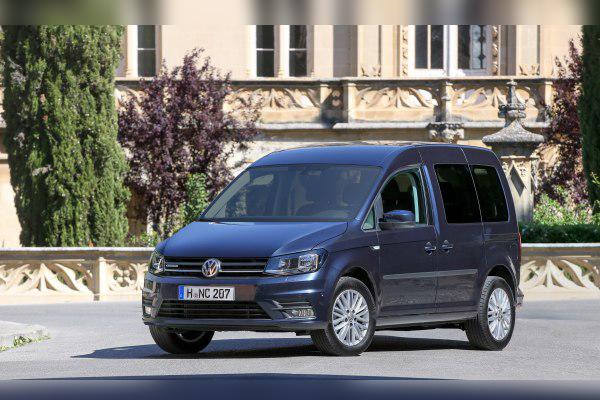
1.4 TGI (EA211 / CPWA) in VW Caddy models: Experiences, issues, fuel consumption and maintenance
Key points (TL;DR)
- Economy champion: Driving on methane (CNG) is drastically cheaper than on diesel or petrol.
- More reliable design: The EA211 series solved the problematic timing chain from previous generations and now uses a timing belt.
- Limited range: Pay attention to the petrol tank size (often only 13 liters) and the availability of CNG stations.
- System complexity: Although the engine itself is reliable, maintenance of the CNG system (tanks, valves, pressure regulator) requires specialized workshops.
- Performance: 110 hp is “just enough” for an empty Caddy, but under full load on inclines the lack of power is noticeable.
- DSG gearbox: Requires caution when buying due to potentially expensive failures of the mechatronics unit and clutches (dry type).
Contents
- Introduction and applications
- Technical specifications
- Reliability and maintenance
- Specific parts and costs
- Fuel consumption and performance
- Additional options and modifications
- Gearbox: Manual and DSG
- Buying used and conclusion
Introduction: An eco-friendly workhorse in a delivery van body
The engine designated as 1.4 TGI (engine code CPWA) belongs to Volkswagen’s modern EA211 engine family. This is not an aftermarket gas conversion done by “a neighbor in his garage”, but a factory-designed power unit optimized to run on compressed natural gas (CNG/methane). Installed in the VW Caddy IV and Caddy Maxi IV, this engine was Volkswagen’s answer to increasingly strict emission standards and the need for businesses to reduce fuel costs. Unlike its predecessors (1.4 TSI Twincharger), this engine is simpler, more reliable, yet still technologically advanced. Its main role is to replace diesel engines in urban delivery and taxi service.
Technical specifications
| Specification | Data |
|---|---|
| Engine displacement | 1395 cc (1.4 l) |
| Power output | 81 kW (110 hp) at 4800–6000 rpm |
| Torque | 200 Nm at 1500–3500 rpm |
| Engine code | CPWA (EA211 family) |
| Fuel type | Petrol / CNG (Methane) |
| Injection system | Direct (Petrol) / MPI (Gas – into intake manifold) |
| Induction | Turbocharger with intercooler (water-cooled) |
Reliability and maintenance
Does this engine have a timing belt or a chain?
Fortunately, EA211 engines, including this 1.4 TGI, use a timing belt. This is a big step forward compared to the older EA111 engines, which had problematic chains that tended to stretch and snap. The belt is reinforced and designed to last a long time, but considering the number of operating hours that Caddy vehicles often accumulate (especially in taxi and delivery use), a visual inspection is recommended at every service after 120,000 km.
What are the most common failures on this engine?
Although the mechanical base of the engine (pistons, block, head) is very robust, issues usually come from the peripherals:
- Gas pressure regulator: The electronic regulator can fail, which leads to the inability to drive on methane. The symptom is automatic switching to petrol even though there is gas in the tanks.
- Corrosion of methane tanks: On older Caddy models, the tanks mounted under the vehicle (protected by plastic covers) can corrode. This is a serious safety risk, and at the technical inspection you can be turned back if the tanks do not have a valid certification or are damaged.
- Fuel pressure sensor: Sometimes gives false readings, triggering the “Check Engine” light.
- Tank valves (solenoids): The electromagnetic valves on the tanks themselves can seize, preventing gas flow to the engine.
- Turbo wastegate actuator: The lever that controls the turbo can stick, leading to loss of power (limp mode).
At what mileage should the major service be done?
The manufacturer specifies a very long interval (sometimes up to 210,000 km for the belt under ideal conditions), but that is overly optimistic for real-world use, especially in city driving. Experienced mechanics recommend that the timing kit (belt, tensioners, water pump) be replaced between 150,000 km and 180,000 km or after 8 to 10 years of age, whichever comes first.
How many liters of oil does this engine take and which grade is recommended?
The sump holds approximately 3.6 to 4.0 liters of oil (always buy 4 or 5 liters). The recommended grade is 5W-30 or 5W-40, and the oil must meet strict VW standards, most commonly VW 502.00 (for fixed intervals) or VW 504.00 (for LongLife). Due to the higher combustion temperatures of methane, high-quality oil is crucial.
Does it consume oil between services?
Unlike older TSI engines, the 1.4 TGI (EA211) is not known as a heavy oil consumer. Consumption of up to 0.5 liters per 10,000 km is considered perfectly acceptable. If it consumes more than 1 liter per service interval, this may indicate an issue with the piston rings or turbocharger, but this is not a design flaw – it is usually the result of high mileage or poor maintenance.
At what mileage should the spark plugs be replaced?
This is a critical question for TGI engines. Methane is harder to ignite than petrol and requires a stronger spark. Spark plugs must be replaced more frequently than on pure petrol engines. The recommendation is replacement every 40,000 to 60,000 km. Always use spark plugs specifically designed for CNG (often laser iridium), because standard plugs can cause misfires and damage to the ignition coils.
Specific parts (costs)
Does the engine have a dual-mass flywheel?
Yes. Most 1.4 TGI models in the Caddy (especially with the DSG gearbox, but also with the manual) are equipped with a dual-mass flywheel. Although the torque of 200 Nm is not very high, the dual-mass flywheel serves to dampen engine vibrations, which can be more pronounced when running on methane. Its service life is usually around 150,000–200,000 km, depending on driving style.
What kind of injection system does it have and are the injectors problematic?
The engine has two sets of injectors. For petrol it uses direct injection (TSI), while for methane it uses port injection into the intake manifold (MPI). Petrol injectors tend to clog if the vehicle is driven 99% of the time on methane, because the petrol sitting in the system creates deposits (“varnish”). It is recommended to occasionally drive on petrol (e.g. once a month on the highway) to clean the system. The methane injectors are generally reliable, but their replacement is expensive (very expensive, depending on the market).
Does the engine have a turbocharger and what is its lifespan?
It has a single turbocharger. It is a small turbo designed to provide torque at low revs. It is very reliable and rarely fails before 200,000 km, unless the engine is switched off immediately after hard driving or poor-quality oil is used.
Does this model have a DPF filter or EGR valve?
It does not have a DPF filter (because it is not a diesel) and it does not use AdBlue. However, it does have a catalytic converter that is specific to TGI engines. Newer models (from around 2018/19 onwards) may have a GPF (Gasoline Particulate Filter), but since methane burns very cleanly, clogging of this filter is extremely rare compared to diesels.
Fuel consumption and performance
What is the real-world fuel consumption in city driving?
The Caddy is heavy and has poor aerodynamics (a “box”).
City driving (CNG): Expect consumption between 6.0 and 7.5 kg of methane per 100 km, depending on traffic and load.
Petrol: If you drive on petrol, city consumption easily climbs to 9–10 l/100 km.
Is this engine “lazy” for the weight of the body?
With 110 hp and 200 Nm, the engine is adequate, but not sporty. In the city, thanks to the turbo that spools from low revs, the Caddy TGI feels lively. However, if you load a Caddy Maxi with 500–600 kg of cargo and turn on the air conditioning, the engine will struggle on inclines and will require frequent downshifts. Overtaking on country roads requires planning.
How does the engine perform on the highway?
On the highway, at 130 km/h, the engine runs at somewhat higher revs (around 3000 rpm in 6th gear, depending on the gearbox). Consumption is then around 4.5–5.5 kg of CNG per 100 km. Wind noise is more noticeable than engine noise. Top speed is around 170 km/h, but anything over 130 km/h drastically increases consumption due to air resistance.
Additional options and modifications
Is this engine suitable for LPG installation?
Absolutely not, and it is unnecessary. This engine already runs on CNG (methane), which is cheaper and more environmentally friendly than LPG. Installing LPG would be technically extremely complicated (due to the existing methane tanks and petrol direct injection) and financially unprofitable.
How far can this engine be safely “chipped” (Stage 1)?
Even though it is a turbo engine, remapping is NOT recommended. TGI engines operate under higher thermal loads due to methane combustion. Increasing turbo pressure and power could lead to overheating of the valves, turbo damage, or issues with the CNG injectors, which are calibrated for the factory map. The gain would be small (maybe up to 130 hp), while the risk of expensive failures would be huge.
Gearbox: Manual and DSG
Which gearboxes are fitted?
The Caddy TGI comes with either a 6-speed manual gearbox or a DSG automatic gearbox (most commonly 7-speed, code DQ200).
Most common gearbox issues
- Manual: Very reliable. Failures are rare, usually limited to oil leaks at the seals after high mileage.
- DSG (DQ200): This is a gearbox with “dry” clutches. In the Caddy, which is a heavy vehicle, this gearbox is subjected to higher loads. The most common issues are worn clutch pack (symptoms: shuddering when moving off, slipping) and mechatronics failure (the gearbox control unit). Mechatronics repairs are very expensive (depending on the market).
Gearbox servicing
- Manual: VW says the oil is “lifetime fill”, but it is recommended to change it every 100,000 km.
- DSG (DQ200): Officially, the oil is not changed, but mechanics recommend changing the oil in the mechanical part and the hydraulic oil in the mechatronics every 60,000–80,000 km to extend its service life.
Buying used and conclusion
Before buying a used Caddy 1.4 TGI, make sure to check:
- Tank certification: The tanks have a service life (usually 20 years), but they must undergo periodic inspections (re-certification) every 4 years (laws vary by country). Check whether the tanks are corroded, because replacing the complete set of tanks can cost more than half the value of the vehicle.
- Operation on both fuels: The engine must start on petrol (when cold), and then automatically and seamlessly switch to gas once it warms up. If it cranks for a long time or jerks when switching, there is a problem with the regulator or injectors.
- Petrol tank size: Many Caddy TGI models have a petrol tank of only 13 liters (so that the vehicle can be classified as mono-fuel for tax purposes). This means that if you run out of methane, you only have a range of about ~150 km on petrol. Check this before a long trip!
- Flywheel noise: Listen for metallic knocking when switching off the engine or a change in sound when you press the clutch at idle.
Final conclusion
The VW Caddy 1.4 TGI is an excellent choice for taxi drivers, courier services and small businesses that cover high mileage in city driving. The fuel savings are huge and will quickly offset the potentially higher maintenance costs of the CNG system. The EA211 engine is reliable but requires disciplined maintenance. Avoid examples with dubious service history, especially if they have a DSG gearbox, and always prioritize those with certified and healthy tanks.
Was this content useful to you?
Your opinion helps us to improve the quality of the content.