EA211 / CHZG Engine
- Engine
- 999 cm3
- Aspiration
- Turbocharger, Intercooler
- Fuel
- Petrol (Gasoline)
- Fuel injection system
- Direct injection
- Power
- 102 hp
- Torque
- 175 Nm
- Cylinders
- 3
- Valves
- 12, 4 per cylinder
- Cylinders position
- Inline
- Valvetrain
- DOHC
- Oil capacity
- 4 l
- Systems
- Start & Stop System
# Vehicles powered by this engine

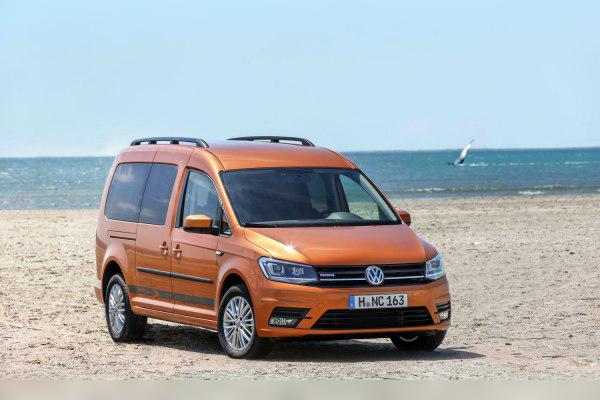
In short: 1.0 TSI in the VW Caddy – Little giant or too much to ask?
- Timing belt: Unlike the old chain-driven TSI engines, this one uses a reliable timing belt.
- Power vs. Weight: With 102 hp and 175 Nm, this engine is perfectly adequate for an empty Caddy, but it struggles when the vehicle is loaded (especially the Maxi version).
- Oil consumption: Generally low, but with frequent high‑rev driving (motorway) it can "drink" a bit of oil.
- Main weak point: The thermostat housing and water pump are prone to leaks.
- City driving: Excellent in town, reaches operating temperature quickly and is quiet.
- Dual‑mass flywheel: Yes, due to the nature of a 3‑cylinder engine, it often has a dual‑mass flywheel to dampen vibrations.
- Recommendation: Ideal for light urban deliveries and family use without heavy loads. For serious hauling, go for the 2.0 TDI.
Contents
Introduction: EA211 1.0 TSI (CHZG) – Is 1000 cc enough for a van?
When Volkswagen decided to put a three‑cylinder 1.0 TSI engine into a vehicle the size of the Volkswagen Caddy IV (even in the extended Maxi version), many traditional drivers were skeptical. Used to robust diesels, the idea of a "one‑liter mill" in a delivery vehicle seemed risky.
However, the engine code CHZG belongs to the advanced EA211 family. This is not just "one cylinder chopped off" from a bigger engine, but an engineering‑optimized unit designed to deliver torque at low revs with minimal fuel consumption. In this article we’ll take a detailed look at how this engine copes with the Caddy’s weight, what owners can expect in terms of maintenance, and whether it’s a smart purchase.
Technical Specifications
| Feature | Value |
|---|---|
| Engine displacement | 999 cc (1.0 L) |
| Configuration | R3 (Inline, 3 cylinders) |
| Power | 75 kW (102 hp) at 5000–5500 rpm |
| Torque | 175 Nm at 1500–3500 rpm |
| Engine code | CHZG (EA211 series) |
| Injection system | TSI (Turbo Stratified Injection) – Direct injection |
| Charging | Turbocharger + intercooler (integrated into intake manifold) |
| Camshaft drive | Timing belt (belt) |
Reliability, Failures and Maintenance
Timing belt or chain?
Unlike the notorious older generation of TSI engines (EA111) that suffered from timing chain stretch, the CHZG (EA211) engine uses a timing belt. This is excellent news for owners.
When should it be replaced? For this engine Volkswagen often lists "lifetime" inspection or replacement at as much as 210,000 km. As an experienced editor, I advise you to ignore that. Due to real‑world driving conditions and material aging, the major service (replacement of belt, tensioner and water pump) should be done between 150,000 km and 180,000 km or every 7 to 10 years, whichever comes first. A snapped belt means catastrophic engine damage, so prevention is cheaper than repair.
Oil consumption and service intervals
This engine takes approximately 4.0 liters of engine oil (always check the exact amount when filling). The recommended grade is usually 5W‑30 or 0W‑20 (VW 508.00 or 504.00 specification; check the owner’s manual as it depends on model year and market).
Does it burn oil? EA211 engines are much better in this regard than their predecessors. Still, it is normal for the engine to "drink" up to 0.3–0.5 liters per 10,000 km, especially if the Caddy is driven under load on the motorway. If consumption exceeds 1 liter over a few thousand kilometers, that points to an issue with piston rings or the turbo, which is not typical at low mileage.
Most common issues
- Thermostat housing and water pump: This is the "Achilles’ heel" of EA211 engines. The housing is plastic and deforms over time from heat, which leads to coolant leaks. Symptoms include a dropping coolant level and the smell of vapors under the bonnet.
- Carbon buildup: Since this is a direct‑injection engine, fuel does not wash over the intake valves. Over time, carbon deposits build up on the valves, which can cause rough running and power loss at higher mileage (over 150,000 km).
- Spark plugs: It’s recommended to replace them every 60,000 km. Three‑cylinder engines are sensitive to bad plugs and you’ll immediately notice it as vibrations and rough running (misfiring).
Specific Components and Costs
Dual‑mass flywheel and clutch
This is a frequent question. Although the engine is small, it is a three‑cylinder, which means it naturally has more vibration (imbalance) than a four‑cylinder. To keep driving comfort acceptable and protect the gearbox, the 1.0 TSI in the Caddy most often comes with a dual‑mass flywheel.
The cost of replacing the clutch kit with flywheel falls into the expensive category (varies by market), but it is still cheaper than on the 2.0 TDI models. Symptoms of a worn flywheel include rattling when switching the engine off and vibrations in the clutch pedal.
Turbocharger and injection
The engine has a single small turbocharger that is very responsive. Its service life is generally long and it often outlasts the engine itself if oil changes are done regularly. However, the turbo actuator (the electronic part that regulates boost pressure) can stick, which leads to power loss and an illuminated "Check Engine" light.
The injection system is direct (high pressure). The injectors are precise and generally not problematic like older diesel injectors, but they are sensitive to poor‑quality petrol. Replacing injectors is expensive, but rarely needed.
Emissions: GPF, EGR and AdBlue
Since this is a petrol engine, there is no AdBlue system – one less thing to worry about. As for particulate filters:
- GPF (Gasoline Particulate Filter): Newer models (especially from 2018 onwards and Euro 6d‑TEMP) are equipped with a GPF. It rarely clogs because petrol exhaust gases reach higher temperatures than diesel, so regeneration usually happens passively while driving.
- EGR: There is an exhaust gas recirculation system, but it is not prone to clogging nearly as much as on diesel engines.
Fuel Consumption and Performance: Real‑world impressions
City driving and "sluggishness"
In urban conditions, the engine is surprisingly lively. The 175 Nm of torque is available from just 1500 rpm, which means the Caddy pulls nicely away from the lights. Real‑world city consumption is between 7.0 and 8.5 l/100 km, depending on traffic and how heavy your right foot is.
Is it sluggish? If the Caddy is empty – no. But if you load a Caddy Maxi with 500 kg of cargo and turn on the air‑conditioning, the engine will struggle. The lack of displacement is noticeable when starting uphill under load.
Motorway and cruising
This is not the natural habitat for a 1.0 TSI in a Caddy body (which has the aerodynamics of a brick). At 130 km/h, the engine spins at relatively high revs (often around 3000 rpm in 5th gear), and fuel consumption jumps to over 8.5–9.0 l/100 km. Wind and engine noise become noticeable. Overtaking on the motorway requires planning and dropping down a gear.
Additional Options and Modifications
LPG conversion
Since the engine uses direct injection (TSI), an LPG conversion is complicated and expensive. You can’t just fit a regular sequential system. You need a system that either uses liquid‑phase LPG injection (very expensive) or one that injects a mix of petrol and LPG (to cool the petrol injectors). Such an investment only really pays off if you cover very high mileage.
Remapping (Stage 1)
This engine can be tuned via software (remap). A Stage 1 usually raises power to around 115–125 hp and torque to around 200–210 Nm. While the engine can handle this, you should be careful with the clutch and turbo, especially in a heavy vehicle like the Caddy. The improvement in flexibility is noticeable, but don’t expect miracles.
Gearbox: Manual vs Automatic
Manual gearbox (5 or 6 speeds)
Most often it comes with a 5‑speed manual gearbox. These gearboxes are precise and reliable. Most common issues: Over time, the gearbox bearings can wear (humming noise), but this happens at high mileage. An oil change in the gearbox is recommended every 100,000 km even though the manufacturer says it’s not necessary.
Automatic gearbox (DSG – DQ200)
If the Caddy has an automatic, it is a 7‑speed DSG with dry clutches (DQ200). This is a gearbox that requires caution. Failures: The mechatronics unit (electronic control unit) and clutch pack are sensitive to stop‑and‑go city driving. DSG repairs fall into the very expensive category. If you’re buying a used Caddy with a DSG, make sure to check whether the gearbox "jerks" when setting off or shifting.
Buying Used and Conclusion
What to check before buying?
- Cold start noise: The engine should run smoothly. You shouldn’t hear any chain rattle (it has a belt), but knocking may indicate issues with valve lifters or pistons.
- Coolant level: Check the expansion tank. If the level is low or there are traces of leaks around the engine (on the right‑hand side when viewed from the front), set money aside for a new thermostat housing.
- Clutch: Try starting uphill. If there are vibrations, the flywheel is nearing the end of its life.
- Service history: Check whether the oil has been changed regularly (every 15,000 km at most, never at 30,000 km "Long Life" intervals).
Final verdict
The 1.0 TSI (102 hp) engine in the VW Caddy is a rational choice for a specific type of buyer. If you need a vehicle for city distribution, transporting light cargo (flowers, medicine, mail) or as a family car for shorter trips – this is an excellent, modern and quiet engine.
However, if you plan to use the Caddy as a "pack mule" for building materials, tow a trailer or drive hundreds of motorway kilometers every day, this engine is not for you. In that case, the 2.0 TDI remains the undisputed king, despite the higher cost of maintaining its emissions systems.
Was this content useful to you?
Your opinion helps us to improve the quality of the content.