CZCA, CZCB Engine
- Engine
- 1395 cm3
- Aspiration
- Turbocharger, Intercooler
- Fuel
- Petrol (Gasoline)
- Fuel injection system
- Direct injection
- Power
- 125 hp
- Torque
- 220 Nm
- Cylinders
- 4
- Valves
- 16, 4 per cylinder
- Cylinders position
- Inline
- Oil capacity
- 4 l
# Vehicles powered by this engine
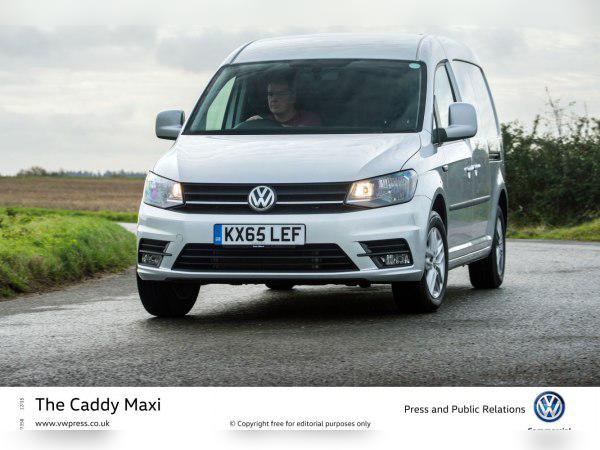
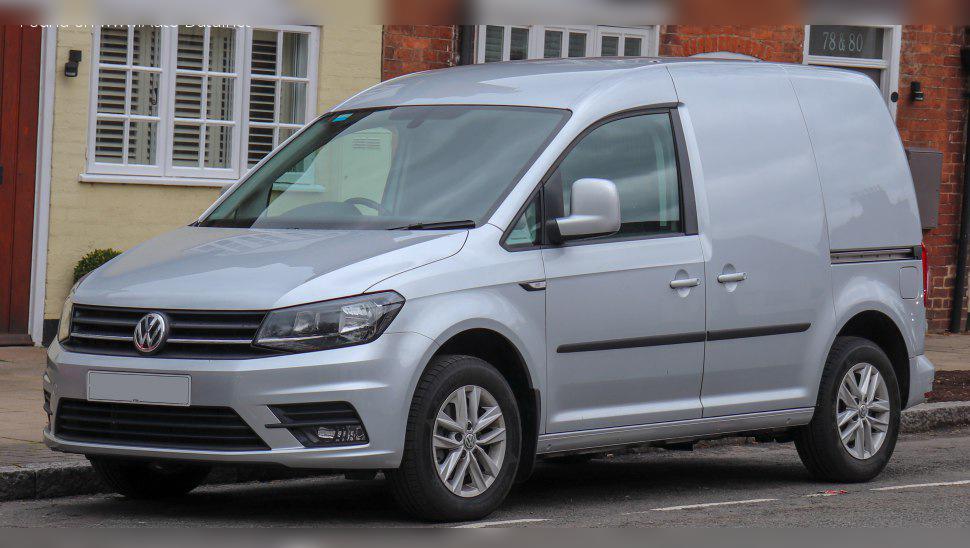
1.4 TSI (CZCA, CZCB) in VW Caddy IV: Experiences, Issues, Fuel Consumption and Maintenance
1. The most important in short (TL;DR)
- Major improvement: This is an EA211 series engine, which means it has a timing belt, not the problematic chain like the older 1.4 TSI engines.
- Reliability: Generally a very reliable petrol engine, an ideal alternative to diesel for city driving.
- Most common failures: Thermostat housing and water pump (coolant leaks) and turbo actuator.
- Gearbox: Comes with a manual or DSG (DQ200) gearbox. DSG requires caution when buying (dry clutch).
- Fuel consumption: Higher in the Caddy than in the Golf due to the “box” aerodynamics; expect around 7–9 liters in the city.
- Direct injection: Requires quality fuel and occasional “blowing out” on the open road due to carbon deposits on the valves.
Contents
- Introduction and engine application
- Technical specifications
- Reliability and maintenance
- Specific components (Injection system, Turbo, Flywheel)
- Fuel consumption and performance
- Additional options (LPG, Tuning)
- Gearbox (Manual vs DSG)
- Buying used and conclusion
Introduction and engine application
The engines with codes CZCA and CZCB belong to the modern EA211 family of Volkswagen power units. Unlike their predecessors (EA111), which caused headaches for owners due to chain failures and oil consumption, this generation was designed “from scratch” to correct those mistakes.
In the Volkswagen Caddy IV (including Maxi versions), this 125 hp engine is the “golden middle ground”. It is not as underpowered as the 1.0 or 1.2 TSI, and it is not excessively expensive to maintain. It is primarily intended for those who use the Caddy in urban environments where modern diesels suffer from clogged DPF filters. This is a workhorse for deliveries, family trips and small business owners who want the quietness of a petrol engine and the responsiveness of a turbo.
Technical specifications
| Characteristic | Data |
|---|---|
| Engine displacement | 1395 cc (1.4 liters) |
| Power | 92 kW / 125 hp |
| Torque | 220 Nm (available from low revs) |
| Engine codes | CZCA, CZCB |
| Injection type | TSI – Direct petrol injection |
| Charging method | Turbocharger + intercooler (water–air integrated into the intake) |
| Timing drive | Timing belt |
| Number of cylinders/valves | 4 cylinders / 16 valves |
Reliability and maintenance
Does this engine have a timing belt or a chain?
This is the most important question, and the good news is: the 1.4 TSI (CZCA/CZCB) uses a timing belt. Volkswagen abandoned the chain that used to stretch on the old 1.4 TSI engines. The new belt system is very reliable, quieter and cheaper to replace in case of failure, although regular servicing is mandatory.
What are the most common issues with this engine?
Although it is more reliable than its predecessors, there are specific points to pay attention to:
- Water pump and thermostat housing: This is the “Achilles’ heel”. The housing is made of plastic and deforms over time due to thermal cycles, which leads to coolant leaks. Symptom: Coolant level dropping without a visible puddle under the car (it often evaporates on the block).
- Turbo actuator (wastegate): The lever that regulates turbo pressure can seize or develop play. Symptoms: Loss of power, “Check Engine” light (EPC fault) and rattling when lifting off the throttle.
- Carbon buildup: As with any direct-injection engine, the intake valves are not “washed” by fuel. Soot builds up over time, which can lead to rough idle and a slight power loss at higher mileage.
At what mileage should the major service be done?
The manufacturer often states optimistic intervals of 210,000 km for checking or replacing the belt (“Long Life” philosophy). However, practice and mechanics’ experience say otherwise. For peace of mind, the recommendation is: Do the major service between 160,000 km and 180,000 km, or every 6 to 8 years, whichever comes first. The rubber of the belt ages regardless of mileage.
How many liters of oil does this engine take and which grade is recommended?
The engine takes approximately 4.0 to 4.5 liters of oil (always buy 5 liters). The most commonly recommended grade is 5W-30 (VW 504.00 / 507.00 standard) for our climate and fixed change intervals. For newer vehicles with flexible intervals, 0W-20 (VW 508.00) is also used, but for a Caddy used as a work vehicle, 5W-30 is often a better choice for engine protection under load.
Does it consume oil between services?
This generation (EA211) consumes drastically less oil than the old TSI engines, which could drink a liter per 1000 km due to poor piston rings. Still, consumption of 0.5 to 0.8 liters per 10,000 km is considered completely normal and acceptable, especially if driven aggressively or under full load. If you have to top up a liter every 2–3 thousand km, that indicates a problem (turbo or piston rings).
At what mileage should the spark plugs be replaced?
Since this is a turbocharged petrol engine with direct injection, the spark plugs are under higher stress. The recommendation is to replace them every 60,000 km. Do not skimp on spark plugs; use only those specified by the manufacturer (e.g. NGK or Bosch iridium) because bad plugs can damage the coils (ignition coils).
Specific components (Costs)
Does the engine have a dual-mass flywheel?
Yes. The 125 hp version (with 220 Nm of torque), especially in a heavier vehicle like the Caddy, is usually equipped with a dual-mass flywheel to reduce vibrations and protect the gearbox. This applies to both manual and DSG gearboxes. In DSG gearboxes, the flywheel is a common wear item.
What kind of injection system does it have and are the injectors problematic?
The system is direct injection (TSI) under high pressure. The injectors are generally very reliable and rarely cause problems before 200,000 km. However, they are sensitive to poor fuel quality. Symptoms of a bad injector can be leaking (smell of petrol in the oil) or uneven running of a cylinder. The price of new injectors is high (very expensive, depends on the market).
Does the engine have a turbocharger and what is its lifespan?
The engine has a single turbocharger integrated with the exhaust manifold. The turbo’s lifespan is long and often exceeds 200,000 km with regular oil changes. The most common issue is not the turbo itself (bearings/shaft), but the electronic actuator (wastegate valve) that gets stuck. Fortunately, on this engine the actuator can be replaced or refurbished without changing the entire turbo, which significantly reduces costs.
Does this model have a DPF filter or an EGR valve?
Since it is a petrol engine, it does not have a DPF filter in the classic diesel sense. However, models produced from late 2018 (due to Euro 6d-TEMP standards) may have a GPF (OPF) filter (gasoline particulate filter). Check by year of manufacture. GPFs rarely clog because exhaust gas temperatures in petrol engines are higher.
There is no EGR valve in the classic form of an external valve that gets sooted up. This engine uses a variable valve timing (VVT) system to achieve the effect of internal exhaust gas recirculation within the cylinder, which means – one less worry (no EGR valve to clean/replace).
Does this engine use AdBlue?
No. AdBlue fluid is used exclusively in diesel engines (TDI) to reduce NOx emissions. TSI petrol engines do not use an AdBlue system, which simplifies maintenance and removes winter concerns about urea freezing.
Fuel consumption and performance
What is the real fuel consumption in city driving?
The Caddy is heavy and has the aerodynamics of a brick. Although the 1.4 TSI is economical in the Golf, in the Caddy you should expect:
- City driving: Realistically between 8.0 and 9.5 l/100 km. In heavy traffic or if a Caddy Maxi is fully loaded, it can go up to 10 liters.
- Open road: It drops to a pleasant 6.0 to 7.0 l/100 km at speeds up to 90 km/h.
Is this engine “lazy” for the weight of the body?
It is not lazy. With 125 hp and 220 Nm of torque available from as low as 1400–1500 rpm, this engine copes very well with an empty or half-loaded Caddy. It is much livelier than the old 1.6 TDI (102 hp). Only if you plan to load a Caddy Maxi to its maximum payload and drive uphill every day will you feel the lack of torque that the 2.0 TDI engines have.
How does the engine behave on the motorway and at what revs does it cruise at 130 km/h?
On the motorway the engine is quiet and refined. At 130 km/h in the highest gear (6th in the manual or 7th in the DSG), the engine runs at around 2600–2800 rpm. That is comfortable for the ears.
However, due to the Caddy’s large air resistance, fuel consumption rises sharply above 120 km/h (expect around 8–9 liters at 130 km/h).
Additional options and modifications
Is this engine suitable for LPG conversion?
Conditionally yes, but it is expensive. Since this is a direct-injection engine (injectors are in the cylinder), you cannot install a basic sequential LPG system for 300–400 EUR. You must install either a system that uses a mixture of petrol and LPG (to cool the petrol injectors) or a liquid LPG injection system (Direct Liquid Injection) that uses the petrol injectors for gas.
The price of such systems is high (often over 800–1000 EUR, depending on the market), so it only pays off if you cover high mileage (30,000+ km per year).
How far can this engine be safely “chipped” (Stage 1)?
This engine has potential. A Stage 1 remap safely raises it to about 145–150 hp and 250–260 Nm. That makes a drastic difference in driving, especially when overtaking. Since the Caddy is heavy, the extra torque helps a lot. If you have a DSG gearbox, check whether the tuner also does gearbox optimization, because the DQ200 has torque limiters.
Gearbox
Which gearboxes are fitted?
- Manual: 6-speed gearbox (precise, light shift).
- Automatic: 7-speed DSG dual-clutch (code DQ200).
What are the most common failures?
Manual gearbox: Very robust. Failures are rare, possibly oil leaks at the seals at high mileage.
DSG (DQ200): This is a gearbox with “dry” clutches. Although improved compared to older versions, it is still more sensitive than “wet” DSG gearboxes. The most common failures are:
- Mechatronics: The brain of the gearbox; repair is expensive.
- Clutch kit: Wears out faster in stop–go city driving. Symptoms are juddering when moving off or slipping.
What is the cost of replacing the clutch and flywheel?
The cost is significant. For the manual gearbox, a clutch kit with dual-mass flywheel costs (expensive, depends on the market, but count on a standard diesel-like expense). For the DSG gearbox, the clutch kit is also expensive, and replacement requires special tools and calibration, which increases labor costs.
At what mileage does the gearbox need servicing?
- Manual: The manufacturer says “lifetime”, but the recommendation is to change the oil every 100,000 km.
- DSG (DQ200): Officially the oil is not changed (the dry clutch has its own lubrication, the gears their own), but experts recommend changing the oil in the gear section and checking the oil in the mechatronics every 60,000–80,000 km to extend its lifespan.
Buying used and conclusion
When buying a Caddy with this engine, be sure to do the following:
- Cold start: Listen to the engine at the first start. There should be no metallic rattling (hydraulic lifters or turbo actuator).
- Check for coolant leaks: Check the coolant level and look for white traces of dried coolant around the thermostat housing (on the right side of the engine when viewed from the front).
- DSG test: If it is an automatic, the car must move off smoothly when you release the brake, without jerks or knocks. Reversing uphill is an excellent test for clutch wear.
Conclusion: The VW Caddy 1.4 TSI (125 hp) is an excellent choice if you need a spacious car and drive less than 20–25 thousand kilometers a year or mostly in the city. You avoid expensive DPF, injector and EGR failures that plague diesels. The engine is powerful enough, quiet and, with regular cooling system maintenance and oil changes, very durable. If you are choosing between this and the 1.0 TSI or 1.2 TSI – always choose the 1.4 TSI.
Was this content useful to you?
Your opinion helps us to improve the quality of the content.