CUUC, CUUF, DFSC, DFSF Engine
- Engine
- 1968 cm3
- Aspiration
- Turbocharger, Intercooler
- Fuel
- Diesel
- Fuel injection system
- Diesel Commonrail
- Power
- 75 hp
- Torque
- 225 Nm
- Cylinders
- 4
- Valves
- 16, 4 per cylinder
- Cylinders position
- Inline
- Oil capacity
- 4.6 l
- Systems
- Particulate filter
# Vehicles powered by this engine
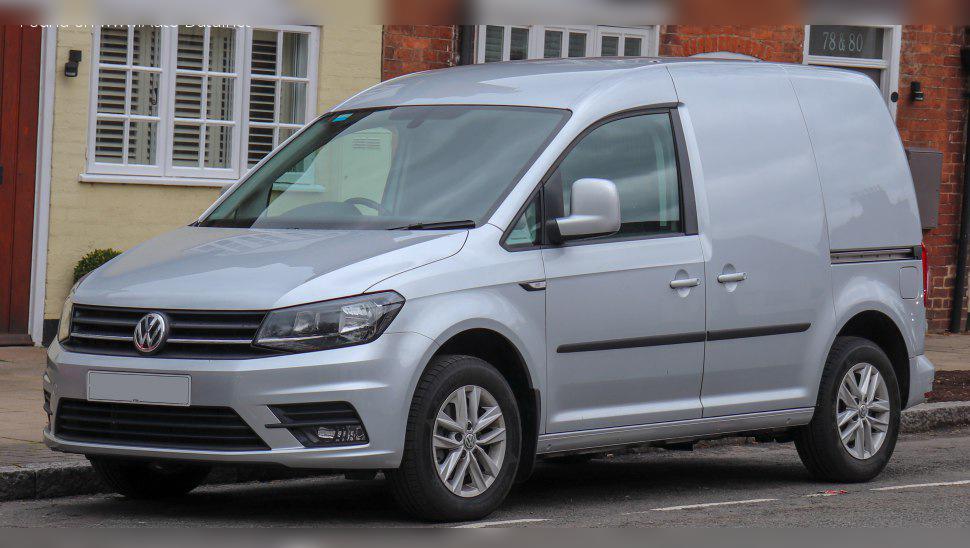
Key takeaways: What you need to know about the 2.0 TDI (75 HP) in the VW Caddy
- Durability: This is a "detuned" version of the 2.0 engine. Since it works under very low load relative to its displacement, it is mechanically extremely long-lasting.
- Performance: With only 75 HP, this engine is very slow. Overtaking on open roads requires serious planning.
- AdBlue system: As with most modern Euro 6 diesels, the urea injection system (AdBlue) is the most common source of headaches and expensive repairs.
- Chip tuning potential: This is one of the best engines for "unlocking" power. It is software-limited, so remapping easily yields drastically more power.
- Purpose: Ideal for city delivery and heavy loads at low speeds thanks to its high torque, but it is not recommended for highway use.
- Maintenance: Standard VW maintenance – parts are widely available, prices are moderate (depends on the market), but it requires quality oil and regular servicing.
Article contents:
VW Caddy IV 2.0 TDI (75 HP) – Experiences, issues and buying advice
When you open the hood of a fourth-generation Volkswagen Caddy and see a 2.0 TDI engine, you usually expect 140 or 150 horsepower. However, here we are talking about specific engine codes CUUC, CUUF, DFSC, DFSF that deliver only 75 HP (55 kW). Many people wonder: why would VW put a two-liter engine and extract power that small 1.2 engines usually have?
The answer lies in durability and emissions. This engine replaced the older 1.6 TDI units in order to meet strict Euro 6 standards, while offering higher torque at low revs, which is crucial for a commercial vehicle that hauls cargo. This is a workhorse, built to cover hundreds of thousands of kilometers under load, but without any sporting ambitions. Below is an analysis of whether this "sleeping giant" is the right choice for you.
Technical specifications
| Parameter | Data |
|---|---|
| Engine displacement | 1968 ccm (2.0 L) |
| Power | 55 kW (75 HP) at 2400–4500 rpm |
| Torque | 225 Nm at 1200–2300 rpm |
| Engine codes | CUUC, CUUF, DFSC, DFSF |
| Injection type | Common Rail (Direct injection) |
| Charging | Turbocharger with intercooler |
| Emissions standard | Euro 6 (with AdBlue system) |
Reliability and Maintenance
Timing belt or chain?
This engine belongs to the EA288 family and uses a timing belt to drive the camshafts. This is good news because modern VW belts are quieter and cheaper to replace than the chains that caused problems on older generations. The water pump is also driven by the timing belt.
Major service – intervals
The factory recommendation for timing belt replacement is often an optimistic 210,000 km. However, as someone who has seen what happens when a water pump seizes or a belt loosens due to rubber aging, my advice is: do the major service at a maximum of 150,000 to 160,000 km or every 5 to 7 years, whichever comes first. The cost of prevention is far lower than an engine failure (depends on the market).
Oil: Quantity and consumption
The oil pan of this engine holds between 5.5 and 6 liters of oil (always check the dipstick after pouring in 5.5 L). You must use oil that meets the VW 507.00 specification, most commonly in 5W-30 or 0W-30 grades. This is crucial because of the DPF filter.
As for oil consumption, these engines are significantly better than the older PD (Pumpe-Düse) units. Consumption of 0.5 liters per 10,000 km is perfectly acceptable and normal. If it uses more than 1 liter per service interval (10–15 thousand km), the turbo or piston rings should be checked, although this is rare at lower mileages.
Most common failures
Although mechanically (pistons, block, head) it is almost indestructible due to the low power output, the peripherals cause issues:
- Water pump: A known problem on EA288 engines is the variable water pump whose flap that regulates flow can get stuck. The symptom is engine overheating under load while the cabin heating is weak.
- Oil leaks: Often appear on the crankshaft seal or valve cover on older examples.
- Exhaust gas temperature sensors: They can fail and trigger the "Check Engine" light, which prevents DPF regeneration.
Specific Parts (Costs)
Injectors and Injection system
It uses a Common Rail system, usually with Bosch or Delphi solenoid injectors (depending on the year and exact code). The injectors have proven to be very durable. They are not as sensitive as the old piezo injectors on Siemens systems. If a failure occurs, symptoms include rough idle, increased smoke and harder starting. Refurbishment is possible, but a new injector is expensive (depends on the market).
Turbocharger
The engine uses a single variable-geometry turbocharger. Since the engine runs at 75 HP, the turbo is very lightly stressed. Its service life often exceeds 300,000 km with regular oil changes. Failures are rare and are mostly the result of poor maintenance or a clogged DPF that creates back pressure.
Emissions: DPF, EGR and AdBlue
This is the Achilles' heel of this model. All engines with these codes have a DPF filter, EGR valve and AdBlue (SCR) system.
- AdBlue issues: This is the most common problem. The heater in the AdBlue tank often fails, as well as the pump itself or the urea dosing injector. The symptom is a warning on the dashboard that the engine will not be able to start in XXX kilometers. AdBlue system repairs are usually very expensive (depends on the market).
- EGR valve: On Caddys that are driven exclusively in the city (stop-and-go delivery), the EGR quickly clogs with soot. The symptom is loss of power and jerking.
- DPF: If the vehicle is driven on short trips, the DPF does not have time to perform regeneration.
Dual-mass flywheel
Does it have a dual-mass flywheel? Most likely YES. Although the power is low (75 HP), the torque of 225 Nm and 2.0 displacement create vibrations that the manufacturer wants to neutralize for comfort and gearbox protection. However, on some basic cargo versions with a 5-speed gearbox you can find a solid flywheel, but this must be checked strictly via the VIN number. If it has a dual-mass flywheel, it lasts longer than on more powerful models (e.g. 150 HP) because it is under less stress.
Fuel Consumption and Performance
Real-world fuel consumption
Do not expect miracles just because it has 75 HP. The Caddy is a heavy vehicle, and its boxy shape does not help aerodynamics.
- City driving: Expect between 6.5 and 8.0 l/100 km, depending on whether you are driving an empty or fully loaded van.
- Open road (up to 90 km/h): This is where it is most economical, it can go down to around 5.0–5.5 l/100 km.
- Highway (130 km/h): Consumption rises sharply to 7.5–8.5 l/100 km.
Is the engine "lazy"?
Honestly? Yes, very. Acceleration to 100 km/h takes an eternity (around 16–17 seconds). In the city, thanks to the 225 Nm of torque available low down, the van feels lively enough and pulls quite decently from traffic light to traffic light. However, as soon as you get out on the open road and need to overtake a truck, the lack of power becomes obvious. You have to judge the situation very carefully before overtaking.
Behavior on the highway
This engine is usually paired with a 5-speed gearbox. This means that at 130 km/h the engine runs at quite high revs (often close to 3000 rpm), which creates noise in the cabin and increases fuel consumption. It is not an ideal cruiser for long journeys, but it will handle them without problems – just do not expect silence and low consumption at high speeds.
Additional Options and Modifications (Tuning)
Chip Tuning (Stage 1)
This is where it gets interesting. The 75 HP engine is hardware-wise almost identical to the 102 HP versions, and very similar to the 122/150 HP ones (although the more powerful versions may have a different turbo or injectors). This means that this engine is software-detuned.
With a safe "Stage 1" remap, power can be raised to 130 and even up to 150 HP, and torque to over 300 Nm! The transformation in driving is incredible – the vehicle becomes completely different. Since the engine is overbuilt for 75 HP, it handles this extra power very well, provided the clutch is in good condition.
Gearbox
Types of gearboxes
With this engine (75 HP) in the Caddy IV model, you most commonly get a 5-speed manual gearbox. It is very rare to find an automatic DSG with the weakest variant, as DSG is usually reserved for more powerful models (102 HP and above).
Gearbox failures and maintenance
- Manual gearbox (5-speed): Robust and reliable. There are no frequent systemic issues. The most common problem is clutch wear due to city driving. An oil change in the gearbox is recommended every 100,000 km for smoother shifting, even though VW says it is "lifetime".
- Clutch cost: If the model has a dual-mass flywheel, replacement of the complete set (pressure plate, disc, release bearing, flywheel) falls into the "expensive" category (depends on the market). If you are lucky and the model has a solid flywheel, the cost is significantly lower.
Buying Used and Conclusion
What to check before buying?
- Cold start: Listen to the engine while it is cold. There should be no metallic rattling or uneven running.
- AdBlue system: Be sure to run a diagnostic scan. Check for any errors related to "Reductant heater" or "Pump pressure". These are expensive failures.
- Exhaust: The exhaust must be clean. If it is sooty, the DPF is probably damaged or removed (which is an issue for inspection/MOT).
- VIN number: Check whether the vehicle has a dual-mass flywheel so you know what kind of costs to expect.
Conclusion
Volkswagen Caddy 2.0 TDI (75 HP) is a workhorse aimed at a very specific audience. If you need a vehicle for city deliveries, transporting tools or local transport, it is a fantastic choice thanks to the reliability of the basic engine and low fuel consumption in moderate driving. The engine is lightly stressed and can cover huge mileages.
However, if you are planning family trips on the highway or often carry heavy loads on open roads, this engine will frustrate you with its sluggishness and noise due to the lack of a sixth gear. In that case, look for the 102 HP or 150 HP version, or be prepared to invest in quality chip tuning right after purchase.
Was this content useful to you?
Your opinion helps us to improve the quality of the content.