CYVC Engine
- Engine
- 1197 cm3
- Aspiration
- Turbocharger, Intercooler
- Fuel
- Petrol (Gasoline)
- Fuel injection system
- Direct injection
- Power
- 84 hp
- Torque
- 160 Nm
- Cylinders
- 4
- Valves
- 16, 4 per cylinder
- Cylinders position
- Inline
- Oil capacity
- 4 l
# Vehicles powered by this engine
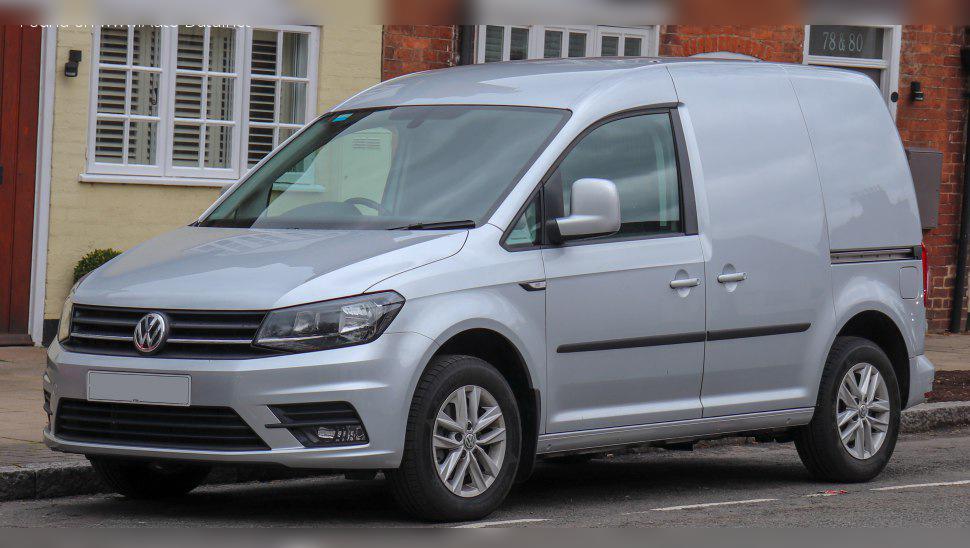
1.2 TSI (CYVC) in the VW Caddy: Experiences, issues, fuel consumption and used-buying guide
Key points (TL;DR)
- Drivetrain: This engine belongs to the EA211 series, which means it has a timing belt, not the problematic chain found in older 1.2 TSI engines.
- Power: With 84 hp in the Caddy body, this is an engine for urban light-duty delivery. It’s not meant for hauling heavy pallets.
- Fuel consumption: Despite the small displacement, consumption can be high if you drive it flat out on the motorway (brick-like aerodynamics).
- Maintenance: Generally cheaper than diesel – no DPF (on older model years), no AdBlue, often no dual-mass flywheel.
- Biggest weakness: The thermostat housing and water pump are prone to coolant leaks.
- Recommendation: Ideal for couriers, florists and service companies that mostly drive short city routes.
Contents
- Introduction: What is the CYVC engine?
- Technical Specifications
- Reliability and Maintenance
- Specific Parts and Costs
- Fuel Consumption and Performance
- Additional Options and Modifications (LPG, Tuning)
- Gearbox and Drivetrain
- Buying Used and Conclusion
Introduction: What is the CYVC engine?
The CYVC engine is a 1.2‑liter turbocharged petrol unit that belongs to Volkswagen’s more modern EA211 engine family. It was primarily installed in the Volkswagen Caddy IV (Panel Van) from 2015 onwards. Its role is clear: to offer a cheaper entry-level option for business users who don’t need an expensive TDI diesel and who don’t rack up huge motorway mileage.
This is a key moment in the evolution of small TSI engines because it fixes many of the “childhood diseases” of the previous generation (EA111), bringing smoother operation, faster cabin warm‑up and, most importantly, a more reliable timing system.
Technical Specifications
| Specification | Data |
|---|---|
| Engine displacement | 1197 ccm |
| Power | 62 kW (84 hp) at 4300 rpm |
| Torque | 160 Nm at 1400–3500 rpm |
| Engine code | CYVC (EA211 family) |
| Injection type | Direct injection (TSI/GDI) |
| Charging | Turbocharger + intercooler |
| Number of cylinders/valves | 4 cylinders / 16 valves |
Reliability and Maintenance
Belt or chain?
This is the most common question and it comes with good news. The CYVC engine uses a timing belt. Unlike older 1.2 TSI engines that had a chain prone to stretching and skipping, the EA211 series uses a reinforced timing belt. This drastically reduces the risk of catastrophic engine failure.
Major service (timing belt service)
The manufacturer (VW) often quotes optimistic intervals of 210,000 km or 10 years for “inspection” of the belt. However, as an experienced technical editor, I recommend that you do the full timing belt service at a maximum of 150,000–160,000 km or every 6–7 years. Rubber ages, and the risk of belt failure is always there. A timing belt kit with water pump is not excessively expensive (depends on the market), and peace of mind is priceless.
Oil consumption and service intervals
This engine takes approximately 4.0 liters of engine oil. The recommended viscosity is usually 5W‑30 (VW 504.00/507.00 standard), although newer specifications may allow 0W‑20 on certain variants.
Does it burn oil? Modern TSI engines are better in this regard, but in the Caddy, which is heavy and has a large frontal area, the engine often works under higher load. Consumption of 0.3 to 0.5 liters per 1,000 km can be considered “normal” by factory standards, even though owners find it annoying. If you drive aggressively or fully loaded, expect to top up oil between services.
Spark plugs and injectors
Since this is a petrol engine with direct injection, the spark plugs are under more stress than in ordinary naturally aspirated engines. The recommendation is to replace them every 60,000 km. Don’t skimp on spark plugs – use quality Iridium/Platinum types (NGK, Bosch) because a weak spark can lead to issues with the coils (which are individual for each cylinder).
The injectors are generally reliable, but sensitive to poor fuel quality. They can last over 200,000 km with regular use of fuel system cleaning additives.
Most common failures
- Thermostat housing and water pump: This is the “Achilles’ heel” of EA211 engines. The housing is plastic and deforms over time from heat, which leads to coolant leaks. Symptom: dropping coolant level in the expansion tank or a smell of coolant under the bonnet.
- Carbon buildup: Due to direct injection, fuel does not wash over the intake valves. Over time, carbon deposits build up and can reduce power and increase fuel consumption. Cleaning (walnut shell blasting) may be needed at higher mileage (150k+ km).
- Turbo actuator: The electric actuator of the wastegate valve can seize, causing loss of power and illuminating the “Check Engine” light (EPC fault).
Specific Parts (Costs)
Dual‑mass flywheel and clutch
Good news for your wallet: the 84 hp (CYVC) variant combined with the 5‑speed gearbox most often uses a solid (conventional) flywheel. The 160 Nm of torque is not high enough to require a dual‑mass flywheel. This significantly reduces the cost of clutch replacement when the time comes.
Turbocharger
The engine has a single small low‑pressure turbocharger. It is designed to respond quickly (at low revs). Service life is long (over 200,000 km) with regular oil changes and proper cool‑down after motorway driving. Rebuilding is possible and the price is mid‑range (depends on the market).
EGR and emissions equipment
This engine has no DPF filter (that’s for diesels), but later models (end of Caddy IV production) may have a GPF (Gasoline Particulate Filter) to meet Euro 6d‑TEMP standards. Check by VIN. If it has a GPF, it behaves similarly to a DPF, but regenerates more easily because petrol exhaust gases are hotter.
An EGR valve is present, but it clogs less often than on diesels. There is no AdBlue system, which is one less worry and expense.
Fuel Consumption and Performance
Is the engine “sluggish”?
Let’s be honest: 84 hp in a vehicle like the Caddy (which weighs around 1.3–1.4 tons empty) is the bare minimum. In the city, thanks to the turbo and torque available from just 1400 rpm, the van feels lively up to 60 km/h. However, as soon as you hit the open road or load 500 kg of cargo, you will feel the lack of power. Overtaking requires serious planning and dropping down a gear.
Real‑world fuel consumption
- City driving: Expect between 7.5 and 9.0 l/100 km. If the Caddy is loaded and you drive stop‑and‑go, it can easily exceed 10 liters. The small engine struggles to move the heavy body.
- Country roads (80–90 km/h): This is where it’s most economical, around 5.5–6.5 l/100 km.
- Motorway (130 km/h): Due to the 5‑speed gearbox and poor aerodynamics, the engine spins at high revs (often over 3000 rpm). Consumption then jumps to 8.0–9.5 l/100 km, and cabin noise becomes tiring.
Additional Options and Modifications
LPG conversion
This is an engine with direct injection (TSI). Installing a “regular”, cheap LPG system is not possible. You need a special direct‑injection LPG kit, which is significantly more expensive (very costly, depends on the market) and which also uses a certain amount of petrol while running on gas (to cool the petrol injectors). The cost‑effectiveness of such a conversion is questionable unless you drive more than 25–30 thousand kilometers per year.
Chip tuning (Stage 1)
This engine is actually software‑detuned. Hardware‑wise it is very similar to the stronger 105 or 110 hp versions. Because of that, a Stage 1 remap can safely raise it to about 105–115 hp and around 200–210 Nm. This modification drastically changes the character of the vehicle and makes it much more pleasant to drive, especially when overtaking. Since the engine has reserves, this does not significantly affect service life if driven sensibly.
Gearbox
With this engine (84 hp) in the Caddy you most commonly get a 5‑speed manual gearbox (often from the MQ200 series). Automatic DSG gearboxes are usually reserved for more powerful engines, but if you come across an example with DSG, it will be the dry 7‑speed DSG (DQ200).
- Manual gearbox: Very precise and reliable. It has no specific weaknesses, except that a 6th gear would be very welcome on the motorway. The factory calls the gearbox oil “lifetime fill”, but it’s recommended to change it every 80,000 to 100,000 km to preserve synchros and bearings.
- DSG (if fitted): The DQ200 is known for issues with the mechatronics unit and clutch pack. Repairs are expensive.
Buying Used and Conclusion
Before buying a Caddy with the 1.2 TSI CYVC engine, pay attention to the following:
- Cold start: Listen to the engine when it’s cold. Even though it doesn’t have a chain, hydraulic lifters can “tick” if the oil is poor or the engine has been neglected.
- Leaks: Check the area around the water pump (on the left side of the engine when viewed from the front) – pink traces of dried coolant are a red flag.
- Turbo: Make sure the van accelerates smoothly without “hesitation” (a symptom of actuator or spark plug issues).
Conclusion: The VW Caddy 1.2 TSI (84 hp) is an excellent choice for urban logistics. If you need a vehicle for delivering medicine, food, flowers or servicing computers around town, it’s a better choice than a diesel (it’s quieter, warms up faster in winter, and is cheaper to maintain). However, if you plan to use the Caddy as a family car for long holiday trips or to transport building materials on the open road, look for a 2.0 TDI or at least a more powerful 1.4 TSI version.
Was this content useful to you?
Your opinion helps us to improve the quality of the content.