EA288 / CUUF, DFSF Engine
- Engine
- 1968 cm3
- Aspiration
- Turbocharger, Intercooler
- Fuel
- Diesel
- Fuel injection system
- Diesel Commonrail
- Power
- 75 hp
- Torque
- 225 Nm
- Cylinders
- 4
- Valves
- 16, 4 per cylinder
- Cylinders position
- Inline
- Valvetrain
- DOHC
- Oil capacity
- 4.6 l
- Systems
- Start & Stop System, Particulate filter
# Vehicles powered by this engine
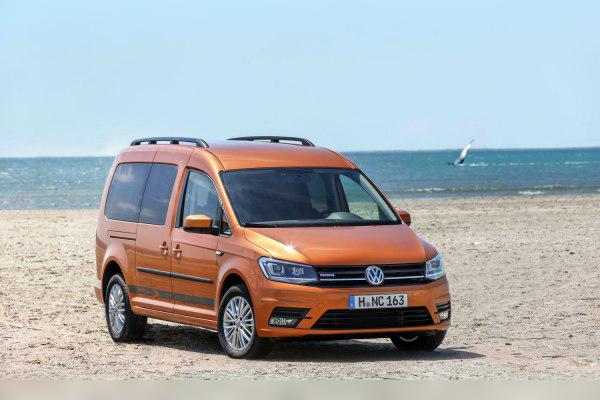
VW Caddy IV 2.0 TDI (75 HP) EA288: Experiences, problems, fuel consumption and maintenance
When you open the hood and see a 2.0 TDI engine, you expect power, right? However, in the case of the fourth-generation Caddy with engine codes CUUF or DFSF, you’re looking at one of the most peculiar phenomena of the modern car industry: a large-displacement engine that’s “strangled” down to just 75 horsepower. This is a classic example of “down-tuning” to meet the needs of large fleets and to get cheaper insurance in certain markets.
This text is intended for anyone considering buying this workhorse. Is a 2.0 engine too much for only 75 HP? Is it indestructible because it’s not stressed? Find out below.
Key points in short (TL;DR)
- Base engine durability: Extremely high. The engine operates with minimal stress considering its 2-liter displacement.
- Performance: Very weak. This is an engine for city deliveries; overtaking on open roads is risky.
- Chip tuning potential: Huge. One of the rare engines where you can almost double the power with software alone.
- Emissions systems: Equipped with DPF, EGR and AdBlue. The AdBlue system is a frequent source of expensive failures.
- Water pump: A known “weak spot” of the EA288 series – a variable pump that can seize and cause overheating.
- Maintenance: Standard for the VW group, parts are widely available and prices are moderate.
Contents
- Technical specifications
- Reliability and maintenance
- Specific parts and costs
- Fuel consumption and performance
- Additional options and modifications
- Gearbox
- Buying used and conclusion
Technical specifications
| Parameter | Data |
|---|---|
| Engine displacement | 1968 ccm (2.0 L) |
| Power | 55 kW (75 HP) |
| Torque | 225 Nm at 1200–2300 rpm |
| Engine codes | CUUF, DFSF (EA288 family) |
| Number of cylinders / valves | 4 / 16 |
| Injection type | Common Rail (Bosch) |
| Charging | Turbocharger with variable geometry + intercooler |
| Emissions standard | Euro 6 (with AdBlue) |
Reliability and maintenance
The EA288 engine series was designed to correct the flaws of the previous EA189 generation. Overall, this is a very robust engine, especially in this version where thermal and mechanical loads are minimal compared to the capacity of the engine block.
Timing belt and major service:
This engine uses a timing belt to drive the camshafts. The factory replacement interval is often an optimistic 210,000 km, but real-world experience and mechanics’ practice call for caution. It is recommended to do the major service (replacement of belt, tensioners and water pump) at 150,000 to 160,000 km or 5 to 7 years of age. A snapped belt leads to catastrophic engine damage (pistons and valves “colliding”).
Most common failures:
The biggest enemy of this engine is not the block itself, but the peripherals. The water pump on EA288 engines has a variable ring that moves to help the engine reach operating temperature faster. That ring often seizes, which leads to engine overheating. The symptom is the temperature gauge jumping above 90°C under load.
Also, oil leaks from the crankshaft seal (towards the gearbox) are not uncommon, visible as oily traces at the junction between engine and gearbox.
Oil and oil consumption:
The engine takes approximately 4.6 to 5 liters of oil (always buy 5L). You must use oil with specification VW 507.00, most commonly in viscosity grades 5W-30 or 0W-30. As for oil consumption, the EA288 is better than the older PD engines, but consumption of 0.5 to 1 liter between services (every 10–15 thousand km) is completely normal and acceptable. If it consumes more than that, the turbocharger or piston rings should be checked.
Injectors:
The injection system is Bosch Common Rail. These injectors have proven to be very durable and rarely cause problems before 250,000–300,000 km, provided quality fuel is used. Symptoms of bad injectors are rough idle, increased smoke or harder starting.
Specific parts (costs)
When you buy a Caddy with this engine, maintenance is a double-edged sword. Basic servicing is affordable, but emissions systems can be expensive.
Flywheel:
This is great news for most owners of this version. Due to the low power (75 HP) and 225 Nm of torque, the 2.0 TDI Caddy in this variant most often comes with a solid (single-mass) flywheel. This means the clutch kit is significantly cheaper to replace and there’s no risk of dual-mass flywheel knocking. Note: Always check by VIN, because VW sometimes installs whatever is in stock at the time, but a solid flywheel is standard for the 75 HP version.
Turbocharger:
The engine has a single turbocharger. Since the engine runs in a detuned state, the turbo is rarely under maximum stress and its service life is very long, often lasting as long as the engine itself with regular oil changes.
Emissions systems (DPF, EGR, AdBlue):
This is the most expensive area. The Caddy IV (Euro 6) has all of the above.
DPF and EGR: They clog up as standard if the vehicle is used exclusively for city driving (stop-and-go).
AdBlue: This is a weak point. The urea (AdBlue) injection system has a heater and pump that are prone to failure. Repair often means replacing the entire AdBlue tank module, which is very expensive (depending on the market, but expect a serious cost). The symptom is the AdBlue warning light coming on and a countdown of remaining kilometers until the engine can no longer be started.
Fuel consumption and performance
Performance:
To be blunt – 75 HP in a Caddy that weighs around 1.5 tons empty makes this vehicle very sluggish. The 0–100 km/h sprint takes an eternity (over 17 seconds). In city traffic you won’t feel it as much thanks to the decent torque (225 Nm) available at low revs, so the van “pulls” off the line at traffic lights. However, on open roads, overtaking trucks requires a long straight and a lot of patience. This is not a vehicle for spirited driving.
Behavior on the motorway:
The engine can maintain 130 km/h, but it takes time to get there. Because of the 5-speed gearbox, at 130 km/h the engine revs higher (around 2800–3000 rpm), which increases cabin noise and fuel consumption. The ideal cruising speed is around 110 km/h.
Fuel consumption:
Real-world fuel consumption is this model’s trump card:
City: 6.5–7.5 l/100 km (depending on load).
Open road / secondary roads: 4.5–5.5 l/100 km.
Motorway (130 km/h): Around 6.5–7.0 l/100 km due to air resistance and gearing.
Additional options and modifications
Chip tuning (Stage 1):
This is where things get interesting. Since this engine (CUUF/DFSF) is hardware-wise almost identical to the more powerful 102 HP or even 150 HP versions (with minimal differences in peripherals depending on model year), it is a perfect candidate for a remap.
You can safely raise the power from 75 HP to 130–140 HP, and torque from 225 Nm to over 300 Nm. This completely transforms the vehicle. The engine “breathes” freely, and fuel consumption often drops in normal driving because you don’t have to “floor it” to get it moving. This is one of the rare situations where chip tuning makes complete sense, as you’re simply unlocking factory-limited potential.
Gearbox
With the 75 HP engine in the Caddy IV generation you almost exclusively get a 5-speed manual gearbox. An automatic gearbox is rarely found with this weakest variant, as it was targeted as a budget option.
Manual gearbox (5-speed):
Very reliable and precise. There are no typical systemic failures. The gearbox oil should be changed every 150,000 km or if you notice harder shifting (even though VW often claims it’s “filled for life”). The most common problem is not the gearbox itself but the shift linkage (cables), which can go out of adjustment.
Clutch:
As mentioned, clutch replacement costs are relatively low (not expensive) because there is usually no dual-mass flywheel. The clutch kit (pressure plate, disc, release bearing) lasts a long time, often over 200,000 km if the vehicle is not overloaded.
Buying used and conclusion
When buying a used Caddy with this engine, pay attention to the following:
- Engine sound: It should run smoothly. Any “clattering” or metallic noise may indicate problems with hydraulic lifters or injectors.
- Water pump and coolant: Check for traces of pink coolant leaking around the timing belt area. Make sure the vehicle reaches 90°C quickly and holds that temperature steadily.
- Diagnostics (AdBlue): Always check for fault codes related to the exhaust aftertreatment system. AdBlue system repairs are very expensive.
- Service history: Since these are often delivery vehicles, mileage can be huge. Check the condition of the interior (pedals, steering wheel) as an indicator of actual use.
Conclusion:
The VW Caddy 2.0 TDI with 75 HP is an ideal choice for companies and delivery work in urban areas where speed is not important, but reliability and low fuel consumption are. If you’re a private user and plan family trips, this engine will feel too weak unless you plan to do a remap (chip tuning) right away. The big advantage is the 2.0 base, which guarantees longevity because the engine runs completely unstressed, along with cheaper clutch maintenance compared to more powerful models.
Was this content useful to you?
Your opinion helps us to improve the quality of the content.