EA211 / CYVC Engine
- Engine
- 1197 cm3
- Aspiration
- Turbocharger, Intercooler
- Fuel
- Petrol (Gasoline)
- Fuel injection system
- Direct injection
- Power
- 84 hp
- Torque
- 160 Nm
- Cylinders
- 4
- Valves
- 16, 4 per cylinder
- Cylinders position
- Inline
- Valvetrain
- DOHC
- Oil capacity
- 4 l
- Coolant
- 5.6 l
- Systems
- Start & Stop System
# Vehicles powered by this engine
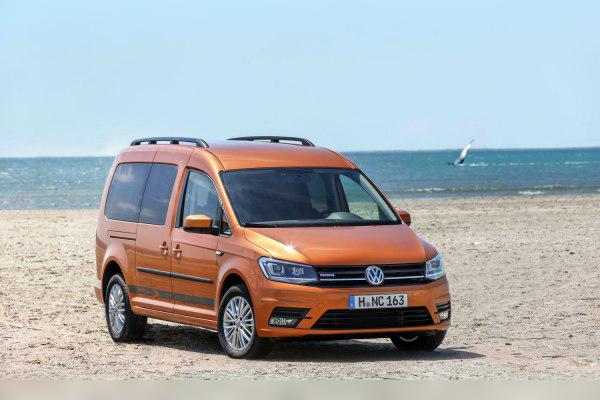
Volkswagen 1.2 TSI (EA211 / CYVC) – Experiences, problems, fuel consumption and maintenance
Key points (TL;DR)
- Major improvement: This is the EA211 engine generation which uses a timing belt, not the problematic chain from the previous EA111 series. It is much more reliable.
- Performance in the Caddy: With only 84 hp and 160 Nm, this engine is underpowered for an overloaded Caddy or open-road driving. It is intended strictly for city deliveries of lighter loads.
- Oil consumption: Significantly reduced compared to its predecessors, but still possible on high-mileage vehicles.
- Direct injection: Requires quality fuel and regular spark plug replacement. Possible carbon buildup on intake valves.
- Coolant leaks: Thermostat housing and water pump are weak points (plastic parts).
- Turbo actuator: Common issue with the wastegate lever sticking.
- Conclusion: A reliable small petrol engine, but the wrong choice for a Caddy if you plan heavy loads or frequent motorway driving.
Contents
- Introduction and applications
- Technical specifications
- Reliability and maintenance
- Specific parts and costs
- Fuel consumption and performance
- Additional options (LPG and chip tuning)
- Gearbox and drivetrain
- Buying used and conclusion
Introduction and applications
The EA211 engine (code CYVC in this case) is Volkswagen’s answer to the disastrous problems of the first generation 1.2 TSI engines (EA111). Installed in the VW Caddy IV, this engine brings a key change: a return to a timing belt and a completely new aluminium construction. Although the displacement of 1197 cc sounds familiar, this is a technically completely different unit.
In the context of the Caddy model, this engine serves as the entry-level, cheapest option. It is important to understand that the Caddy is not a light car (like a Polo or Golf), but a vehicle with high aerodynamic drag and designed to carry loads, which puts this small engine under a serious durability test.
Technical specifications
| Parameter | Data |
|---|---|
| Engine displacement | 1197 cc (1.2 L) |
| Power | 62 kW / 84 hp (at 4300–5300 rpm) |
| Torque | 160 Nm (at 1400–3500 rpm) |
| Engine code | CYVC (EA211 family) |
| Injection system | TSI (direct petrol injection) |
| Forced induction | Turbocharger + intercooler (water–air) |
| Number of cylinders / valves | 4 / 16 (4 valves per cylinder) |
| Emission standard | Euro 6 |
Reliability and maintenance
Timing belt or chain?
This is the most common and most important question. The EA211 / CYVC engine has a timing belt. Volkswagen learned its lesson from the snapping and stretching chains on the old 1.2 TSI engines and switched to a belt reinforced with glass fibre. This is excellent news for owners, as the system is quieter and far more reliable.
Most common failures
Although more reliable than its predecessor, this engine has its weak spots:
- Coolant leaks: The thermostat housing and water pump are integrated into a plastic module. Over time, due to heat cycles, the plastic cracks or the seals fail. Symptom: Coolant level in the expansion tank drops without visible puddles under the car (the fluid often evaporates on the hot block).
- Turbo actuator (wastegate): The electric actuator that regulates turbo pressure can seize or the lever can stick. Symptom: Loss of power, “Check Engine” light and the car going into limp mode. It is often solved by lubricating or replacing just the actuator, not the entire turbo.
- Carbon buildup: As with any direct-injection engine, the intake valves are not “washed” by petrol. Over time, carbon deposits build up. Symptom: Rough idle, slight loss of performance.
Major service (timing belt replacement)
The factory interval is very optimistic (they often state inspection at 210,000 km). However, real-world practice and mechanics’ experience say otherwise. It is recommended to replace the timing belt kit, tensioner and water pump between 150,000 km and 180,000 km, or every 8 to 10 years, whichever comes first. Since the Caddy is a work vehicle driven under load, it is better to stick to the lower end of that range.
Oil: capacity and consumption
The engine takes approximately 4.0 litres of engine oil (with filter). You must use fully synthetic oil that meets the VW 504.00 / 507.00 standard (most commonly 5W-30), although newer models may require 0W-20 (VW 508.00) – check the label in the engine bay.
Oil consumption: The EA211 consumes significantly less oil than the EA111, but it is not immune to oil usage. Topping up 0.5 to 1 litre per 10,000 km is considered normal under more spirited driving. If it consumes more than that (e.g. 1 L per 2000 km), this points to issues with piston rings or valve stem seals, which is an expensive repair.
Spark plugs
The 1.2 TSI uses iridium or platinum spark plugs, which should be replaced every 60,000 km or 4 years. Do not postpone replacement, as a bad plug can lead to overheating and damage to the individual coil packs, or in extreme cases even piston melting.
Specific parts and costs
Does this engine have a dual-mass flywheel?
This is good news for your wallet. The 84 hp (62 kW) Caddy version, usually paired with a 5-speed manual gearbox, most often uses a solid (single-mass) flywheel. The 160 Nm of torque is not high enough to require a dual-mass flywheel to dampen vibrations. Still, always check by VIN, as VW sometimes makes exceptions depending on the market.
Injection system and injectors
The engine uses a high-pressure direct injection system. Injectors are generally reliable, but sensitive to poor fuel quality. A faulty injector manifests as engine misfire and fuel leaking into the cylinder (which can dilute the oil). The high-pressure fuel pump (HPFP) is driven by the camshaft and rarely fails, but when it does, repairs are expensive (depending on the market, expect a higher cost).
Turbocharger
The engine has a single small turbocharger to reduce turbo lag. The turbo is integrated with the exhaust manifold. Its service life is long (over 200,000 km) with regular oil changes and if the engine is not switched off immediately after hard driving. The intercooler is a water–air type and integrated into the intake manifold, which allows quicker throttle response but makes servicing more difficult if it starts leaking internally.
EGR, DPF and AdBlue
Since this is a petrol engine, it does not have a DPF filter or AdBlue system. This makes maintenance significantly cheaper compared to TDI engines. However, the engine does have a catalytic converter. Newer models (especially from 2018 onwards, Euro 6d-TEMP) may have a GPF (Gasoline Particulate Filter), which is the petrol equivalent of a DPF. GPFs rarely clog because exhaust gas temperatures on petrol engines are higher, so regeneration usually happens passively while driving. There is an EGR valve, but thanks to variable valve timing (VVT), part of the “recirculation” is done internally, so the conventional EGR valve is less stressed than on diesels.
Fuel consumption and performance
Real-world city consumption
Do not trust the factory figures of 5–6 litres. The Caddy is heavy and shaped like a box. In real stop-and-go city driving, this engine consumes between 8.0 and 9.5 litres per 100 km. If the vehicle is loaded or the A/C is on, consumption easily exceeds 10 litres. The small engine struggles to move the heavy body, which requires more throttle and more fuel.
Performance: is the engine “sluggish”?
Yes, it is quite sluggish. With 84 hp in a vehicle like the Caddy, performance is modest. Up to 60 km/h it is acceptable thanks to the turbo and short gear ratios, but any acceleration above 80 km/h requires patience. Overtaking on country roads with a loaded Caddy requires serious planning and downshifting.
Engine on the motorway
The Caddy 1.2 TSI is not a motorway cruiser. At 130 km/h, the engine spins at relatively high revs (often around 3000–3200 rpm in 5th gear), which results in noise and high fuel consumption (around 8.5–9 litres). The lack of a 6th gear is noticeable here. Top speed is about 157 km/h, but anything over 120 km/h is a struggle for this engine.
Additional options and modifications
LPG conversion
Since this is a TSI engine with direct injection, LPG conversion is complex and expensive. You cannot install a regular sequential system. You need a system that either injects liquid LPG directly through the petrol injectors (the most expensive option) or a system that injects gas into the intake manifold but still uses 10–15% petrol to cool the petrol injectors (to prevent them from burning out). Economic viability: Due to the high installation cost (depending on the market, often over 800–1000 EUR), it only pays off if you drive more than 20–30,000 km per year.
Chiptuning (Stage 1)
This engine is an ideal candidate for a Stage 1 remap. The 84 hp version is often just a software-detuned version of the stronger engine. With a safe remap, power can be raised to 105 to 110 hp, and torque to about 190–200 Nm. This difference is dramatically noticeable in driving and makes the Caddy much more usable, without significantly affecting engine longevity, provided you maintain it regularly.
Gearbox
Types of gearboxes
The 84 hp 1.2 TSI in the Caddy most commonly comes with a 5-speed manual gearbox (MQ200 family). In rare cases and depending on the production year, you may find a DSG (dual-clutch automatic), but it is more common with more powerful engines.
Gearbox issues
- Manual (5-speed): Very reliable. The most common issues are worn synchros (grinding when shifting, usually from 1st to 2nd) if the gearbox is abused. Bearings can become noisy at high mileage.
- DSG (DQ200 – 7-speed dry clutch): If you find this gearbox (rare with 84 hp), be cautious. It is known for mechatronics failures and faster clutch wear in city driving. Repairs are very expensive.
Clutch replacement costs
For the manual gearbox, the clutch kit (pressure plate, disc, release bearing) without a dual-mass flywheel is relatively affordable. The part itself is reasonably priced (depending on the market, it falls into the “not expensive” category).
Gearbox servicing
VW often states that the oil in the manual gearbox is “lifetime”. Ignore that. Replace the gearbox oil every 80,000 to 100,000 km. This will protect the bearings and make shifting easier in winter.
Buying used and conclusion
What to check before buying?
- Cold start: Even though it has a belt, the engine must run smoothly. Any knocking may indicate issues with hydraulic lifters or bearings.
- Coolant traces: Look carefully around the plastic housing on the right side of the engine block. White or pink deposits mean it is leaking.
- Turbo actuator: Test the car uphill. If you feel the power suddenly drop and then return, the actuator is sticking.
- Service history: Check when the timing belt was replaced. If there is no proof, that is your first expense (major service).
Final verdict
VW Caddy 1.2 TSI (84 hp) is intended for: Urban delivery drivers, bakeries, pharmacies and tradespeople who drive short distances, do not carry very heavy loads and want to avoid the potentially expensive failures of modern diesels (DPF, injectors, dual-mass flywheel).
It is not intended for: Drivers who often use the motorway, tow trailers or transport heavy pallets. For those purposes, the 2.0 TDI is still the undisputed choice despite higher maintenance costs. If you buy this Caddy and are aware of its power limitations, you will be satisfied with its reliability.
Was this content useful to you?
Your opinion helps us to improve the quality of the content.