CFHC, CLCB Engine
- Engine
- 1968 cm3
- Aspiration
- Turbocharger, Intercooler
- Fuel
- Diesel
- Fuel injection system
- Diesel Commonrail
- Power
- 140 hp @ 4200 rpm
- Torque
- 320 Nm
- Cylinders
- 4
- Valves
- 16, 4 per cylinder
- Cylinders position
- Inline
- Valvetrain
- DOHC
- Oil capacity
- 4.3 l
- Systems
- Particulate filter
# Vehicles powered by this engine

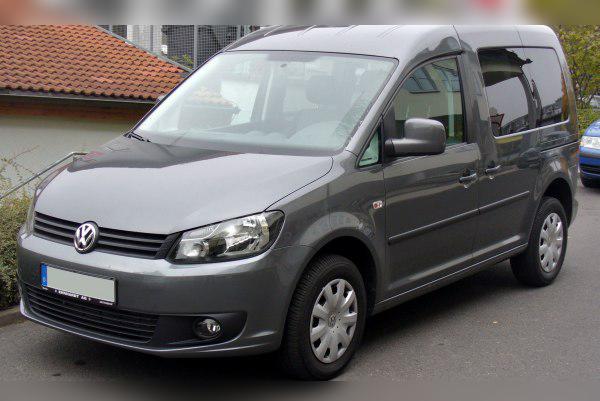
2.0 TDI (CFHC, CLCB) in the VW Caddy: Experiences, Problems, Fuel Consumption and Buying Used
The Volkswagen Caddy, especially the third generation after the facelift (2010–2015), represents the gold standard in the class of light commercial vehicles and family MPVs. The heart of this model, which sets it apart from the weak 1.6 TDI versions, is precisely the 2.0 TDI engine with 140 horsepower. These are Common Rail engines (codes CFHC and CLCB) that replaced the older and noisier “Pumpe-Düse” units.
As someone who has spent years analyzing the VAG group, I can say this is probably the best engine choice for the Caddy, but that doesn’t mean it’s flawless. Below follows a detailed technical analysis.
Key points (TL;DR)
- Best power-to-weight ratio: Unlike the 1.6 TDI, this engine doesn’t struggle when the Caddy is fully loaded or full of passengers.
- Common Rail system: Quieter operation, smoother driving and more reliable injectors compared to the previous PD engines.
- EGR valve and cooler: The most common expensive issue. Soot blocks the mechanism and repairs are not cheap.
- Dual-mass flywheel: Standard equipment. Expect replacement at around 200,000 km (depending on driving style).
- Fuel consumption: Higher than in the Golf due to the “boxy” body shape (air resistance).
- Recommendation: An absolute recommendation compared to weaker engines, especially if you often drive on open roads or tow/haul loads.
Contents
- Technical specifications
- Reliability and Maintenance
- Specific Components (Injectors, Turbo, DPF)
- Fuel Consumption and Performance
- Additional Options (Tuning)
- Gearbox (DSG and Manual)
- Buying Used and Conclusion
Technical specifications
| Specification | Data |
|---|---|
| Displacement | 1968 ccm |
| Power | 103 kW (140 hp) |
| Torque | 320 Nm at 1750–2500 rpm |
| Engine codes | CFHC, CLCB (EA189 generation) |
| Injection system | Common Rail (Bosch) |
| Charging | Variable-geometry turbocharger (VGT) + intercooler |
| Drivetrain | Front-wheel drive or 4MOTION (Haldex) |
Reliability and Maintenance
Does this engine have a timing belt or a chain?
Engines with codes CFHC and CLCB use a timing belt. This is good news because the system is more reliable than the chain on some older VAG engines. However, a snapped belt leads to catastrophic engine failure (pistons hitting valves), so regular replacement is essential.
At what mileage should the major service be done?
The factory recommendation for timing belt replacement on these engines is often an optimistic 210,000 km. However, as an experienced editor and in consultation with mechanics, I strongly recommend shortening the interval to 150,000 to 180,000 km or a maximum of 5 to 7 years of age. The timing belt kit includes the water pump, which must be replaced at the same time.
How many liters of oil does this engine take and which grade is recommended?
The sump holds approximately 4.3 liters of oil. Since these engines have a DPF filter, it is mandatory to use oil that meets the VW 507.00 specification. The most common grade is 5W-30. Using the wrong oil (without “Low SAPS” technology) will permanently damage the DPF filter.
Does it consume oil between services?
Oil consumption on Common Rail 2.0 TDI engines is significantly lower than on the old PD engines. Still, the Caddy faces higher air resistance and is often under load. Consumption of 0.5 to 0.8 liters per 10,000 km is considered completely normal and acceptable. If the engine consumes more than a liter over a service interval, the turbocharger or oil leaks at the seals should be checked.
Most common failures
Aside from standard wear items, owners most often encounter:
- EGR valve and EGR cooler: This is the “Achilles’ heel” of EA189 engines. Symptoms are loss of power, the “check engine” light and going into limp mode. Coolant often leaks through the EGR cooler as well.
- Intake manifold (flaps): Plastic flaps in the intake manifold (swirl flaps) can stick due to soot buildup or the mechanism can break. Fault code P2015 is common.
- Thermostat: It can get stuck open, so the engine struggles to reach operating temperature, which in winter increases fuel consumption and wear.
How long do the injectors last and how reliable are they?
Good news: CFHC/CLCB engines use Bosch Common Rail solenoid or piezo injectors (depending on series), which have proven to be very robust. They can easily cover 250,000–300,000 km with good-quality fuel. They can be refurbished and the price is reasonable (depends on the market), unlike the Siemens piezo injectors on older Passats which could not be refurbished.
Specific Components (Costs and Issues)
Does the engine have a dual-mass flywheel?
Yes, it has a dual-mass flywheel. Regardless of whether it’s a manual gearbox or DSG, a dual-mass flywheel is fitted to reduce vibrations from the strong diesel. Its service life is usually around 200,000 km. Symptoms of failure are metallic noises (clunking) when switching off the engine and vibrations at idle that can be felt through the driver’s seat. Replacement is a costly job (depends on the market).
Does the engine have a turbocharger?
The engine uses a single variable-geometry turbocharger (VGT). Turbo lifespan is directly related to regular oil changes and driving style. With proper maintenance, the turbo lasts as long as the engine. However, city driving (lugging the engine at low revs) leads to soot buildup on the VGT vanes, which causes jerky acceleration or excessive boost (overboost).
DPF filter and EGR valve
All Caddy models with this engine (facelift 2010+) have a DPF filter and an EGR valve. If the vehicle is used exclusively for city deliveries (stop-and-go driving), the DPF will clog quickly because it cannot reach the temperature needed for regeneration. Symptoms are frequent regenerations (elevated idle speed, fan running) and eventually a warning light on the dash. The EGR valve is integrated with the cooler and replacement is complex.
Does this engine have AdBlue?
CFHC and CLCB are primarily Euro 5 engines. Most models from this period (2010–2015) do not have an AdBlue system and rely only on the DPF and EGR for emission control. This is an advantage from a maintenance standpoint because you have one less system that can fail (AdBlue heaters, pump, injector). Still, check the engine code and the filler area – if the vehicle is from late production (just before the switch to Caddy 4) or a specific BlueMotion variant, there is a small chance it has an AdBlue system.
Fuel Consumption and Performance
What is the real fuel consumption in city driving?
Do not trust the official factory figures. The Caddy is heavy (around 1.5–1.6 tons empty) and has the aerodynamics of a brick. In real city traffic, fuel consumption ranges between 7.5 and 9.0 liters per 100 km, depending on whether the vehicle is empty or loaded, and whether it has a DSG or manual gearbox (DSG can slightly increase city consumption).
Is this engine “lazy” for the weight of the body?
No, quite the opposite. With 320 Nm of torque, this is the ideal engine for the Caddy, especially the Maxi (long-wheelbase) version. Unlike the 1.6 TDI, which requires constant shifting and high revs to pull a load, the 2.0 TDI pulls strongly from as low as 1700 rpm. Overtaking is safe even when the vehicle is fully loaded.
How does the engine perform on the motorway?
On the motorway the engine feels confident. At 130 km/h in sixth gear, it spins at a comfortable 2200–2400 rpm (depending on the gearbox). However, due to the large frontal area, fuel consumption at 130 km/h rises to around 7.0 to 8.0 liters. Wind noise is more noticeable than engine noise.
Additional Options and Modifications
Chip tuning (Stage 1)
This engine (CFHC/CLCB) responds very well to remapping (chip tuning). A safe Stage 1 raises power to about 170–180 hp and torque to 380–400 Nm. This drastically changes the character of the vehicle, making it much more lively. If you have a DSG gearbox, a software tune of the gearbox (DSG tune) is also recommended to increase clutch pressure. Note: Poorly done tuning can shorten DPF life if the map produces too much soot (smoke).
Gearbox
Which gearboxes are fitted?
With the 2.0 TDI (140 hp) in the Caddy there are two options:
- 6-speed manual: Precise, robust and durable.
- 6-speed DSG (DQ250): Automatic dual-clutch gearbox with wet clutches.
Gearbox failures and maintenance
Manual gearbox: Rarely fails. As a preventive measure, the oil should be changed every 100,000 km, even though the factory states it is “lifetime fill”. Failures are usually related to the clutch kit and flywheel, not the gearbox itself.
DSG (DQ250): This is an excellent gearbox, but it requires strict maintenance. The oil and filter in the DSG must be changed every 60,000 km. If this is ignored, the mechatronics (the gearbox brain) or the clutch pack will fail. DSG repairs are very expensive (depends on the market). If you are buying a used car with DSG, ask for proof of gearbox servicing.
Clutch replacement cost: On the manual gearbox you replace the clutch kit + dual-mass flywheel. On the DSG, the dual-mass flywheel is replaced (different from the manual one) and, if necessary, the clutch pack inside the gearbox (less common, but more expensive).
4MOTION all-wheel drive
If you have a 4MOTION version, it uses a 4th-generation Haldex coupling. It also has its own oil that needs to be changed (recommended every 40,000–60,000 km). A faulty Haldex pump means your rear-wheel drive will not work.
Buying Used and Conclusion
Before buying a Caddy with this engine, pay attention to the following:
- Cold start: The engine should start immediately, without long cranking and without clouds of white or blue smoke. Rough running for the first few seconds can indicate injector or glow plug issues.
- Flywheel noise: Listen for knocking while the engine idles and whether the sound changes when you press the clutch (on manuals). On DSG, listen for “click-clack” noises when shifting from P to D or R.
- Diagnostics: Check DPF saturation (ash mass) and injector correction values.
- EGR/cooler: Look for traces of coolant leaks around the engine or soot around the EGR valve.
Conclusion:
The VW Caddy 2.0 TDI (140 hp) is a workhorse that drives like a passenger car. Although maintenance is more expensive compared to simpler petrol engines (due to the DPF, flywheel, EGR), the performance and longevity this engine offers are unmatched in its class. It is ideal for those who cover high mileages, drive under load or want a vehicle that can serve both for work and for family trips. Avoid it only if you drive exclusively short city trips – in that case the DPF will be a nightmare.
Was this content useful to you?
Your opinion helps us to improve the quality of the content.