EA288 / CXGA Engine
- Engine
- 1968 cm3
- Aspiration
- Turbocharger, Intercooler
- Fuel
- Diesel
- Fuel injection system
- Diesel Commonrail
- Power
- 84 hp
- Torque
- 220 Nm
- Cylinders
- 4
- Valves
- 16, 4 per cylinder
- Cylinders position
- Inline
- Valvetrain
- DOHC
- Oil capacity
- 7.4 l
- Systems
- Start & Stop System, Particulate filter
# Vehicles powered by this engine


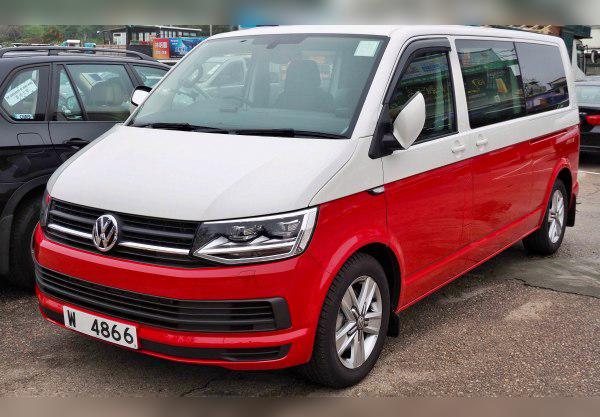

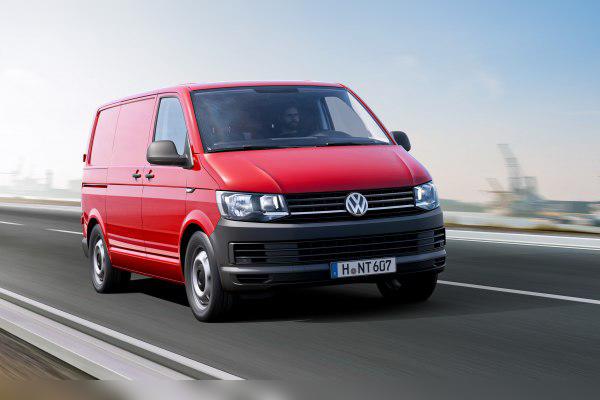
VW 2.0 TDI (CXGA) 84 HP – Experiences, problems, fuel consumption and buying tips
Volkswagen’s EA288 engine in the 84 horsepower version (code CXGA) is the entry-level, in fact the weakest engine option in the T6 generation of the Transporter and Caravelle models. Many people wonder: is this engine too weak for such a big vehicle? Is it “detuned” only in software or also mechanically? As someone who has spent years under the bonnet of these vans, I can tell you this engine is a double-edged sword – on one hand it is extremely unstressed and durable, and on the other, in its stock form, it demands a lot of patience behind the wheel.
Key points in short (TL;DR)
- Durability: Mechanically a very robust engine because it operates under low load compared to its potential.
- Performance: The stock 84 HP is insufficient for such a heavy body (especially under load). Overtaking is risky.
- Potential: This is a tuner’s favourite – with a simple software tune (Stage 1) it easily and safely goes to 140+ HP.
- AdBlue: The exhaust aftertreatment system is the most common and most expensive headache (heaters, pumps, injectors).
- Major service: Recommended earlier than factory specs due to issues with the water pump.
- Conclusion: An excellent buy only if you plan to remap it (“chip it”) or drive exclusively on flat city roads without heavy loads.
Contents
- Technical specifications
- Reliability and maintenance
- Specific parts (costs)
- Fuel consumption and performance
- Additional options and modifications
- Gearbox and drivetrain
- Used-buy advice and conclusion
Technical specifications
| Characteristic | Data |
|---|---|
| Engine displacement | 1968 ccm (2.0 l) |
| Power | 62 kW / 84 HP |
| Torque | 220 Nm at 1250–2500 rpm |
| Engine code | CXGA (EA288 family) |
| Injection | Common Rail (direct) |
| Charging | Variable-geometry turbocharger + intercooler |
| Emission standard | Euro 6 (with AdBlue system) |
Reliability and maintenance
Does this engine have a timing belt or a chain?
The CXGA engine uses a timing belt. This is good news because the system is quieter and generally more predictable than the chains on older generations of VW engines. The belt also drives the high-pressure pump and the water pump.
At what mileage should the major service be done?
The factory recommendation for Western European markets is often an optimistic 210,000 km. However, as an experienced editor and advisor, I strongly recommend doing the major service at a maximum of 150,000 to 160,000 km or 5 to 6 years of age (whichever comes first).
Why earlier? The main culprit is the water pump. On these engines (EA288), the water pump has a variable “shutter” (an electromagnetic valve) that regulates coolant flow for faster engine warm-up. This mechanism often gets stuck, which leads to engine overheating. If you are changing the belt, make sure you also replace the pump with this system.
What are the most common failures on this engine?
Apart from the mentioned water pump, here’s what most often fails:
- AdBlue system: The heater in the AdBlue tank, the pump or the dosing injector often fail. Urea crystallisation clogs the system if the vehicle is driven rarely or poor-quality AdBlue is used.
- EGR cooler: Cracking or coolant leakage inside the EGR cooler. The symptom is coolant disappearing without visible traces under the vehicle (the engine “drinks” it).
- Exhaust gas temperature sensors: They often misread and put the engine into safe mode.
How many litres of oil does this engine take and which grade is recommended?
These engines in the T6 body have a large-capacity oil sump to allow for extended service intervals. They take about 7.4 litres of oil.
Grade: Only 5W-30 with VW 507.00 specification. Because of the DPF filter, you must not use oils that do not meet this standard (“Low SAPS” oils are required).
Does it consume oil between services?
EA288 engines are significantly better in this regard than the older PD (Pumpe-Düse) engines. Consumption of up to 0.5 litres per 10,000 km is completely normal and acceptable. If it consumes more than 1 litre between minor services (at 10–15k km), this may indicate a problem with the turbocharger or piston rings, although this is rare at low mileage.
How long do the injectors last and how reliable are they?
This model uses Common Rail injectors (most often Delphi solenoid injectors on lower-output versions, although it depends on the production batch). They have proven to be very durable and often exceed 300,000 km without issues.
Failure symptoms: Rough idle (“hammering”), harder cold starts or increased smoke. They are sensitive to poor-quality fuel, so regular fuel filter replacement is recommended (every second minor service, ideally at every minor service).
Specific parts (costs)
Does the engine have a dual-mass flywheel?
Yes, although this is the weakest version, most T6 models with the CXGA engine come with a dual-mass flywheel (DMF). Its role is to reduce diesel engine vibrations transmitted to the gearbox. Due to the low torque (220 Nm), the flywheel lasts longer here than on more powerful models (150+ HP), but it is still a wear item.
Note: There are conversions to a solid flywheel, but I do not recommend them because they can damage the gearbox due to increased vibrations.
Does the engine have a turbocharger and what is its lifespan?
It has a single turbocharger with variable geometry. The turbo on this model is extremely unstressed because the engine runs at low boost pressure relative to its capacity. With regular oil changes, the turbo often outlives the engine itself. Failures are usually related to the actuator (the electronics that move the vanes), not the mechanical turbine itself.
Is there a DPF filter or EGR valve that often clogs?
Absolutely yes. The Euro 6 standard requires a complex system.
EGR valve: It often gets dirty from city driving. The symptom is loss of power and the glow plug warning light on the dashboard.
DPF filter: Transporters are often used in city traffic (delivery). If driven only in stop-and-go conditions, the DPF cannot perform regeneration. This leads to clogging and limp mode. You must take the van out on an open road at least once a week for about 20 minutes.
Does this engine have AdBlue and does it cause problems?
Yes, all CXGA engines in the T6 have AdBlue. This is perhaps the weakest point of the system.
Problems: NOx sensors, heaters in the AdBlue tank or the pump often fail. Repairs are not cheap (often from 300 to 1000 EUR, depending on the market).
Maintenance: Never allow the AdBlue tank to run completely dry. Buy quality fluid to prevent crystallisation.
Fuel consumption and performance
What is the real fuel consumption in city driving?
Do not trust the brochure. The T6 is heavy (empty around 1.8–2 tonnes). In the city, real consumption is between 8.5 and 10 litres/100 km. If the vehicle is loaded and the A/C is on, this easily goes above 11 litres, because you have to “push” the engine to get it moving.
Is this engine “sluggish” for the weight of the body?
To put it mildly – yes, it is very sluggish. With 84 HP and 220 Nm, acceleration to 100 km/h takes “an eternity” (around 20 seconds).
This is most noticeable on uphill sections when loaded. You will often have to shift down to second gear where more powerful vans would manage in third. Overtaking on country roads requires a long straight and good judgement.
How does the engine perform on the motorway?
This is not its natural habitat. Cruising at 130 km/h is possible, but tiring.
Due to the 5-speed gearbox, at 130 km/h the engine spins at a high 2800–3000 rpm (depending on the final drive ratio). This means: a lot of noise, higher fuel consumption (9–10 l/100 km on the motorway) and more wear. The ideal speed for this engine is around 100–110 km/h.
Additional options and modifications
How far can this engine be safely tuned (Stage 1)?
This is the best aspect of the CXGA engine. Hardware-wise, this engine is almost identical to the 102 HP version, and very similar to the 114/150 HP versions (although the more powerful variants often have a larger turbo or different injectors, depending on the year).
Stage 1: With a software-only remap, this engine can be safely raised to 140 HP and even up to 160 HP, and torque jumps from 220 Nm to over 340 Nm.
The difference is dramatic. The van “wakes up”, fuel consumption often drops (because you no longer have to floor it), and the engine handles it without issues because it is overengineered for those miserable 84 HP.
Gearbox and drivetrain
Which gearboxes are fitted to this engine?
The 84 HP engine is almost exclusively paired with a 5-speed manual gearbox (02Z series codes). The DSG automatic is usually not paired with this weakest variant (it is reserved for 150+ HP models).
What are the most common manual gearbox issues?
The gearbox is robust, but it has its weaknesses:
- Driveshafts (short right shaft): The splines wear out at the joint between the driveshaft and the gearbox. The symptom is knocking when setting off or complete loss of drive. This is a classic issue on Transporters.
- Gear selector cables: They can stretch or seize, making it hard to engage gears.
- The lack of a 6th gear is the biggest functional drawback, not a failure.
What is the cost of clutch replacement?
The clutch kit with dual-mass flywheel for this model is not cheap, but also not extremely expensive compared to the competition. (The price depends on the market), but you should count on it as a regular maintenance cost roughly every 200,000 km, especially if the vehicle is used for city delivery.
At what mileage should the gearbox be serviced?
Although VW often says that the oil in the manual gearbox is “fill for life”, this is not true. Replace the gearbox oil every 80,000 to 100,000 km. It is a small expense (2–3 litres of oil) and significantly extends the life of the bearings and synchros.
Used-buy advice and conclusion
If you are looking at a used T6 with this engine, here is what to check:
- Cold start: Listen for metallic noises (flywheel) while the engine is cold.
- Coolant: Check the expansion tank. If the level is low or the coolant is dirty, suspect the EGR cooler or water pump.
- AdBlue faults: Always connect diagnostics. If you see faults related to “Reductant heater” or “NOx sensor”, prepare for expenses.
- Test drive: If the van jerks under acceleration, the injectors may be dirty or the DPF may be near the end of its life.
Final conclusion:
The VW T6 with the 2.0 TDI (84 HP) engine is aimed at a narrow group of buyers: companies that transport light loads in the city and want to prevent drivers from thrashing the vehicle, or enthusiasts looking for a cheaper base they will immediately remap to 140+ HP.
If you leave it stock, it will be slow, but a very reliable workhorse that will cover hundreds of thousands of kilometres with regular AdBlue and cooling system maintenance. For family trips and motorway use, the warm recommendation is to do a remap (Stage 1) straight away or look for the factory 150 HP version.
Was this content useful to you?
Your opinion helps us to improve the quality of the content.