EA189 / CCHA Engine
- Engine
- 1968 cm3
- Aspiration
- Turbocharger, Intercooler
- Fuel
- Diesel
- Fuel injection system
- Diesel Commonrail
- Power
- 140 hp @ 3500 rpm
- Torque
- 340 Nm
- Cylinders
- 4
- Valves
- 16, 4 per cylinder
- Cylinders position
- Inline
- Valvetrain
- DOHC
- Oil capacity
- 7 l
- Coolant
- 11 l
- Systems
- Particulate filter
# Vehicles powered by this engine
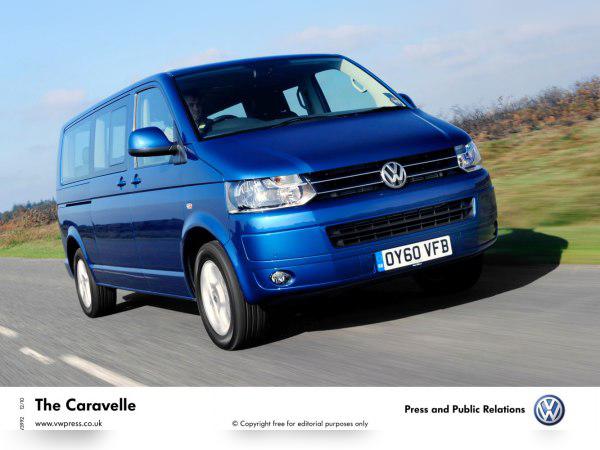
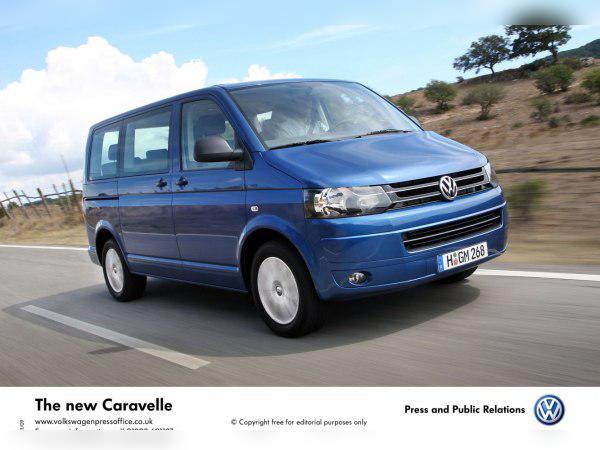
VW 2.0 TDI (CCHA) 140 HP – Experiences, problems, fuel consumption and buying used
Key points (TL;DR)
- Sweet spot: The 140 HP (103 kW) version is considered the most reliable option in T5 Facelift models – you’ve avoided the problematic BiTDI (180 HP).
- Injection system: This is a Common Rail engine (code CCHA), significantly quieter and more refined than the old “Pumpe-Düse” diesels.
- Timing service: The engine is driven by a timing belt. Intervals are long, but it’s recommended to shorten them due to the vehicle’s heavy use.
- Dual-mass flywheel: Present on both manual and DSG gearboxes. Its replacement is a major expense.
- EGR and DPF: As with any modern diesel, city driving is their enemy. The EGR valve is prone to clogging.
- Oil consumption: Although better than the BiTDI versions, CCHA engines can consume oil at higher mileage.
- Recommendation: An ideal engine for the Caravelle – enough power for the heavy body with acceptable maintenance costs.
Contents
- Introduction and engine application
- Technical specifications
- Reliability and maintenance
- Specific parts (costs)
- Fuel consumption and performance
- Additional options and modifications
- Gearbox (manual and DSG)
- Buying used and conclusion
Introduction and engine application
The engine with code CCHA (EA189 generation) represents a turning point for Volkswagen commercial vehicles, specifically for the T5 Facelift (T5.1) which arrived in 2009. Unlike its predecessors that used the “Pumpe-Düse” system, this 2.0 TDI uses Common Rail technology. In practice, this means smoother operation, more linear power delivery and compliance with Euro 5 standards.
This unit is crucial because it covers the “middle” of the range. Weaker versions (84 HP, 102 HP) are often too underpowered for the heavy Caravelle body, while the more powerful BiTDI version (180 HP is notorious for catastrophic oil consumption issues and engine failures. That’s why the 2.0 TDI 140 HP is (for many) the best choice when buying a used T5 van.
Technical specifications
| Parameter | Value |
|---|---|
| Engine displacement | 1968 cc |
| Power | 103 kW (140 HP) at 3500 rpm |
| Torque | 340 Nm at 1750–2500 rpm |
| Engine code | CCHA (EA189 family) |
| Injection system | Common Rail (Piezo/Solenoid) |
| Induction | Variable-geometry turbocharger (VGT) + intercooler |
| Emission standard | Euro 5 |
Reliability and maintenance
Does this engine have a timing belt or chain?
The 2.0 TDI CCHA engine uses a timing belt to drive the camshaft. This is generally a quieter and cheaper solution to replace than a chain, but it requires strict adherence to service intervals. A snapped belt leads to piston-to-valve contact, which means total engine failure.
What are the most common failures on this engine?
Although more reliable than the BiTDI version, the CCHA is not immune to problems:
- EGR valve and EGR cooler: Soot and oil deposits often block the valve. Symptoms are loss of power, the “Check Engine” light coming on and the engine going into limp mode. The EGR cooler can leak coolant, which shows up as loss of coolant without visible leakage under the vehicle.
- Exhaust gas pressure sensors (DPF sensors): A common failure that falsely reports that the DPF is full.
- Oil leaks: Often occur at the valve cover or crankshaft oil seal.
- High-pressure fuel pump (less common): If poor-quality fuel is used, metal shavings from the pump can destroy the injectors (although this is less common than on older 2.0 TDI engines).
At what mileage should the major timing service be done?
The factory recommendation for the VW T5 Facelift is often optimistic (210,000 km). However, considering that the Caravelle is a heavy vehicle that is often heavily loaded, experienced mechanics recommend a major timing service at 150,000 km to a maximum of 160,000 km or every 5 to 7 years, whichever comes first. The water pump must also be replaced at every major timing service.
How many liters of oil does this engine take and which grade is recommended?
This is a particularity of the T5 models. Although it’s a 2.0 TDI, the oil sump is larger than on passenger cars (Golf/Passat). The CCHA engine takes about 7.0 liters of oil. You must use oil that meets the VW 507.00 specification, most commonly in 5W-30 grade. Using the wrong oil drastically shortens the life of the DPF filter.
Does it consume oil between services?
Oil consumption is acceptable, but not zero. Topping up 0.5 to 1 liter per 10,000 km is considered normal, especially if the vehicle is driven on the motorway under load. If the engine consumes more than that (e.g. 1 liter per 2,000 km), this points to an issue with the piston rings or turbocharger, which requires serious inspection.
How long do the injectors last and how reliable are they?
The Common Rail injectors (usually Bosch) on the CCHA engine have proven to be very durable. With good-quality fuel, they can easily cover 250,000–300,000 km. Symptoms of failure are rough idle (engine shaking), hard starting or increased smoke under acceleration. Refurbishment is possible, but not cheap (depends on the market).
Specific parts (costs)
Does this engine have a dual-mass flywheel?
Yes, all models of the Caravelle with this engine (both manual and DSG) have a dual-mass flywheel. On heavy vehicles such as the T5, the flywheel is subjected to huge forces. Symptoms of failure are metallic rattling when starting/stopping the engine and vibrations in the clutch pedal. This is one of the more expensive wear items.
What kind of injection system does it have?
It uses a high-pressure Common Rail system. The injectors are not as problematic as the old Siemens piezo injectors on 2.0 TDI PD engines (Passat B6), but they are sensitive to poor-quality diesel and the presence of water in the fuel.
Does the engine have a turbocharger (or two)?
The 140 HP version (CCHA) has one variable-geometry turbocharger. This is a big advantage over the 180 HP version which has two turbos. Turbo lifespan is long (over 200,000 km) if you follow the rule of letting the engine cool down after fast driving and change the oil regularly. Turbo whistling is the first sign of material fatigue.
Does it have a DPF filter or EGR valve?
Yes, this engine comes standard with a DPF filter and EGR valve to meet Euro 5 standards. The DPF filter often clogs if the vehicle is used exclusively for short city trips (e.g. taxi service or hotel transfers). It’s necessary to occasionally take the vehicle on an open road to allow regeneration.
Does this engine use AdBlue?
Most T5 Facelift models with the CCHA engine (Euro 5) do not have an AdBlue system. They rely only on the DPF and EGR for emission control. However, there are rare later “BlueMotion” variants that may have an SCR catalyst (AdBlue), but this only became standard with the arrival of the T6 models (Euro 6). Check whether there is a smaller blue cap next to the fuel cap – if there isn’t, you don’t have AdBlue, which is one less maintenance concern.
Fuel consumption and performance
What is the real fuel consumption in city driving?
The VW Caravelle is heavy and has poor aerodynamics (a “brick”). In real-world city driving, you can expect consumption between 9.5 and 11.5 liters/100 km. Versions with 4MOTION all-wheel drive and DSG gearbox will be at the upper end, even up to 12 l/100 km in heavy traffic.
Is this engine “lazy” for the weight of the body?
With 140 HP and 340 Nm, this engine is not a racer, but it’s not lazy either. It’s the optimal compromise. It has enough torque to pull a fully loaded vehicle uphill without struggling. A feeling of “laziness” may appear only when attempting sudden overtakes on country roads with the van full of passengers and luggage.
How does the engine perform on the motorway?
This is the Caravelle’s natural habitat. At 130 km/h, the engine in 6th gear (or 7th with DSG) runs at about 2,200–2,400 rpm. That’s a comfortable cruising zone. Fuel consumption on the motorway at 130 km/h is around 8.5–9.5 liters, depending on wind and load.
Additional options and modifications
How far can this engine be safely tuned (Stage 1)?
The EA189 2.0 TDI engine responds very well to remapping (chip tuning). A “Stage 1” tune raises power from 140 HP to about 170–175 HP and torque to around 390–400 Nm. This modification significantly improves overtaking and uphill driving. However, keep in mind that the increased power puts additional stress on the clutch and flywheel, so it’s recommended only if those components are in good condition.
Gearbox
Which gearboxes are fitted?
- Manual: 6-speed gearbox. Precise and robust.
- Automatic: 7-speed DSG gearbox. Important: The DQ500 model is used in the T5.
What are the most common gearbox failures?
The manual gearbox is very reliable, failures are rare and usually related to synchro rings at high mileage.
DSG (DQ500): This is a “wet clutch” gearbox, designed for high torque and heavy vehicles (much more durable than the small DQ200). However, mechatronic failures do occur and repairs are expensive (very expensive). Also, the flywheel on DSG models often fails earlier than on manuals.
At what mileage does the gearbox need servicing?
- Manual: VW says the oil is “lifetime”, but the recommendation is to change it every 150,000 km.
- DSG: MANDATORY oil and filter change every 60,000 km. Skipping this service will almost certainly lead to costly mechatronic and clutch failures.
Buying used and conclusion
What should you check before buying?
- Cold start: Listen for metallic knocking (flywheel) while the engine is idling.
- Exhaust smoke: White smoke may indicate a problem with the EGR cooler (coolant leak) or injectors. Black smoke is a sign of DPF or turbo issues.
- DSG service history: If you’re buying an automatic, proof of oil changes in the gearbox every 60k km is crucial.
- Oil level: Check whether the oil level is above the maximum. This may mean that diesel is entering the sump due to failed DPF regenerations.
- Suspension and driveshafts: On T5 models, the splines on the driveshaft (right side) often wear out, resulting in loss of drive.
Conclusion: Who is this engine for?
The VW Caravelle with the 2.0 TDI 140 HP (CCHA) is probably the smartest purchase in the world of used T5.1 vans. It offers the best balance between performance and reliability. You’ve avoided the “ticking time bomb” (BiTDI 180 HP) and got a vehicle that can cruise across Europe effortlessly. If you maintain the DPF properly and service it on time, this engine can cover more than 500,000 km. It’s ideal for family trips, passenger transport or as a base for a camper conversion.
Was this content useful to you?
Your opinion helps us to improve the quality of the content.