CAVD, CTHD Engine
- Engine
- 1390 cm3
- Aspiration
- Turbocharging and Supercharger, Intercooler
- Fuel
- Petrol (Gasoline)
- Fuel injection system
- Direct injection
- Power
- 160 hp @ 5800 rpm
- Torque
- 240 Nm
- Cylinders
- 4
- Valves
- 16, 4 per cylinder
- Cylinders position
- Inline
- Valvetrain
- DOHC
- Oil capacity
- 3.6 l
# Vehicles powered by this engine
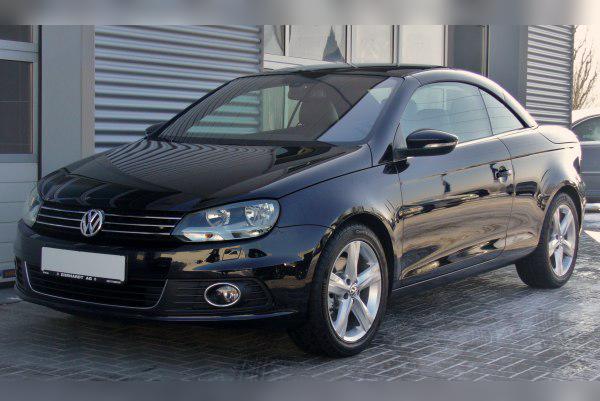
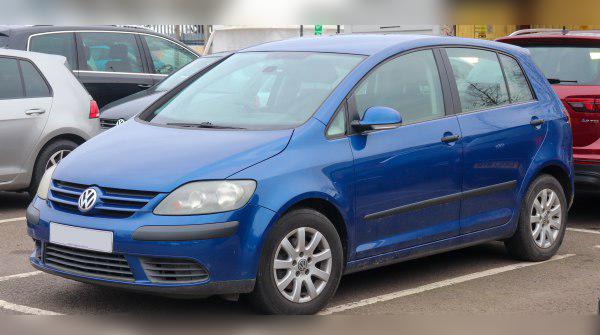
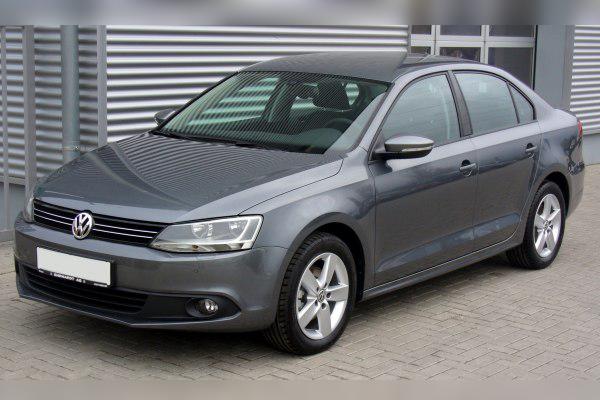
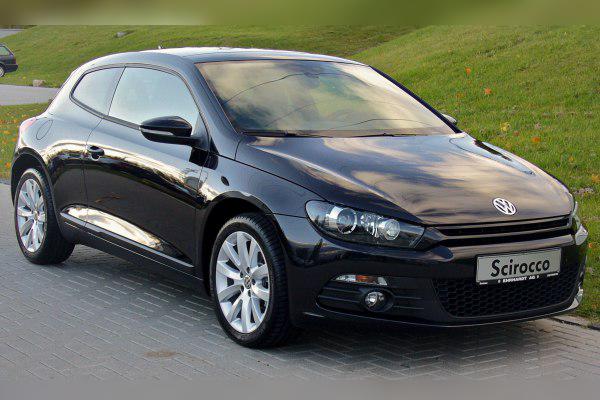
1.4 TSI Twincharger (160 HP) – Experiences, problems, fuel consumption and used car buying tips (CAVD, CTHD)
Key points (TL;DR)
- Performance over reliability: This is a "Twincharger" engine (turbo + supercharger) that offers fantastic performance for its displacement, but it is mechanically very complex.
- Sensitive to fuel quality: It requires high-quality fuel (98/100 octane) to avoid detonation that can destroy the pistons.
- Problematic timing chain: The timing system (chain) is a weak point, especially on early CAVD versions, where chain stretching and tensioner issues are common.
- Oil consumption: It often consumes oil, which can be the result of issues with piston rings or the turbocharger.
- Piston failure: On CAVD engines there is a documented risk of piston cracking due to thermal stress and poor ignition mapping. The CTHD version is improved.
- Expensive water pump: The water pump contains a magnetic clutch for the supercharger and replacement is expensive (depends on the market).
- Recommendation: Intended for enthusiasts who are ready for strict and more expensive maintenance, not for drivers who want a simple "fill up and drive" car.
Contents
- Introduction and characteristics
- Technical specifications
- Reliability, maintenance and failures
- Specific parts and costs
- Fuel consumption and performance
- LPG and remapping
- Gearbox (manual and DSG)
- Used car buying tips and conclusion
Introduction: An engineering marvel with flaws
The 1.4 TSI engine with 160 HP (from the EA111 family) was once awarded "Engine of the Year". Its secret lies in twincharging: a mechanical supercharger works at low revs and eliminates turbo lag, while the turbocharger kicks in at higher revs for maximum power. This allows the 1.4 engine to pull like a naturally aspirated 2.3 engine.
It was installed in popular models such as the VW Golf, Scirocco, Jetta and Eos. There are two main variants we are talking about here: the notorious CAVD (early series) and the revised CTHD (installed later, usually from 2012/2013, with reinforced pistons and improved chain tensioners). Although driving this engine puts a smile on your face, owning it can be stressful if you are not familiar with its quirks.
Technical specifications
| Specification | Data |
|---|---|
| Engine displacement | 1390 cc (1.4 L) |
| Power | 118 kW (160 HP) |
| Torque | 240 Nm at 1500–4500 rpm |
| Engine codes | CAVD, CTHD |
| Injection type | Direct injection (TSI/FSI) |
| Charging system | Twincharger (mechanical supercharger + turbocharger) + intercooler |
| Camshaft drive | Chain |
Reliability and maintenance
Chain or belt?
This engine uses a timing chain. Unfortunately, the chain on 1.4 TSI EA111 engines is known as a weak point. Chain stretching often occurs as early as 60,000 - 100,000 km. Symptoms include rattling on cold start (a sound like "cracking nuts") that lasts a few seconds. If ignored, the chain can jump, which leads to piston-to-valve contact – a complete engine failure.
Most common failures
Besides the chain, the most serious problem, particularly specific to the CAVD code, is piston and piston ring failure. This happens due to excessive pressure, poor-quality fuel that causes detonation (LSPI - Low Speed Pre-Ignition) and thermal stress. The CTHD version has reinforced pistons and suffers from this problem far less often. There are also frequent issues with ignition coils (misfire) and the magnetic clutch on the water pump.
Service intervals and oil
Minor service is recommended every 10,000 km up to a maximum of 15,000 km (never "Long Life" intervals of 30,000 km). The engine takes about 3.6 liters of oil. Recommended viscosity is 5W-30 or 5W-40 (VW 502.00 or 504.00 specification).
Oil consumption
This engine is prone to oil consumption. Consumption of 0.3 to 0.5 liters per 1,000 km is often considered "within tolerance" by VW, but in practice, anything over 1 liter per service interval indicates a potential problem with oil control rings or the turbocharger. Regular oil level checks are mandatory.
Spark plugs
On Twincharger engines, spark plugs are a critical component. They must be replaced more often than on regular naturally aspirated engines; the recommendation is every 30,000 to 40,000 km. Use only high-quality (e.g. NGK or OEM) spark plugs, as a bad plug can lead to detonation that destroys the piston.
Specific parts (costs)
Dual-mass flywheel
Yes, this engine has a dual-mass flywheel, regardless of whether it is paired with a manual or a DSG gearbox. Its lifespan is usually between 150,000 and 200,000 km, depending on driving style. Symptoms include knocking at idle and vibrations when switching the engine off. Replacement cost is high (depends on the market).
Fuel injection system
It uses a high-pressure direct fuel injection system. Injectors are generally reliable, but sensitive to poor fuel quality. A much bigger problem is carbon build-up on the intake valves, because fuel does not wash the valves (as on MPI engines). This requires mechanical cleaning (walnut blasting or chemicals) at higher mileages.
Turbo and supercharger
The engine has one turbocharger and one mechanical (Roots-type) supercharger. The turbocharger is generally durable with regular oil changes and proper cooldown after driving. The supercharger itself is robust, but it is engaged via a magnetic clutch integrated into the water pump. When this clutch fails (you hear a squealing noise or the supercharger does not work), the entire water pump has to be replaced, which is an expensive part.
DPF, EGR and AdBlue
Since this is a petrol engine, it has no DPF filter or AdBlue system. As for the EGR valve, exhaust gas recirculation is often achieved by variable valve timing (internal EGR), so there is no classic EGR valve that clogs up like on diesels, but the carbon build-up on intake valves is an equivalent problem.
Fuel consumption and performance
Real-world fuel consumption
In city driving, real-world fuel consumption ranges from 8.5 to 10.5 l/100 km, depending on how heavy your right foot is. Twincharger technology tempts you to drive faster, which drastically increases consumption. On the open road, with moderate driving, it is possible to get down to about 6.0 - 7.0 l/100 km.
Is the engine "lazy"?
Absolutely not. With 160 HP and 240 Nm available from just 1500 rpm, this engine is extremely lively. Thanks to the supercharger, there is no waiting for power when pulling away from a standstill. It moves the bodies of the Golf, Scirocco or Jetta with ease, giving the impression of driving a much larger engine.
Motorway driving
On the motorway the engine behaves confidently. At 130 km/h in top gear (6th gear or 7th gear on DSG), the engine spins at around 2,800 - 3,000 rpm, which provides quiet cruising and a good power reserve for overtaking without frequent downshifts.
Additional options and modifications
LPG conversion
Due to direct injection, LPG conversion is complicated and expensive (depends on the market). A special system for direct injection is required (e.g. liquid phase or a system that uses a mixture of petrol and LPG to cool the injectors). Given the complexity of the engine and the sensitivity of the injectors, LPG conversion often does not pay off unless you cover very high mileages.
Remapping (Stage 1)
This engine can be remapped to around 190-200 HP. However, be extremely careful. Considering the history of piston failure on CAVD engines, increasing power further stresses components that are already under heavy load. If you have the CTHD version (better pistons), the risk is lower, but still present. The recommendation is not to remap this engine if you want longevity.
Gearbox
Types of gearboxes
This engine comes with either a 6-speed manual gearbox or a 7-speed DSG automatic gearbox (code DQ200).
Gearbox failures
- Manual gearbox: Very reliable. Possible issues include gearbox bearing wear at high mileage (whining noise), but this is not widespread. The main expense is the clutch kit and dual-mass flywheel.
- DSG (DQ200): This is a gearbox with "dry" clutches. It is known for jerking when moving off (clutch problems) and failures of the mechatronic unit (control unit). Mechatronic repair is very expensive (depends on the market). Also, the oil in this gearbox is not changed as often as in "wet" DSG gearboxes, but it is advisable to have it checked.
Used car purchase and conclusion
When buying a used car with the 1.4 TSI 160 HP engine, pay attention to:
- Cold start: Insist that the engine is completely cold. Listen to the chain during the first 3–5 seconds. Any rattling is a red flag.
- Idle: The engine must run smoothly. Rough idle can indicate a compression problem (cracked piston), dirty intake valves or bad injectors.
- Engine code: Check in the trunk (sticker) or in the service book whether the engine is CAVD or CTHD. CTHD is always the better choice.
- Test drive: Floor the throttle from low revs. The engine must pull linearly, without "hiccups" (the transition from supercharger to turbo must be smooth). Listen for a squealing noise from the water pump under acceleration.
Conclusion: The VW 1.4 TSI Twincharger (160 HP) is a "Dr. Jekyll and Mr. Hyde" engine. It offers great performance and low fuel consumption when driven gently, but carries a high risk of expensive failures, especially in earlier model years. It is ideal for those who buy a well-documented example with known service history (chain replaced, regular servicing) and are willing to use high-quality fuel. If you are looking for maximum reliability and low maintenance costs, the simpler 1.4 TSI with a single turbo (122 HP) is a safer, although slower, option.
Was this content useful to you?
Your opinion helps us to improve the quality of the content.