BUB, CBRA Engine
- Engine
- 3189 cm3
- Aspiration
- Naturally aspirated engine
- Fuel
- Petrol (Gasoline)
- Fuel injection system
- Multi-port manifold injection
- Power
- 250 hp @ 6300 rpm
- Torque
- 320 Nm @ 2750 rpm
- Cylinders
- 6
- Valves
- 24, 4 per cylinder
- Cylinders position
- VR-engine
- Valvetrain
- DOHC
- Oil capacity
- 5.5 l
- Coolant
- 9 l
# Vehicles powered by this engine
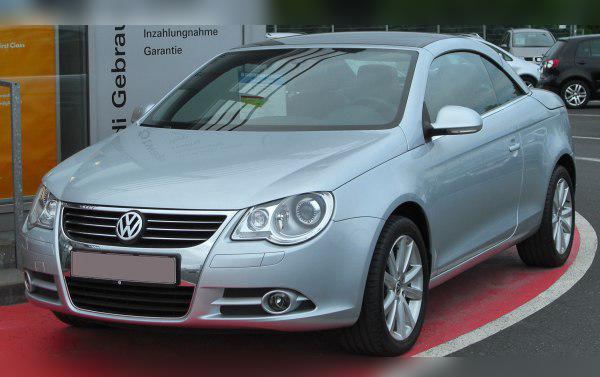
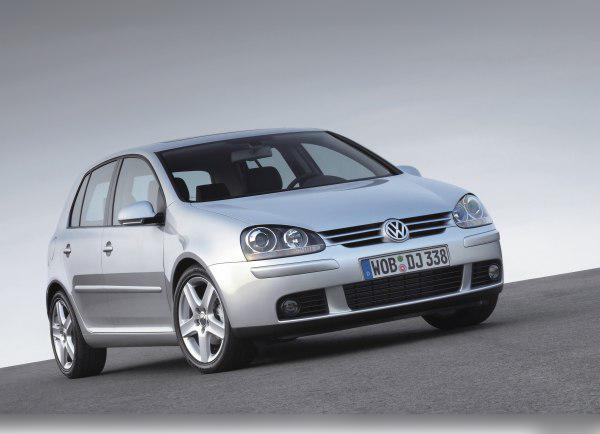
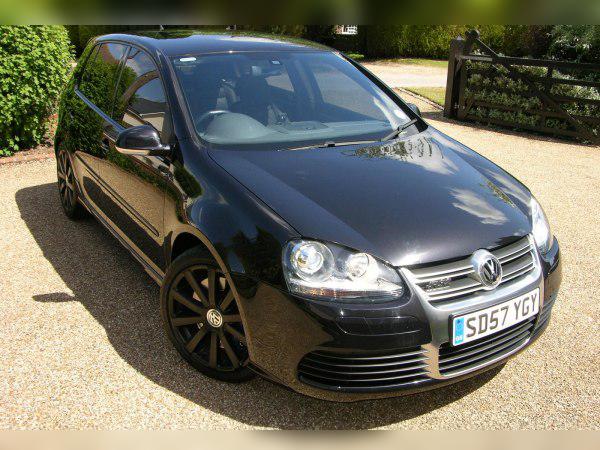
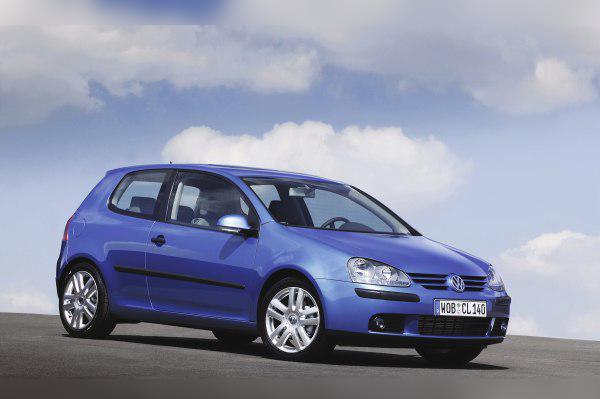
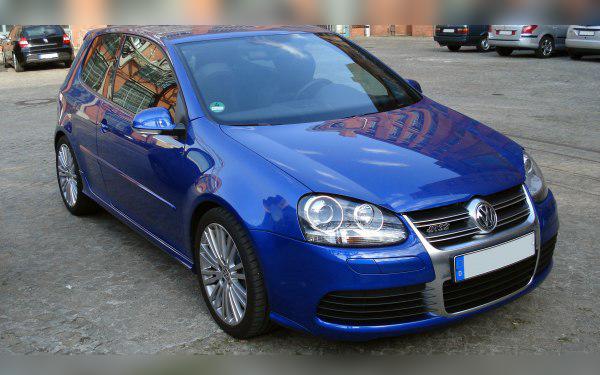
3.2 VR6 (BUB, CBRA): Experiences, issues, fuel consumption and buying advice
If you’re looking for a hair‑raising sound and linear power that just keeps pulling, the 3.2 VR6 engine (engine codes BUB and CBRA) is probably one of the last “dinosaurs” of its kind in compact cars. Fitted primarily in the legendary VW Golf V R32 and the elegant VW Eos, this engine represents the peak of an era before turbochargers and downsizing took over the market. However, owning such an engineering gem comes at a price – both at the fuel station and in the workshop.
In short (TL;DR)
- Sound and character: One of the best sounds in the car industry, linear throttle response.
- Biggest issue: Timing chain. It’s located at the back of the engine (by the gearbox), prone to stretching, and replacement is expensive and complicated.
- Fuel consumption: Very high. In the city, expect 13–16 liters without any trouble.
- LPG suitability: Excellent! Unlike newer FSI engines, this one has indirect injection (MPI), so LPG can be installed easily and cheaply.
- Drivetrain: Almost always comes with 4MOTION (Haldex) all‑wheel drive, which requires its own regular maintenance.
- Recommendation: An engine for enthusiasts who are willing to accept high running costs in exchange for driving pleasure.
Contents
- Technical specifications
- Reliability and maintenance
- Specific parts (costs)
- Fuel consumption and performance
- Additional options and modifications
- Gearbox and drivetrain
- Buying used and conclusion
Technical specifications
| Feature | Data |
|---|---|
| Displacement | 3189 cc (3.2 L) |
| Configuration | VR6 (narrow‑angle V engine, 15‑degree angle) |
| Power | 184 kW (250 hp) at 6300 rpm |
| Torque | 320 Nm at 2500–3000 rpm |
| Engine codes | BUB, CBRA |
| Injection type | MPI (Multi‑Point Injection) – indirect |
| Aspiration | Naturally aspirated |
| Valves | 24 valves (4 per cylinder) |
Reliability and maintenance
Chain or belt?
The 3.2 VR6 (BUB/CBRA) uses a timing chain. Unfortunately, this is also the “Achilles’ heel” of this engine. Although in theory it was designed to last the lifetime of the engine, in practice the chains start stretching as early as 100,000–150,000 km. The problem is complicated because the chain is located at the back of the engine (between the engine and gearbox). This means that to replace the chain, the engine (or gearbox) has to come out, which drastically increases labor cost.
Most common failures
Besides the chain, owners encounter the following issues:
- Ignition coils: The engine has 6 individual coils which are prone to failure. Symptoms are rough idle, loss of power and engine shaking.
- PCV valve (oil separator): When the membrane tears, the engine may whistle, idle roughly or consume more oil.
- Camshaft and crankshaft sensors: They often fail and can cause starting issues or stalling while driving.
- Oil leaks: Usually from the valve cover gasket or crankshaft seal (again, on the gearbox side).
Service intervals and oil
Minor service is recommended at a maximum of 10,000 to 12,000 km or once a year. Do not use LongLife intervals of 30,000 km if you want to preserve the chain.
The engine takes about 5.5 to 6.0 liters of oil. The recommended grade is 5W‑30 or 5W‑40 (VW 502.00 / 504.00 standard). Many experienced owners and mechanics recommend a quality 5W‑40 oil for better protection at high temperatures.
Oil consumption
Unlike the 2.0 TFSI engines from that era, the 3.2 VR6 is not known as a heavy oil burner due to bad piston rings. However, consumption of up to 0.5 liters per 1,000 km is considered acceptable by factory standards, although in practice healthy engines consume significantly less (around 1 liter between oil changes). If it consumes more, the problem is usually the PCV valve or a leak, and less often the engine internals themselves.
Spark plugs and injectors
Since this is a petrol engine:
- Spark plugs: Replace every 60,000 km. Use only NGK or OEM plugs specified for this engine.
- Injectors: BUB/CBRA engines use an older, more reliable indirect injection (MPI) system into the intake manifold. The injectors are extremely robust, don’t get dirty as easily as on FSI engines and rarely cause issues. No special maintenance is needed apart from occasional cleaning if poor running is noticed.
Specific parts (costs)
Dual mass flywheel
Yes, this engine has a dual mass flywheel (DMF), regardless of whether it’s paired with a manual or DSG gearbox. Its role is to dampen the vibrations of the large V6 engine. Failure symptoms are rattling at idle (which stops when you press the clutch on a manual) or thumps when switching the engine off. Replacement is expensive (depends on the market, but it’s among the pricier items).
Turbo, EGR, DPF, AdBlue?
- Turbo: This engine does not have a turbocharger. It’s naturally aspirated. The advantage is that you don’t have turbo rebuild costs, there’s no turbo lag, and power delivery is linear.
- EGR/DPF/AdBlue: These are diesel‑related terms. This petrol engine has no DPF filter, no AdBlue system, and EGR function is handled via variable valve timing (VVT), so there is no classic EGR valve that clogs up and causes chaos like on diesels.
Fuel consumption and performance
Real‑world fuel consumption
Let’s be honest – this engine drinks like there’s no tomorrow.
City driving: Expect between 13 and 16 l/100 km. If you have a heavy right foot, the figure easily goes to 18+.
Highway / open road: With careful driving you can get it down to 9–10 l/100 km, but a realistic average is around 11 liters.
Is the engine “lazy”?
Absolutely not. With 250 hp and 320 Nm, the engine is not lazy, but it behaves differently from modern turbo engines. There is no sudden “kick” in the back at 2000 rpm. It pulls constantly, strongly and tirelessly all the way to the redline. Throttle response is instant.
Behavior on the motorway
On the motorway this engine is a cruising king. At 130 km/h in top gear (6th), the engine spins at around 3,000–3,200 rpm (depending on the gearbox). That’s a bit higher than on modern 7‑ or 8‑speed automatics, so there is some noise in the cabin, but the engine note is pleasant. Overtaking is effortless, without the need for frequent downshifts.
Additional options and modifications
LPG conversion
This is a big advantage of the BUB/CBRA engines compared to the 3.2 FSI or 3.6 FSI units. Since it uses indirect injection, this engine is ideal for LPG installation. The system is simpler, cheaper to install and does not consume petrol while running on gas (unlike FSI engines). Given the fuel consumption, LPG is the only way to run this car economically.
Remap (Stage 1)
Since the engine is naturally aspirated, a remap (Stage 1) brings only minimal gains. You can expect an increase of about 10 to 15 hp and a slightly better throttle response. It’s often done just to remove the speed limiter or smooth out the torque curve a bit. Real power gains (Stage 2 or 3) require fitting a turbocharger or supercharger, which is an investment of several thousand euros.
Gearbox and drivetrain
Types of gearboxes
This engine was paired with:
- 6‑speed manual gearbox: Precise and robust.
- 6‑speed DSG gearbox (code DQ250): Dual‑clutch automatic (wet clutch).
Gearbox issues
- Manual: Generally indestructible by itself. Failures are limited to wear items: clutch kit and dual mass flywheel. The price of a clutch kit with flywheel is high (expensive).
- DSG (DQ250): This is an older generation DSG. The most common failure is the mechatronics unit (the gearbox “brain”), which results in jerks when taking off, harsh shifts or inability to engage gears. The clutch pack also wears out.
Gearbox service
- Manual: Oil is changed preventively at major services, even though VW claims it’s “lifetime”.
- DSG: MANDATORY oil and filter change every 60,000 km! If this is neglected, mechatronics failure is almost guaranteed.
Note on 4MOTION: Don’t forget the Haldex coupling (all‑wheel drive). It also has its own oil and filter that must be changed (usually every 30,000–60,000 km, depending on Haldex generation). If the 4x4 system doesn’t work, the Haldex pump is often the culprit.
Buying used and conclusion
What to check before buying?
- Cold start (crucial): Start the car when the engine is completely cold. Listen from the driver’s side of the bonnet (where the gearbox is). If you hear rattling, scraping or a “grinding” noise that lasts longer than 2–3 seconds, the chain needs replacing. That’s a 1000+ EUR expense.
- Diagnostics (VCDS): Check measuring blocks 208 and 209. These blocks show the phase difference between the camshafts and crankshaft. Values should be as close to 0 as possible. If they are over -8 or +8 degrees, the chain is stretched.
- DSG test: The gearbox must take off smoothly, without jerks, both forward and in reverse. An incline is a good test – release the brake; the car should not roll back before the clutch bites.
Conclusion
The 3.2 VR6 (BUB/CBRA) is not a choice for someone who just wants transport from point A to point B. This is an engine for hedonists. It offers a fantastic sound, excellent refinement and robustness (chain aside). Although running costs are higher (fuel, registration, tyres, major services), the feeling of driving a “six‑cylinder” in a Golf or Eos is something modern 2.0 turbo engines simply cannot replicate.
Should you buy one? YES, if you find a car with the chain already replaced or you’re prepared to invest in that service immediately after purchase. With an LPG conversion, this can be a surprisingly usable daily car with the character of a supercar.
Was this content useful to you?
Your opinion helps us to improve the quality of the content.