CSEA Engine
- Engine
- 999 cm3
- Aspiration
- Naturally aspirated engine
- Fuel
- Petrol / Ethanol - E85
- Fuel injection system
- Multi-port manifold injection
- Power
- 82 hp @ 6250 rpm
- Torque
- 102 Nm @ 3000 rpm
- Cylinders
- 3
- Cylinders position
- Inline
- Oil capacity
- 3.3 l
# Vehicles powered by this engine
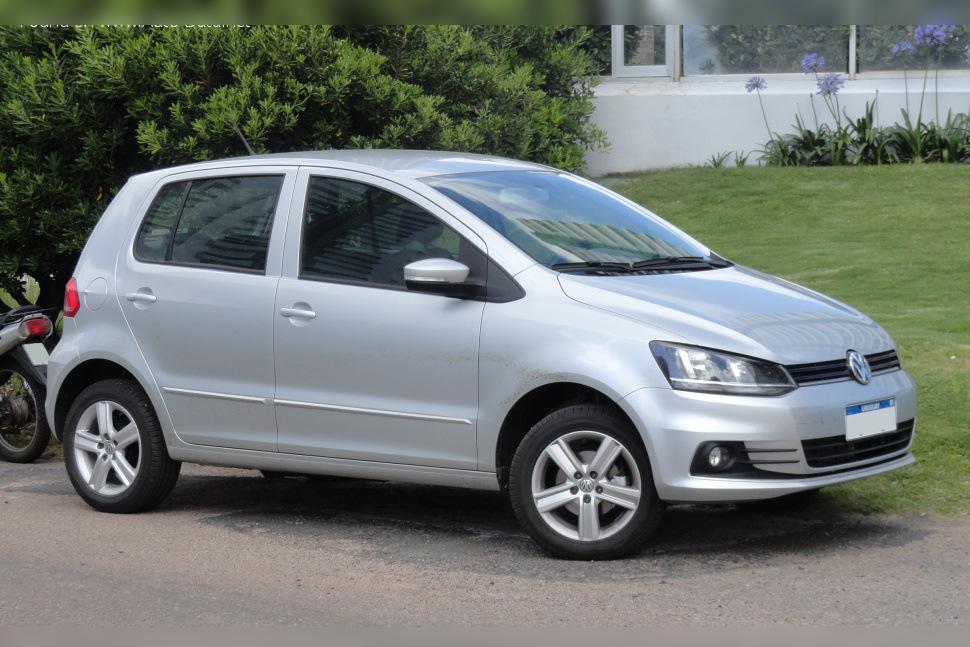
VW 1.0 MPI (CSEA) – Experiences, problems, fuel consumption and used-car buying tips
Key points (TL;DR)
- Proven technology: The CSEA is a naturally aspirated engine from the EA211 family, easy to maintain and generally reliable.
- Timing belt: Unlike older VW engines with problematic chains, this one uses a belt, which is a big plus.
- Fuel flexibility: Designed as a "Total Flex" engine (Petrol/Ethanol), but it works perfectly on pure petrol.
- Performance: With 82 hp (on ethanol) it is lively in the city, but it lacks breath on open roads and during overtaking.
- Coolant leaks: Its biggest weakness is the thermostat housing and water pump.
- Oil consumption: Not alarming like on old TSI engines, but it does require checking the level every few thousand kilometers.
- Recommendation: Ideal for city driving and drivers who want low maintenance costs.
Contents
- Introduction and engine applications
- Technical specifications
- Reliability, maintenance and failures
- Specific parts and costs
- Fuel consumption and performance
- Additional options and modifications (LPG/Tuning)
- Gearbox and drivetrain
- Buying used and conclusion
Introduction and engine applications
The engine with the code CSEA belongs to Volkswagen’s modern EA211 engine family. This is a three-cylinder naturally aspirated unit with a displacement of 1.0 liters. The specific feature of the CSEA variant is that it was primarily developed for Latin American markets (it is installed in the VW Fox Facelift from 2015), where ethanol use is popular.
This engine is a technological twin of the European 1.0 MPI engines we see in the VW Up!, Polo or Škoda Fabia, but it is mapped and tuned to extract maximum power (82 hp) using ethanol (E85), while on regular petrol the power slightly drops (usually to around 75–76 hp). Its simplicity is its main advantage – no turbocharger, no complex high-pressure injection, which makes it cheap to run.
Technical specifications
| Parameter | Data |
|---|---|
| Engine displacement | 999 cc (1.0 L) |
| Configuration | R3 (3 cylinders in-line), 12 valves |
| Power | 60 kW (82 hp) on Ethanol / ~56 kW (76 hp) on Petrol |
| Torque | 102 Nm at 3000–3800 rpm |
| Engine code | CSEA |
| Injection system | MPI (Multi-Point Injection) – Indirect injection |
| Aspiration | Naturally aspirated – No turbo |
| Fuel | Petrol / Ethanol (E85) |
Reliability and maintenance
Timing belt or chain?
Good news for all owners: the CSEA engine uses a timing belt. With the EA211 series Volkswagen abandoned the problematic chains that stretched on the old 1.2 and 1.4 engines. The belt on this engine is reinforced and designed to last long. A visual inspection is recommended after 120,000 km, and replacement is usually done preventively between 160,000 km and 200,000 km or after 8–10 years of age (depending on market and climate). Still, I recommend replacing the complete kit (belt, tensioners, water pump) earlier, around 150,000 km, for peace of mind.
Most common failures
Although the engine is robust, it has a few weak points:
- Thermostat housing and water pump: This is the "Achilles’ heel" of EA211 engines. The housing is plastic and over time, due to heating and cooling cycles, micro-cracks or deformation appear, which leads to coolant leaks. The symptom is a dropping coolant level in the expansion tank and the smell of coolant under the hood.
- Ignition coils: They can fail, causing rough engine operation, loss of power and the "Check Engine" light to come on.
- Vibrations: Like every three-cylinder, the engine is not perfectly balanced by nature. If the engine mounts (especially the lower one) weaken, vibrations in the cabin become more pronounced, especially at idle.
- Oil vapor deposits: Although it is an MPI engine (less prone to this than direct injection), the oil vapor separator (PCV valve) can clog if the oil is not changed regularly.
Major and minor service
A minor service (oil and filters) is recommended every 10,000 km to 15,000 km or once a year. Do not follow "Long Life" interval recommendations of 30,000 km if you plan to keep the car long-term – city driving kills oil.
The major service (replacement of timing belt, tensioners and water pump) is done preventively at around 150,000 km. Parts are not expensive (depends on the market).
Oil: quantity and grade
The sump of this engine holds approximately 3.3 to 3.5 liters of oil (including the filter). The recommended grade is usually 5W-40 or 5W-30, which meets VW standards (VW 502 00 or VW 508 88 for flex engines). In warmer climates, 5W-40 is a better choice due to better protection at high temperatures.
Oil consumption
This engine is not known as an "oil burner", but it is not immune either. Consumption of up to 0.3 to 0.5 liters per 10,000 km is completely normal and acceptable. If it uses more than 0.5 liters per 1,000 km, this indicates a problem with piston rings or valve stem seals, but this usually happens only at high mileage (over 200,000 km).
Spark plugs
Since this is a petrol/ethanol engine, spark plugs are crucial. Replacement is recommended every 40,000 km to 60,000 km. If you often run on ethanol (or have LPG installed), the interval should be shortened to 30,000 km because these fuels are harder to ignite and put more stress on the ignition system.
Specific parts (costs)
Dual-mass flywheel and clutch
Good news: this engine DOES NOT have a dual-mass flywheel. It uses a classic, solid flywheel. This means that the clutch kit (pressure plate, disc, release bearing) is significantly cheaper to replace compared to diesels or more powerful turbo petrol engines. The clutch kit price falls into the "not expensive" category.
Injection system
The engine uses an MPI (Multi-Point Injection) system. The injectors spray fuel into the intake manifold, not directly into the cylinder. These injectors are very robust, resistant to poorer fuel quality and cheap to clean or replace. They are not as problematic as piezo injectors on diesels or high-pressure injectors on TSI engines.
Turbocharger
The engine DOES NOT have a turbocharger. That means one (expensive) worry less. No turbo that can start whining, no intercooler that can crack.
DPF, EGR and AdBlue
Since this is a petrol engine:
- DPF filter: None.
- AdBlue: None.
- EGR valve: On modern petrol engines like this, exhaust gas recirculation is often achieved by "valve overlap" (Variable Valve Timing – VVT) on the camshaft, so a classic EGR valve that gets clogged with soot and sticks often does not exist as a separate part or is very simple and rarely causes problems.
- Catalytic converter: It has a catalytic converter that can fail if you drive with bad spark plugs/coils (unburnt fuel ends up in it).
Fuel consumption and performance
Real-world fuel consumption
Fuel consumption strongly depends on how heavy your right foot is, because small engines need high revs to go.
- City driving: Expect around 6.5 to 7.5 liters of petrol per 100 km. If you use ethanol, consumption increases by about 30% (so around 9–10 liters of ethanol).
- Open road (single carriageway): It can drop to around 4.5 to 5.5 l/100 km at speeds up to 80–90 km/h.
Is the engine "sluggish"?
For the VW Fox body (which is in the Polo class, weighing around 1000–1100 kg), 82 hp is "enough", but not "fast". In the city the engine feels nippy thanks to short gearbox ratios. However, when the car is fully loaded with passengers and the A/C is on, you will feel a noticeable drop in performance. Uphill sections require downshifting and high revs.
Behavior on the motorway
This is not the natural habitat for this engine. To maintain 130 km/h, the engine in fifth gear will be spinning at a high 3,800 to 4,200 rpm (depending on the gearbox). This means: increased cabin noise and fuel consumption rising to over 7–8 liters. Cruising is comfortable up to 110–120 km/h.
Additional options and modifications
LPG installation
YES, this engine is excellent for LPG. Thanks to MPI injection, installing an LPG system is simple, cheap and the engine handles gas very well. The hydraulic valve lifters (which this engine has) automatically adjust valve clearance, which further simplifies LPG use. Still, it is advisable to install a system with valve lubrication (as a precaution) or to have regular checks.
Chip tuning (Stage 1)
Since this is a naturally aspirated engine, chipping it is a waste of money. You might gain 3 to 5 hp and maybe a slightly better throttle response, but you will not notice it in real driving. There is no safe way to extract significant power through software alone without mechanical modifications.
Gearbox
Manual and automated gearboxes
With this engine in the VW Fox you most often get:
- 5-speed manual (MQ200): Extremely precise, easy to use and reliable gearbox.
- Automated (ASG / I-Motion): This is essentially a manual gearbox with a robot that shifts instead of you. Avoid it if you can.
Gearbox failures
- Manual: Failures are rare. Sometimes oil can leak at the driveshaft seal. The gearbox oil should be changed every 80,000–100,000 km, even though VW says it is "lifetime".
- Automated (I-Motion): Very problematic. It jerks when setting off, is indecisive when changing gears, and actuator (robot) repairs are expensive (depends on the market, but counts as a costly failure). The clutch on these wears out faster than on the manual.
Buying used and conclusion
When buying a used VW Fox with the CSEA engine, pay attention to the following:
- Noise on cold start: The engine should run smoothly. A bit of "ticking" in the first few seconds is normal (hydraulic lifters), but if you hear metallic knocking that does not stop, walk away.
- Signs of coolant leaks: Look at the left side of the engine (where the belt is) and the thermostat housing. If you see white or pink deposits, the pump or housing is leaking coolant.
- Test drive: Put it in third gear at low revs and press the accelerator. There should be no "hesitation" (jerking), which would indicate bad spark plugs, leads or coils.
Conclusion: The VW 1.0 CSEA is an excellent engine for a rational driver. It is cheap to maintain, has no expensive failure-prone parts (turbo, dual-mass flywheel, high-pressure injectors) and is perfectly suited to city driving. If performance is not your top priority and you spend most of your time in urban environments, this is one of the most reliable options in its class.
Was this content useful to you?
Your opinion helps us to improve the quality of the content.