CSEA Engine
- Engine
- 999 cm3
- Aspiration
- Naturally aspirated engine
- Fuel
- Petrol (Gasoline)
- Fuel injection system
- Multi-port manifold injection
- Power
- 75 hp @ 6250 rpm
- Torque
- 95 Nm @ 3000 rpm
- Cylinders
- 3
- Cylinders position
- Inline
- Oil capacity
- 3.3 l
# Vehicles powered by this engine
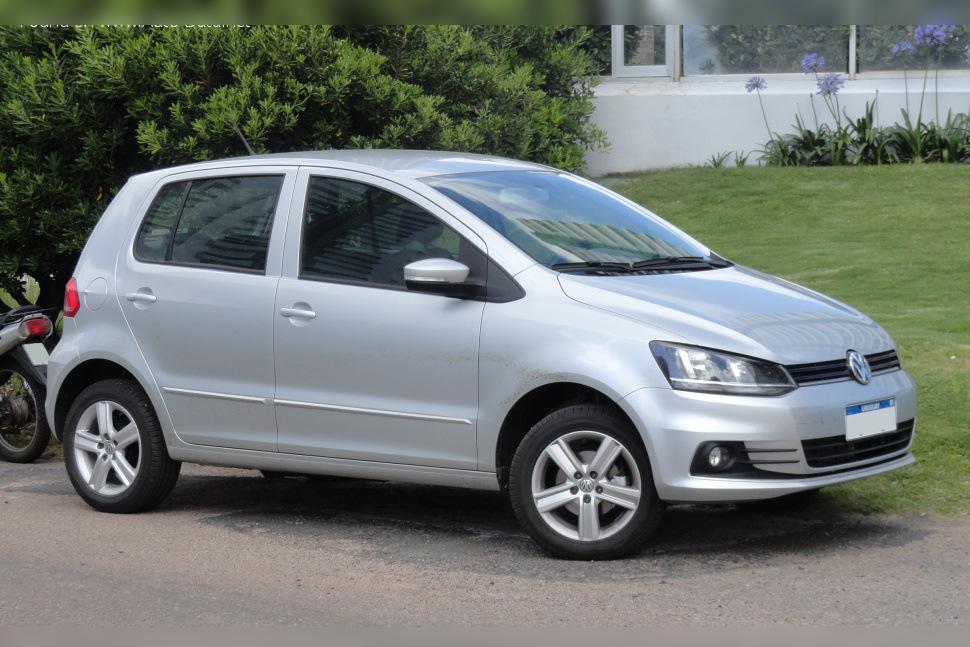
Volkswagen Fox 1.0 MPI (CSEA) – Experiences, issues, fuel consumption and used car buying guide
Key points (TL;DR)
- Simple design: This is a naturally aspirated engine without a turbo, without a dual-mass flywheel and without complex injection systems, which makes it cheap to maintain.
- Belt-driven: Unlike older generations, this engine uses a timing belt, which is more reliable than the old chains.
- Ideal for the city: With 75 hp, it feels lively in city driving, but on open roads it quickly runs out of breath, especially under load.
- Oil consumption: In the EA211 engine family, oil consumption is significantly reduced compared to predecessors, but regular checking is still mandatory.
- LPG (Autogas): An excellent candidate for LPG conversion thanks to its indirect fuel injection.
- Gearbox: Manual gearboxes are excellent, but avoid the robotised (automated) "I-Motion" gearboxes if they are available on your market.
- Recommendation: A great choice as a first car, for delivery drivers, or as a second family car for city use.
Contents
Introduction and use case
The engine with the code CSEA belongs to VW’s modern EA211 engine family. It is a three-cylinder naturally aspirated petrol engine with a displacement of 1.0 litre. This specific engine code is used in models such as the Volkswagen Fox (2015 facelift), a vehicle primarily developed for South American markets, but the technical solutions and base of this engine are shared with European models like the VW Up!, Škoda Citigo and VW Polo.
Its main purpose is economy and simplicity. In a world dominated by turbo engines and complex emissions systems, the CSEA represents “old school” in a modern package – a simple petrol engine designed to last long with minimal running costs. Although small, this engine is important because it shows that VW can build a reliable three-cylinder after the timing chain problems in previous generations.
Technical specifications
| Characteristic | Value |
|---|---|
| Engine displacement | 999 cc (1.0 L) |
| Configuration | Inline, 3 cylinders |
| Power | 55 kW (75 hp) @ 6250 rpm |
| Torque | 95 Nm @ 3000-4300 rpm |
| Engine code | CSEA (EA211 family) |
| Injection type | MPI (Multi Point Injection) – Indirect |
| Charging | Naturally aspirated (No turbo) |
Reliability and maintenance
Belt or chain?
Unlike the older 1.2 and 1.4 engines from the EA111 series that had problematic chains, the CSEA engine (EA211) uses a timing belt. This is very good news. The belt is reinforced and designed to last a long time. It is recommended to have it thoroughly inspected for the first time at 90,000 km, and replacement is usually done between 120,000 km and 160,000 km or every 6 to 8 years (depending on market and climate conditions). If the car is driven mostly in the city (stop‑and‑go traffic), shorten the interval.
Most common failures
This engine is quite robust, but it has its “bugs”:
- Thermostat housing and water pump: This is the most common weak point of EA211 engines. The water pump and thermostat are integrated in a single plastic module. Over time, due to heating and cooling cycles, the plastic can crack and coolant may start leaking. Symptoms include a dropping coolant level in the expansion tank or traces of coolant under the car.
- Vibrations: Since this is a three‑cylinder, the engine is naturally not perfectly balanced. Even though it has balance shafts, the engine mounts are under higher stress. Worn mounts will transmit unpleasant vibrations into the cabin, especially at idle.
- Ignition coils: As with most petrol engines, coils can fail, which leads to rough running (“misfiring”) and the “Check Engine” light coming on.
Oil and spark plugs
Minor service: Recommended every 10,000 km to 15,000 km. Ignore extended intervals of 30,000 km if you want the engine to last.
Oil quantity and type: The sump holds approximately 3.3 to 3.5 litres of oil (always check the dipstick while filling). The recommended viscosity is usually 5W-30 or 5W-40 with a VW approval (e.g. VW 502.00 for fixed intervals).
Oil consumption: CSEA engines are much better than their predecessors, but it is not unusual for them to consume 0.2 to 0.5 litres per 10,000 km, especially if driven at high revs on the motorway. Anything above 0.5 litres per 1,000 km is considered a fault (valve stem seals or piston rings).
Spark plugs: Being a petrol engine, spark plugs are a service item. It is recommended to replace them every 40,000 to 60,000 km. Worn plugs can damage the ignition coils.
Specific parts and costs
Maintaining this engine falls into the category: Affordable (Not expensive). (Depends on the market).
- Dual‑mass flywheel: This engine does NOT have a dual‑mass flywheel. It uses a conventional solid flywheel. This is a huge saving when replacing the clutch kit.
- Turbocharger: The engine is naturally aspirated, so it does NOT have a turbocharger. One less thing to worry about. No turbo that can whistle, leak oil or require rebuilding.
- Injection system: The CSEA uses an MPI (Multi Point Injection) system. The injectors are simple, operate at low pressure and are rarely problematic. Even if they fail, they are cheap to replace or clean compared to direct injection systems (TSI/FSI).
- DPF and EGR: As a petrol engine, it has no DPF filter. It has a catalytic converter, which can fail if the engine burns a lot of oil or has poor combustion, but this is not a common issue. An EGR valve is present in the recirculation system, but on petrol engines it clogs much less often than on diesels because the soot is not oily.
- AdBlue: This engine does NOT use AdBlue fluid.
Fuel consumption and performance
This is a city warrior. Its performance should be viewed in the context of the vehicle’s intended use.
- City driving: Real‑world consumption in the city ranges between 6.5 and 8.0 litres/100 km, depending on traffic and how heavy your right foot is. In winter it can be slightly higher.
- Motorway and cruising: This is where its limits show. With only 75 hp and 95 Nm of torque, the engine “struggles” at higher speeds. At 130 km/h in fifth gear, the engine spins at a high 3800-4200 rpm (depending on gearbox ratios). It is noisy then, and fuel consumption rises to around 7–8 litres.
- Is it “sluggish”? For the VW Fox body, the engine is perfectly adequate in town (up to 80 km/h). However, if four adults get in and you turn on the air conditioning, the engine becomes noticeably sluggish. Overtaking on country roads requires planning, downshifting and high revs.
Additional options and modifications
Can it run on LPG?
YES, and very well! This is one of the best modern engines for LPG conversion. Thanks to the MPI system (indirect injection), installation is simple and inexpensive (“standard” sequential system), and the engine handles LPG very well. This drastically reduces running costs.
Chip tuning (Stage 1)?
It doesn’t make much sense. Since the engine is naturally aspirated (no turbo), a remap can yield maybe 3 to 5 hp and an almost imperceptible increase in torque. You won’t feel a real difference in driving, so it’s basically wasted money.
Gearbox: Manual vs automatic
Manual gearbox (5‑speed): This engine is most commonly paired with the MQ200 gearbox. It is very precise, light to operate and reliable.
- Maintenance: Although VW often claims the oil is “lifetime fill”, it is recommended to change the gearbox oil every 100,000 km to preserve the synchros.
- Clutch: The clutch kit is cheap (no dual‑mass flywheel) and replacement is a routine job.
Automated gearbox (ASG / I-Motion): In Latin America and some other markets, this engine was offered with a robotised gearbox (often called I-Motion). Avoid it if possible.
- Problems: Jerky take‑off, slow gear changes and troublesome clutch actuators (“robots”) that are expensive to repair. The driving experience is uncomfortable (the car “nods” with every gear change).
Buying tips and conclusion
When buying a used VW Fox or another model with the CSEA engine, pay attention to the following:
- Noise on cold start: The engine may run slightly louder when cold, but there should be no metallic knocking (pistons/valves). Once warmed up, it should run smoothly.
- Coolant leaks: Check the area around the thermostat housing (on the right side of the engine block when viewed from the front). If you see pink deposits, prepare for a pump/housing replacement.
- Service history: Check when the major service (timing belt) was done. If there is no proof, factor that cost in immediately.
Conclusion:
The VW 1.0 MPI (CSEA) is a rational choice. It is not built for racing or long motorway journeys, but it is a champion of low running costs and urban use. If you want a car that will take you from point A to point B with minimal hassle and breakdowns, and performance is not your top priority, this is the engine for you. It is especially recommended if you plan to install an LPG system.
Was this content useful to you?
Your opinion helps us to improve the quality of the content.