CPBA Engine
- Engine
- 999 cm3
- Aspiration
- Naturally aspirated engine
- Fuel
- Petrol / Ethanol - E85
- Fuel injection system
- Multi-port manifold injection
- Power
- 76 hp @ 5250 rpm
- Torque
- 104 Nm @ 3850 rpm
- Cylinders
- 4
- Valves
- 8, 2 per cylinder
- Cylinders position
- Inline
- Oil capacity
- 3.3 l
# Vehicles powered by this engine
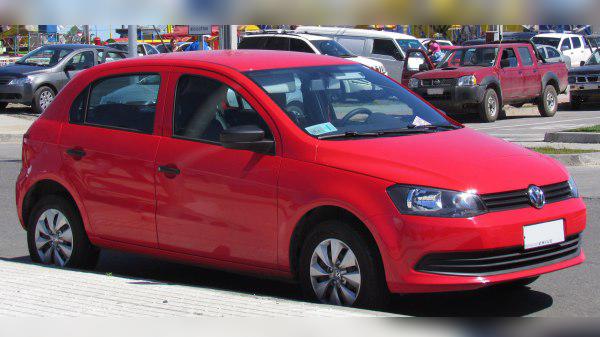
VW 1.0 Total Flex (CPBA) – Experiences, Issues, Fuel Consumption and Maintenance
Key points (TL;DR)
- Simplicity: Classic naturally aspirated engine, no turbo, no dual-mass flywheel and no overcomplicated emissions systems. A dream for anyone who wants cheap maintenance.
- Total Flex technology: Designed to run on gasoline and ethanol (E85), which means it has reinforced fuel system components.
- City warrior: Excellent throttle response at low speeds, but it quickly runs out of breath on open roads.
- Potential issues: Ignition coils and oil leaks at the valve cover gasket are the most common headaches.
- LPG (Autogas): An ideal candidate for LPG conversion thanks to its indirect injection.
- Recommendation: Buy it if you need a “workhorse” for city driving where reliability and low running costs are the priority.
Contents
Introduction: VW 1.0 CPBA – The South American Champion
The engine with the code CPBA (often called 1.0 TEC or VHT) is a specific evolution of Volkswagen’s EA111 engine family. Although Europe has moved on to three-cylinder units, this engine kept its 4 cylinders and was refined primarily for emerging markets, especially South America (Brazil, Argentina), where it was installed in the legendary VW Gol (G5/G6).
What makes it special is its Total Flex nature. From the factory it is ready to “digest” both regular gasoline and ethanol (alcohol), or any mixture of the two fuels. For drivers, this means a robust injection system and an engine designed to tolerate variations in fuel quality. Despite its modest displacement, this unit was engineered to deliver maximum torque at the lowest possible rpm (VHT – Very High Torque), in order to compensate for the lack of power in demanding urban conditions.
Technical specifications
| Feature | Data |
|---|---|
| Engine code | CPBA |
| Displacement | 999 cc (1.0 L) |
| Configuration | Inline 4-cylinder |
| Power | 56 kW (76 hp) on ethanol / ~72 hp on gasoline |
| Torque | 104 Nm at 3,850 rpm |
| Injection type | MPI (Multi-Point Injection) – Indirect |
| Induction | Naturally aspirated (No turbo) |
| Valves | 8 valves (2 per cylinder) |
Reliability and maintenance
Timing belt or chain?
The CPBA engine uses a timing belt. This is the classic solution for the EA111 family. Although some drivers prefer a chain, on this engine the belt has proven to be a more reliable and quieter solution, provided it is replaced on time. The system is relatively simple, with a single tensioner.
Most common failures and issues
Although it has a reputation as a “mule”, years of use have revealed certain weaknesses:
- Ignition coils: This is probably the most common issue. The engine starts running roughly, misfires and turns on the “Check Engine” light. It is recommended to replace them in pairs or all four when one fails.
- Oil leaks: The valve cover gasket often gives up, so the engine looks oily. The crankshaft oil seal can also start to weep at higher mileage.
- Coolant temperature sensor: Failure of this sensor can lead to difficult starting (hot or cold) and an incorrect fuel mixture, which increases fuel consumption.
- PCV valve (crankcase ventilation): If it clogs, crankcase pressure rises, which can blow out oil seals and lead to increased oil consumption. It often shows up as “mayonnaise” under the oil cap (although this can also be condensation from short trips).
Major service (timing service)
The recommended interval for replacing the timing belt, tensioner and water pump is every 60,000 to 90,000 km or 4 to 5 years, whichever comes first. Since a snapped belt leads to piston-to-valve contact (catastrophic engine damage), and the parts are not expensive (depends on the market), it is wise to stick to the 60,000 km interval, especially in stop‑and‑go city driving.
Oil: Quantity and grade
The sump holds approximately 3.3 to 3.5 liters of oil including the filter. The recommended grade is 5W-40 (VW 502.00 standard). It is also possible to use 10W-40 on high‑mileage engines in warmer climates, but fully synthetic 5W-40 protects the hydraulic lifters best.
Oil consumption
Does it burn oil? Yes, like most VW engines of that generation, but moderately. According to factory data, up to 0.5 liters per 1,000 km is considered normal (which is excessive), but in practice a healthy engine should not need more than 0.5 to 1 liter between two minor services (over 10,000 km). If it uses more, check the valve stem seals or piston rings.
Spark plugs
Since this is a gasoline/ethanol engine, spark plugs are crucial. The replacement interval is usually 30,000 to 40,000 km. Because it runs on ethanol (which is more conductive and harder to ignite), the ignition system is under more stress than on pure gasoline engines. Use only spark plugs specified in the catalog for Flex engines.
Specific parts (Costs)
Dual-mass flywheel
Good news: This engine does NOT have a dual-mass flywheel. It uses a classic solid flywheel. This means the clutch kit is much cheaper and there is no risk of the expensive repairs typical of modern diesels.
Fuel injection system
It uses a classic MPI (Multi-Point Injection) system. Injectors are robust, cheap to clean and rarely fail. They are not as sensitive to poor fuel quality as modern direct injectors (GDI/TSI). If one does fail, replacement is not expensive (depends on the market).
Turbo and complex systems
The engine is naturally aspirated, so it has no turbocharger, no intercooler and no complicated variable-geometry turbine. As a result, engine life is extended because there are fewer hot, moving parts that can fail.
DPF, EGR and AdBlue
This is a gasoline engine, so it has no DPF filter and no AdBlue system. As for the EGR valve (exhaust gas recirculation), this engine usually has one (or uses variable valve timing to simulate the EGR effect). If the EGR clogs with soot (common in city driving), the engine can lose power or run roughly. Cleaning is usually sufficient.
Fuel consumption and performance
Real-world fuel consumption
This is a small-displacement engine that has to rev to make progress, which affects fuel consumption.
- City driving: Expect between 7.5 and 9.0 l/100 km on gasoline. If you run it on ethanol (where available), consumption increases by about 30% (so 10–12 l/100 km), but the fuel itself is cheaper.
- Highway / open road: Around 5.5 to 6.5 l/100 km at moderate speeds (up to 90 km/h).
Is the engine “lazy”?
For the VW Gol body (around 1,000 kg), this engine is acceptable in the city. First and second gears are short, which gives a feeling of briskness at traffic lights. However, as soon as you load the car with passengers and luggage, the lack of torque becomes obvious. Uphill sections require downshifting and high revs.
Behavior on the motorway
This is not the natural habitat of the CPBA engine. At 130 km/h in fifth gear, the engine spins at over 4,000 rpm. That creates noise in the cabin and increases fuel consumption. Overtaking on the motorway requires serious planning, a run‑up and often turning off the air conditioning to squeeze out every last bit of power.
Additional options and modifications
LPG (CNG/TNG) conversion
Absolutely yes. This is one of the best engines for LPG conversion. Since it has indirect injection and, as a Flex engine, already has reinforced valves and valve seats from the factory to withstand the corrosiveness of ethanol, it handles LPG very well. Installation is simple, inexpensive and pays for itself quickly.
Chip tuning (Stage 1)
Honestly? Don’t waste your money. On a naturally aspirated 1.0‑liter engine, chip tuning can give you at most 2 to 4 horsepower, which you won’t feel in real driving. The only noticeable change can be a sharper throttle response (remapping), but that does not increase actual power.
Gearbox
Manual and automated gearboxes
With this engine in the VW Gol you most often get two options:
- 5-speed manual (MQ200): One of VW’s best gearboxes for small engines. Precise, light and reliable.
- Automated manual (I-Motion / ASG): This is NOT a conventional automatic, but a robotized manual. It is a manual gearbox with a “robot” that operates the clutch instead of you.
Gearbox issues
- Manual: Almost indestructible with regular oil changes. Sometimes there can be issues with the shift linkage (hard engagement of first or reverse), but that is a cheap fix.
- I-Motion (ASG): Avoid if possible. The robot (electro‑hydraulic actuator) is prone to failures, oil leaks and sticking. Driving is jerky (a noticeable “lurch” when changing gears), and repairing the actuator is very expensive (pricey, depends on the market).
Clutch replacement and gearbox oil
The cost of replacing the clutch kit on the manual gearbox is low (falls into the “not expensive” category). On I-Motion gearboxes the clutch kit itself is the same, but calibration via diagnostics is required after replacement.
Gearbox service: Although VW often states that the oil in the manual gearbox is “lifetime filled”, experienced mechanics recommend changing it every 100,000 km or 8–10 years. A 75W-90 synthetic oil is used (about 2 liters). On I-Motion gearboxes, the hydraulic oil in the actuator also needs to be changed.
Conclusion and buying advice
Before buying a used car with the CPBA engine, make sure you do the following:
- Listen to the engine on a cold start: Rattling can indicate issues with hydraulic lifters or pistons (piston slap is known on some VW engines, though less on the 1.0 than on the 1.6).
- Check the oil cap: If there is too much “mayonnaise”, check whether the engine is losing coolant (head gasket) or if it is just condensation.
- Test drive: Put it in third gear at low revs and floor the throttle – there should be no hesitation or jerking (a sign of bad coils/cables).
Final verdict:
The VW 1.0 Total Flex (CPBA) is an engine for the head, not the heart. If you need a car for deliveries, a beginner driver or pure city use, it is an excellent choice. Parts are available everywhere, every mechanic knows how to work on it, and the simple design guarantees it won’t leave you stranded because of some 500‑euro sensor. Just avoid the robotized (I-Motion) gearbox and you’ll be satisfied.
Was this content useful to you?
Your opinion helps us to improve the quality of the content.