EA888 evo4 Engine
- Engine
- 1984 cm3
- Aspiration
- Turbocharger, Intercooler
- Fuel
- Petrol (Gasoline)
- Fuel injection system
- Direct injection
- Power
- 333 hp
- Torque
- 420 Nm
- Cylinders
- 4
- Valves
- 16, 4 per cylinder
- Cylinders position
- Inline
- Valvetrain
- DOHC
- Systems
- Start & Stop System, Particulate filter
# Vehicles powered by this engine
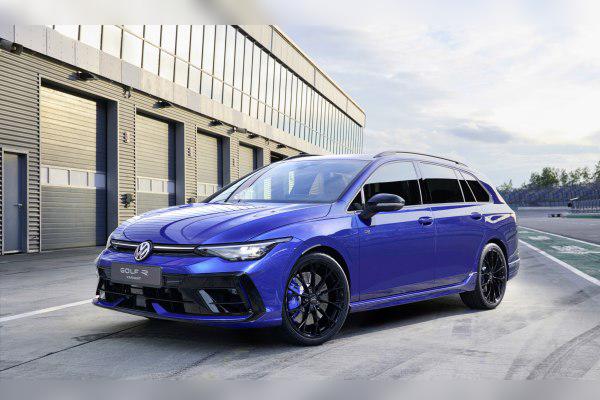
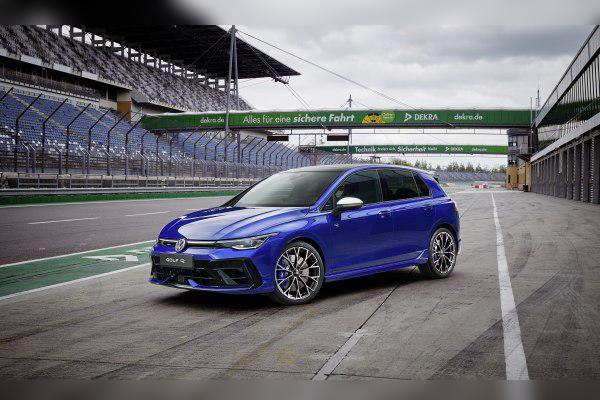
EA888 evo4 2.0 TSI (333 hp) – Experiences, issues, fuel consumption and buying tips
Key points (TL;DR)
- Powertrain and output: This is the pinnacle of engineering in the 2.0-liter class – 333 hp delivers brutal performance, but it requires strict maintenance.
- Timing: Uses a chain. On the "evo4" generation the system is significantly improved and reliable, but not eternal.
- Gearbox: Comes exclusively with a DSG automatic transmission (in this 333 hp version). Gearbox oil must be changed every 60,000 km.
- Oil consumption: Expect some oil consumption if you drive aggressively. That’s a characteristic, not necessarily a fault, but the level must be monitored.
- Cooling system: The thermostat housing and water pump are still the "Achilles’ heel" of these engines (coolant leaks).
- Fuel: Requires exclusively high-octane petrol (98 or 100 RON) for maximum performance and engine health.
- Recommendation: An ideal engine for enthusiasts who have the budget for premium maintenance. Not for those who want to save on servicing.
Contents
Introduction: The King of the Hot Hatch Segment
The EA888 evo4 engine in its most powerful 333 hp (245 kW) version is the heart of the facelifted (2024) Volkswagen Golf R and Golf R Variant (wagon). This is not just a "chipped" version of the standard GTI engine, but a seriously modified unit designed to withstand high thermal and mechanical loads.
This engine version is specific in that it solves many of the "childhood diseases" of previous generations (gen 2 and gen 3), but due to its extremely high specific output per liter, it does not tolerate neglect. It is paired exclusively with 4MOTION all-wheel drive, which now features "R-Performance Torque Vectoring", meaning this engine has to drive a fairly complex mechanical system.
Technical specifications
| Feature | Data |
|---|---|
| Displacement | 1984 cc (2.0 L) |
| Power | 245 kW / 333 hp |
| Torque | 420 Nm (available from 2100 rpm) |
| Engine code | DNFF (or variations depending on market) |
| Injection | Direct + Indirect (MPI+TSI combination on some versions, evo4 mostly high-pressure direct injection 350 bar) |
| Turbocharger | Continental (Single Scroll) |
| Camshaft drive | Chain |
Reliability and Maintenance
Timing belt or chain?
The EA888 evo4 engine uses a timing chain. Unlike the notorious earlier generations (where the chain could fail before 100,000 km), here the system is significantly reinforced. Still, the chain is not eternal. It is recommended to check its condition (stretch) via diagnostics after 150,000 km or if you hear characteristic rattling on cold start.
Most common issues
Although robust, high performance comes with risks:
- Thermostat and water pump: This is "classic" for the VW group. The thermostat module is plastic and prone to cracking or coolant leaks. Symptoms are coolant loss or engine overheating.
- Oil leaks: Often occur at the crankshaft seals or timing cover if the PCV valve (oil vapor separator) is faulty.
- PCV valve: If it clogs, overpressure builds up in the engine and forces oil out at the weakest points. Symptoms can include rough idle and whistling noises.
Service intervals
Although the manufacturer (LongLife regime) recommends oil changes at 30,000 km, forget about that if you want this engine to last.
Minor service: Do it at a maximum of 10,000 to 12,000 km. On such a powerful engine, oil degrades quickly due to the high turbo temperatures.
Major service: There is no fixed interval because it uses a chain. The auxiliary (serpentine) belt set, tensioners and water pump are usually replaced around 120,000 km or as needed.
Oil: quantity and grade
The engine takes approximately 5.7 liters of oil. As for viscosity, the factory for "evo4" engines often recommends 0W-20 (VW 508.00) for ecological reasons and lower fuel consumption. However, most experienced tuners and mechanics for the Golf R recommend switching to 0W-30 or 5W-30 (VW 504.00), especially if you drive harder or in summer, because these oils provide better protection at high temperatures. Check the owner’s manual, but 0W-30 is the "golden middle ground".
Oil consumption
Yes, it consumes oil. On a 333 hp engine, consumption of about 0.5 liters per 2,000–3,000 km can be completely normal if driven at high revs. Always keep a liter of oil in the trunk. If it uses a liter per 1,000 km under normal driving, that points to an issue with piston rings or the turbo.
Spark plugs
Spark plug replacement is scheduled at 60,000 km, but for the R models I recommend changing them every 30,000 to 40,000 km. Use only NGK or OEM plugs specified for this engine. A bad spark plug can lead to detonation (knocking), which can destroy the pistons.
Specific Parts (Costs)
Dual-mass flywheel
Yes, this engine combined with the DSG gearbox uses a dual-mass flywheel. Its role is to absorb the strong torque shocks (420 Nm). The price is high (depends on the market, but expect a serious expense). Failure symptoms are metallic noises (clunking) at idle that disappear when you rev the engine, or vibrations when switching the engine off.
Fuel injection system
It uses a direct injection system with extremely high pressure (up to 350 bar). Injectors are generally reliable, but sensitive to poor fuel quality. The main problem with direct injection is carbon buildup on intake valves, because fuel does not wash the valves. Mechanical cleaning (walnut shell blasting) is recommended at around 100,000 km to restore full power.
Turbocharger
The engine has one large turbocharger (usually Continental). Service life is long if you follow the "cool-down" rule after spirited driving (let the car idle for a minute before switching off). If the engine is turned off immediately after hard driving, the oil in the turbo cokes and destroys the bearings. Rebuild is possible, but a new turbo is very expensive.
GPF and EGR
This model is equipped with a GPF (Gasoline Particulate Filter), which is the petrol equivalent of a DPF on diesels. It can clog if the car is driven exclusively in the city at low revs ("lugging" the engine). It needs to be "blown out" from time to time by driving on open roads. There is also an EGR valve for exhaust gas recirculation; it is not as problematic as on diesels, but it can get dirty.
AdBlue
No. This is a petrol engine and does not use AdBlue fluid.
Fuel Consumption and Performance
City driving
Let’s be realistic – this is a 333 hp car with all-wheel drive. In heavy traffic, real-world consumption is between 11 and 14 l/100 km. If you have a heavy right foot ("traffic light races"), it easily goes over 16 liters.
Is the engine "lazy"?
Absolutely not. With 420 Nm of torque available from low revs and a sophisticated DSG gearbox, the Golf R launches "like from a slingshot". The Golf 8 body is light for this level of power (0–100 km/h in about 4.6 seconds). The feeling of acceleration is brutal.
Highway and cruising
This is the ideal environment for this engine. At 130 km/h in 7th gear, the engine spins at a low 2,200–2,400 rpm. It is then almost inaudible, and fuel consumption can drop to 7.5 to 8.5 l/100 km, which is impressive for this power level. In-gear acceleration (e.g. from 120 to 160 km/h) is instantaneous and does not require much effort from the engine.
Additional Options and Modifications
LPG conversion
Theoretically possible (liquid-phase direct injection LPG systems), but in practice I do not recommend it. Installation is extremely expensive (over 1000 EUR), complicated, and you risk overheating the cylinder head and valves on such a highly stressed engine. Buying an R model to run it on LPG makes neither economic nor engineering sense.
Chip tuning (Stage 1)
The EA888 evo4 is the king of tuning.
Stage 1: With a simple software remap (no mechanical changes), this engine safely reaches 370–380 hp and nearly 500 Nm.
The engine handles this power very well, provided you shorten oil service intervals to 8,000 km and use 100 RON fuel. Keep in mind that tuning voids the factory warranty.
Gearbox
Gearbox type
With the 333 hp version (2024 facelift), a 7-speed DSG dual-clutch automatic gearbox (code DQ381, reinforced version for 4MOTION) comes as standard. A manual gearbox is no longer an option for this version in most markets.
Most common DSG issues
DSG is fast, but complex.
Mechatronics: The brain of the gearbox. Failures are rarer than before, but still possible. Symptoms include harsh gear changes, popping out of gear or the "safe mode" warning light.
Clutch pack: The clutch plates wear out. If the car has often been used for Launch Control starts, the clutches can fail even before 60,000 km. Replacement is expensive (depends on the market).
Gearbox service
DSG gearbox oil and filter must be changed every 60,000 km (some say 120,000 km for newer versions, but for the R model you MUST do it at 60,000 km). Old oil loses its properties and causes overheating and clutch wear.
Buying Used and Conclusion
Before buying a Golf 8 R with this engine, make sure to check the following:
- Launch Control history: A good diagnostician can see how many times Launch Control has been used. If the number is high (e.g. over 50–100 times), expect an imminent clutch and flywheel replacement.
- Cold start: Listen to the engine when it is completely cold. Chain rattle must not last longer than 1–2 seconds.
- Signs of leaks: Look at the water pump housing (under the intake manifold) – a pink crust is a sign of coolant leakage.
- Tuning history: Check whether the car has been "chipped" and then returned to stock. That can indicate a hard life.
Conclusion:
The 333 hp EA888 evo4 is a phenomenal engine. It delivers the performance of a supercar from 10 years ago in the package of a practical hatchback or wagon. It is more reliable than its predecessors, but it requires an owner who understands mechanics: regular oil changes, warming up before hard driving and cooling down before switching off. If you are looking for a "fill up and drive" car with minimal running costs – this is not the engine for you. If you are looking for excitement and are ready to pay for quality maintenance – this is one of the best engines of today.
Was this content useful to you?
Your opinion helps us to improve the quality of the content.