EA888 evo4 Engine
- Engine
- 1984 cm3
- Aspiration
- Turbocharger, Intercooler
- Fuel
- Petrol (Gasoline)
- Fuel injection system
- Direct injection
- Power
- 300 hp
- Torque
- 400 Nm
- Cylinders
- 4
- Valves
- 16, 4 per cylinder
- Cylinders position
- Inline
- Valvetrain
- DOHC
- Systems
- Start & Stop System, Particulate filter
# Vehicles powered by this engine
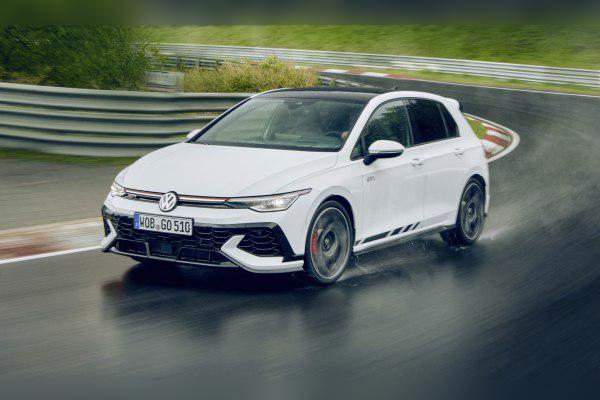
Volkswagen 2.0 TSI EA888 evo4 (300 hp): Experiences, Issues and Maintenance
Key points in short (TL;DR)
- Performance: With 300 hp and 400 Nm, this is one of the best 2.0 turbo engines on the market. It’s explosive and very potent.
- Timing drive: Uses a chain. On the "evo4" generation the system is significantly improved and very reliable compared to older versions.
- Oil consumption: Although better than before, oil consumption is still possible with aggressive driving. Regular dipstick checks are a must.
- Cooling system: The thermostat and water pump (housing) are a traditional weak point of the VW group and can also cause problems here (leaks).
- Gearbox: Comes exclusively with a DSG gearbox (DQ381) which is robust, but requires strict oil changes every 60,000 km.
- Recommendation: The engine requires high-quality fuel (98 or 100 octane) and regular servicing. It’s not for those who want to save on maintenance.
Contents
- Technical specifications
- Reliability and Maintenance
- Specific Parts (Costs)
- Fuel Consumption and Performance
- Additional Options and Modifications
- Gearbox
- Buying Used and Conclusion
Introduction
The EA888 evo4 engine in its 300-horsepower version represents the pinnacle of engineering by the Volkswagen Group when it comes to four-cylinder turbo petrol engines. Specifically, this unit is the heart of the Volkswagen Golf VIII GTI Clubsport (including the 2024 facelift model). Unlike the standard GTI, this version brings more serious components, a larger turbo and a tune that blurs the line between a "hot hatch" and a proper sports car. Although technologically advanced, it has its roots in the well-known EA888 family, which means mechanics are already very familiar with its quirks.
Technical specifications
| Characteristic | Data |
|---|---|
| Engine displacement | 1984 cc (2.0 L) |
| Power | 221 kW (300 hp) |
| Torque | 400 Nm |
| Engine code | DNFC (Most common code for evo4 300 hp) |
| Injection type | Direct injection (TSI/FSI) - 350 bar |
| Charging method | Turbocharger (Continental or Garrett, depending on series) + Intercooler |
| Camshaft drive | Chain |
Reliability and Maintenance
Does this engine have a timing belt or a chain?
The EA888 evo4 uses a timing chain. Unlike the notorious earlier generations (such as Gen 2 in the Golf 6), this system is now very reliable. The chain rarely snaps or stretches before 200,000 km, provided the oil has been changed regularly. Still, it’s recommended to listen to the engine on a "cold start" – any rattling longer than 2–3 seconds may indicate an issue with the chain tensioner.
What are the most common failures on this engine?
Although robust, the evo4 has a few known weak points:
- Thermostat and water pump housing: This is a plastic module that tends to deform due to heat. Symptoms are loss of coolant without a visible puddle under the car (because it evaporates on the block) or engine overheating.
- PCV valve (breather): When the membrane tears, the engine may run unevenly, whistle, or increase oil consumption.
- GPF sensors: Due to strict Euro emission standards, pressure sensors on the particulate filter can trigger "false alarms" and light up the Check Engine warning.
At what mileage is the “major service” done?
Since the engine has a chain, the classic "major service" (timing belt replacement) doesn’t exist in that form. However, replacement of the auxiliary (serpentine) belt, tensioner and water pump is usually recommended at around 100,000 to 120,000 km or after 5–6 years of age. Chain condition is checked via diagnostics (cam/crank correlation) at higher mileages.
How many liters of oil does this engine take and which grade is recommended?
The sump holds approximately 5.7 liters of oil. The factory recommendation for the latest evo4 engines is often 0W-20 (VW 508.00 standard) for ecological reasons and lower fuel consumption. However, many experienced tuners and mechanics for this engine (especially in the Clubsport version, which is driven hard) recommend switching to 5W-30 (VW 504.00) for a better oil film and protection at high temperatures.
Does it consume oil between services and what amount is considered normal?
Yes, 2.0 TSI engines are known to "drink" some oil, especially if driven at high revs, which is exactly what the GTI Clubsport is made for. Consumption of 0.5 to 1 liter per 5,000 km is not alarming for this engine if driven in a sporty manner. If it uses a liter per 1,000 km, you have a problem with piston rings or the turbo. Recommendation: Keep a 1L can in the trunk.
At what mileage should the spark plugs be replaced?
For this engine, it’s recommended to replace the spark plugs every 60,000 km. However, if the car is "chipped" (Stage 1) or driven exclusively in a sporty way, the interval should be shortened to 30,000 km. Use only NGK or OEM plugs specified for this model, as poor-quality plugs can cause detonation which may destroy the pistons.
Specific Parts (Costs)
Does the engine have a dual-mass flywheel?
Yes, this model has a dual-mass flywheel. Although it’s paired with an automatic DSG gearbox that "treats it more gently" than a driver with a manual, it is still a wear item. Symptoms of failure are metallic knocking noises at idle (which disappear when you rev the engine) or vibrations when switching the engine off. Replacement is expensive (depends on the market).
What kind of injection system does it have and are the injectors problematic?
It uses direct injection at very high pressure (up to 350 bar). The injectors are generally reliable, but sensitive to poor fuel quality. The main "problem" of this system is carbon buildup on the intake valves, since the fuel doesn’t wash them. This requires mechanical cleaning (walnut shell blasting) usually at around 100,000+ km if you notice loss of power.
Does the engine have a turbocharger (or two) and what is their lifespan?
The engine has one turbocharger (usually Continental in this version). It’s a large turbo that enables those 300 hp. Its lifespan is long and often matches that of the engine, provided you follow the rule of cooling the turbo after hard driving (don’t switch the engine off immediately) and avoid full throttle when the oil is still cold.
Does this model have a DPF filter or an EGR valve that often clogs?
Being a petrol engine, it doesn’t have a DPF, but it does have a GPF/OPF (Gasoline Particulate Filter). This is the petrol equivalent of a DPF. Due to the high exhaust gas temperatures of petrol engines, the GPF rarely clogs unless the car is driven exclusively on very short city trips "on a feather-light throttle". Occasional spirited driving on an open road usually takes care of regeneration.
Does this engine use AdBlue?
No. AdBlue is used exclusively on diesel engines. The EA888 evo4 meets Euro standards via a catalytic converter and the GPF filter.
Fuel Consumption and Performance
What is the real-world fuel consumption in city driving?
Don’t expect miracles. In heavy city traffic, the Golf 8 GTI Clubsport with 300 hp will use between 10 and 13 liters per 100 km. If you have a "heavy right foot" at traffic lights, that figure easily goes up to 15 liters. The start-stop system can help a little, but this is not an economical city car.
Is this engine “lazy” for the weight of the body it’s installed in?
Absolutely not. This engine "plays" with the Golf’s body. With 300 hp and 400 Nm available from low revs, the car is explosive. The 0–100 km/h sprint is under 6 seconds. The "pinned to the seat" feeling is present in every gear.
How does the engine behave on the highway and at what revs does it cruise at 130 km/h?
This is the engine’s natural habitat. Thanks to the 7-speed DSG gearbox, at 130 km/h the engine spins at a relaxed 2,200–2,400 rpm. This results in a quiet cabin and relatively decent fuel consumption on the open road, which can drop to around 7.5 to 8.5 liters. Overtakes are instantaneous and require little effort from the engine.
Additional Options and Modifications
Is this engine suitable for LPG conversion?
Not recommended. Although it is technically possible to install an LPG system for direct-injection engines (so-called liquid phase systems), such setups are very expensive (over 1000–1500 EUR) and complicated to maintain. Also, installing LPG on a limited series car like the Clubsport drastically reduces the vehicle’s value and compromises its performance.
How far can this engine be safely “chipped” (Stage 1)?
The EA888 evo4 is every tuner’s dream. With software optimization alone (Stage 1), this engine safely reaches 340–360 hp and around 450–470 Nm. The hardware (pistons, rods) can handle much more, but for Stage 1 no parts need to be changed. Note: Remapping usually also requires a DSG gearbox tune to increase clutch pressure so they don’t slip.
Gearbox
Which manual and automatic gearboxes are paired with this engine?
The GTI Clubsport (including the facelift) comes standard with a 7-speed DSG automatic gearbox (code DQ381). A manual gearbox is usually not an option for the Clubsport version in most markets, as the focus is on maximum performance that a human cannot match with manual shifting.
What are the most common issues with the automatic gearbox?
The DQ381 is a "wet" DSG gearbox and is very reliable, significantly better than the older dry versions. Problems are rare, but can include failures of the mechatronics unit (electro-hydraulic unit) or oil leaks at the seals. Symptoms are jerks when setting off, delayed shifts or harsh engagement when changing gears (especially from 2nd to 1st).
How much does clutch replacement cost?
Although the clutches are oil-cooled and last a long time (often over 150,000 km), when the time comes to replace them, it is a very expensive job. The clutch pack is replaced. The price including labor is high (depends on the market), so it’s important to check the gearbox condition before buying.
At what mileage should the gearbox be serviced and the oil changed?
This is critical: The oil and filter in the DSG gearbox MUST be changed every 60,000 km (or every 4 years). Skipping this service is a sure path to mechatronics and clutch failure. Use only original oil or a high-quality equivalent that meets the manufacturer’s specification.
Buying Used and Conclusion
What to check before buying?
- Cold start: Insist that the car is completely cold. Listen to the chain. If it rattles for more than a second or two, walk away.
- Coolant leaks: Look under the intake manifold for traces of pink coolant (thermostat housing).
- DSG service history: Ask for proof of gearbox servicing if the car has over 60,000 km. Without that, buying is a risk.
- Modifications: If the car is chipped, check who did the tune. A bad map can destroy the engine in a few thousand kilometers.
Conclusion:
The VW Golf 8 GTI Clubsport with the 2.0 TSI (300 hp) engine is a fantastic machine. It offers the performance of a supercar from 15 years ago in a package you can drive every day. Reliability is high for this power class, but it requires meticulous and expensive maintenance. This is not a car for drivers who plan to save on parts or fill up with questionable fuel. If you can afford the upkeep, this engine will put a smile on your face every time you press the throttle.
Was this content useful to you?
Your opinion helps us to improve the quality of the content.