EA888 evo4 / DNFG Engine
- Engine
- 1984 cm3
- Aspiration
- Turbocharger, Intercooler
- Fuel
- Petrol (Gasoline)
- Fuel injection system
- Direct injection
- Power
- 320 hp
- Torque
- 420 Nm
- Cylinders
- 4
- Valves
- 16, 4 per cylinder
- Cylinders position
- Inline
- Valvetrain
- DOHC
- Oil capacity
- 5.7 l
- Systems
- Start & Stop System, Particulate filter
# Vehicles powered by this engine
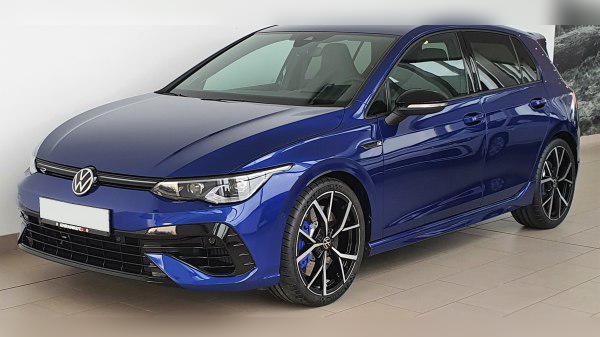
VW 2.0 TSI (EA888 Evo4 / DNFG) – Experiences, issues, fuel consumption and maintenance
Key points in short (TL;DR)
- Performance: With 320 hp and 420 Nm, this is one of the most potent 2.0-liter engines on the market. It’s not lazy in any situation.
- Timing drive: Uses a timing chain, which in the Evo4 generation is significantly reinforced and does not pose a problem like on older models.
- Oil consumption: Although the piston rings are improved, with aggressive driving oil consumption is expected and must be monitored.
- Cooling: The thermostat module and water pump are still the “Achilles’ heel” of this engine series – keep an eye on coolant level.
- GPF/OPF filter: Equipped with a gasoline particulate filter that can clog if the car is used exclusively for city driving.
- Gearbox: Comes exclusively with the DQ381 DSG gearbox, which requires regular oil changes.
- Recommendation: Ideal for enthusiasts, but requires meticulous maintenance and high-quality fuel (min 98 or 100 octane).
Contents
- Introduction and applications
- Technical specifications
- Reliability and maintenance
- Specific parts and costs
- Fuel consumption and performance
- Additional options and modifications
- Gearbox and drivetrain
- Buying used and conclusion
Introduction and applications
The engine with internal code DNFG belongs to the latest generation of the famous Volkswagen EA888 (Evo4) family. This is not a regular Golf GTI engine; it is its most powerful factory version, intended for the Volkswagen Golf VIII R. Engineers focused on reducing internal friction, increasing injection pressure and optimizing the turbocharger in order to extract 320 hp from two liters of displacement while still meeting strict Euro 6d standards.
This powerplant represents the pinnacle of VW Group four-cylinder technology before full electrification. It is paired exclusively with 4MOTION all-wheel drive which, in this generation, also features Torque Vectoring on the rear axle, allowing the engine to put its power down to the tarmac in a brutal way.
Technical specifications
| Parameter | Value |
|---|---|
| Engine displacement | 1984 cc |
| Power | 235 kW (320 hp) |
| Torque | 420 Nm |
| Engine code | DNFG (EA888 Evo4) |
| Injection type | Direct (TSI) – up to 350 bar |
| Charging system | Continental turbocharger + intercooler |
Reliability and maintenance
Timing system: Chain or belt?
The EA888 Evo4 engine uses a timing chain. Unlike the notorious earlier generations (Gen 1 and Gen 2), the chain on Evo4 engines is extremely robust. It is not intended to be replaced at a fixed interval. However, it is recommended to check chain “stretch” via diagnostics or visually after around 150,000 km. If you hear rattling on cold start that lasts longer than 2–3 seconds, that’s a sign you should visit a workshop immediately.
Most common failures and symptoms
Although reliable, the DNFG engine operates under high stress, so the following issues are possible:
- Thermostat module and water pump: This is the most common weak point. The housing is plastic and over time it cracks due to thermal cycles. Symptoms: Coolant loss, smell of antifreeze under the hood, or engine overheating.
- PCV valve (oil separator): When the membrane tears, crankcase pressure is disturbed. Symptoms: Rough idle, increased oil consumption and a whistling noise from the engine bay.
- Carbon buildup: Since this is a direct-injection engine, the valves are not washed by fuel. Symptoms: Power loss and hesitation on cold start at higher mileage (usually above 80,000 km).
Service intervals and spark plugs
The factory “Long Life” service interval is 30,000 km, but forget about that immediately if you want the engine to last. Change oil and filter every 10,000 to 15,000 km at most, or once a year.
Spark plugs on this engine are replaced every 60,000 km. However, if you often drive aggressively or have done a chip tune, it is recommended to shorten this interval to 30,000–40,000 km.
Oil: Quantity and consumption
The engine takes approximately 5.7 liters of oil. The manufacturer often recommends 0W-20 (VW 508.00) for ecological reasons and lower fuel consumption. However, many experienced mechanics and R owners switch to 0W-30 or 5W-30 (VW 504.00) for better protection at high temperatures, especially in summer. (Check the owner’s manual before deciding).
Oil consumption: These engines are known to consume some oil. Factory tolerance is up to 0.5 l/1000 km, which is excessive. In practice, a healthy engine may consume around 0.5 to 1 liter between two services (over 10,000 km). If it uses a liter per 1,000 km, you likely have an issue with piston rings or the turbo.
Specific parts (Costs)
Injection system and turbo
The injection system is direct, and in the Evo4 generation fuel pressure has been raised to as much as 350 bar. The injectors are extremely precise but also sensitive to poor fuel quality. Replacing injectors is expensive (depends on the market), so it is advisable to use premium 98 or 100 octane fuel.
The engine uses a single large Continental turbocharger. It is very durable and spools up quickly. Its lifespan is generally equal to the engine’s lifespan, provided you don’t shut the engine off immediately after hard runs on the highway (let it idle for a minute or two).
GPF/OPF filter and dual-mass flywheel
Yes, the Golf 8 R is equipped with an OPF (Otto Particulate Filter), the gasoline equivalent of a DPF. If you drive only short city trips, it can clog and trigger a warning light. The solution is to get on the highway and drive at higher revs (above 3,000 rpm) for about 20 minutes.
The car has a dual-mass flywheel. It protects the gearbox from engine vibrations. On DSG models it lasts longer than on manuals, but replacement cost is still high (depends on the market).
There is no AdBlue system, as this is a gasoline engine.
Fuel consumption and performance
Real-world fuel consumption
- City driving: Expect 11 to 14 liters per 100 km. In heavy traffic and “Race” mode, this easily goes above 16 liters.
- Country roads: It is possible to get it down to around 7.5–8.5 liters with a light right foot.
- Highway (130 km/h): At this speed the engine runs at a low 2,000–2,500 rpm in 7th gear, and consumption is around 8 to 9 liters.
Is it lazy? Absolutely not. With 320 hp and all-wheel drive, this car tears up the tarmac. The acceleration feels linear and brutal, regardless of the vehicle’s weight.
Additional options and modifications
LPG
Installing LPG on an EA888 Evo4 engine is technically possible only via a liquid direct-injection LPG system. This is a very expensive investment (often over 1,000–1,500 EUR). Considering this is an “R” model built for performance, LPG installation is regarded as pointless and drastically reduces the car’s resale value.
Chip tuning (Stage 1)
This engine is every tuner’s dream. The stock components are very robust. With software remapping alone (Stage 1), without any mechanical changes, power can be safely raised to 360 to 380 hp, and torque goes close to 500 Nm. It is recommended to remap the DSG gearbox along with the engine so that the clutches can handle the extra torque.
Gearbox
The Golf 8 R with this engine most commonly comes with a 7-speed DSG gearbox (code DQ381). This is a “wet” clutch gearbox, meaning the clutch packs are immersed in oil.
Gearbox maintenance and issues
- Gearbox service: Gearbox oil and filter MUST be changed every 60,000 km. Do not skip this service, as mechatronic repairs are extremely expensive.
- Failures: The DQ381 is more reliable than the older DQ200/250 gearboxes, but occasional issues with mechatronic electronics or oil leaks at the seals do occur.
- Manual gearbox: In some markets (primarily North America), the Golf 8 R was offered with a manual gearbox. In Europe, DSG is standard. The clutch on the manual version is a weak point if power is increased through tuning.
Buying used and conclusion
Before buying a used Golf 8 R with this engine, make sure to do the following:
- Cold start: Listen to the engine when it is completely cold. There should be no chain rattle or uneven running.
- Launch control counter: Use diagnostics to check how many times “Launch Control” has been used. If the number is high (e.g. in the hundreds), be aware that the gearbox, drivetrain and differentials have been subjected to enormous stress.
- Water pump: Check for traces of pink/purple coolant around the engine.
- Haldex/diff service: Check whether the oil in the rear differential (Torque Splitter) has been changed. This is specific to the Golf 8 R and is often neglected.
Conclusion: The EA888 Evo4 (DNFG) is a fantastic engineering achievement. It offers the performance of a supercar from 15 years ago in a hatchback package. It is not cheap to maintain and does not tolerate neglect. It is intended for drivers who know what they are driving, respect warm-up and cool-down procedures, and are willing to pay for quality maintenance in exchange for top-tier driving enjoyment.
Was this content useful to you?
Your opinion helps us to improve the quality of the content.