EA888 / DSFE, DSFF Engine
- Engine
- 1984 cm3
- Aspiration
- Turbocharger, Intercooler
- Fuel
- Petrol (Gasoline)
- Fuel injection system
- Direct injection
- Power
- 315 hp
- Torque
- 380 Nm
- Cylinders
- 4
- Valves
- 16, 4 per cylinder
- Cylinders position
- Inline
- Valvetrain
- DOHC
- Oil capacity
- 5.7 l
- Systems
- Start & Stop System
# Vehicles powered by this engine
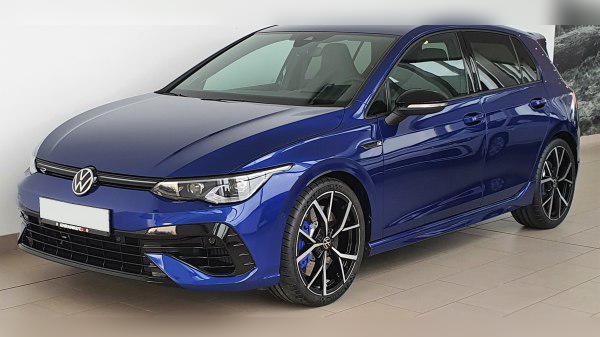
Volkswagen 2.0 TSI (EA888 Gen 4) – Experiences, problems, fuel consumption and used car buying guide
Key points in short (TL;DR)
- Performance: This is the “jewel” in the crown of 2.0-liter engines – explosive power and excellent throttle response.
- Timing drive: Uses a timing chain, which in this generation (Gen 4) is significantly more reliable than in older models.
- Cooling: The thermostat module and water pump are still weak points (plastic housings prone to cracking/leaks).
- Oil consumption: Although better than before, with aggressive driving (which this car is built for) some oil consumption is to be expected.
- Transmission maintenance: The DSG gearbox and 4Motion drivetrain (Haldex/Rear Torque Vectoring) require strict oil service intervals; otherwise, repair costs are astronomical.
- GPF filter: Newer models have a gasoline particulate filter (GPF) which causes no issues if the car is regularly driven on open roads, but it does mute the exhaust sound.
- Recommendation: An ideal engine for enthusiasts, but it requires an owner who does not skimp on high-quality oil and preventive maintenance.
Contents
- Introduction: EA888 Gen 4 in the Golf R
- Technical specifications
- Reliability and maintenance
- Specific parts and costs
- Fuel consumption and performance
- Additional options and modifications
- Transmission and drivetrain
- Buying used and conclusion
Introduction: EA888 Gen 4 in the Golf R
The engine in front of us is the pinnacle of the evolution of Volkswagen’s famous EA888 block. We’re talking about the fourth generation (Evo 4), specifically in the variants with engine codes DSFE and DSFF, which power the flagship of the range – the Golf VIII R. This is not a regular Golf GTI engine; this is its most powerful factory iteration with 315 horsepower (in some specs up to 320 hp).
Why is this engine important? Because it represents the last shout of “purebred” petrol hot hatch machines before full electrification. Paired with the advanced 4MOTION all-wheel drive system that now offers torque vectoring (and even a Drift mode), this engine is subjected to enormous loads, which means that proper maintenance is crucial for a long service life.
Technical specifications
| Engine displacement | 1984 cc (2.0 l) |
| Power | 235 kW (315 hp) |
| Torque | 380 Nm (Note: some versions go up to 420 Nm) |
| Engine codes | DSFE, DSFF (EA888 Evo 4) |
| Injection type | High-pressure direct injection (TSI / FSI) |
| Forced induction | Turbocharger + intercooler |
| Number of cylinders/valves | 4 / 16v |
Reliability and maintenance
Does this engine use a timing belt or a chain?
The engine uses a timing chain. On earlier generations of EA888 engines, the chain was a nightmare (stretching, skipping teeth). However, in this Gen 4 version, the system has been significantly improved. The chain tensioners and the chain itself have been reinforced. Still, it is recommended to check chain stretch via diagnostics or visually after around 150,000 km, or earlier if you hear rattling on cold start (the so-called “morning rattle”).
What are the most common failures on this engine?
Although robust, high performance comes with risks:
- Thermostat module and water pump: This is the “Achilles’ heel” of the VW group. The housing is plastic and, due to constant heat cycles, micro-cracks appear over time. Symptom: Coolant loss without visible puddles under the car (the coolant evaporates on the hot block) or engine overheating.
- PCV valve (oil separator): When the membrane tears, the engine loses vacuum. Symptom: Whistling noise at idle, rough running and increased oil consumption.
- Carbon buildup: Since this is a direct injection engine, fuel does not “wash” the intake valves. Soot accumulates over time. Symptom: Power loss and hesitation on cold start at mileages over 80,000 km.
At what mileage is the “major service” done?
Since the engine has a chain, the classic “major service” (timing belt replacement) does not exist in that form. However, the serpentine belt and its rollers should be replaced at around 100,000 - 120,000 km. Chain replacement is done only if needed (rattling, stretching); there is no fixed interval, but in practice you’ll sleep better if it’s inspected around 150,000 km.
How many liters of oil does this engine take and which viscosity is recommended?
The engine takes approximately 5.7 liters of oil. As for viscosity, VW often recommends 0W-20 (VW 508.00) for new engines for ecological reasons and lower fuel consumption. However, for a 315 hp engine that is driven hard, many experts and enthusiasts switch to a thicker oil such as 0W-30 or 5W-30 (VW 504.00) for better protection at high temperatures. Tip: Check the sticker under the hood or the owner’s manual, because using the wrong oil can damage the GPF filter.
Does it consume oil between services and what amount is considered normal?
Yes, expect some oil consumption. This is a high-performance turbocharged engine. Consumption of 0.5L to 1L per 5,000 - 7,000 km can be considered acceptable if the car is often driven at high revs. If it uses a liter per 1,000 km, you have a problem (piston rings or turbo). Never wait for the “Long Life” 30,000 km interval. Change the oil every 10,000 km at most.
At what mileage should the spark plugs be replaced?
The factory recommendation is often 60,000 km, but for the Golf R that is too long. I recommend replacing spark plugs every 30,000 to 40,000 km. Worn spark plugs can cause misfires, which can damage the ignition coils (which are also wear items).
Specific parts (costs)
Does the engine have a dual-mass flywheel?
Yes. Regardless of whether it’s the DSG (standard for the Golf 8 R in Europe) or the rare manual gearbox, the engine is equipped with a dual-mass flywheel (DMF). In the DSG, the flywheel serves to dampen engine vibrations towards the gearbox. Failure symptoms: Metallic knocking/clattering noise at idle that disappears when you rev the engine, or vibrations when switching the engine off. Replacement is expensive (depends on the market).
What kind of injection system does it have and are the injectors problematic?
It uses an advanced direct injection system with extremely high pressure (up to 350 bar on newer generations). Injectors are generally reliable but sensitive to poor fuel quality. Injector failure manifests as fuel leaking into the cylinder, which washes oil off the cylinder walls and can lead to engine seizure. The best prevention is using high-quality fuel (98 or 100 octane).
Does the engine have a turbocharger (or two) and what is their lifespan like?
It has one large turbocharger (often Continental or Garrett, depending on the batch). This is the successor to the famous IS38 turbo. Lifespan depends directly on the owner. If the engine is switched off immediately after hard driving, the oil in the turbo cokes and destroys the bearings. With proper cooldown and regular oil changes, the turbo can last over 200,000 km. Rebuilding is possible, but a new unit is very expensive.
Does this model have a DPF filter or an EGR valve that often clogs?
Being a petrol engine, it does not have a DPF, but it does have a GPF (Gasoline Particulate Filter), also known as OPF. Its role is the same – to trap soot particles. Unlike diesel DPFs, GPFs regenerate much faster and more easily because exhaust gas temperatures on petrol engines are higher. Problems are rare unless the car is driven exclusively on short city trips. There is an EGR valve and it can get dirty, but it is a smaller issue than on diesels.
Does this engine use AdBlue?
No. AdBlue is used exclusively on diesel engines for NOx treatment. This engine does not use any additional fluids besides fuel, oil and coolant.
Fuel consumption and performance
What is the real fuel consumption in city driving?
Don’t be fooled by factory figures. This is a 315 hp car with all-wheel drive. In the city, expect 11 to 14 liters per 100 km, depending on traffic and how heavy your right foot is. In extreme winter stop-and-go conditions, it can go up to 15 l/100 km.
Is this engine “lazy” for the weight of the body it’s installed in?
Absolutely not. With 380–420 Nm of torque available from as low as 2,000 rpm, the Golf R feels like it’s launched from a slingshot. The engine is even “too strong” for everyday use, as any firmer press of the throttle results in instant speeding.
What is the engine like on the highway and at what rpm does it cruise at 130 km/h?
On the highway it’s in its element. Thanks to the 7-speed DSG gearbox, at 130 km/h the engine spins at a relatively low 2,300 - 2,500 rpm (in 7th gear). This allows for comfortable driving without intrusive engine noise (you hear wind and tires more). Fuel consumption on the open road at normal speeds (130 km/h) is around 7.5 - 8.5 liters.
Additional options and modifications
Is this engine suitable for LPG (autogas) conversion?
Theoretically – yes, practically – it is not recommended. Due to direct injection, an expensive system is required (liquid injection or a system that uses both petrol and LPG to cool the injectors). Considering this is an “R” model built for performance, LPG would upset the balance, add weight and potentially cause issues with thermal load on the cylinder head. Cost-effectiveness is questionable.
How far can this engine be safely tuned (Stage 1)?
The EA888 Gen 4 is every tuner’s dream. With just software remapping (Stage 1), without changing hardware, power can be safely raised to 360 - 380 hp, and torque often exceeds 450 Nm. However, keep in mind that this increases thermal stress and shortens the lifespan of the turbo and gearbox if they are not meticulously maintained.
Transmission
Which manual and automatic gearboxes are paired with this engine?
In Europe, the Golf 8 R comes exclusively with a 7-speed DSG automatic gearbox (code DQ381, wet clutch). On the North American market there is an option of a 6-speed manual, but it is rare in Europe.
What are the most common failures of the manual and automatic gearboxes?
- DSG (DQ381): Very reliable if maintained properly. Problems can occur with the mechatronics unit (electronic control unit), which can fail and cause harsh shifting or loss of gears (most often reverse or even-numbered gears). Oil leaks at the driveshaft seal are also possible.
- Manual: The weakest link is the clutch. The factory clutch in the Golf R is known to be weak and often starts slipping at relatively low mileage if the car is driven hard or tuned.
Does this model have a dual-mass flywheel and how much does clutch replacement cost?
As mentioned, it has a dual-mass flywheel. In DSG gearboxes, the clutch pack (friction plates inside the gearbox) lasts a long time (often over 150–200k km), but replacement is expensive and requires special tools. Dual-mass flywheel replacement is more common and falls into the “expensive” category (depends on the market).
At what mileage should the gearbox be serviced and the oil changed?
For the DQ381 DSG gearbox, VW specifies an interval of 120,000 km in some documents, but that is too long for a sports car. Experienced mechanics recommend changing the gearbox oil and filter every 60,000 km. This is crucial for cooling the clutches and proper mechatronics operation.
Buying used and conclusion
What to check before buying?
- Launch control history: Via diagnostics you can see how many times Launch Control has been used. If the number is high, the gearbox and drivetrain have been under heavy stress.
- Cold start: Listen to the chain during the first 3–5 seconds. There should be no metallic rattling.
- Leaks: Be sure to inspect the thermostat housing (at the front of the engine) for traces of pink/purple coolant.
- Rear differential: On the Golf 8 R, the rear differential is complex (torque vectoring). Check whether the oil in the differential has been changed, as it is sensitive to old oil.
Conclusion:
The VW 2.0 TSI (315 hp) in the Golf 8 R is a fantastic machine that offers the performance of a supercar from 10 years ago in a practical package. It is not cheap to maintain – it requires premium fuel, frequent servicing and expensive suspension/brake components. It is intended for drivers who know what they are buying and are willing to pay for the enjoyment. If you are looking for economy, look at the 2.0 TDI; if you want a smile on your face every time you press the throttle – this is the right engine for you.
Was this content useful to you?
Your opinion helps us to improve the quality of the content.