EA211 evo / DPBA Engine
- Engine
- 1498 cm3
- Aspiration
- Turbocharger, Intercooler
- Fuel
- Petrol (Gasoline)
- Fuel injection system
- Direct injection
- Power
- 130 hp
- Torque
- 200 Nm
- Cylinders
- 4
- Valves
- 16, 4 per cylinder
- Cylinders position
- Inline
- Valvetrain
- DOHC
- Oil capacity
- 4.3 l
- Coolant
- 10 l
- Systems
- Start & Stop System, Particulate filter
# Vehicles powered by this engine
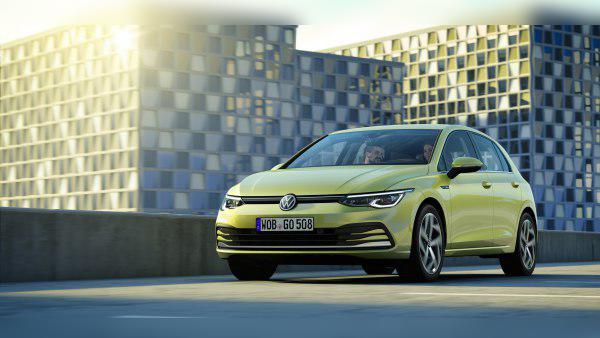
1.5 eTSI (EA211 evo / DPBA) 130 HP – Experiences, problems, fuel consumption and used car buying guide
1. The most important in short (TL;DR)
- Technology: This is a 48V Mild Hybrid system. It doesn’t have a classic alternator, but a starter-generator that enables seamless engine shut-off and restart while driving (“coasting”).
- Fuel consumption: Extremely economical thanks to the Miller cycle and cylinder deactivation (ACT). On the open road it can consume fuel like a diesel.
- Timing drive: Uses a timing belt, not a chain. Replacement intervals are long, but should not be ignored.
- Turbo: The specific feature of the 130 HP version is the VTG turbocharger (variable geometry), which is rare on petrol engines. It provides better response, but more expensive maintenance.
- Gearbox: In the eTSI variant it comes exclusively with the automatic DSG gearbox (DQ200). The manual gearbox is paired with the regular TSI (without “e”).
- Recommendation: An excellent choice for those who want petrol-engine quietness with diesel-like fuel consumption, but it requires strict maintenance with the specific 0W-20 oil.
Contents
- Introduction and applications
- Technical specifications
- Reliability and maintenance
- Specific parts and costs
- Fuel consumption and performance
- Additional options and modifications
- Gearbox (DSG)
- Buying used and conclusion
Introduction and applications
The engine with the code DPBA belongs to the EA211 evo family. This is not just “another 1.5 TSI”, but its most technologically advanced variant in the 130 HP class, paired with 48‑volt mild hybrid technology (hence the eTSI badge). It is primarily installed in the Volkswagen Golf 8, but also in related models from the group (Audi A3, Seat Leon, Škoda Octavia) on the MQB Evo platform.
This engine is designed to replace small-displacement diesel engines. Its key characteristic is operating in the so‑called Miller cycle, which sacrifices a bit of peak power for outstanding combustion efficiency. Drivers appreciate it for its quietness and linear power delivery, but as a used engine it can be a “surprise box” if not properly maintained, due to complex electronics.
Technical specifications
| Characteristic | Data |
|---|---|
| Name / Engine code | EA211 evo / DPBA |
| Displacement | 1498 cc |
| Power | 96 kW (130 HP) |
| Torque | 200 Nm at 1400–4000 rpm |
| Injection type | Direct injection (TSI) – pressure up to 350 bar |
| Charging | Turbocharger with variable geometry (VTG) |
| Hybrid system | 48V Mild Hybrid (Lithium-ion battery + starter-generator) |
Reliability and maintenance
Does this engine have a timing belt or a chain?
The engine uses a timing belt. With the EA211 generation, Volkswagen abandoned the problematic chains that caused headaches for owners of the old 1.2 and 1.4 TSI engines. The belt is reinforced and designed to last long, but it is not eternal.
What are the most common failures on this engine?
Although mechanically robust, the complexity of the peripherals brings potential issues:
- Coolant consumption: Check the thermostat housing and water pump. The pump is electronically controlled and more complex than on older models.
- ACT system (Active Cylinder Technology): The system that deactivates two cylinders can sometimes cause vibrations or uneven running. Although failures of the actuator itself are rare, if they do occur, repairs are expensive.
- Carbon buildup: Like any direct-injection engine, the intake valves are prone to deposits, which at higher mileage (over 150,000 km) can lead to rough running and power loss.
- 48V system issues: Software glitches were common at the start of Golf 8 production (model year 2020), where the system would report hybrid drive errors. Most of these were resolved with software updates at authorized service centers.
At what mileage should the major service be done?
The factory recommendation is often very optimistic (up to 210,000 km in some regions), but real‑world experience and mechanic advice is to do the major service (belt, tensioner and water pump replacement) between 150,000 km and 180,000 km, or every 8 to 10 years in terms of time. Rubber ages regardless of mileage.
How many liters of oil does this engine take and which grade is recommended?
The sump holds approximately 4.3 liters of oil. This is a critical point: EA211 evo engines are designed for extremely “thin” oils to reduce friction. You must use 0W-20 oil with the VW 508.00 / 509.00 specification. Using thicker oil (e.g. 5W-40) can damage the fine oil passages and disrupt the operation of the VTG turbo.
Does it consume oil between services and what amount is considered normal?
Modern TSI engines are drastically better in this regard than their predecessors. Consumption of around 0.5 liters per 10,000 km is acceptable and common, especially if the car is driven a lot on motorways. If the engine consumes more than 0.5 liters per 1,000 km, this points to an issue with the piston rings or turbo, but that is rare at lower mileage.
At what mileage should the spark plugs be replaced?
The recommended spark plug replacement interval is 60,000 km or 4 years. Use only iridium spark plugs specified for this engine, as poor-quality plugs can damage the coils (which sit directly on the plugs).
Specific parts (costs)
Does the engine have a dual-mass flywheel?
Yes, the 1.5 eTSI paired with the DSG gearbox has a dual-mass flywheel (DMF). Its lifespan depends on driving style, but it usually lasts around 200,000 km. Failure symptoms include metallic rattling when switching the engine off or vibrations at idle.
What kind of injection system does it have and are the injectors problematic?
It uses a high-pressure direct injection system (up to 350 bar). The injectors are precise and generally durable, but very sensitive to poor fuel quality. Injector failure manifests as engine “misfiring”, the “Check Engine” light coming on, and a smell of petrol from the exhaust.
Does this engine have a turbocharger (or two) and what is their lifespan?
It has a single turbocharger. The specific feature of the 130 HP version (DPBA) is that it uses a VTG turbo (Variable Turbine Geometry). This technology was for decades reserved for diesel engines because of the high exhaust gas temperatures in petrol engines. VW solved this by using expensive materials. A VTG turbo is more expensive to overhaul than a regular one (fixed geometry or wastegate), and the price of a new unit is high (expensive – very expensive, depending on the market). The lifespan is long if quality oil is used and changed regularly.
Does this model have a DPF filter or EGR valve?
This engine does not have a DPF (because it’s a petrol), but it does have a GPF (Gasoline Particulate Filter), which is the petrol equivalent of a DPF. The GPF very rarely clogs because exhaust gas temperatures in petrol engines are higher, so passive regeneration happens constantly. There is an EGR valve and it can get dirty, but this is not as widespread a problem as on diesels.
Does this engine use AdBlue?
No, this is a petrol engine and does not use AdBlue fluid.
Fuel consumption and performance
What is the real fuel consumption in city driving?
Thanks to the Mild Hybrid system that assists when setting off and shuts the engine off while decelerating (coasting), city fuel consumption is surprisingly low for a petrol engine. Realistically, expect between 6.5 and 8.0 l/100 km, depending on traffic and how heavy your right foot is.
Is this engine “sluggish” for the weight of the cars it’s installed in?
With 200 Nm of torque available from as low as 1400 rpm, the engine is not sluggish in everyday driving. The electric motor (starter-generator) adds torque instantly when setting off, masking the “turbo lag”. However, at high speeds and full throttle, you can feel that the engine is optimized for efficiency rather than racing. It doesn’t have that “punchy” feel of the older 1.4 TSI; instead, it pulls in a linear manner.
How does the engine behave on the motorway and at what revs does it cruise at 130 km/h?
On the motorway it is in its element. Thanks to the 7‑speed DSG gearbox, at 130 km/h the engine runs at about 2,600 – 2,800 rpm (depending on gradient and load). It is very quiet there. The “coasting” mode (engine off, car gliding on inertia) will often activate when you lift off the throttle on gentle descents, which drastically saves fuel.
Additional options and modifications
Is this engine suitable for LPG conversion?
Technically it is possible, but economically often not worthwhile. Since this is a direct‑injection engine, it requires an expensive “Direct Injection” LPG system that also uses a certain amount of petrol while running on gas (to cool the injectors). Given the already low petrol consumption and high installation cost (very expensive), the payback period is too long for the average driver.
How far can this engine be safely tuned (Stage 1)?
This version (130 HP, Miller cycle) is specific. It can be raised to about 150–160 HP and around 240–250 Nm. Still, caution is needed. The VTG turbo is sensitive and is pushed close to its limits. Also, the DQ200 gearbox has a factory torque limit of 250 Nm, so any more aggressive power increase can drastically shorten the gearbox’s lifespan.
Gearbox
Which gearboxes are paired with this engine?
The 1.5 eTSI (Mild Hybrid) model comes exclusively with a 7‑speed automatic DSG gearbox (code DQ200). If you want a manual gearbox, you need to look for the regular 1.5 TSI without the hybrid system.
What are the most common failures of the automatic gearbox?
The DQ200 is a gearbox with “dry” clutches. Although in the Golf 8 this version is significantly improved compared to older models, it still has its weak points:
- Clutch wear: Frequent stop‑and‑go city driving wears out the clutch plates. Symptoms are slipping or juddering when setting off.
- Mechatronics: The electro‑hydraulic unit that controls the gears. Mechatronics failure is an expensive repair (very expensive).
Does this model have a dual-mass flywheel and how much does clutch replacement cost?
Yes, it has a dual-mass flywheel. Replacing the clutch kit and flywheel on a DSG gearbox is a complex job. The cost falls into the expensive to very expensive category (depending on the market and whether original parts are used), but fortunately it is not done often.
At what mileage should the gearbox be serviced and the oil changed?
For the DQ200, the manufacturer often states that the oil is “lifetime”. Do not believe this. Experienced mechanics recommend changing the gearbox oil (there is only a small amount, about 2 liters) and the oil in the mechatronics every 60,000 to 80,000 km to extend the life of the mechanism.
Buying used and conclusion
When buying a used Golf 8 with this engine, pay attention to the following:
- Start‑Stop system: Check whether engine shut‑off and restart (while stationary and while moving) are seamless. Jerks indicate a problem with the BSG (starter‑generator) or engine mounts.
- Oil service history: Insist on proof that 0W‑20 oil was used. The wrong oil can permanently damage this engine.
- Noise when switching off: If you hear a “clack‑clack‑clack” when you turn the car off, the dual‑mass flywheel is on its last legs.
Conclusion: The VW 1.5 eTSI (DPBA) is a technological gem that offers a fantastic balance between performance and fuel consumption. It is ideal for drivers who cover moderate mileage (up to 20–25 thousand km per year) and want the comfort of an automatic. It is not for those who want cheap “parking‑lot” maintenance – this engine requires a specialist workshop, proper diagnostics and quality parts. If you provide that, it will serve you very well.
Was this content useful to you?
Your opinion helps us to improve the quality of the content.