EA888 / DLRA Engine
- Engine
- 1984 cm3
- Aspiration
- Turbocharger, Intercooler
- Fuel
- Petrol (Gasoline)
- Fuel injection system
- Direct injection
- Power
- 288 hp
- Torque
- 380 Nm
- Cylinders
- 4
- Valves
- 16, 4 per cylinder
- Cylinders position
- Inline
- Valvetrain
- DOHC
- Oil capacity
- 5.7 l
- Coolant
- 10 l
- Systems
- Start & Stop System
# Vehicles powered by this engine
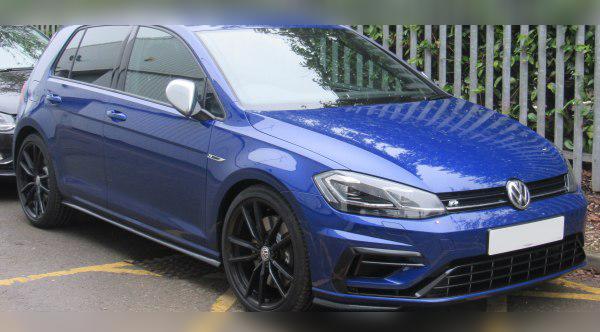
2.0 TSI (EA888 / DLRA) 288 hp – Experiences, issues, fuel consumption and used car buying guide
Key points (TL;DR)
- Performance: Explosive engine with huge tuning potential. In the Golf R it delivers a supercar-like experience in a hatchback package.
- Reliability: Significantly improved compared to older generations (Gen 2), but still requires meticulous maintenance.
- Main weakness: The thermostat housing and water pump are plastic and prone to leaks. This is the “Achilles’ heel” of this engine.
- Drivetrain: Requires regular servicing not only of the engine, but also of the DSG gearbox and Haldex coupling (4Motion system).
- Fuel consumption: Can be acceptable on the highway, but it is high in city driving.
- Recommendation: Buy only examples with complete service history; a neglected 2.0 TSI is a “bottomless money pit”.
Contents
Introduction: EA888 DLRA in the Golf R
The DLRA engine belongs to the famous EA888 family (Generation 3) from the Volkswagen Group. Specifically, this powerplant is the heart of the Volkswagen Golf VII R (Facelift 7.5), a model that redefined the “hot hatch” segment. With 288 hp (often quoted due to strict emission standards and the addition of a GPF on certain markets), this is an engine that offers a perfect balance between everyday usability and track-level performance.
Unlike the standard GTI model, the “R” version with this engine comes with reinforced internal components (pistons, connecting rods, cylinder head) to withstand the higher pressure of the larger turbocharger. This is not just a “chipped” GTI engine, but a seriously engineered high-performance unit designed for all-wheel drive.
Technical specifications
| Specification | Data |
|---|---|
| Engine displacement | 1984 cc (2.0 L) |
| Power | 212 kW / 288 hp |
| Torque | 380 Nm |
| Engine code | DLRA (EA888 Gen 3) |
| Injection type | Direct (TSI) + Indirect (MPI) *Depending on market |
| Forced induction | Turbocharger (IHI IS38), intercooler |
Reliability and maintenance
Timing system: Chain or belt?
This engine uses a timing chain. EA888 Generation 3 solved most of the catastrophic timing chain tensioner issues that plagued the previous generation. The chain is now robust and intended to last the “lifetime” of the vehicle, but in practice it is recommended to check chain stretch via diagnostics or visually after 150,000 km. If you hear rattling on cold start that lasts more than a few seconds, that is a sign for an urgent inspection.
Most common issues
Although the engine is reliable, there are some specific weak points:
- Thermostat housing and water pump: This is the most common failure. The housing is plastic and deforms over time from heat, which leads to coolant leaks. Symptoms include a dropping coolant level without a visible puddle under the car (because it evaporates on the block) or a coolant smell in the cabin.
- PCV valve (oil separator): When it fails, it can cause rough idle, increased oil consumption and oil leaks at the seals due to excessive crankcase pressure.
- Oil leaks: Often occur at the timing cover or at the oil pan (which is plastic on some models).
Major and minor service
Since the engine has a chain, a classic “major service” (fixed-interval belt replacement) does not exist in the usual form. However, the auxiliary (serpentine) belt and its tensioners are replaced at around 100,000 – 120,000 km. Minor service: Change oil and filters every 10,000 to 15,000 km at most, or once a year. Forget the factory “Long Life” interval of 30,000 km if you want the engine to last.
Oil: Capacity and consumption
The engine takes approximately 5.7 liters of engine oil. The recommended viscosity is 5W-30 or 0W-30 (VW 504.00 / 507.00 specification). Oil consumption: EA888 Gen 3 is drastically better than Gen 2 in this regard. Still, under spirited driving it is normal for the engine to consume about 0.5 liters per 3,000 – 5,000 km. If it uses a liter per 1,000 km, that points to an issue with piston rings or the turbo, but this is rare on well-maintained examples.
Spark plugs and injectors
On a powerful petrol engine like this, spark plugs are crucial. They are replaced every 60,000 km. If the car is “chipped” (tuned), the interval is reduced to 30,000 – 40,000 km. Use only NGK or OEM spark plugs specified for “R” models. Injectors are generally reliable, but direct injection can lead to carbon buildup on the intake valves, which is resolved by walnut blasting at higher mileage (over 100,000 km).
Specific parts (costs)
Dual-mass flywheel
Yes, this engine does have a dual-mass flywheel, regardless of whether it is paired with a manual or a DSG gearbox. With the DSG, the flywheel usually lasts longer (often over 150,000 km), while with the manual its lifespan depends entirely on driving style. Replacement is expensive (market-dependent) and counts as a major repair.
Turbocharger
The engine uses a single large IHI IS38 turbocharger. It is a strong turbo, but early units (before 2017) had issues with shaft failure. The 2017 (DLRA) model should have the revised, more reliable version. Turbo lifespan is long (over 200,000 km) if you follow the rules: don’t push a cold engine hard, and let it idle for about a minute after spirited driving before shutting it off.
GPF, EGR and AdBlue
This engine (DLRA) is a petrol unit, so it does not use AdBlue. Regarding emissions:
- GPF (OPF): Facelift models (from 2017/2018) often have a GPF (gasoline particulate filter). Unlike diesel DPFs, GPFs are much less prone to clogging because exhaust gas temperatures on petrol engines are much higher. Problems are rare, unless the wrong oil is used (it must be Low-SAPS).
- EGR: Exhaust gas recirculation is implemented via variable valve timing (internal EGR), so there is no classic EGR valve that clogs with soot like on diesels.
Fuel consumption and performance
Real-world fuel consumption
Let’s be honest – nobody buys a Golf R to save fuel.
- City driving: Expect between 11 and 14 l/100 km. In heavy traffic and with a heavy right foot, this easily goes above 15 l/100 km.
- Country roads: It is possible to get down to 7.5 – 8.5 l/100 km with moderate driving.
- Motorway (130 km/h): Consumption is around 8.5 – 9.5 l/100 km.
Is the engine sluggish?
Absolutely not. With 380 Nm of torque available from low revs (around 1,800 rpm), this engine catapults the Golf. Thanks to the 4Motion system there is no wheelspin, so launches are brutal. In-gear acceleration is fantastic, making overtaking trivial.
Motorway cruising
Thanks to the 7-speed DSG gearbox (most commonly fitted in the facelift), at 130 km/h the engine spins at a pleasantly low 2,300 – 2,500 rpm (depending on drive mode). This makes long-distance driving surprisingly quiet and comfortable.
Additional options and modifications
LPG conversion
Theoretically possible, but economically and technically not worthwhile. Since the engine has direct injection, an expensive system is required (liquid phase or a system that uses both petrol and LPG at the same time). Installing LPG on an “R” model is considered heresy among enthusiasts and will drastically reduce the car’s resale value. Not recommended.
Tuning (remap)
The EA888 Gen 3 is a tuning king. Stage 1: With just a software remap, this engine can be safely taken to 340 – 360 hp and over 450 Nm of torque. The engine hardware can handle this without any issues, provided it has been regularly maintained. This is probably the engine with the best power-per-money ratio on the market.
Gearbox
Available gearboxes
With the DLRA engine in the Golf 7.5 R you most commonly get the 7-speed DSG (code DQ381). This is a “wet” DSG, significantly improved over the older 6-speed (DQ250) in terms of efficiency and speed. In some markets (e.g. North America) a 6-speed manual gearbox was also available.
Gearbox maintenance and issues
- DSG (DQ381): Requires oil and filter changes every 60,000 km (some sources say 120k for the DQ381, but in practice 60k is recommended for longevity). Failures are rare if the oil is changed on time, but mechatronics repairs are very expensive (market-dependent).
- Manual gearbox: The biggest issue is the clutch. The stock clutch is sized “on the limit” for 288 hp. If you plan any tuning, the factory clutch will start slipping almost immediately. Upgrading to a reinforced clutch is expensive but necessary for enthusiasts.
Haldex coupling (4Motion)
Although not part of the gearbox, it is crucial to mention: the 4Motion system uses a Haldex coupling (Gen 5). It has its own oil, which must be changed every 3 years or 45,000 – 60,000 km. Always insist on cleaning the pump strainer when changing the oil – this is not always included in the official service schedule, and a clogged strainer leads to pump failure and loss of drive to the rear wheels.
Buying used and conclusion
When buying a Golf R with the DLRA engine, pay attention to the following:
- Cold start: Listen to the timing chain. Any rattling longer than 2–3 seconds is a red flag.
- Coolant leaks: Check the engine bay around the intake manifold (under it) for traces of pink residue (dried coolant).
- Launch control test: If possible (and the seller agrees), try a hard launch. If the front wheels spin (squeal), the Haldex pump is likely dead.
- Exhaust smoke: Bluish smoke under hard acceleration or after idling indicates oil consumption or a failing turbo.
Conclusion: The Volkswagen Golf VII R with the 2.0 TSI (DLRA) engine is one of the most complete cars in the world. It offers family practicality, all-wheel drive for all weather conditions and performance that embarrasses much more expensive cars. Maintenance is not cheap (especially DSG, Haldex, brakes, tyres), but if you find a well-kept example, you will get a machine that puts a smile on your face every time you press the throttle. Recommendation: Buy, but only after a thorough service history and technical inspection.
Was this content useful to you?
Your opinion helps us to improve the quality of the content.