EA888 / DKTB Engine
- Engine
- 1984 cm3
- Aspiration
- Turbocharger, Intercooler
- Fuel
- Petrol (Gasoline)
- Fuel injection system
- Direct injection
- Power
- 245 hp
- Torque
- 370 Nm
- Cylinders
- 4
- Valves
- 16, 4 per cylinder
- Cylinders position
- Inline
- Valvetrain
- DOHC
- Oil capacity
- 5.7 l
- Systems
- Start & Stop System, Particulate filter
# Vehicles powered by this engine
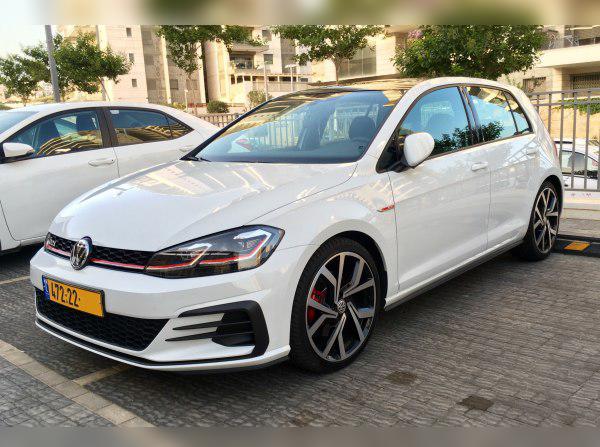
Volkswagen 2.0 TSI (EA888 Gen 3 / DKTB): Experiences, Issues, Fuel Consumption and Maintenance
If you’re looking for the “golden middle ground” in the world of hot hatchbacks, the engine powering the Golf 7.5 GTI Performance is probably one of the best engineering achievements of the Volkswagen Group in the last decade. It is an evolution of the famous EA888 platform, specifically the DKTB engine code, which comes with a factory output of 245 horsepower.
This engine is not just a “beefed-up” regular GTI, but brings specific changes to meet stricter emission standards (introduction of the OPF filter) while maintaining, and even improving, performance. Still, like any complex machine, it has its own “Achilles’ heels” you should know about before buying.
Key points in short (TL;DR)
- Performance: Explosive engine that easily copes with the Golf’s body. Excellent tuning potential.
- Biggest weakness: Thermostat housing and water pump. An almost certain failure at a certain mileage.
- Timing chain: Far more reliable than on older generations, but still requires a sound check on cold start.
- Emissions: The DKTB code means the car has an OPF (GPF) filter, which affects oil choice and exhaust sound.
- Gearbox: Mostly paired with the DQ381 (7-speed DSG), which is durable but requires regular maintenance.
- Recommendation: One of the best 2.0 turbo petrol engines on the market, provided it has been regularly serviced.
Contents
- Technical Specifications
- Reliability and Maintenance
- Specific Parts and Costs
- Fuel Consumption and Performance
- Additional Options and Modifications
- Gearbox (DSG and Manual)
- Buying Used and Conclusion
Technical Specifications
| Parameter | Value |
|---|---|
| Engine displacement | 1984 cc (2.0 L) |
| Power | 180 kW (245 hp) |
| Torque | 370 Nm at 1600–4300 rpm |
| Engine code | DKTB (EA888 Gen 3) |
| Injection type | Direct injection (TSI) |
| Forced induction | Turbocharger (IS20) + intercooler |
| Emission standard | Euro 6 (with OPF filter) |
Reliability and Maintenance
Timing system: Chain or belt?
The 2.0 TSI (DKTB) engine uses a timing chain. Unlike the notorious EA888 Gen 2 engines (before 2013), where chain failure was common, this third generation has a significantly improved tensioner system and chain itself. However, the “lifetime” chain is a myth. Expect that replacement may be needed between 150,000 and 200,000 km, or earlier if you hear characteristic rattling (metallic knocking) on cold start during the first few seconds.
Most common issues
The absolute number one on the problem list is the thermostat housing and water pump. They are made of plastic that deforms over time due to heat cycles, which leads to coolant leaks. Symptoms include a slight loss of coolant or a sweet smell of vapour under the hood. This often happens as early as 60,000–80,000 km.
The second common issue is the PCV valve (oil vapor separator). When it fails, the engine may start consuming oil, run rough at idle, or you may hear a whistling sound. Fortunately, this is not an overly expensive repair.
Major and minor service
Since the engine has a chain, a classic “major service” (timing belt replacement) is not done at a fixed interval as on diesels. Instead, the serpentine belt is replaced and the condition of the chain and water pump is checked. It is recommended to replace the serpentine belt and tensioners at around 100,000–120,000 km or 5–6 years of age.
Minor service (oil and filter change) should be done at a maximum of 10,000 to 15,000 km (or once a year). Factory intervals of 30,000 km (“Long Life”) are harmful for this engine, especially if driven hard.
Oil: Capacity and consumption
The engine holds approximately 5.7 liters of engine oil. Due to the presence of the OPF filter (more on that later), it is extremely important to use oil that meets the VW 508.00 (0W-20) or VW 504.00 (5W-30) standards, depending on the exact recommendation for your market and climate. Check the sticker under the hood or the service booklet.
As for oil consumption, the EA888 Gen 3 is significantly better than its predecessors. Consumption of 0.5 liters per 5,000–7,000 km is considered acceptable, especially if the car is often driven at high revs. If it uses a liter per 2,000 km, that points to an issue with piston rings, turbo, or the PCV valve.
Spark plugs
Since this is a high-performance turbo petrol engine, the spark plugs are under heavy stress. It is recommended to replace them every 60,000 km. If the car is “chipped” (Stage 1 or higher), the interval should be reduced to 30,000 km (colder spark plugs are used).
Specific Parts (Costs)
Dual-mass flywheel
Yes, this model (especially with the DSG gearbox) has a dual-mass flywheel. Its role is to dampen engine vibrations before they reach the gearbox. In DSG models it usually lasts longer than in manuals, often over 150,000 km, but once it starts making noise (knocking at idle that disappears when you rev the engine or engage a gear), replacement is expensive (depends on the market, but think “very expensive”).
Fuel injection system and injectors
The DKTB engine uses high-pressure direct fuel injection. The injectors are generally reliable but sensitive to poor fuel quality. The main side effect of direct injection is carbon buildup on intake valves, because fuel does not wash the valves as in older engines. This can lead to power loss and rough running at higher mileage (over 120,000 km). Cleaning (walnut shell blasting) solves this problem.
Turbocharger
The engine uses a single turbocharger, model IHI IS20. This turbo is known for providing excellent low-end response. Its lifespan is long if you respect proper warm-up and cool-down of the engine. The most common turbo-related issue is not the turbo itself, but the electronic actuator (wastegate), which can stick, causing power loss and the EPC light to come on.
DPF, GPF and EGR
This particular model (DKTB, 2017+ facelift) is equipped with an OPF (Ottopartikelfilter), which is the petrol equivalent of a diesel DPF. Its role is to reduce soot particle emissions. Unlike diesels, petrol engines reach higher exhaust gas temperatures, so the OPF regenerates much more easily and quickly during normal driving. Clogging is very rare, unless the car is driven exclusively on short trips in cold weather. The EGR valve as a separate, failure-prone component is not a primary issue here, because exhaust gas recirculation is handled via variable valve timing (internal EGR).
AdBlue
No, this engine does not have an AdBlue system. AdBlue is used exclusively on diesel engines to reduce NOx emissions. On petrol engines this is handled by a three-way catalytic converter.
Fuel Consumption and Performance
Fuel consumption
Don’t expect miracles – this is a performance engine.
- City driving: Real-world consumption is between 10 and 12 l/100 km. In heavy traffic it can go up to 14 l/100 km.
- Country roads: It’s possible to get down to 6.5–7.5 l/100 km with a light right foot.
- Motorway: At 130 km/h it uses about 7.5–8.5 l/100 km.
Performance and “laziness”
This engine is anything but lazy. With 370 Nm of torque available from just 1,600 rpm, the Golf GTI Performance feels brutally strong. In-gear acceleration is fantastic and overtaking is effortless. The Golf’s body is not too heavy for 245 hp, so the car feels very agile and lively.
Behaviour on the motorway
On the motorway this engine is in its element. Thanks to the 7-speed DSG gearbox, at 130 km/h the engine spins at a relatively low 2,000–2,200 rpm (in 7th gear), which contributes to acoustic comfort and lower fuel consumption. There is always power in reserve, even at speeds above 160 km/h.
Additional Options and Modifications
LPG conversion
Installing LPG on the 2.0 TSI engine is possible, but expensive and complicated. Due to direct injection, a special system is required (so-called liquid phase or a system that still injects a percentage of petrol to cool the injectors). The price of such a setup is high (over 1,000 EUR, depending on the market), and cost-effectiveness is questionable unless you cover huge mileages. Most GTI owners avoid LPG.
Remapping (Stage 1)
EA888 Gen 3 engines are kings of tuning. Stage 1 (software-only remap) is very safe if done by a reputable tuner. From the stock 245 hp, it easily goes to 290–310 hp and over 450 Nm of torque, without any mechanical changes. The engine and turbo can handle this without issues, but keep in mind it will shorten the lifespan of spark plugs and clutch and require more frequent oil changes.
Gearbox
Types of gearboxes
With the DKTB engine (GTI Performance Facelift), you most commonly get the 7-speed DSG gearbox (code DQ381). This is a “wet” gearbox (clutches run in oil) and represents an evolution of the older 6-speed DQ250. There is also a version with a 6-speed manual gearbox, but it is rarer.
Gearbox issues
- DSG (automatic): A very reliable gearbox. The most common issues are related to the mechatronics unit (the gearbox brain), which can fail, or oil leaks at the seals. Symptoms include jerking when taking off, harsh shifts between gears, or a delay when selecting reverse.
- Manual: On the manual gearbox, the weak point is the clutch kit, which struggles with the high torque, especially if the car is remapped. In that case, the clutch may start to slip.
Gearbox servicing
For the DQ381 DSG gearbox, the manufacturer specifies oil and filter changes at 120,000 km. However, any experienced mechanic will tell you that this is too long. It is recommended to change the gearbox oil every 60,000 km. This drastically extends the life of the mechatronics unit and clutches. The service is not cheap (depends on the market), but it is far cheaper than a gearbox overhaul.
Buying Used and Conclusion
Before buying a Golf 7.5 GTI with this engine, pay attention to the following:
- Cold start: Listen for chain rattling lasting longer than 2–3 seconds.
- Signs of leaks: Check the coolant level and look for white traces of dried coolant around the thermostat housing (at the front of the engine).
- DSG service history: Has the gearbox oil been changed on time?
- OPF check: Since it has an OPF, the sound is slightly more “muted” compared to pre-2017 models. Check whether the exhaust pressure sensors are working properly (via diagnostics).
Conclusion: Volkswagen’s 2.0 TSI (DKTB) is an excellent engine. It offers a perfect balance between everyday usability and serious performance. Its issues (water pump, thermostat) are well-known and solvable, and not catastrophic. It is aimed at drivers who want excitement behind the wheel but also need a reliable daily car. If you find a car with a proper service history – go for it.
Was this content useful to you?
Your opinion helps us to improve the quality of the content.