EA888 / CXCB Engine
- Engine
- 1984 cm3
- Aspiration
- Turbocharger, Intercooler
- Fuel
- Petrol (Gasoline)
- Fuel injection system
- Direct injection
- Power
- 220 hp @ 4700 rpm
- Torque
- 350 Nm @ 1500 rpm
- Cylinders
- 4
- Valves
- 16, 4 per cylinder
- Cylinders position
- Inline
- Valvetrain
- DOHC
- Oil capacity
- 5.7 l
- Coolant
- 8 l
- Systems
- Start & Stop System
# Vehicles powered by this engine
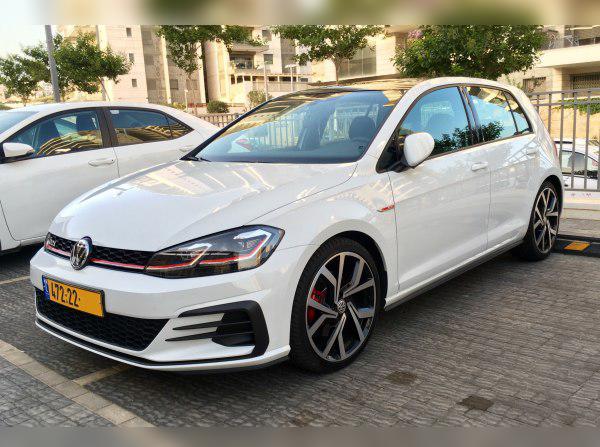
2.0 TSI EA888 (CXCB) – Experiences, issues, fuel consumption and used car buying guide
Key points (TL;DR)
- Biggest downside: Thermostat housing and water pump (module) are prone to leaking and cracking of the plastic.
- Timing: Uses a timing chain. Much more reliable than on older generations, but it should be checked after 150,000 km.
- Oil consumption: The excessive oil consumption issue that ruined the reputation of older TSI engines is solved, but it still “likes” high‑quality oil.
- Tuning potential: Huge. A Stage 1 remap wakes it up to the level of much more expensive sports cars without major risk.
- Gearbox: DSG requires regular oil changes (every 60,000 km), otherwise repair costs are astronomical.
- Recommendation: One of the best all‑round engines today. Fast, relatively economical and (with proper maintenance) reliable.
Contents
Introduction: EA888 Gen 3 in the Golf 7.5
The engine with the code CXCB belongs to the third generation (Gen 3) of the famous Volkswagen EA888 family. This is a key piece of information because the first and second generations were notorious for piston ring issues and oil consumption. CXCB is the 220 hp version that was installed in the facelifted Golf 7 model (known as 7.5) starting from 2017.
This engine is the “sweet spot” in the hot hatch world. It is not as highly strung as the R versions, but it offers far more excitement than the standard engines. For many enthusiasts, this is the last “proper” GTI before emission regulations became too restrictive with the introduction of OPF filters on later models.
Technical specifications
| Characteristic | Data |
|---|---|
| Displacement | 1984 cc (2.0 L) |
| Power | 162 kW (220 hp) at 4500-6200 rpm |
| Torque | 350 Nm at 1500-4400 rpm |
| Engine code | CXCB (EA888 Gen 3) |
| Injection type | Direct (TSI/FSI) + port injection (depending on market) |
| Forced induction | Turbocharger (IHI IS20) + intercooler |
| Camshaft drive | Chain |
Reliability and maintenance
Does this engine have a timing belt or a chain?
The EA888 CXCB engine uses a timing chain. Unlike older versions (Gen 2), where the chain tensioner was a ticking time bomb, the system here is significantly improved. Still, the chain is not eternal. It is recommended to check its condition (“stretch”) via diagnostics or visually (through the cover inspection port) at around 150,000 km. If you hear rattling on cold start that lasts longer than 2–3 seconds, it is time to replace the complete timing chain kit.
What are the most common failures on this engine?
The biggest headache for owners of this engine is the thermostat and water pump module. The housing is made of plastic that deforms over time due to heat cycles, which leads to coolant leaks. Symptoms are dropping coolant level and the smell of evaporated coolant under the hood. This is not a question of “if it will happen”, but “when it will happen”.
Another common problem is ignition coils, which can fail and cause rough engine operation (misfire). Also, the PCV valve (oil separator) can fail, leading to unstable idle and increased oil consumption.
At what mileage is the major service due?
Since the engine has a chain, a classic “major service” (timing belt replacement) does not exist in that sense. However, replacement of the serpentine belt and its tensioners, as well as the water pump (if it has not started leaking earlier), is recommended at around 100,000–120,000 km or every 5–6 years. The timing chain is replaced only when necessary (symptoms or measured stretch).
How many liters of oil does this engine take and which viscosity is recommended?
The sump holds approximately 5.7 liters of oil. The recommended viscosity is usually 5W-30 (VW 504.00/507.00 standard) or the newer 0W-20 (VW 508.00) for the latest revisions. However, for engines that are driven hard or have higher mileage, many mechanics recommend a high‑quality 5W-40 oil that meets VW specifications, for better protection at high temperatures.
Does it consume oil between services?
Gen 3 engines are drastically better than their predecessors. Consumption of 0.5 to 1 liter per 10,000 km is considered completely normal and acceptable, especially if you often use the full potential of the engine. If it consumes more than that (e.g. a liter per 2,000 km), there is an issue (PCV valve, turbo or piston rings), but this is rare with the CXCB code.
At what mileage should the spark plugs be replaced?
For a stock engine, spark plugs should be replaced every 60,000 km or 4 years. However, if the car is “chipped” (Stage 1), the interval should be shortened to 30,000 km (or even less) and plugs with a colder heat range should be used (e.g. RS7 plugs) to prevent detonation.
Specific parts (costs)
Does this engine have a dual‑mass flywheel?
Yes, it has a dual‑mass flywheel. Both with the manual and DSG gearboxes, the flywheel serves to dampen vibrations. Its lifespan is usually between 150,000 and 200,000 km, depending on driving style. Failure symptoms are metallic knocking at idle that changes when you press the clutch (manual) or vibrations when switching the engine off.
What kind of injection system does it have and are the injectors problematic?
CXCB engines often use a combination of direct (FSI) and port (MPI) injection (depending on the market, but most EU models have this). This is a great solution because the port injectors “wash” the intake valves with fuel, which drastically reduces carbon buildup – a major issue on engines with direct injection only. Injectors are generally reliable, but they are expensive to replace if they fail (cost depends on the market).
Does this engine have a turbocharger and what is its lifespan?
It uses a single IHI IS20 turbocharger. It is very responsive and reliable. Its lifespan is usually equal to the engine’s lifespan with regular oil changes and proper cooldown after spirited driving. The wastegate actuator can cause problems if it sticks or develops play, which leads to loss of power or a warning light on the dash (EPC light).
Does this model have a DPF filter or an EGR valve?
Being a petrol engine, it does not have a DPF (Diesel Particulate Filter). However, models produced at the end of 2017 and later may have an OPF/GPF (gasoline particulate filter) to meet Euro 6d‑TEMP standards. Check by VIN. CXCB usually does not have OPF, while newer codes (e.g. DNPA) do. A classic separate EGR valve is often not present, as exhaust gas recirculation is handled via variable valve timing (internal EGR), which is less failure‑prone.
Does this engine use AdBlue?
No. AdBlue is used only on diesel engines. This is one less thing to worry about for TSI owners.
Fuel consumption and performance
What is the real‑world fuel consumption in city driving?
Do not trust the factory figures. In real stop‑and‑go city driving, this engine uses between 9 and 12 liters per 100 km. If you have a heavy right foot, the figure easily goes above 13 liters.
Is this engine “lazy” for the weight of the car?
Absolutely not. With 220 hp and 350 Nm available from as low as 1500 rpm, the Golf 7.5 GTI is very lively. The Golf body is relatively light for this engine, so overtaking is lightning fast. The “pushed into the seat” feeling is present in almost every gear.
What is it like on the motorway and at what revs does it cruise at 130 km/h?
It is an excellent cruiser. At 130 km/h, the engine (depending on gearbox) spins at around 2,500–2,800 rpm (in top gear). This means the cabin is quiet, and fuel consumption on the open road can drop to a surprisingly low 7–8 liters. There is always plenty of power in reserve for acceleration from 130 to 180 km/h.
Additional options and modifications
Is this engine suitable for LPG (autogas) conversion?
Theoretically yes, practically – it is not recommended or is very expensive. Due to direct injection, a special system is required (e.g. liquid phase or a system that uses both petrol and LPG to cool the petrol injectors). Installing such a system costs over 1000–1500 EUR (depending on the market), and the cost‑effectiveness is questionable unless you cover huge mileages. You also lose boot space and risk the reliability of a complex system.
How far can this engine be safely “chipped” (Stage 1)?
The EA888 Gen 3 is a tuning king. With just a software remap (Stage 1), without any mechanical changes, power can be safely raised to 290–300 hp and over 420 Nm of torque. The engine handles this increase without issues, provided it has been regularly maintained. It is recommended to pair the engine remap with a DSG remap (if automatic) for faster shifts and higher clutch pressure.
Gearbox
Which gearboxes are fitted?
With the CXCB engine in the Golf 7.5 GTI you most commonly get:
- 6‑speed manual: Precise, with the classic VW feel.
- 6‑speed DSG (DQ250): Fitted to earlier models and some 220 hp versions. Wet clutch.
- 7‑speed DSG (DQ381): A more modern wet‑clutch gearbox that started appearing in facelift models (more common on Performance Pack 245 hp models, but can also be found here depending on year).
What are the most common failures?
Manual: The clutch is the weak point if the car is chipped. The stock clutch often starts slipping soon after a power increase. The gearbox itself is robust.
DSG: The mechatronics unit (the gearbox “brain”) is the most expensive failure. Symptoms are harsh shifts or delay when setting off. Still, DQ250 and DQ381 are very reliable if maintained properly.
How much does clutch replacement cost?
On the manual gearbox, a clutch kit with dual‑mass flywheel is a costly investment (depends on the market), but it is rarely replaced. On DSG gearboxes, the clutch pack is also a very expensive part, but it usually lasts over 200,000 km if the oil is changed regularly.
At what mileage does the gearbox need servicing?
For DSG gearboxes (both DQ250 and DQ381), it is MANDATORY to change the oil and filter every 60,000 km. Skipping this service is the fastest way to mechatronics or clutch pack failure. The manual gearbox officially has no set interval, but an oil change at around 100,000 km is recommended for smoother shifting.
Buying used and conclusion
What should you check before buying?
- Cold start: Listen to the chain. If it rattles for more than a couple of seconds, walk away or lower the price by the cost of replacement.
- Coolant leaks: Look under the intake manifold for traces of pink/red crust (coolant). This is a sign that the pump/thermostat is leaking.
- DSG service history: If there is no proof that the gearbox oil was changed on time, this is a major risk.
- Turbo: Check whether the car pulls linearly without “surging” (possible actuator issue).
Conclusion
The Golf 7.5 GTI with the 2.0 TSI (CXCB) engine is a fantastic car. It has eliminated most of the early TSI “childhood diseases”, offers sports‑car performance, yet can be driven every day like a regular Golf. Maintenance is not cheap (water pump, flywheel, DSG service), but if you find a car that has been regularly serviced, you will get one of the best engines in its class.
Ideal for: Drivers who want a blend of practicality and adrenaline and are willing to pay for proper maintenance.
Was this content useful to you?
Your opinion helps us to improve the quality of the content.