EA211 / CUKB Engine
- Engine
- 1395 cm3
- Aspiration
- Turbocharger, Intercooler
- Fuel
- Petrol / electricity
- Fuel injection system
- Direct injection
- Power
- 150 hp
- Torque
- 250 Nm
- Cylinders
- 4
- Valves
- 16, 4 per cylinder
- Cylinders position
- Inline
- Valvetrain
- DOHC
- Oil capacity
- 4 l
- Systems
- Start & Stop System
# Vehicles powered by this engine
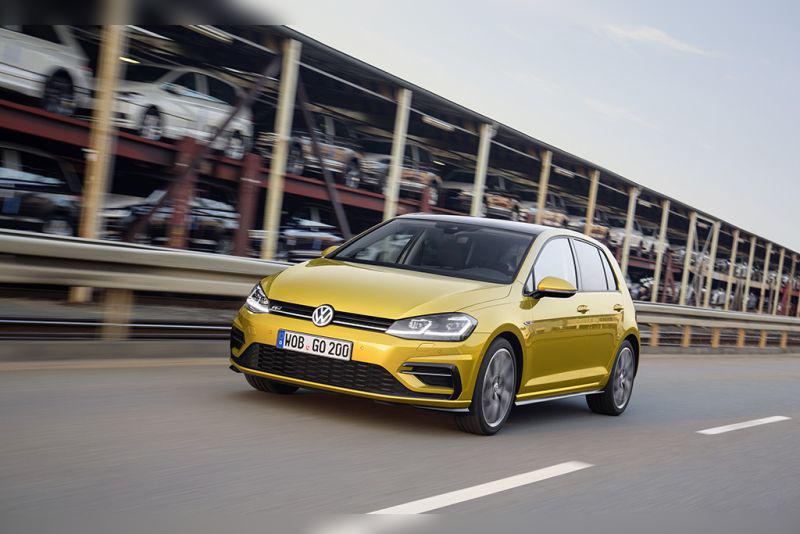
VW 1.4 TSI GTE (EA211 / CUKB) – Hybrid Rocket: Experiences, Issues, Fuel Consumption and Maintenance
When Volkswagen puts a badge with the letters "GT" on a model, expectations are always high. The Golf GTE with the EA211 engine (code CUKB) is a bridge between environmental awareness and sporty performance. This is not an ordinary 1.4 TSI; this is the heart of a complex plug-in hybrid system that has to work in perfect harmony with the electric motor. As someone who has spent years under the hood and behind the keyboard, I’ll say it right away: this is a technological gem, but like any complex system, it requires specific knowledge and maintenance.
This text is intended for those who are considering buying a Golf VII (Facelift) GTE or related VAG group models with this drivetrain. Is the battery a boogeyman? Does the small petrol engine struggle with the heavy body? Find out below.
Key points in short (TL;DR)
- Timing belt: The engine uses a timing belt, not the problematic chain from the older EA111 series. A big plus for reliability.
- Hybrid system: Adds significant weight, but also instant torque. Driving is smooth and quick.
- Fuel consumption: Varies drastically. If you charge it at home – driving is almost free. If you drive it like a regular petrol car with an empty battery – it will consume like a powerful diesel.
- Weak point 1: The water pump and thermostat housing is plastic and prone to leaks (a standard weak spot of EA211 engines).
- Weak point 2: The DQ400e gearbox mechatronics is complex and expensive to repair.
- Recommendation: An excellent choice for those who have a garage/charger and drive up to 40–50 km per day locally, but want power for longer trips.
Contents
- Technical Specifications
- Reliability and Maintenance
- Specific Parts and Costs
- Fuel Consumption and Performance
- Additional Options and Modifications
- Gearbox (DQ400e)
- Used Car Buying Tips and Conclusion
Technical Specifications
| Parameter | Data |
|---|---|
| Engine code | EA211 / CUKB |
| Displacement | 1395 cc (1.4 litres) |
| Power (Petrol engine) | 110 kW (150 hp) at 5000–6000 rpm |
| Total system power | 150 kW (204 hp) |
| Torque (Petrol / Total) | 250 Nm / 350 Nm (combined) |
| Injection type | TSI (Turbo Stratified Injection) – Direct |
| Induction | Turbocharger with water-cooled intercooler |
| Hybrid battery | 8.7 kWh (Lithium-ion) |
Reliability and Maintenance
Belt or chain?
Good news for everyone afraid of chain "rattling". The EA211 CUKB engine uses a timing belt. The VAG group learned its lesson with the previous generation (EA111), and the switch to a belt brought much quieter operation and greater reliability. There is no risk of chain stretching and timing skipping as with the old 1.4 TSI engines.
Most common failures and issues
Although this is one of the more reliable modern petrol engines, the CUKB engine in GTE form has its specifics:
- Water pump and thermostat: This is the "Achilles’ heel" of EA211 engines. The housing is made of plastic and integrated with the thermostat. Over time, due to heating and cooling cycles, the plastic deforms and coolant leaks occur. The symptom is a dropping coolant level and a smell of vapour under the bonnet.
- Turbo actuator (wastegate): The wastegate lever can stick or rattle. If it sticks, the car loses power and the "Check Engine" light comes on (EPC fault).
- Carbon buildup: Since this is a direct injection engine, fuel does not wash the intake valves. Over time, carbon deposits build up on the valves, which can lead to rough idle and a slight loss of power. In hybrids this is sometimes more pronounced because the engine often starts and stops while not fully warmed up.
- Charging issues: Although not a fault of the engine itself, a common problem is the locking mechanism of the charging cable behind the front VW badge. It can get stuck, so you can’t charge or disconnect the car.
Major service (timing belt)
According to factory specs for many markets, the timing belt is designed to last a very long time (often inspection is listed at 240,000 km). However, real-world practice and common sense say otherwise. Experienced mechanics recommend replacing the timing belt kit and water pump at 160,000 to 180,000 km or at the latest after 8 to 10 years of age. A snapped belt means catastrophic engine damage, so it’s better not to take the risk.
Oil: Capacity and consumption
The sump holds approximately 4.0 litres of oil. Full synthetic oil grade 5W-30 (VW 504.00 standard) is recommended, or the newer 0W-20 (VW 508.00) if the car is factory-set for it (check the owner’s manual or by VIN, as recommendations changed with the 2017/2018 facelift).
As for oil consumption, the EA211 is much better than its predecessor. Still, it is normal for the engine to consume 0.5 to 1 litre per 10,000 km, especially if driven aggressively on the motorway. In GTE models, the engine suffers from frequent cold starts (switching from electric to petrol under full throttle), so regularly checking the oil level is a must.
Spark plugs and injectors
Spark plugs on TSI engines are under higher stress. They are replaced every 60,000 km or 4 years. In GTE models, the petrol engine’s actual mileage is lower than the odometer reading (because part of the distance is covered on electricity), but due to the time interval and frequent cold starts, delaying replacement is not recommended.
The injectors are high-pressure piezo injectors. They are generally reliable but sensitive to poor fuel quality. They are not prone to mass failures like old diesel injectors, but if they fail, replacement is expensive (cost depends on the market, but think "expensive").
Specific Parts (Costs)
Dual-mass flywheel
Yes, this engine has a dual-mass flywheel. It is specifically designed for the hybrid drivetrain and the DQ400e gearbox. Its role is to dampen vibrations when the petrol engine starts while driving (which has to be imperceptible) and to protect the gearbox. Its lifespan is usually around 150,000–200,000 km, depending on driving style.
Turbocharger
The engine has a single turbocharger (Mitsubishi or IHI). The turbo is generally long-lasting and often outlives the engine if oil is changed regularly. What can fail is the electronic turbo actuator, which can often be replaced separately without buying a complete turbo.
EGR, DPF and GPF
This model (petrol hybrid) does not have a DPF filter (that’s for diesels) and does not have an AdBlue system. As for the EGR valve, EA211 engines use variable valve timing (VVT) to achieve internal exhaust gas recirculation, so they do not have a classic, problematic external EGR valve that clogs with soot like on older models.
Important note: Facelift models produced after mid/late 2018 (due to WLTP standards) may have a GPF (Gasoline Particulate Filter). The 2017 Golf VII GTE usually does not have a GPF, but checking by VIN is mandatory. GPFs rarely clog compared to diesel DPFs because petrol engines run at higher exhaust gas temperatures.
Fuel Consumption and Performance
City driving – Two sides of the same coin
Real-world city consumption depends entirely on whether you charge the battery:
- Full battery: 0–2.5 l/100 km. You can cover a realistic 30–40 km on electricity alone (less in winter).
- Empty battery (Hybrid mode): 6.5–8.0 l/100 km. When the battery is empty, the car behaves like a conventional hybrid (uses regenerative braking), but it carries the extra weight of the battery and electric motor (about 150–200 kg more than a regular Golf).
Is the engine "lazy"?
Absolutely not. Although 1.4 litres is a small displacement, the electric motor’s assistance is crucial. The electric motor provides instant torque from zero rpm. When you floor it in "GTE mode", both motors work together, delivering 400 Nm (system peak for short intervals) and 204 hp. The shove in your back is impressive, and the car feels more eager than a regular GTI in the first few seconds of acceleration.
Motorway
On the motorway, the hybrid system has less influence at constant speeds. There the main load is carried by the 1.4 TSI petrol engine.
- At 130 km/h the engine spins at about 2,600–2,800 rpm in 6th gear.
- Fuel consumption at 130 km/h is between 6.5 and 7.5 l/100 km. Not excessive, but not as low as with a 2.0 TDI.
Additional Options and Modifications
LPG conversion
Not recommended and physically almost impossible. First, the engine has direct injection, which requires an expensive LPG system. Second, and more importantly – the GTE model has no space for a spare wheel because the high-voltage battery is located there. There is nowhere to put the LPG tank unless you sacrifice the entire boot, which defeats the purpose of the car.
Chiptuning (Stage 1)
The EA211 CUKB engine can be "chipped". With remapping, the petrol engine can be raised from 150 hp to about 170–180 hp. However, caution! The total system power and torque are limited by the DSG gearbox’s capabilities. Aggressive tuning can lead to clutch slip or issues with the transition between electric and petrol drive. If it is done, the gearbox (DSG) also needs a remap (DSG tune).
Gearbox: Special DQ400e
In the GTE variant, this engine comes exclusively with a DSG automatic gearbox designated DQ400e. This is a 6-speed dual-clutch gearbox (wet clutch), but with an important difference: it also has a third clutch (K0).
- K0 clutch: Serves to disconnect the petrol engine from the rest of the drivetrain when you drive on electricity or when the car is "coasting".
- Electric motor: Located inside the gearbox housing.
Gearbox issues and maintenance
The DQ400e is robust, but not immune to failures:
- Mechatronics: The brain of the gearbox. Failures manifest as jerks when shifting, inability to engage gears, or oil leaks. Repairs are very expensive (depending on the market, often €1000+).
- Jerks when switching drive sources: If you feel a strong jolt when the petrol engine starts while driving, this may indicate a problem with the K0 clutch or with rpm synchronisation.
- Service: Gearbox oil changes are MANDATORY every 60,000 km. A specific DSG oil is used. Do not skip this service because old oil destroys the mechatronics and clutches.
- Clutch replacement: The clutch pack is a wear item. The cost is high due to the system’s complexity (again, think "very expensive").
Buying Used and Conclusion
Before buying a Golf GTE with the 1.4 TSI engine, pay attention to the following:
- Battery diagnostics: Check the high-voltage battery "State of Health" (SOH). New, it has a capacity of about 7–8 kWh (net). If diagnostics show a drastic drop or the car covers less than 20–25 km on electricity, the battery is degraded.
- Gearbox service history: If the gearbox oil has not been changed at 60k km intervals, skip that car.
- Engine sound: Listen to a cold start (you’ll have to drain the battery or put the car in "Battery Hold/Charge" mode to start the engine). There must be no metallic rattling.
- Suspension: The GTE is a heavy car. Check the condition of the bushings and shock absorbers; they wear out faster than on a regular Golf.
Conclusion: The VW 1.4 TSI CUKB in GTE form is a fantastic engineering achievement. It offers (almost) GTI performance with scooter-like fuel consumption (if you charge it). It is intended for people who have somewhere to charge it and cover moderate daily distances. If you live in a flat on the 10th floor with no garage and drive only on the motorway, buy a 2.0 TDI. For everyone else – the GTE is a more fun and more modern option.
Was this content useful to you?
Your opinion helps us to improve the quality of the content.