CRLB, DCYA, DFGA Engine
- Engine
- 1968 cm3
- Aspiration
- Turbocharger, Intercooler
- Fuel
- Diesel
- Fuel injection system
- Diesel Commonrail
- Power
- 150 hp
- Torque
- 340 Nm
- Cylinders
- 4
- Cylinders position
- Inline
- Valvetrain
- DOHC
- Oil capacity
- 4.7 l
# Vehicles powered by this engine
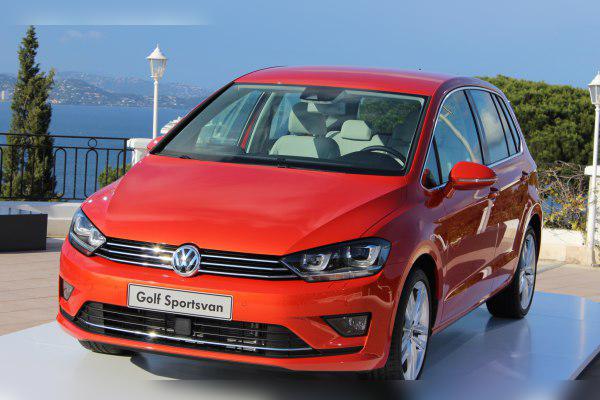
2.0 TDI (CRLB, DCYA, DFGA) 150 HP: Experiences, Problems and Maintenance – The Golden Middle Ground for the Golf Sportsvan
Key points (TL;DR)
- Performance: This is the ideal measure for the Golf Sportsvan. 150 HP and 340 Nm offer an excellent balance between power and efficiency.
- Achilles’ heel: The water pump is the most common issue. It often starts leaking or seizes before the scheduled timing belt service.
- Emissions: All listed engine codes (CRLB, DCYA, DFGA) are Euro 6 and feature an AdBlue system, which adds extra complexity to maintenance.
- Gearbox: DSG gearboxes require strict oil changes every 60,000 km. If this is respected, they are very durable.
- Recommendation: An excellent choice for families who drive higher mileages on open roads. For strict city driving, the DPF can cause problems.
Contents
- Introduction and application
- Technical specifications
- Reliability and maintenance
- Specific parts and systems
- Fuel consumption and performance
- Additional options and modifications
- Gearbox: Manual and DSG
- Buying used and conclusion
Introduction and application
The engine we’re talking about today belongs to the famous EA288 family of Volkswagen diesels. Specifically, the codes CRLB, DCYA and DFGA represent an evolution of the 2.0 TDI unit adapted to Euro 6 standards. Although it was installed in a wide range of VW Group vehicles (from Passat to Tiguan), here we focus on its application in the Volkswagen Golf VII Sportsvan model.
Why is this engine important? Because it hits the “sweet spot”. It’s not the basic 1.6 TDI which sometimes struggles with the heavier Sportsvan, nor is it the more expensive 184/190 HP version which is often overkill for this class. This is the workhorse of the modern car industry.
Technical specifications
| Characteristic | Data |
|---|---|
| Engine displacement | 1968 ccm |
| Power | 110 kW (150 HP) at 3500–4000 rpm |
| Torque | 340 Nm at 1750–3000 rpm |
| Engine codes | CRLB, DCYA, DFGA |
| Injection type | Common Rail (Bosch/Continental) |
| Charging | Variable geometry turbocharger (VGT) + intercooler |
| Emission standard | Euro 6 (with AdBlue system) |
Reliability and maintenance
Does this engine have a timing belt or a chain?
All listed engines (CRLB, DFGA, DCYA) use a timing belt. This is good news because the system is quieter and generally more predictable than the chains on older engine generations. The oil pump is usually driven by a separate belt running in oil, a solution that has proven durable but requires attention during major overhauls.
At what mileage is the timing belt service done?
The manufacturer optimistically states an interval of 210,000 km for timing belt replacement, without a time limit (or 10 years in some manuals).
However, as an experienced editor, I advise you to ignore that figure. In practice, the water pump and tensioners often fail earlier. For peace of mind, the recommendation is replacement at 150,000 to 160,000 km or every 5 to 6 years, whichever comes first.
What are the most common failures on this engine?
Although the EA288 series is reliable, there are some specific issues:
- Water pump: This is problem number one. The variable “cup” that regulates coolant flow can seize, leading to engine overheating. Symptom: Temperature climbs above 90°C under load and drops on downhill sections, or there is a loss of coolant.
- Coolant leaks: Often from the thermostat housing or the water pump itself.
- Heater core (small radiator): If G13 coolant is used, the silica bag in the expansion tank can burst and clog the heater core. Symptom: Cabin heating is weak on the passenger side.
- Exhaust gas temperature sensors: They can fail and trigger the “Check Engine” light.
Oil: quantity and consumption
The engine takes between 4.7 and 5.7 liters of oil (depending on the exact sump and filter variant). You must use 5W-30 or 0W-30 with the VW 507.00 specification. This spec is crucial because of the DPF filter.
As for oil consumption, these engines are quite “tight”. Consumption of up to 0.5 liters per 10,000 km is perfectly acceptable. If it uses a liter every 2–3 thousand kilometers, that points to a problem with the piston rings or turbo, which is not typical for healthy examples with under 300,000 km.
Injector (nozzle) lifespan
The injectors on these 150 HP engines are mostly electromagnetic (solenoid), which have proven more durable and cheaper to refurbish than piezo injectors. With good-quality fuel, they easily last 250,000–300,000 km. Symptoms of bad injectors are rough idle (“hammering”) and increased smoke, although the DPF tends to mask this.
Specific parts (costs)
Does the engine have a dual-mass flywheel?
Yes. Both manual and DSG versions have a dual-mass flywheel (DMF). Its lifespan is usually around 180,000–250,000 km, depending on driving style. On DSG cars it often lasts longer because the gearbox “irons out” driver errors. Replacement is expensive (falls into the “costly” category), but it’s a necessary investment.
Turbocharger
The engine uses a single variable geometry turbocharger. It is not prone to failure if the oil is changed regularly. Its lifespan often matches that of the engine itself, but the turbo actuator (the electronic part) can fail earlier.
DPF, EGR and AdBlue
This is a Euro 6 engine, which means the exhaust aftertreatment system is complex.
- DPF filter: Located right next to the engine for faster warm-up. Passive regeneration works excellently on open roads. Problems arise almost exclusively in city driving.
- EGR valve: There are two recirculation circuits (high and low pressure). The EGR cooler can leak or become clogged with soot.
- AdBlue: Yes, these engines (CRLB, DFGA, DCYA) use AdBlue fluid. The system consists of a tank, heater, pump and injector. AdBlue system problems are common (e.g. heater failure or urea crystallization on the injector). Repairs can be expensive (depending on the market), and software deletion is illegal in Europe.
Fuel consumption and performance
Real-world fuel consumption
The Golf Sportsvan is slightly taller and heavier than the regular Golf, which slightly affects fuel consumption.
- City driving: Expect between 6.5 and 7.5 l/100 km. In heavy traffic it can go up to 8.5 liters.
- Country roads: This is where the engine shines – consumption drops to 4.5–5.0 l/100 km.
- Motorway (130 km/h): Consumption is around 5.5–6.2 l/100 km.
Performance: Is the engine “lazy”?
Absolutely not. With 340 Nm of torque available from just 1750 rpm, this engine moves the Sportsvan body with ease, even when the car is full of passengers and luggage. Overtaking is safe and quick.
Motorway and cruising
At 130 km/h, in top gear (6th on the manual or 6th/7th on the DSG), the engine runs at a relaxed 2000 to 2200 rpm. This ensures a quiet cabin and low fuel consumption. It’s an excellent cruiser.
Additional options and modifications
Remapping (Stage 1)
This 2.0 TDI block has a large power reserve. A safe Stage 1 remap can raise power to about 185–195 HP and torque to 400–420 Nm.
Note: On DSG gearboxes, it is sometimes necessary to remap the gearbox as well (TCU tune) to adapt clutch pressure to the higher torque. Overdoing the torque can shorten the flywheel’s lifespan.
Gearbox: Manual and DSG
Which gearboxes are used?
- Manual: 6-speed gearbox (code MQ350). Very precise and robust.
- Automatic (DSG):
- Older models (up to approx. 2017): DQ250 (6-speed, wet clutches).
- Newer models (from approx. 2017): DQ381 (7-speed, wet clutches).
Failures and maintenance
Manual gearbox: Practically indestructible. The only major expense is the clutch kit and dual-mass flywheel. The cost of replacing the complete set is significant (falls into the “medium to high” category), but it is done rarely.
DSG gearbox: These are gearboxes with “wet” clutches, which makes them far more reliable than the notorious DQ200 (dry 7-speed). However, they require an oil and filter change every 60,000 km without exception!
If the oil is not changed, the mechatronics unit (the gearbox brain) fails, and its repair is very expensive. The clutches also wear, but usually last over 200,000 km with normal driving. Symptoms of problems are juddering when setting off or delayed gear changes.
Buying used and conclusion
What to check before buying?
- Cold start: The engine should start “on half a turn”. Listen for any metallic knocking when cold (flywheel).
- Coolant: Check the color in the expansion tank. It must be clean (pink/purple). If it’s brown, there may be oil–coolant mixing or corrosion due to poor-quality antifreeze (G13 issue).
- DSG service history: If it’s an automatic, ask for proof of gearbox oil changes every 60k km. If there is no proof, skip the car or set money aside for a rebuild.
- Water pump: Check for traces of leaks on the left side of the engine (viewed from the front).
Conclusion: Who is it for?
The Golf Sportsvan with the 2.0 TDI (150 HP) engine is a fantastic family car. The engine offers a perfect compromise. If you drive more than 15,000 km per year and spend a lot of time on open roads, this is the right choice.
Avoid it only if you drive exclusively short distances in the city (e.g. 3–5 km to work), because you will quickly run into problems with the DPF filter and AdBlue system. For such conditions, a petrol engine is a better option.
Was this content useful to you?
Your opinion helps us to improve the quality of the content.