CZCA, CZDD Engine
- Engine
- 1395 cm3
- Aspiration
- Turbocharger, Intercooler
- Fuel
- Petrol (Gasoline)
- Fuel injection system
- Direct injection
- Power
- 125 hp
- Torque
- 200 Nm
- Cylinders
- 4
- Valves
- 16, 4 per cylinder
- Cylinders position
- Inline
- Oil capacity
- 4 l
# Vehicles powered by this engine
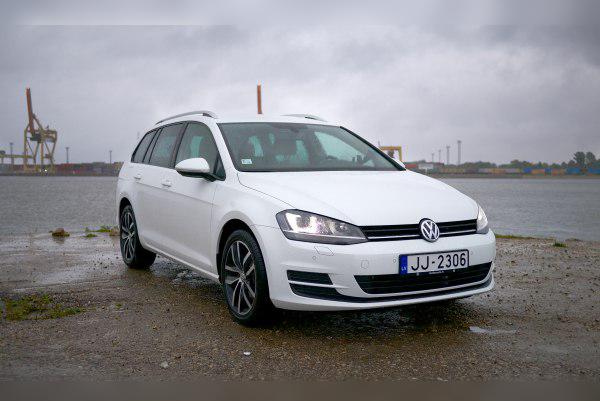
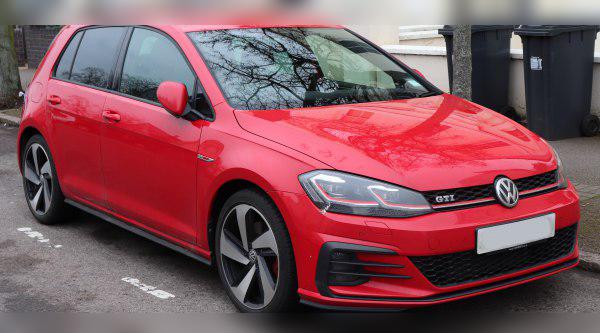
1.4 TSI (125 HP) CZCA / CZDD – Experiences, problems, fuel consumption and buying used
Key points (TL;DR)
- Timing belt drive: Unlike the older 1.4 TSI engines (EA111) which had problematic timing chains, this engine (EA211) uses a timing belt that is more reliable and quieter.
- Excellent power-to-economy ratio: 125 HP is the “sweet spot” for the Golf 7 – enough power for overtaking, with very reasonable fuel consumption.
- Injection system: Direct injection means excellent performance, but makes LPG (autogas) installation more complex and expensive.
- Water pump and thermostat: The thermostat housing is plastic and prone to coolant leaks, which is one of the more common failures.
- Oil consumption: Significantly reduced compared to older generations, but regular level checks are still mandatory.
- DSG gearbox: If you choose an automatic, it’s the DQ200 with dry clutch, which requires careful inspection before purchase (mechatronics and clutch pack).
- Recommendation: One of the best petrol engines in its class for everyday use.
Contents
Introduction: Why is this engine important?
The engines with codes CZCA and CZDD belong to the EA211 family of Volkswagen power units. This is a key piece of information because it marks a turning point in TSI engine reliability. While older models (EA111) had a bad reputation due to timing chain failures and cracked pistons, this generation, fitted in the VW Golf VII (hatchback and estate), brought a completely new design.
With 125 horsepower, this is not a racing engine, but it is probably the most sensible choice for the average driver who wants a modern petrol engine. It offers diesel-like agility thanks to the turbo, but without the noise and vibrations. It was widely installed in the Golf 7 after 2014 (including the facelift models), replacing the weaker 122 HP version.
Technical specifications
| Feature | Data |
|---|---|
| Displacement | 1395 cc (1.4 litres) |
| Power | 92 kW (125 HP) at 5000–6000 rpm |
| Torque | 200 Nm at 1400–4000 rpm |
| Engine codes | CZCA, CZDD |
| Injection type | Direct injection (TSI / GDI) |
| Charging | Turbocharger with intercooler |
| Timing drive | Timing belt |
| Number of cylinders/valves | 4 cylinders / 16 valves |
Reliability and maintenance
Does this engine have a timing belt or a chain?
This is the most important question, and the good news is: The engine uses a timing belt. With this series (EA211), Volkswagen abandoned the problematic chain that stretched on older 1.4 TSI engines. The belt has proven to be a very durable and quiet solution.
What are the most common issues with this engine?
Although reliable, it has some specific weak points:
1. Coolant leaks: The most common problem is the thermostat housing and water pump. They are made of plastic which deforms over time due to heat, leading to coolant loss.
2. Turbo actuator (wastegate): The rod that regulates turbo pressure can seize or develop play. Symptoms are loss of power (“safe mode”) and the Check Engine light coming on.
3. Carbon build-up: Due to direct injection, fuel does not wash the intake valves. Over time, carbon deposits build up on the valves, which can lead to rough idle and a slight loss of power.
At what mileage should the major service be done?
The manufacturer states optimistic intervals of up to 210,000 km for inspection or replacement of the belt. However, workshop experience says otherwise. It is recommended to do the major service (timing kit and water pump) between 160,000 km and 180,000 km, or after 6–7 years of age, whichever comes first. Rubber ages regardless of mileage.
How many litres of oil does this engine take and which grade is recommended?
The sump holds approximately 4.0 litres of oil (with filter). Fully synthetic oil of grade 5W-30 or 0W-20 (for newer models) is recommended, meeting the strict VW standards VW 504.00 / 507.00 or VW 508.00. Do not use semi-synthetic oil.
Does it consume oil between services and what amount is considered normal?
This generation (EA211) has drastically reduced oil consumption compared to its predecessors. Still, turbo engines always consume a small amount of oil. Consumption of 0.5 to 1 litre per 10,000 km is considered completely acceptable and normal, especially if driven aggressively or on motorways. If it consumes more than that, the piston rings or turbocharger should be checked.
At what mileage should the spark plugs be replaced?
Spark plugs should be replaced every 60,000 km or 4 years. Use only iridium or platinum spark plugs intended for this engine (e.g. NGK or Bosch by catalogue number), as standard plugs cannot withstand the thermal load of a TSI engine.
Specific parts (costs)
Does this engine have a dual-mass flywheel?
Here it depends on the gearbox:
– Manual gearbox: The 125 HP version often comes with a conventional solid flywheel, which makes maintenance cheaper. However, some models (depending on year and market) may have a dual-mass flywheel. Checking by VIN is mandatory.
– DSG gearbox: Models with DSG do have a dual-mass flywheel specific to automatics, which serves to protect the gearbox from vibrations.
What type of injection system does it have and are the injectors problematic?
The system is high-pressure direct injection. Injectors are generally durable, but sensitive to poor fuel quality. Injector failure manifests as jerking while driving or fuel leaking into a cylinder (which can wash away oil and damage the engine). Ultrasonic cleaning of injectors is recommended preventively at higher mileage.
Does the engine have a turbocharger and what is its lifespan?
Yes, it has a single turbocharger integrated with the exhaust manifold (smaller size for quicker response). The turbo’s lifespan is usually equal to the engine’s lifespan (over 200–250 thousand km) with regular oil changes and proper cool-down after fast driving. The most common failure is not the turbo itself, but its electronic actuator.
Does this model have a DPF filter or EGR valve?
– DPF: No, because it’s a petrol engine. However, models produced from late 2018 onwards (usually with the Golf 7.5 facelift) may have a GPF (OPF) petrol particulate filter. These filters clog less often than diesel DPFs because petrol exhaust temperatures are higher.
– EGR: The engine does have an exhaust gas recirculation system, but it is implemented more intelligently (with variable valve opening), so the classic EGR issues seen on diesels are not as pronounced.
– AdBlue: None.
Fuel consumption and performance
What is the real-world fuel consumption in city driving?
In real city traffic, you can expect consumption between 7.0 and 8.5 l/100 km. If you have a heavy right foot or mostly drive short trips in winter, it can go up to 9–10 litres, but overall it is very economical for a petrol engine of this power. The start-stop system helps reduce consumption while stationary.
Is this engine “underpowered” for the weight of the car?
No. With 200 Nm of torque available from just 1400 rpm, a Golf with this engine drives very nicely. 0–100 km/h takes around 9 seconds, which is perfectly respectable. It’s not a sports car, but you will never feel unsafe when joining a motorway or overtaking.
How does the engine behave on the motorway and at what rpm does it cruise at 130 km/h?
The engine is quiet and refined. Thanks to the 6-speed gearbox (or 7-speed DSG), at 130 km/h it runs at around 2,800–3,000 rpm. Fuel consumption on country roads can drop to 5.0 l/100 km, while on the motorway the average is around 6.0–6.5 l/100 km.
Additional options and modifications
Is this engine suitable for LPG (autogas) conversion?
Due to direct fuel injection into the cylinders, LPG installation is complex and expensive. It requires a special “Direct Injection” kit that either injects liquid gas or mixes petrol and gas (e.g. uses 15–20% petrol while running on gas to cool the injectors). The installation cost is high (often over 800–1000 EUR, depending on the market) and the payback is questionable unless you cover very high mileage.
How far can this engine be safely tuned (Stage 1)?
The engine has potential. A Stage 1 remap can safely raise power to about 145–150 HP and torque to around 250 Nm. However, care must be taken with the clutch (especially with the DSG DQ200 gearbox, which has a torque limit of around 250 Nm) and the turbo.
Gearbox: Manual vs DSG
Which gearboxes are fitted and what are the most common failures?
1. Manual (6-speed): Very precise and reliable. The codes are usually MQ200 or MQ250. Failures are rare and mostly limited to regular clutch replacement at higher mileage.
2. Automatic DSG (7-speed – DQ200): This is a gearbox with a dry clutch. Although quick and efficient, it is less reliable than the “wet” DSG gearboxes used in more powerful models.
Most common problems with the DSG DQ200 gearbox:
– Clutch wear: Since the clutch packs are dry, they wear faster in stop-and-go city driving. Symptoms are shuddering when moving off or when shifting from 1st to 2nd gear.
– Mechatronics: The electro-hydraulic brain of the gearbox can fail, resulting in an inability to change gears. Repair is expensive (depending on the market, expect a significant bill).
Clutch replacement cost:
– For the manual gearbox: Not very expensive (relatively standard clutch kit price).
– For the DSG gearbox: Expensive. The clutch kit is more complex, and after replacement the gearbox must be calibrated.
At what mileage should the gearbox be serviced and the oil changed?
– Manual: VW says “lifetime fill”, but it is recommended to change the oil every 100,000 km.
– DSG DQ200: Officially, the gearbox oil is not changed (sealed for life), as it is a dry system. However, there is oil in the mechatronics and gears. Many specialist workshops recommend changing the oil in the mechatronics every 60,000–80,000 km to extend the life of the solenoids.
Buying used and conclusion
What should be checked before purchase?
1. Cold start: Listen to the engine when it is cold. Although it has no chain, there should be no metallic rattling.
2. Coolant: Check the coolant level and look for white traces of leaks around the water pump (on the side of the engine where the belt is).
3. Test drive (DSG): Start gently uphill without pressing the accelerator (does the car creep smoothly?). Accelerate firmly. Gear changes must be seamless, without jolts or grinding noises.
4. Diagnostics: Check for “misfire” on the cylinders, which may indicate dirty valves or faulty spark plugs/coil packs.
Conclusion: Who is this engine for?
The VW 1.4 TSI (125 HP) in CZCA/CZDD variants is an excellent choice. It has solved most of the “childhood diseases” of previous generations and offers a great balance overall. It is ideal for families, drivers who combine city and highway use, and anyone who wants a Golf 7 but does not want to take the risk of DPF filters and EGR valves on used diesels. If you can choose, the manual gearbox is the safer (cheaper) option in terms of maintenance on a used car, while the DSG offers comfort at the cost of potentially more expensive repairs.
Was this content useful to you?
Your opinion helps us to improve the quality of the content.