EA888 / CNTA, CXCA Engine
- Engine
- 1984 cm3
- Aspiration
- Turbocharger, Intercooler
- Fuel
- Petrol (Gasoline)
- Fuel injection system
- Direct injection
- Power
- 210 hp @ 4500 rpm
- Torque
- 350 Nm @ 1500 rpm
- Cylinders
- 4
- Valves
- 16, 4 per cylinder
- Cylinders position
- Inline
- Valvetrain
- DOHC
- Oil capacity
- 5.7 l
- Coolant
- 10 l
- Systems
- Start & Stop System
# Vehicles powered by this engine
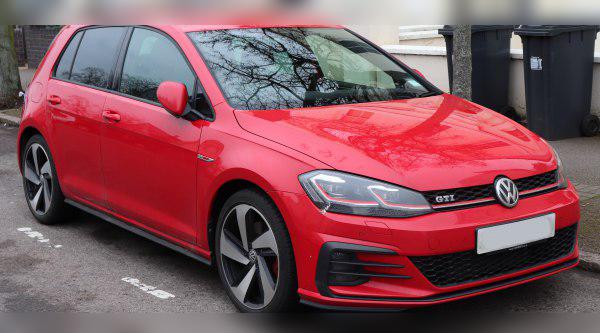
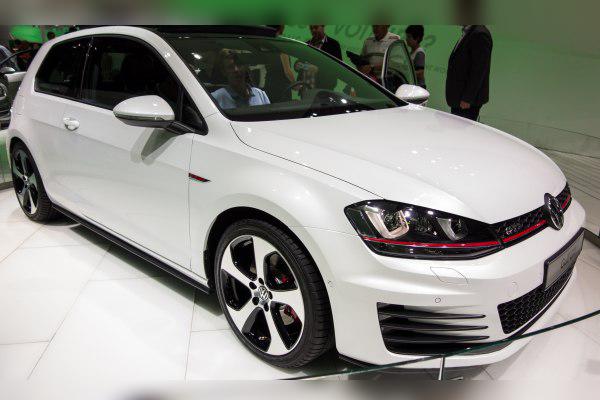
2.0 TSI EA888 (CNTA, CXCA) in Golf 7 GTI – Experiences, issues, fuel consumption and used-buying tips
Key points (TL;DR)
- Performance: This is the heart of a true hot hatch. The engine is explosive, flexible and offers a perfect everyday balance.
- Timing drive: It uses a timing chain, which in this third generation (Gen 3) is much more reliable than in its predecessor, but still requires attention.
- Achilles’ heel: The thermostat and water pump housing are plastic and will almost certainly start leaking sooner or later.
- Oil consumption: Although better than in the Golf 6 GTI, these engines still like to “drink” oil if driven hard. Regular checks are mandatory.
- DSG gearbox: The DQ250 wet-clutch gearbox is fantastic, but only if the oil has been changed every 60,000 km.
- Potential: This engine is a “tuner’s dream”; a Stage 1 remap drastically changes the car’s character without major mechanical changes.
- Maintenance: Not cheap. Parts are specific, and high‑quality oil and fuel are a must.
Contents
- Technical specifications
- Reliability and maintenance
- Specific parts and costs
- Fuel consumption and performance
- Additional options and modifications
- Gearbox and drivetrain
- Conclusion and used‑car advice
Introduction
The engine we’re talking about today is a modern legend of the automotive industry. It’s the third generation (Gen 3) of the famous EA888 series of turbocharged petrol engines. The specific codes CNTA and CXCA refer to the 210 hp (155 kW) variants used in the Volkswagen Golf VII GTI. These versions are often specific to certain markets (such as North America), while in Europe you’ll more often see codes like CHHA/CHHB, but the mechanical basis and issues are almost identical.
This is the engine that defined the Golf 7 GTI as the “king of the class”. Unlike the previous generation in the Golf 6, many catastrophic issues with oil consumption and timing chain tensioners have been resolved here, but that doesn’t mean maintenance is cheap or that there are no weak points.
Technical specifications
| Parameter | Value |
|---|---|
| Engine displacement | 1984 cc (2.0 L) |
| Power | 155 kW (210 hp) @ 4500 rpm |
| Torque | 350 Nm @ 1500–4400 rpm |
| Engine codes | CNTA, CXCA (EA888 Gen 3) |
| Injection type | Direct (FSI/TSI) + Port (MPI) *Depends on market |
| Induction | Turbocharger (IHI IS20), intercooler |
| Number of cylinders / valves | 4 / 16v |
Reliability and maintenance
Does this engine have a timing belt or a chain?
The EA888 Gen 3 engine uses a timing chain. This is good news because the system has been significantly improved compared to the notorious second generation. The chain itself is more robust, as are the tensioners. Still, the “lifetime” chain is a myth. It’s recommended to check chain condition (stretch) via diagnostics or visually (through the inspection opening) after around 150,000 km. If you hear rattling on cold start that lasts longer than 2–3 seconds, it’s time for replacement.
What are the most common failures on this engine?
Although generally reliable, it has a few “guaranteed” issues:
- Water pump and thermostat module: This is problem number one. The housing is made of plastic that deforms over time from repeated heat cycles, which leads to coolant leaks. Symptoms include a sweet smell under the hood or disappearing coolant.
- PCV valve (oil vapor separator): When the membrane tears, the engine can run rough, whistle, or start consuming more oil.
- Carbon buildup: Although many Gen 3 versions have dual injection (injectors in the intake manifold and directly in the cylinder) which helps keep the valves clean, certain versions (such as some US‑market CNTA/CXCA engines) may have direct injection only. In that case, the intake valves get dirty and require mechanical cleaning (“walnut blasting”) at around 100,000 km. Symptoms are poor throttle response and hesitation while driving.
At what mileage is the “major service” done?
Since the engine has a chain, there is no classic “major service” (fixed‑interval belt replacement). However, the serpentine belt with its tensioners and the water pump (which is replaced when it starts leaking – and it will) are usually serviced between 100,000 and 120,000 km, or preventively when fixing coolant leaks.
How many liters of oil does this engine take and which grade is recommended?
The sump holds approximately 5.7 liters of engine oil. The recommended grade is usually 5W‑30 or 5W‑40 that meets the strict VW 504.00 / 507.00 specification. For newer variants 0W‑20 (VW 508.00) is sometimes recommended, but for a GTI that is driven hard and at higher temperatures, 5W‑40 has proven to offer better protection.
Does it consume oil between services?
Yes, but it shouldn’t be as alarming as on older models. Consumption of 0.5 to 1 liter per 5,000–7,000 km can be considered normal for this type of engine, especially if it’s often driven at high rpm. If it uses a liter per 1,000 km, that points to an issue with piston rings or the turbo.
At what mileage should the spark plugs be replaced?
On a stock engine, spark plugs (iridium/platinum) should be replaced every 60,000 km. However, if the car is remapped (Stage 1), the interval should be shortened to around 30,000 km, and “colder” plugs are often used (e.g. from the Audi RS7).
Specific parts (costs)
Does this engine have a dual‑mass flywheel?
Yes, it does. Both manual and DSG versions use a dual‑mass flywheel. In DSG cars it usually lasts longer because the computer smooths out shocks, while in manuals it depends heavily on driving style. Replacement is expensive (falls into the “very expensive” category, depending on market).
What kind of injection system does it have and are the injectors problematic?
It’s a high‑pressure direct injection system, with pressures exceeding 200 bar. The injectors are generally reliable but sensitive to poor‑quality fuel. A failing injector can “dribble” fuel into a cylinder, washing oil off the cylinder walls and causing catastrophic damage. It’s advisable to occasionally use an injector‑cleaning fuel additive.
Does this engine have a turbocharger and what is its lifespan like?
The engine uses a single IHI IS20 turbocharger. It’s an excellent, fast‑spooling turbo with minimal lag. Lifespan is long and often exceeds 200,000 km with regular oil changes and, most importantly, letting the engine cool down before switching off after spirited driving. Early models had issues with the turbine shaft, but CNTA/CXCA are later revisions and generally don’t suffer from this.
Does this model have a DPF or EGR valve?
This is a petrol engine, so it does not have a DPF (like diesels do). However, newer models (usually after 2018 in Europe) have a GPF/OPF gasoline particulate filter. CNTA/CXCA usually don’t have a GPF because they are older revisions or for markets where it wasn’t mandatory. EGR functionality is achieved via variable valve timing (internal EGR), so there is no classic EGR valve that clogs and causes issues like on diesels.
Does this engine use AdBlue?
No. AdBlue is used exclusively on diesel engines to reduce NOx emissions. This engine doesn’t use any additional exhaust‑aftertreatment fluids.
Fuel consumption and performance
What is the real‑world fuel consumption in city driving?
Be realistic – you’re buying a GTI. Factory figures are optimistic. In heavy stop‑and‑go city traffic, this engine will use between 10 and 12 liters per 100 km. If you have a heavy right foot, that figure easily goes up to 14 liters. In moderate city driving without major congestion, it’s possible to get it down to around 9 liters.
Is this engine “lazy” for the weight of the car?
Absolutely not. With 350 Nm of torque available from as low as 1,500 rpm, the Golf 7 GTI really moves. The Golf’s body is relatively light (MQB platform), so the engine pulls the car with incredible ease, whether empty or fully loaded. In‑gear acceleration is fantastic.
How does the engine behave on the highway?
This is the GTI’s natural habitat. At 130 km/h, depending on gearbox (DSG 6th gear), the engine spins at around 2,800 to 3,000 rpm. The cabin is quiet, and fuel consumption at that speed is around 7.0 to 8.0 liters. There is always enough power for overtaking, even in sixth gear without downshifting.
Additional options and modifications
Is this engine suitable for LPG conversion?
Theoretically yes, practically – not recommended. Due to the direct injection system, you need an expensive setup (liquid injection or a system that still uses some petrol along with LPG to cool the injectors). Installation is costly (over 1,000 EUR), and given the engine’s complexity and the car’s purpose (sporty driving), the risk of combustion issues and constant “check engine” lights is high.
How far can this engine be safely tuned (Stage 1)?
The EA888 Gen 3 is known for its huge potential. With just a software remap (Stage 1), power can be safely raised from 210 hp to around 260 up to even 300 hp, and torque climbs to over 420 Nm. The engine handles this very well, but keep in mind that the clutch (on manuals) or the turbo will be under greater stress.
Gearbox
Which gearboxes are available?
With CNTA/CXCA engines in the Golf 7 GTI you get two options:
- 6‑speed manual: Precise, short throw, a real joy for purists.
- 6‑speed DSG (DQ250): Dual‑clutch automatic. Fast, efficient and durable.
Most common gearbox issues?
- Manual: The clutch is a weak point if the car is tuned. The stock clutch struggles to hold power above factory levels. Second and third gear synchros can suffer from aggressive driving.
- DSG: The most common problem is the mechatronics unit (the gearbox “brain”), which can fail and cause jerking or inability to engage gears. Repairs are expensive.
How much does clutch replacement cost?
For the manual gearbox, a clutch kit with dual‑mass flywheel is a significant expense. For the DSG, the clutch pack (friction plates inside the gearbox) is replaced less often, but both parts and labor are more expensive. (Prices vary by market, but expect it to fall into the “expensive” category.)
Gearbox servicing?
- DSG: Oil and filter changes are MANDATORY every 60,000 km. If you’re buying a used car without proof of this, be extremely cautious.
- Manual: VW claims the oil is “lifetime”, but in practice it’s wise to replace it every 100,000 km to preserve the gears.
Buying used and conclusion
Before buying a Golf 7 GTI with this engine, make sure you do the following:
- Cold start: The engine must be completely cold. Listen to the chain. Any rattling lasting more than a couple of seconds is a red flag.
- Leak inspection: Look into the engine bay on the left side (as seen from the front), under the intake manifold. If you see white traces of dried coolant or smell syrup, the water pump needs replacing.
- DSG test: The gearbox must not jerk when pulling away from a standstill, nor when downshifting (e.g. from 3rd to 2nd) while slowing down.
Conclusion: The 2.0 TSI (EA888 Gen 3) is an engineering gem that offers an excellent balance of power and fuel consumption. It is more reliable than its predecessor, but it requires an owner who won’t cut corners on maintenance. If you accept that you’ll have to replace the water pump at some point and maybe clean the intake valves, this engine can provide you with hundreds of thousands of kilometers of pure driving pleasure. It’s aimed at enthusiasts who want a sporty car that can still be used every day.
Was this content useful to you?
Your opinion helps us to improve the quality of the content.