CBDB, CFHC, CLCB Engine
- Engine
- 1968 cm3
- Aspiration
- Turbocharger, Intercooler
- Fuel
- Diesel
- Fuel injection system
- Diesel Commonrail
- Power
- 140 hp @ 4200 rpm
- Torque
- 320 Nm
- Cylinders
- 4
- Valves
- 16, 4 per cylinder
- Cylinders position
- Inline
- Valvetrain
- DOHC
- Oil capacity
- 4.3 l
- Systems
- Particulate filter
# Vehicles powered by this engine
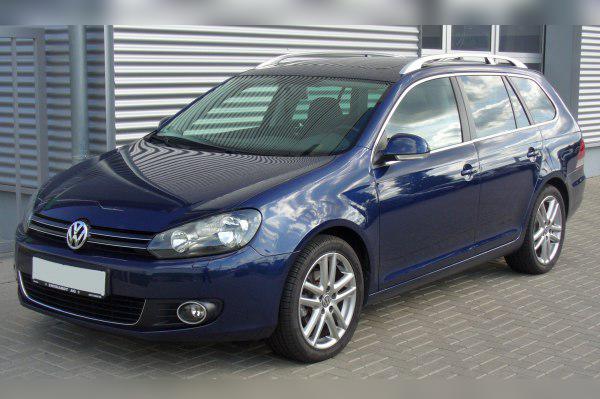
2.0 TDI (CBDB, CFHC, CLCB) in Golf 6 – Experiences, problems, fuel consumption and buying used
Key points (TL;DR)
- Common Rail technology: These engines are significantly quieter and more refined than the previous "Pumpe-Düse" (PD) engines.
- Dual-mass flywheel: Present and one of the bigger maintenance costs (expect replacement at 200,000+ km).
- EGR and DPF: The Achilles' heel of modern diesel technology; city driving clogs them quickly.
- Intake manifold: Frequent issues with swirl flaps and the actuator (fault code P2015).
- Fuel consumption: Extremely economical, especially on the open road (around 5–5.5 l/100 km).
- Recommendation: An excellent choice for those who drive more than 15,000 km per year, mostly on open roads.
Contents
Introduction and Models
The 2.0 TDI engine with 140 horsepower in the Volkswagen Golf VI (especially in the Variant, i.e. estate version) represents the "golden mean" when it comes to the balance of power, efficiency and longevity. Engine codes CBDB, CFHC and CLCB belong to the EA189 generation. This is a key moment in the evolution of VW diesels because it marks the complete transition from the noisy "Pumpe-Düse" system to the more sophisticated Common Rail injection system.
These engines were designed to correct the mistakes of their predecessors (such as injector issues on 2.0 PD engines) and to meet stricter Euro 5 standards. Although they are basically similar, there are minor differences in production years and software maps, but for the end user the driving and maintenance experience is almost identical.
Technical Specifications
| Specification | Data |
|---|---|
| Engine displacement | 1968 ccm |
| Power | 103 kW (140 hp) |
| Torque | 320 Nm at 1750–2500 rpm |
| Engine codes | CBDB, CFHC, CLCB |
| Injection system | Common Rail (Bosch) |
| Charging | Variable-geometry turbocharger + intercooler |
| Number of cylinders / valves | 4 / 16v |
Reliability and Maintenance
Timing belt or chain?
All of the listed engines (CBDB, CFHC, CLCB) use a timing belt to drive the camshafts. This is good news because belt systems in this generation are quieter and cheaper to maintain than the problematic chains used by some other manufacturers.
Major and minor service
The factory recommendation for timing belt replacement (major service) is often an optimistic 210,000 km. However, experienced mechanics and real-world practice suggest shortening this interval. The recommendation is to do the major service at 160,000 km to 180,000 km or every 5 to 7 years, whichever comes first. A snapped belt leads to catastrophic engine damage, so trying to save money here is risky.
The minor service (oil and filters) should be done at a maximum of 15,000 km or once a year. Factory "Long Life" intervals of 30,000 km are disastrous for engines with high mileage and a lot of city driving.
Oil: quantity and consumption
The engine takes approximately 4.0 to 4.3 liters of oil. You must use 5W-30 oil that meets the VW 507.00 specification. This specification is crucial because of the DPF filter (low-ash oil).
As for oil consumption, Common Rail engines are significantly better than the old PD units. Consumption of 0.5 to 0.8 liters per 10,000 km is considered completely normal and acceptable. If the engine uses more than a liter per 5,000 km, this points to a problem with the piston rings or, more often, with the turbocharger leaking oil.
Injectors
Unlike the notorious Siemens piezo injectors in 2.0 TDI PD engines (Passat B6), these engines use more reliable Bosch Common Rail injectors (electromagnetic or piezo, depending on the exact code). They are durable and often last over 250,000–300,000 km without overhaul. Symptoms of bad injectors are rough idle, increased smoke and harder starting.
Most common failures
- Intake manifold (swirl flaps): Plastic stops or the flap motor wear out. The symptom is the "Check Engine" light (fault code P2015). There are cheap repair kits available, but if ignored, the whole manifold has to be replaced.
- EGR valve: Soot makes it stick, so the car loses power or jerks.
- Thermostat: On models with DSG there is often a second thermostat which, if stuck open, prevents the engine from reaching operating temperature, increasing fuel consumption and wear.
Specific Parts (Costs)
Dual-mass flywheel
Yes, this engine has a dual-mass flywheel. It is a wear item. Its lifespan is usually between 180,000 and 250,000 km, depending on driving style (city driving kills it faster). Symptoms: Metallic knocking noise at idle that disappears when you press the clutch, vibration in the clutch pedal or shuddering when switching the engine off. Cost: Replacing the clutch kit with the flywheel is a costly investment (often 400–600 EUR + labor, depending on the market and brands like LuK or Sachs).
Turbocharger
The engine has a single turbocharger with variable geometry. It is generally reliable. The most common problem is not failure of the turbo itself, but soot-clogged variable-geometry vanes. Symptoms: The car goes into limp mode at higher speeds or on climbs because the turbo is overboosting. This is often solved by cleaning, but at high mileage a rebuild may be necessary.
DPF and EGR
The Golf VI with these engines meets the Euro 5 standard, which means it has a DPF filter and an EGR valve. Problems: If the car is driven exclusively in the city, the DPF cannot reach the temperature needed for regeneration and gets clogged. Replacement is very expensive, and cleaning is only a temporary solution. The EGR valve also gets dirty. A clogged DPF is indicated by frequent active regenerations (elevated idle speed, radiator fan running) and a warning light on the dashboard.
AdBlue
Most Golf VI 2.0 TDI models (CBDB, CFHC) DO NOT have an AdBlue system. They meet Euro 5 standards via EGR and DPF. This is an advantage from a maintenance standpoint, as there is no urea pump, tank heaters or AdBlue injectors that often fail on newer (Euro 6) models. Note: Always check the engine code and the fuel filler area; if there is no blue cap next to the diesel cap, you do not have AdBlue.
Fuel Consumption and Performance
City driving
In real-world city traffic, the Golf VI Variant 2.0 TDI uses between 6.5 and 7.5 l/100 km. In winter and on short trips it can go up to 8.5 liters, but rarely above that. The start-stop system (if fitted and working) can slightly reduce this figure.
Is the engine "lazy"?
Absolutely not. With 320 Nm of torque available from just 1750 rpm, this engine moves the Golf VI estate body with ease. Overtaking is safe, and there is a noticeable "push into the seat" feeling. It is a much better choice than the 1.6 TDI for the estate version, especially if you drive loaded.
Motorway
This is the natural habitat of this engine. At 130 km/h in sixth gear, the engine spins at a comfortable 2200–2400 rpm (depending on the gearbox). The cabin is quiet and fuel consumption is around 5.0 to 5.5 l/100 km. The top speed is over 200 km/h, so there is always power in reserve.
Additional Options and Modifications
Remapping (Stage 1)
This engine (EA189 block) responds very well to remapping. A safe Stage 1 tune raises power from 140 hp to about 170–180 hp, and torque to 380–400 Nm. Risk: The increased power puts more stress on the dual-mass flywheel and clutch. If these parts are already near the end of their life, remapping will finish them off very quickly. Also, keep an eye on the turbo.
Gearbox
Manual gearbox (6-speed)
It usually comes with a 6-speed manual gearbox. It is very precise and robust. Failures: Failures of the gearbox itself are rare. The main expense is the clutch kit and dual-mass flywheel. Maintenance: Although VW says the oil is "lifetime", it is recommended to change the gearbox oil at around 150,000–200,000 km to improve cold-weather shifting.
DSG automatic gearbox (6-speed – DQ250)
A dual-clutch DSG is available as an option. This is a gearbox with "wet" clutches (the clutches run in oil). Failures: The mechatronic unit (electro-hydraulic control unit) is the most expensive failure. Symptoms are harsh gear changes, delay when setting off or jolts when downshifting. Flywheel: The DSG also has a dual-mass flywheel that is replaced (it is different from the manual one and often more expensive). Maintenance: MANDATORY oil and filter changes in the DSG every 60,000 km. If this is ignored, failures are guaranteed.
Buying Used and Conclusion
What to check before buying?
- Cold start: The engine should start immediately, without long cranking and without clouds of white or blue smoke. Rough running for the first few seconds may indicate glow plug or injector issues.
- Flywheel noise: Listen for metallic rattling on the driver's side while the car is idling. Press the clutch halfway – if the noise changes or vibration increases, the flywheel is due for replacement.
- Diagnostics (VCDS): Check "DPF saturation" (soot mass / ash volume). Also check injector corrections (they should not deviate much from 0).
- Coolant: Check whether it is losing coolant (possible issue with the EGR cooler or, more rarely, the cylinder head).
Conclusion
The VW Golf VI 2.0 TDI (140 hp) is probably the best all-round car of its era for European roads. Engine codes CBDB, CFHC and CLCB bring a level of reliability that the older 2.0 engines did not have.
Who is it for? An ideal vehicle for families, commuters and people who cover higher daily mileage on open roads. It is not ideal as a "second car" used only for short city trips to the shops because of the DPF. Maintenance is not cheap (flywheel, major service), but in return you get a long-lasting engine, excellent performance and low fuel consumption.
Was this content useful to you?
Your opinion helps us to improve the quality of the content.