CBDB Engine
- Engine
- 1968 cm3
- Aspiration
- Turbocharger, Intercooler
- Fuel
- Diesel
- Fuel injection system
- Diesel Commonrail
- Power
- 140 hp @ 4200 rpm
- Torque
- 320 Nm
- Cylinders
- 4
- Valves
- 16, 4 per cylinder
- Cylinders position
- Inline
- Valvetrain
- DOHC
- Oil capacity
- 4.3 l
- Coolant
- 5.6 l
- Systems
- Particulate filter
# Vehicles powered by this engine
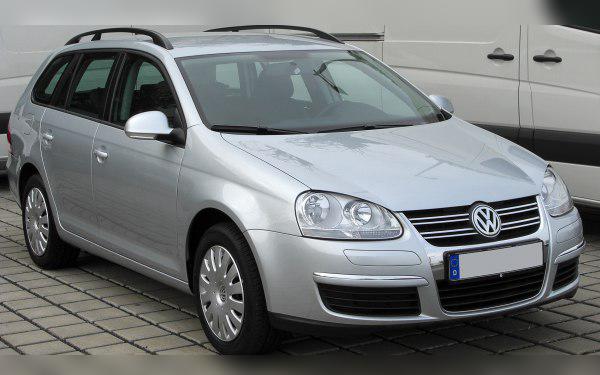
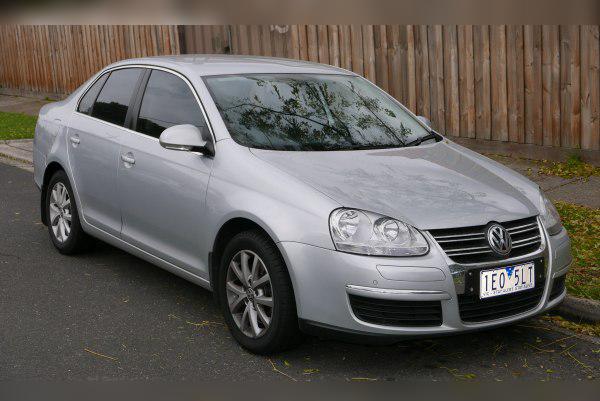
2.0 TDI CBDB (140 HP) – Experiences, problems, fuel consumption and buying tips
The engine designated as CBDB represents a turning point in the history of Volkswagen diesels. It is a two-liter unit that belongs to the first generation of the Common Rail (CR) injection system in this segment, replacing the noisier and (in some versions) problematic "Pumpe-Düse" (PD) engines. It was installed in late series of the Golf V (mainly estate versions) and Jetta V, as well as in early Golf 6 models.
This engine offers more refined operation and a more linear power delivery, but it also comes with specific mechanical challenges that every owner needs to be aware of, especially regarding the lubrication system and the intake manifold.
Key points in short (TL;DR)
- Significantly quieter and smoother operation compared to previous PD engines (e.g. BKD).
- Critical point: Oil pump and its hexagonal shaft – potentially catastrophic failure.
- Uses a timing belt, not a chain.
- Problems with the intake manifold flap actuator (fault code P2015).
- Equipped with a DPF filter, which requires caution in city driving.
- Excellent balance of performance and fuel consumption, ideal for long-distance driving.
- Recommendation: Worth buying, but immediately check the condition of the oil pump and dual-mass flywheel.
Contents
- Technical specifications
- Reliability and maintenance
- Specific parts and costs
- Fuel consumption and performance
- Additional options and modifications
- Gearbox (Manual and DSG)
- Buying used and conclusion
Technical specifications
| Specification | Data |
|---|---|
| Engine code | CBDB |
| Displacement | 1968 cc (2.0 L) |
| Power | 103 kW (140 HP) at 4200 rpm |
| Torque | 320 Nm at 1750–2500 rpm |
| Injection type | Common Rail (Piezo injectors) |
| Induction | Variable-geometry turbocharger (VGT) + intercooler |
| Emission standard | Euro 5 (mostly, depending on market and year) |
Reliability and maintenance
Timing belt or chain?
The CBDB engine uses a timing belt for the valve timing. This is good news because belts on these engines are reliable and quiet. According to factory specifications, the replacement interval is often set at 180,000 km or 210,000 km (depending on the model year), but workshop experience shows that this is overly optimistic.
Recommendation: Do the major service every 150,000 km or a maximum of 5 years, whichever comes first. A snapped belt causes piston-to-valve contact, which is a failure that often exceeds the value of the car.
Most common failures
In addition to regular maintenance, the CBDB has several specific weak points:
- Hexagonal oil pump shaft: This is the Achilles’ heel of this engine. The shaft that drives the oil pump gradually wears down and rounds off, the pump stops turning, oil pressure drops to zero and the turbo fails almost instantly, followed shortly by the crankshaft bearings. The symptom is a red oil warning light – by then it is often already too late. Preventive replacement of this shaft is mandatory when you buy the car (it is cheap compared to the potential damage).
- Intake manifold swirl flaps: The plastic mechanism or the motor that drives the flaps can seize or break. The symptom is the "Check Engine" light and fault code P2015 on diagnostics. It is solved by replacing the intake manifold or overhauling it (repair kits are available).
- DPF differential pressure sensor: It often fails, which prevents DPF regeneration. It is a cheap part, but can cause an expensive problem if ignored.
Oil: capacity and consumption
The engine takes approximately 4.0 to 4.3 liters of oil. Due to the presence of a DPF filter, it is MANDATORY to use oil that meets the VW 507.00 specification. The recommended viscosity grade is usually 5W-30.
Unlike older PD engines, Common Rail engines such as the CBDB consume significantly less oil. Consumption of up to 0.5 liters per 10,000 km is acceptable, especially if the car is driven aggressively on the motorway. If it consumes more than that, the turbocharger or piston rings should be checked.
Injectors
The CBDB uses piezo-electric injectors (usually Bosch). They are much more reliable than the Siemens injectors that caused chaos in 2.0 TDI PD engines (code BKP). They usually last over 200,000 - 250,000 km. Symptoms of bad injectors are rough idle, increased smoke under acceleration and difficult starting. Rebuilding is possible, but still quite expensive (depends on the market).
Specific parts (costs)
Dual-mass flywheel
Yes, this engine has a dual-mass flywheel. Given the torque of 320 Nm, the flywheel is subjected to significant loads. Its average lifespan is between 180,000 and 250,000 km, depending on driving style. Symptoms are metallic knocking noises when starting and switching off the engine, as well as vibrations in the clutch pedal. Replacement cost (clutch kit + flywheel) falls into the expensive category.
Turbocharger
The engine uses a single variable-geometry turbocharger (VGT). The turbo is generally durable, but its life depends directly on the condition of the oil pump and regular oil changes. It is common for the variable-geometry vanes to seize due to soot buildup if the car is driven only in the city ("pensioner driving"), which leads to the engine going into "safe mode" (loss of power) during hard acceleration.
DPF and EGR
The CBDB is equipped with a DPF filter and an EGR valve with a cooler.
DPF: It is sensitive to short city trips. If the warning light comes on, you need to take the car out on an open road (3000 rpm, 15–20 minutes) to regenerate it. A clogged DPF often kills the turbocharger due to backpressure.
EGR: The EGR cooler is known to leak, causing the engine to lose coolant without any visible traces of leakage under the car.
AdBlue
In Golf V Variant and Jetta V models, this engine (CBDB) usually DOES NOT have an AdBlue system. It meets emission standards primarily through exhaust gas recirculation (EGR) and the DPF. This is an advantage from a maintenance standpoint, as there is no urea pump, tank heater or AdBlue injectors, which are expensive to repair on newer models.
Fuel consumption and performance
Real-world fuel consumption
- City driving: Expect between 6.5 and 8.0 l/100 km. The Jetta and Golf estate are relatively heavy cars, and DPF regenerations in city traffic can slightly increase the average.
- Open road / secondary roads: This is where the engine shines. Fuel consumption drops to 4.5 to 5.5 l/100 km.
- Motorway (130 km/h): Consumption is around 5.5 to 6.2 l/100 km.
Is the engine "lazy"?
Absolutely not. With 140 HP and 320 Nm available from just 1750 rpm, this engine copes very well with the Golf estate or Jetta body. In-gear acceleration is strong, making overtaking safe. It is not a sports car (like a GTI), but it is far from sluggish.
Motorway driving
The CBDB is a "cruiser" engine. At 130 km/h in 6th gear, it runs at a comfortable 2200 – 2400 rpm (depending on the gearbox). The cabin is quiet, and there is enough power reserve to accelerate up to 160 km/h without downshifting.
Additional options and modifications
Remapping (Stage 1)
This engine responds very well to remapping (software power increase).
Stage 1: It can safely be taken to 170 - 180 HP and 380 - 400 Nm.
Warning: Although the engine and turbo can handle this power, the dual-mass flywheel and clutch will have a significantly shorter lifespan, especially if you accelerate hard from low revs.
Gearbox
Manual and automatic
Two types of gearboxes were paired with the CBDB engine:
- 6-speed manual (Type 02Q): Very precise and durable. Failures are rare and mostly limited to worn second-gear synchros at high mileage. It is advisable to change the gearbox oil at 150,000 km, even though the factory claims it is "lifetime".
- 6-speed DSG (DQ250): This is a dual-clutch gearbox with oil-bathed clutches (wet clutch).
DSG maintenance and failures
The DSG gearbox offers excellent comfort and fast gear changes, but it requires strict maintenance.
Service: Oil and filter in the DSG gearbox must be changed EVERY 60,000 km. The service cost is moderately high (depends on the market).
Failures: The most expensive failure is the mechatronics unit (the gearbox "brain"). Also, DSG gearboxes have a dual-mass flywheel that wears out and can be heard as knocking in "P" or "N" position.
Buying used and conclusion
What to check before buying?
When looking at a car with a CBDB engine (Golf 5 Variant / Jetta), pay attention to:
- Cold start: Listen for knocking (flywheel) or uneven running (injectors).
- Exhaust: Sooty deposits on the exhaust tip may indicate that the DPF has been removed or drilled through (which can be a problem at the technical inspection/MOT).
- Diagnostics: Check DPF saturation (ash mass) and injector corrections. Be sure to look for fault code P2015 (intake).
- Service history: Ask whether the oil pump shaft has been replaced. If not, plan for that expense immediately.
Final conclusion
CBDB 2.0 TDI is an excellent engine that has corrected many of its predecessors’ mistakes. It is ideal for drivers who cover a lot of kilometres, especially on open roads. It offers a great balance of power and efficiency.
However, it is not suitable for those who drive exclusively short city trips (because of the DPF) or for those who are not willing to invest preventively in solving the oil pump issue. If you find a well-maintained example and immediately sort out the oil pump hex shaft, this engine can serve you for hundreds of thousands of kilometres.
Was this content useful to you?
Your opinion helps us to improve the quality of the content.