EA888 / DXSA Engine
- Engine
- 1984 cm3
- Aspiration
- Turbocharger, Intercooler
- Fuel
- Petrol (Gasoline)
- Fuel injection system
- Direct injection
- Power
- 228 hp
- Torque
- 350 Nm
- Cylinders
- 4
- Valves
- 16, 4 per cylinder
- Cylinders position
- Inline
- Valvetrain
- DOHC, Audi Valvelift System
- Oil capacity
- 5.7 l
# Vehicles powered by this engine
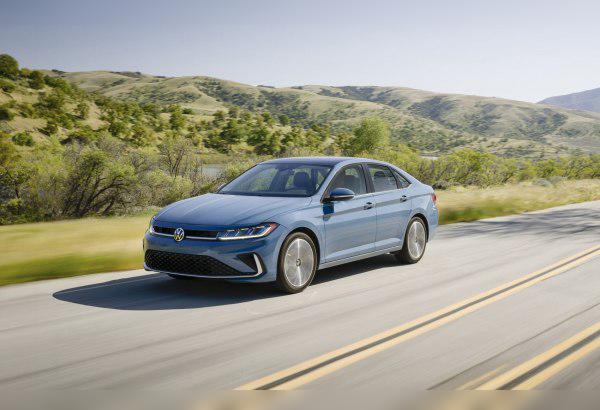
2.0 TSI (EA888 / DXSA) – Experiences, issues, fuel consumption and used car buying guide
The engine with the code EA888 (in this specific iteration often marked as DXSA or a Gen 3/4 variant) is the very heart of Volkswagen’s performance lineup. Specifically, the 228 hp (170 kW) version found in the Jetta VII GLI (facelift) is practically the same unit as in the Golf GTI. This is not a simple engine for going to the grocery store – it’s a machine built to put a smile on your face, but like any high-tech device, it requires specific maintenance.
As someone who has spent years following the evolution of TSI engines, I can say that this generation has solved most of the “childhood diseases” (such as oil consumption on older models), but it has brought new challenges related to the complexity of the cooling system and emissions regulations.
Key points (TL;DR)
- Performance: Explosive engine, excellent torque, moves the Jetta’s body with zero effort.
- Timing: Uses a chain. In this generation it’s reliable, but it requires high-quality oil.
- Common issues: Thermostat and water pump module (coolant leaks) is the most frequent problem.
- Fuel consumption: Moderate on the highway, but in the city it can “drink” a lot if you have a heavy right foot.
- Gearbox: DSG requires strict maintenance (oil changes), manual gearbox has a sensitive clutch on stronger tunes.
- Recommendation: An excellent choice for enthusiasts, but avoid cars with a questionable service history.
Contents
- Technical specifications
- Reliability and maintenance
- Specific parts (costs)
- Fuel consumption and performance
- Additional options and modifications
- Gearbox
- Buying used and conclusion
Technical specifications
| Parameter | Data |
|---|---|
| Displacement | 1984 cc (2.0 L) |
| Power | 170 kW (228 hp) |
| Torque | 350 Nm |
| Engine code | EA888 Gen 3 / DXSA (and related) |
| Injection type | Direct (TSI/FSI) |
| Induction | Turbocharger + intercooler |
| Fuel | Petrol (Recommended 98/100 octane) |
Reliability and maintenance
Does this engine have a timing belt or a chain?
This engine uses a timing chain. Unlike the notorious first generations of EA888 engines (where tensioners failed before 100,000 km), this version in the Jetta GLI has a revised tensioner system and a reinforced chain. With regular oil changes, the chain should last over 200,000 km without issues. Still, “cold start” is the moment of truth – if you hear rattling in the first 3–5 seconds of operation, it’s a sign that the chain has stretched or the hydraulic tensioner is giving up.
What are the most common failures on this engine?
The biggest headache for owners of this engine is the water pump and thermostat module. The housing is made of plastic that deforms over time due to heat cycles, which leads to coolant leaks. The symptom is a sweet smell under the hood or a dropping coolant level in the reservoir. Also, the PCV valve (oil vapor separator) tends to fail, causing rough idle and a “whistling” sound from the engine.
At what mileage is the major service done?
Since the engine has a chain, the classic “major service” (belt replacement) doesn’t exist in that form. However, it is recommended that at around 100,000–120,000 km you check the condition of the chain (via diagnostics you can see the cam/crank phase angle / chain stretch) and definitely replace the serpentine (PK) belt with its tensioners that drive the alternator and A/C.
How many liters of oil does this engine take and which grade is recommended?
The sump holds approximately 5.7 liters of oil. For newer models (2020+), the factory often pushes 0W-20 (VW 508.00 standard) for emissions and lower consumption. However, many mechanics and enthusiasts (myself included) recommend switching to a good 5W-30 or 5W-40 (VW 504.00 / 502.00 standard) for warmer climates and spirited driving, provided you don’t have a strict OPF/GPF filter that requires specific “low ash” oil.
Does it consume oil between services?
This generation is drastically better than the old ones, but it’s still a high-performance turbo petrol engine. Consumption of 0.5 to 1 liter per 10,000 km is considered completely normal and acceptable. If it consumes more than that, first check the PCV valve or turbo leaks before suspecting piston rings.
At what mileage should the spark plugs be replaced?
On turbo petrol engines, spark plugs are exposed to high thermal stress. It is recommended to replace them every 60,000 km. If the car is “chipped” (Stage 1), the interval should be shortened to 30,000 km and you should use one heat range colder spark plugs.
Specific parts (costs)
Does the engine have a dual-mass flywheel?
Yes. Both the manual and DSG versions have a dual-mass flywheel. Its role is to dampen engine vibrations before they reach the gearbox. On DSG it usually lasts longer, while on the manual its lifespan directly depends on the driver’s style (hard acceleration from low revs kills it).
What kind of injection system does it have and are the injectors problematic?
The DXSA engine uses a high-pressure direct fuel injection system. Injectors are generally reliable, but direct injection has one drawback: fuel does not wash the intake valves. This leads to carbon buildup on the intake valves. Symptoms usually appear after 100,000 km as slight hesitation on cold start or loss of power. The solution is mechanical valve cleaning (“decarbonization” or walnut shell blasting).
Does this engine have a turbocharger and what is its lifespan like?
It has a single turbocharger (usually an IHI IS20 in this power version). The turbo is very durable and water-cooled. Its lifespan is often equal to the engine’s lifespan with proper maintenance. The most important thing is not to shut the engine off immediately after “hammering” it on the highway; instead, let it idle for a minute or two so that oil and coolant can cool the turbo bearings.
Does this model have a DPF filter or an EGR valve?
Since this is a petrol engine, it does not have a DPF (Diesel Particulate Filter), but newer models (especially for the EU market and from around 2019/2020 onwards) have a GPF/OPF (Gasoline Particulate Filter). It rarely clogs because exhaust gas temperatures on petrol engines are much higher than on diesels, so passive regeneration happens constantly. EGR function is often implemented via variable valve timing (internal EGR), so there is no classic EGR valve that clogs with soot like on diesels.
Does this engine use AdBlue?
No. AdBlue is used exclusively on diesel engines to reduce NOx emissions. This engine does not use any additional fluids besides fuel, oil, coolant and washer fluid.
Fuel consumption and performance
What is the real-world fuel consumption in city driving?
Let’s be honest – 228 horses have to eat. In heavy city traffic, expect 10 to 12 liters per 100 km. If you are careful and use the start-stop system, you might get it down to 9 liters, but this is not a car you buy to save fuel in the city.
Is this engine “lazy” for the weight of the body?
Absolutely not. With 350 Nm of torque available from as low as 1500–1700 rpm, the Jetta GLI “flies”. Throttle response is instant and overtaking is routine. The driving feel is sporty, and the sedan body (which is not too heavy, around 1450–1500 kg) handles this power very well.
What is the engine like on the highway and cruising at 130 km/h?
This is the natural habitat of this car. At 130 km/h, in the highest gear (6th on the manual or 7th on the DSG), the engine spins at a comfortable 2200 to 2400 rpm. Fuel consumption then drops to around 6.5–7.5 liters, and the cabin is quiet. The engine has a huge power reserve even at these speeds.
Additional options and modifications
Is this engine suitable for LPG (autogas) conversion?
Technically it’s possible, but it is economically unviable and complicated. Due to direct injection, you need an expensive system that either injects liquid gas directly through the petrol injectors, or a system that uses a mixture of gas and petrol (to cool the injectors). Installation costs over 1000 EUR (depending on the market), and the risk of issues with electronics and injectors increases. My recommendation: Do not install LPG on TSI engines of this generation.
How far can this engine be safely “chipped” (Stage 1)?
EA888 engines are legendary for their tuning potential. With just a software remap (Stage 1), without changing any hardware, this engine safely goes to 290–300 hp and about 430–450 Nm of torque. That completely changes the character of the car. However, keep in mind that this shortens clutch life (on the manual gearbox) and requires more frequent servicing.
Gearbox
Which gearboxes are available?
Jetta GLI comes with two options:
- 6-speed manual gearbox: For purists who love full control.
- 7-speed DSG (DQ381): Dual-clutch automatic gearbox (wet clutch). In some older pre-facelift versions you could also find the 6-speed DQ250, but the 2024 model mostly uses the more modern DQ381.
Most common gearbox issues?
Manual: The gearbox itself is robust, but the stock clutch is sized “just enough” for these 350 Nm. If you drive aggressively or tune the car, the clutch will start slipping very quickly.
DSG: The mechatronics unit (the “brain” of the gearbox) is the most expensive part that can fail, although reliability has improved on the DQ381. Symptoms are harsh gear changes or delay when taking off.
Cost of clutch and dual-mass flywheel replacement?
This falls into the “expensive” category. A clutch kit with dual-mass flywheel for this model (manual or DSG) is a significant investment (Price: Very expensive, depends on the market and brand of parts, but expect a four-digit euro amount including labor at an authorized dealer, or somewhat less at an independent shop).
At what mileage should the gearbox be serviced?
For the DSG gearbox, oil and filter changes are MANDATORY every 60,000 km (some manufacturers say 120,000 km for newer models, but in practice 60,000 km is the only way to ensure long life). On the manual gearbox, the oil is not officially specified for replacement (“fill for life”), but it is advisable to change it at around 100,000 km for smoother shifting.
Buying used and conclusion
Before buying a Jetta GLI with this engine, make sure to do the following:
- Cold start: Listen to the chain. Any rattling lasting more than a couple of seconds is a red flag.
- Visual inspection: Look under the intake manifold for white residue (water pump/thermostat leaks).
- Test drive: DSG must shift seamlessly. If it jerks when taking off or stopping, walk away from that car.
- Smoke: Blue smoke from the exhaust when you blip the throttle means the turbo is leaking oil or the rings/valve stem seals are worn.
Conclusion: The 2.0 TSI (228 hp) is a fantastic engine that offers an almost sports-car level of performance in a family sedan package. It is intended for drivers who enjoy driving and are willing to pay a bit more for maintenance and fuel for the sake of that enjoyment. If you change the oil regularly and keep an eye on engine temperature, it will serve you well for years. This is not a car for those who just want to get from point A to point B with minimal costs.
Was this content useful to you?
Your opinion helps us to improve the quality of the content.