EA211 / DGXA, DJXA Engine
- Engine
- 1395 cm3
- Aspiration
- Turbocharger, Intercooler
- Fuel
- Petrol (Gasoline)
- Fuel injection system
- Direct injection
- Power
- 147 hp @ 5000 rpm
- Torque
- 249 Nm @ 1400 rpm
- Cylinders
- 4
- Valves
- 16, 4 per cylinder
- Cylinders position
- Inline
- Valvetrain
- DOHC
- Oil capacity
- 4 l
- Coolant
- 8 l
- Systems
- Particulate filter
# Vehicles powered by this engine
Key points in short (TL;DR)
- Timing chain issue solved: Unlike previous generations (EA111), this engine uses a timing belt, which is far more reliable and quieter.
- Water pump and thermostat: The weakest point of this engine. The housing is plastic and prone to cracking and coolant leaks.
- Direct injection: Great for performance and fuel economy, but requires intake valve cleaning from carbon deposits (decarbonization) at higher mileage.
- Transmission in the Jetta VII: Often comes with an Aisin 8-speed automatic (classic torque converter), which is more reliable but slower than the DSG gearbox.
- Oil consumption: Not alarming like on older 1.8 or 2.0 TSI engines, but the oil level should be checked regularly, especially if thin 0W-20 oil is used.
- Recommendation: One of the best downsized petrol engines on the market. An ideal balance of power and running costs.
Contents
VW 1.4 TSI (EA211) – DGXA / DJXA: Real-world experience, issues and maintenance
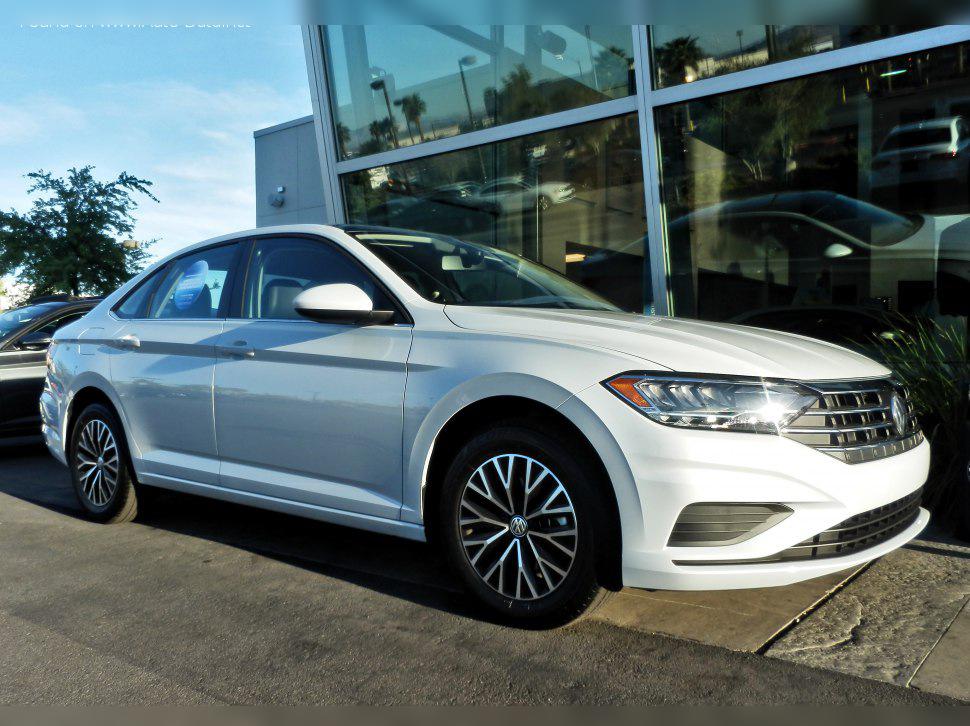
The engine we’re looking at today belongs to the EA211 family, which was a turning point for the Volkswagen Group. After a series of timing chain problems on the older EA111 engines, the engineers “turned the page” and designed a completely new unit. The codes DGXA and DJXA are specifically linked to newer models, primarily the Volkswagen Jetta VII (very popular on the US market, but also found in certain parts of Europe and the rest of the world).
This 1.4 TSI with 147 hp (or 150 hp in some nomenclatures) represents the “sweet spot”. It’s not the base engine, but a unit that offers very decent performance for a C-segment sedan while remaining economical. Unlike European models (Golf, Octavia) which often use DSG, the Jetta VII with this engine code frequently comes paired with a conventional automatic transmission, which significantly changes both the driving feel and the maintenance profile.
Technical Specifications
| Specification | Data |
|---|---|
| Engine displacement | 1395 cc (1.4 litres) |
| Power | 110 kW (147 hp) |
| Torque | 250 Nm at 1500–3500 rpm |
| Engine codes | DGXA, DJXA (EA211 family) |
| Injection system | TSI – Turbo Stratified Injection (Direct injection) |
| Induction | Turbocharger + intercooler (integrated water-to-air) |
| Cylinder layout | R4 (Inline, 4 cylinders) |
Reliability and Maintenance
Belt or chain?
This is the most common question, and here the news is excellent. EA211 engines (including DGXA) use a timing belt. VW abandoned the problematic chains that tended to stretch on the previous generation. This belt is reinforced with glass fibres and is designed to last a long time.
Most common issues
Although the engine is reliable, there are two main areas you need to pay attention to:
- Thermostat module and water pump: This is the “Achilles’ heel” of EA211 engines. The housing is made of plastic which, over time and many heat cycles, becomes brittle and deforms. The symptom is coolant loss without visible puddles under the car (because the coolant evaporates on the hot block) or engine overheating. Replacement is not cheap because the module is complex.
- Carbon buildup: As with any direct-injection engine, the fuel does not wash over the intake valves. Over time, carbon deposits build up, causing rough idle and a slight loss of power. This is not a failure, but a characteristic of the technology.
- Turbo actuator (wastegate): The turbo actuator rod can stick, which results in a dashboard error (EPC light) and loss of power (safe mode).
Major service (timing service)
The manufacturer specifies optimistic intervals of up to 210,000 km or 10 years for timing belt inspection/replacement. However, real-world workshop experience suggests caution. A visual inspection at 120,000 km is recommended, and replacement of the complete timing kit (belt, tensioners, water pump) should be done no later than between 150,000 km and 180,000 km or after 8–9 years of age, whichever comes first.
Oil: quantity and grade
The engine takes approximately 4.0 litres of engine oil (always buy a 5L can).
As for viscosity, these engines are factory-optimized for low-viscosity oils to reduce friction and fuel consumption. 0W-20 (VW standard 508.00) is recommended for newer engines such as the DGXA. It is also possible to use 5W-30 (VW 504.00), especially in warmer climates or on higher-mileage engines, but always strictly follow the VW specification.
Oil consumption
EA211 engines are significantly better than their predecessors in this regard. Still, consumption of 0.5 to 1 litre per 10,000 km is considered acceptable, especially with aggressive driving or a lot of highway use. If the engine consumes more than that, the turbocharger or piston rings should be checked (although ring issues are rare here).
Spark plugs
On turbocharged direct-injection petrol engines, spark plugs are under higher stress. Replacement is recommended every 60,000 km. Don’t wait for them to “fail”, because a bad plug can damage the coil pack (there is one coil per cylinder).
Specific Parts (Costs)
Dual mass flywheel
Yes, this model does have a dual mass flywheel, regardless of whether it’s paired with an automatic or a manual gearbox. Its role is to dampen engine vibrations before they reach the transmission. On automatics it usually lasts longer than on manuals, but it is still a wear item.
Fuel injection system
It uses high-pressure direct injection (up to 200 bar or more). The injectors are generally reliable but very sensitive to poor fuel quality. If they fail, injector replacement is expensive (cost varies by market, but expect a high price per unit). Symptoms of bad injectors include fuel leaking into the cylinder (oil dilution) or engine “knocking”.
Turbocharger
The engine has a single turbocharger integrated into the exhaust manifold (less lag, faster warm-up). With regular oil changes, the turbo’s lifespan is usually equal to that of the engine. The most common problem is not the turbo itself, but the electronic actuator that controls boost pressure.
GPF (gasoline particulate filter) and EGR
The DGXA codes often indicate models for markets with specific emissions standards (e.g. North America). These engines usually do not have a traditional EGR valve (they use variable valve timing for internal exhaust gas recirculation), which is one less thing to worry about.
As for the GPF filter (Gasoline Particulate Filter), it is fitted to most models produced for the EU market after 2018. For Jetta VII models intended for the US, a GPF is often not installed, but check by VIN to be sure. GPFs rarely clog compared to diesel DPFs because exhaust gas temperatures on petrol engines are much higher.
AdBlue: This is a petrol engine and does NOT use AdBlue fluid.
Fuel Consumption and Performance
City driving
In real-world city traffic, the Jetta 1.4 TSI automatic uses between 7.5 and 9.5 litres per 100 km. The start-stop system helps reduce consumption while stationary, but the vehicle’s weight and the conventional automatic (torque converter) slightly increase fuel use in stop-and-go conditions.
Is the engine “lazy”?
With 250 Nm of torque available from just 1500 rpm, this engine is not lazy. It feels very lively and agile in town. A sense of “running out of breath” may appear only at very high motorway speeds or when the car is fully loaded with passengers and luggage on a steep incline, but for everyday use the power is more than adequate.
Motorway and cruising
This is where the Jetta VII really shines, especially thanks to its aerodynamics. Fuel consumption on the open road drops to 5.5 to 6.5 l/100 km.
At a speed of 130 km/h, in top gear (8th gear on the automatic), the engine spins at a low 2000–2200 rpm. This means quiet and economical cruising.
Additional Options and Modifications
LPG conversion
Since this is a direct-injection engine, LPG conversion is complicated and expensive. It requires a special system that either injects liquid gas directly through the petrol injectors (very expensive) or a system that runs on a mix of gas and petrol (e.g. 80% LPG, 20% petrol) to keep the petrol injectors cool.
Bottom line: The economic benefit is questionable unless you cover very high annual mileage (over 30–40k km per year).
Remapping (Stage 1)
The EA211 engine responds very well to software tuning. A Stage 1 remap can safely raise power to around 170–175 hp and torque to nearly 300 Nm. Keep in mind, however, that the increased torque puts additional stress on the gearbox and turbocharger.
Gearbox
Types of gearboxes
For the Jetta VII 1.4 TSI, the following applies:
- Automatic: Most commonly an Aisin 8-speed automatic transmission (AQ300 series). This is NOT a DSG dual-clutch gearbox as seen in European Golfs. It is a conventional automatic with a torque converter.
- Manual: 6-speed manual gearbox (standard, precise, reliable).
Gearbox issues and maintenance
Aisin 8-speed: This gearbox is extremely reliable and robust, much more tolerant of city driving than a DSG. There are no expensive clutches that wear out. However, it can be a bit slower when changing gears (it “hesitates” under sudden throttle input).
Automatic transmission service: Although VW often claims the oil is “lifetime fill”, experts recommend changing the transmission fluid every 60,000 to 80,000 km. This dramatically extends the life of the valve body.
Manual gearbox: Failures are rare. Replacement of the clutch kit together with the dual mass flywheel is a cost you can expect usually after 150,000–200,000 km, depending on driving style. The price is average for this class (not cheap, but not excessively expensive either).
Buying a used one and Conclusion
What to check before buying?
- Cold start: Listen to the engine at first start-up. If you hear metallic rattling for the first few seconds, it may indicate an issue with the camshaft phase variator (cam phaser), even though the chain has been replaced by a belt.
- Coolant traces: Look around the thermostat housing (on the right-hand side of the engine when viewed from the front). White residue is a sign that the pump/housing is starting to leak.
- Transmission service history: If it’s an automatic with more than 100,000 km, check whether the fluid has been changed.
- Unusual turbo noises: Rattling when lifting off the throttle may indicate play in the wastegate linkage.
Conclusion
The VW 1.4 TSI (EA211) in the Jetta VII is an excellent used-car choice. This is a mature, well-sorted engineering product that has corrected almost all of the past mistakes. Combined with the 8-speed Aisin automatic, it may be less sporty than DSG variants, but it is more reliable in the long run and more comfortable for everyday driving.
This engine is aimed at drivers who want a comfortable sedan with low fuel consumption, without the complications of diesel engines (DPF, AdBlue, expensive injectors). If you change the oil regularly and proactively deal with the water pump, this engine can serve you for hundreds of thousands of kilometres.
Was this content useful to you?
Your opinion helps us to improve the quality of the content.