CTHA Engine
- Engine
- 1395 cm3
- Aspiration
- Turbocharger, Intercooler
- Fuel
- Petrol (Gasoline)
- Fuel injection system
- Direct injection
- Power
- 150 hp
- Torque
- 250 Nm
- Cylinders
- 4
- Valves
- 16, 4 per cylinder
- Cylinders position
- Inline
- Oil capacity
- 3.6 l
# Vehicles powered by this engine
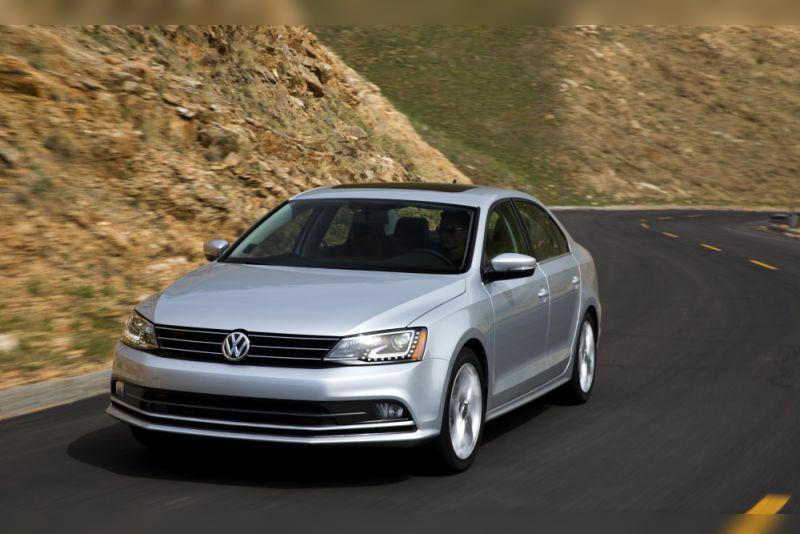
1.4 TSI (CTHA) 150 HP – Experiences, problems, fuel consumption and buying used
Key points (TL;DR)
- System complexity: This is a "Twincharger" engine (it has both a supercharger and a turbo), which delivers great performance but brings double the maintenance concerns.
- Timing drive: Uses a chain. Although CTHA is an improved version (compared to the notorious CAVD), the chain still requires attention and periodic replacement.
- Oil consumption: Common, especially on higher-mileage examples. The cause can be piston rings or the turbo.
- Gearbox: Often paired with a 7-speed DSG gearbox (dry clutch), which requires checking the mechatronics and clutch pack.
- Recommendation: A fun engine to drive with excellent torque, but it demands strict maintenance and high-quality oil. Not for those who want a “fill up and drive” approach with no investment.
Contents
Introduction and characteristics
The engine with the code CTHA belongs to the EA111 family and represents the "swan song" of this generation before the transition to the newer EA211 engines. It is one of the most technically interesting, but also most complicated small-displacement engines Volkswagen Group has produced.
It was installed in the Jetta VI (facelift), Tiguan, and even in some versions of the Polo GTI. Its key feature is twin charging: a mechanical supercharger that works at low revs to eliminate turbo lag, and a conventional turbocharger that takes over at higher revs. CTHA is actually a factory-revised version of the older CAVD engine (160 HP), which had many issues with cracked pistons; CTHA brings reinforced pistons and better management, but it still requires a cautious owner.
Technical specifications
| Parameter | Data |
|---|---|
| Engine code | CTHA (EA111 family) |
| Displacement | 1390 cc (Often rounded to 1.4) |
| Power | 110 kW (150 HP) |
| Torque | 250 Nm at 1500–4500 rpm |
| Injection system | TSI (Direct injection) |
| Charging method | Twincharger (Mechanical supercharger + Turbo) |
| Timing drive | Chain |
Reliability and maintenance
Does this engine have a timing belt or a chain?
The CTHA engine uses a timing chain. This is very important to distinguish because newer engines (EA211) in the same Jetta model (from 2014/2015) use a belt. CTHA, as part of the EA111 family, has a chain that is known as a weak point. Although the tensioner system and the chain itself are improved on the CTHA compared to older versions, chain stretch is still possible, usually after 100,000–120,000 km. The symptom is a characteristic rattle on cold start (a "cracking nuts" sound) that lasts a few seconds.
What are the most common failures on this engine?
Besides the chain, the most serious potential problem is pistons and rings. Although the pistons on the CTHA are reinforced (forged differently than on the CAVD), due to poor fuel, aggressive driving and the "knock" effect (detonation), the piston edges (ring lands) can be damaged. The water pump is also problematic, as it has an integrated magnetic clutch for engaging the supercharger. If you hear a squealing noise or the supercharger stops working, the pump is often to blame.
At what mileage is the major service done?
Since the engine has a chain, a "major service" in the classic sense (belt replacement) does not exist at a fixed interval. However, in practice, replacing the chain kit (chain, guides, tensioner) is often necessary between 120,000 km and 150,000 km. Do not wait for the chain to jump a tooth – if you hear rattling, replace it immediately. The auxiliary belt and tensioners should be checked and replaced at around 100,000 km.
How many liters of oil does this engine take and which grade is recommended?
The sump holds approximately 3.6 liters of oil with the filter. Only fully synthetic oil of grade 5W-30 or 5W-40 that meets VW standards 504.00 / 507.00 (for long-life intervals) or 502.00 (for fixed intervals) is recommended. Due to the high thermal load (turbo + supercharger), a fixed change interval of a maximum of 10,000 km is advisable.
Does it consume oil between services and what amount is considered normal?
Yes, 1.4 TSI Twincharger engines are prone to oil consumption. Consumption of up to 0.5 liters per 1,000 km is, by the factory’s (very loose) standards, considered "within limits", but realistically, a healthy engine should not consume more than 0.2–0.3 liters per 1,000 km. Increased consumption may indicate stuck oil control rings or an issue with the PCV valve (oil vapor separator).
At what mileage should the spark plugs be replaced?
On the CTHA engine, spark plugs are a critical component. Due to complex combustion, they are under huge stress. It is recommended to replace them every 30,000 km to a maximum of 40,000 km. Using old spark plugs can lead to poor mixture ignition, which directly destroys the coils (one per cylinder) and can even damage the pistons.
Specific parts (Costs)
Does the engine have a dual-mass flywheel?
Yes, the 150 HP engine has a dual-mass flywheel, regardless of whether it is paired with a manual or DSG gearbox. Its lifespan depends on driving style, but it usually lasts around 150,000–200,000 km. Symptoms of failure are knocking at idle and vibrations when switching the engine off.
What type of injection system does it have and are the injectors problematic?
The system is direct injection (GDI/FSI). The injectors are generally durable but sensitive to poor fuel quality. A much bigger issue with this system is carbon buildup on the intake valves. Since the fuel does not "wash" the valves (it is injected directly into the cylinder), airflow gradually decreases over time, leading to rough running and loss of performance. Cleaning the valves (walnut blasting or chemical cleaning) is recommended at higher mileage.
Does this engine have a turbocharger (or two) and what is their lifespan?
This is a Twincharger. It has one exhaust turbocharger and one mechanical supercharger (Roots type, driven by a belt). The supercharger works from idle to about 2400–3500 rpm, and the turbo takes over at higher revs. The supercharger (Eaton) is generally reliable, but the flap system that regulates airflow between them can cause problems. The turbocharger has typical durability provided oil is changed regularly and the engine is allowed to cool down before shutting off.
Does this model have a DPF filter or an EGR valve?
Being a petrol engine, it does not have a DPF filter (GPF is only fitted on much newer models). It has a catalytic converter. It uses an exhaust gas recirculation system (often implemented via variable valve timing rather than a classic problematic external EGR valve as on diesels), so clogging is not a primary issue as it is with TDI engines.
Does this engine use AdBlue?
No, this engine does not use AdBlue fluid. That is reserved for newer diesel engines.
Fuel consumption and performance
What is the real fuel consumption in city driving?
Factory figures are often overly optimistic. Real-world city consumption (stop-and-go) for a Jetta with this engine is between 8 and 10 liters per 100 km. If you have a heavy right foot and like to feel the supercharger "kick", consumption easily goes over 11 liters.
Is this engine “lazy” for the weight of the body?
Absolutely not. This is one of the liveliest engines of this displacement. Thanks to 250 Nm of torque available from as low as 1500 rpm (because of the supercharger), the Jetta "pulls like crazy" from a standstill and in-gear acceleration is excellent. The driving feel is like a naturally aspirated 2.0 engine, if not better.
How does the engine behave on the highway?
The engine performs very well on the highway. With 6th gear (manual) or 7th gear (DSG), at 130 km/h the engine spins at about 2,600–2,800 rpm, which allows for quiet cruising and fuel consumption of around 6.5–7.5 liters. Overtaking is easy and safe; you don’t need to drop two gears down.
Additional options and modifications
Is this engine suitable for LPG (autogas) conversion?
It is not an ideal candidate. Due to direct injection, a special (and expensive) LPG system is required. There are two options: a system that uses a mixture of petrol and gas (to cool the petrol injectors) or a liquid-phase LPG injection system (very expensive, often over 1000 EUR). Considering the engine’s complexity, LPG installation often brings more headaches (engine errors, mixture issues) than savings, unless you cover very high mileage.
How far can this engine be safely tuned (Stage 1)?
The engine has potential and with a Stage 1 remap the power can be raised to 180–190 HP, and torque to about 300 Nm. However, be careful! This is already a highly stressed small-displacement engine. Increasing turbo pressure further stresses the pistons and the DSG gearbox (DQ200 has a torque limit of around 250–280 Nm). If you decide to remap, use only 98/100 octane fuel and shorten service intervals.
Gearbox
Which gearboxes are fitted?
With the CTHA engine in the Jetta VI you get:
- Manual gearbox: 6-speed (precise, reliable).
- Automatic gearbox: 7-speed DSG (code DQ200).
Most common gearbox failures?
Manual: Very reliable. Rarely fails, mostly just regular clutch maintenance.
DSG (DQ200): This is a gearbox with a "dry" clutch. Its weaknesses are overheating in city traffic and mechatronics failures (the control unit). Symptoms are jerking when setting off, hesitation when changing gears, or complete loss of drive. The clutch pack also wears out faster than on "wet" DSG gearboxes.
Cost of clutch and dual-mass flywheel replacement?
For the manual gearbox, the clutch kit with flywheel is expensive but within the average for this class (depends on the market, but expect a significant expense). For the DSG gearbox, the clutch pack is also a consumable item, and replacement requires special tools and calibration, which increases labor costs. The flywheel for the DSG is specific and must be replaced when it develops excessive play.
Gearbox servicing?
Manual gearbox: The oil is supposedly "lifetime", but it is recommended to change it at 150,000 km.
DSG (DQ200): The manufacturer says the oil does not need changing (because of the dry clutch), but the oil in the gear set itself and the hydraulic oil in the mechatronics are changed. Expert advice is to check and, if necessary, replace it every 60,000 km to extend the life of the mechatronics.
Buying used and conclusion
When buying a Jetta with the CTHA engine, make sure you do the following:
- Cold start: Insist that the engine is completely cold. Listen to the chain noise during the first 3 seconds. If you hear loud metallic rattling, the chain needs replacing.
- Test drive: Check how the engine accelerates from low revs (supercharger operation) and from high revs (turbo operation). There should be no "flat spots" or power cuts.
- DSG test: Start gently uphill without throttle (if possible). The gearbox must not jerk or shudder.
- Diagnostics: Check for "misfire" errors on the cylinders. If present, it can be something trivial (spark plug) or catastrophic (loss of compression due to a cracked piston).
Conclusion: The 1.4 TSI (CTHA) is an engine for drivers who enjoy technology and performance and are willing to pay for it through meticulous maintenance. It offers much more fun than ordinary naturally aspirated engines but carries the risk of expensive repairs if you buy a neglected example. If you are looking for absolute reliability and cheap running costs, simpler engines (or newer EA211 with a belt) are a better choice. If you want a "sleeper" sedan that goes really well – this is the right thing, provided you keep a reserve fund for unexpected failures.
Was this content useful to you?
Your opinion helps us to improve the quality of the content.