CFFB, CLCB Engine
- Engine
- 1968 cm3
- Aspiration
- Turbocharger, Intercooler
- Fuel
- Diesel
- Fuel injection system
- Diesel Commonrail
- Power
- 140 hp @ 4200 rpm
- Torque
- 320 Nm
- Cylinders
- 4
- Valves
- 16, 4 per cylinder
- Cylinders position
- Inline
- Valvetrain
- DOHC
- Oil capacity
- 4.3 l
- Systems
- Particulate filter
# Vehicles powered by this engine
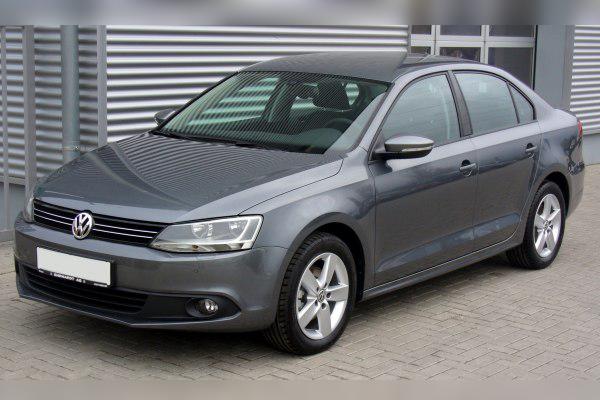
2.0 TDI (CFFB, CLCB) – Experiences, issues, fuel consumption and buying tips
Key points (TL;DR)
If you don’t have time to read everything in detail, here’s what you need to know about the 2.0 TDI CR engines (engine codes CFFB and CLCB) in the Volkswagen Jetta VI and related models:
- Big improvement: These are Common Rail engines, significantly quieter and more reliable than the old “Pumpe-Düse” (PD) units. No cylinder head cracking issues like on the older 2.0 TDI versions.
- Timing belt: The engine uses a timing belt that also drives the water pump. Regular replacement is crucial.
- EGR and DPF: As with any modern diesel, these are the main failure points, especially if the car is driven exclusively in the city.
- Dual-mass flywheel: A wear-and-tear part that isn’t cheap, and it fails on both manual and DSG gearboxes.
- Recommendation: One of the best diesel engines in its class. An ideal balance of power and fuel economy for long-distance driving.
- High-pressure pumps: The Bosch CP4 pump can be sensitive to poor fuel quality (metal shavings appearing in the system).
Contents
- Introduction and applications
- Technical specifications
- Reliability and maintenance
- Specific parts and costs
- Fuel consumption and performance
- Gearbox (Manual and DSG)
- Additional options and modifications
- Buying used and conclusion
Introduction and applications
The 2.0 TDI engine with codes CFFB and CLCB belongs to the EA189 generation. This is a key moment in Volkswagen’s history because it marks the complete switch to Common Rail injection technology. Why does that matter? Because it eliminated the characteristically rough operation of the old PD engines, as well as many of their early “teething problems”.
It was widely installed across the Volkswagen Group, specifically in the Volkswagen Jetta VI, Golf 6, Passat B7, and even in the Škoda Superb and Octavia. The 140 hp version is considered the “sweet spot” – strong enough to pull a fully loaded car uphill, yet economical enough not to drain your wallet at the fuel station.
Technical specifications
| Parameter | Value |
|---|---|
| Engine displacement | 1968 cc (2.0 L) |
| Power | 103 kW (140 hp) |
| Torque | 320 Nm at 1750–2500 rpm |
| Engine codes | CFFB, CLCB |
| Injection system | Common Rail (Direct injection) |
| Induction | Variable-geometry turbocharger + intercooler |
| Number of valves | 16 (4 per cylinder) |
Reliability and maintenance
When we talk about CFFB/CLCB engines, we’re talking about fairly mature units. Still, maintenance is the key to longevity.
Timing belt or chain?
This engine uses a timing belt for the valvetrain. That’s good news because the system is quieter and generally more predictable than the chains used on some other VW engines of that generation.
Major service
The factory recommendation for timing belt replacement is often an optimistic 210,000 km. Do not follow that recommendation. Experienced mechanics and real-world practice show that it’s ideal to do a major service (belt kit + water pump) between 150,000 km and 180,000 km or every 5 to 7 years. The water pump is a weak point; if it starts leaking or seizes, it can cause catastrophic engine damage.
Oil: quantity and consumption
The engine takes approximately 4.3 liters of oil. Always use oil that meets the VW 507.00 specification (Low SAPS due to the DPF filter), most commonly in 5W-30 grade.
As for oil consumption, these engines are much better than the old PD units. Between two services (10,000–15,000 km) you shouldn’t need to top up more than 0.5 to 1 liter. If it consumes more than that, check the turbocharger or for leaks at the crankshaft seals.
Most common issues
In addition to standard diesel problems, pay attention to:
- EGR valve: The EGR cooler often cracks or the valve itself gets stuck due to soot buildup. Symptoms include loss of power, a “Check Engine” light and the car going into “safe mode”.
- Thermostat: It can stick open, so the engine struggles to reach operating temperature in winter, which harms the DPF and increases fuel consumption.
- Intake manifold: The swirl flaps in the intake manifold can develop play, which the ECU registers as a fault (P2015).
Injectors
The good news for CFFB/CLCB owners is that these engines mostly use Bosch electromagnetic (solenoid) injectors, not the more sensitive piezo injectors used in some higher-output versions (170 hp). These injectors are very durable and often last well over 300,000 km without issues. And if they do fail, they can be refurbished, which is much cheaper than buying new ones.
Specific parts and costs
Dual-mass flywheel
Yes, this engine has a dual-mass flywheel, regardless of whether it’s paired with a manual or DSG gearbox. It’s a consumable part. It usually lasts around 180,000–250,000 km, depending on driving style. Symptoms include a metallic rattling noise when starting and shutting off the engine, as well as vibrations at idle that can be felt in the seat.
Replacement cost: Very expensive (depends on the market), because it’s replaced together with the clutch kit.
Turbocharger
The engine has a single variable-geometry turbocharger. Its lifespan is long, often as long as the engine itself, provided oil changes are done regularly. Problems arise if the car is driven “pensioner-style” only in the city – the variable vanes get clogged with soot and seize, which leads to overboost and the turbo cutting out while driving.
DPF and EGR
The CFFB and CLCB models meet Euro 5 standards. They have a DPF filter and an EGR valve. If you drive your Jetta mostly on open roads, you’ll probably barely notice they’re there. However, stop-and-go city driving is deadly for the DPF. If the warning light comes on, you need a run on the motorway to perform regeneration. A clogged DPF can destroy the turbocharger due to excessive backpressure.
AdBlue
Most CFFB/CLCB engines in Europe (Euro 5) DO NOT have AdBlue, which is a big advantage because it’s one less system to maintain (no AdBlue fluid heaters, no pump, no urea injector). However, check the specific car (especially if it’s an import from the USA or a later model) by looking for a blue cap next to the fuel filler cap.
Fuel consumption and performance
Real-world fuel consumption
This is the strongest selling point of this engine. In the Jetta VI, which is an aerodynamic sedan, the figures are as follows:
- City driving: Expect between 6.5 and 8.0 l/100 km, depending on traffic and how heavy your right foot is. In winter it can go up to 9 l/100 km.
- Country roads: On main roads (80–90 km/h) consumption drops to a ridiculous 4.0–4.5 l/100 km.
- Motorway: At 130 km/h it uses about 5.0–5.5 l/100 km.
Is the engine “lazy”?
Absolutely not. With 320 Nm of torque available from just 1750 rpm, a Jetta with this engine really pulls. In-gear acceleration is excellent and overtaking is safe. The driving feel is as if the engine has more power than it does on paper.
Cruising
On the motorway, at 130 km/h in 6th gear (manual or DSG), the engine spins at a relaxed 2,200–2,400 rpm. That guarantees a quiet cabin and low fuel consumption.
Additional options and modifications
Chip tuning (Stage 1)
This engine responds very well to remapping. A safe Stage 1 tune raises power to around 170–180 hp and torque to around 380–400 Nm.
Warning: Although the engine itself can handle this increase, the clutch and flywheel are subjected to more stress. If you have a DSG gearbox, it’s recommended to also do a software adjustment of the gearbox (TCU tuning) to increase oil pressure on the clutch packs.
Gearbox (Manual and DSG)
With the 2.0 TDI in the Jetta VI you get two options:
Manual gearbox (6-speed)
Very precise and robust. The gearbox itself rarely fails. The main expense, as mentioned, is the clutch kit with the dual-mass flywheel. Oil change in the manual gearbox is not prescribed by the manufacturer (“lifetime”), but it’s strongly recommended to replace it every 150,000 km for smoother shifting.
DSG gearbox (DQ250 – 6-speed)
This is a gearbox with a wet dual clutch. It’s much more reliable than the notorious 7-speed “dry” DSG (DQ200) used in lower-powered engines (1.6 TDI).
Maintenance: Oil and filter changes in the DSG gearbox are MANDATORY every 60,000 km. If this is not done, the mechatronic unit (the gearbox’s “brain”) fails, and repairs are very expensive (depends on the market, but expect a four-figure sum in euros).
Failures: In addition to the mechatronic unit, the flywheel on DSG gearboxes also fails and can be recognized by rattling noises in “N” or “P” position.
Buying used and conclusion
Buying a Jetta with a CFFB/CLCB engine is generally a smart move, but caution is necessary.
What to check before buying?
- Cold start: The engine should fire up instantly. Listen for knocking in the first few seconds (flywheel) or uneven running (injectors).
- Exhaust: A sooty exhaust on a Euro 5 diesel with a DPF means the DPF has either been removed or is cracked. The inside of the exhaust should be greyish-clean.
- Coolant: Open the expansion tank (when the engine is cold!). The coolant should be clean and pink (G12/G13). If it’s dirty or brown, the oil cooler might be mixing fluids.
- DSG test: If it’s an automatic, release the brake on level ground – the car should start moving immediately without jerks. Gear changes should be imperceptible.
Conclusion
The 2.0 TDI (140 hp) engine in the Jetta VI is a true “marathon runner”. It’s intended for drivers who cover a lot of kilometres, mostly on open roads. It offers an excellent compromise between performance that won’t let you down and fuel consumption that won’t bankrupt you. With regular maintenance (especially the major service and DSG oil changes), this engine can easily exceed 400,000+ kilometres. Avoid it only if you drive exclusively very short 2 km trips in the city – for that, buy a petrol car.
Was this content useful to you?
Your opinion helps us to improve the quality of the content.